Why brake fluid absorbs water
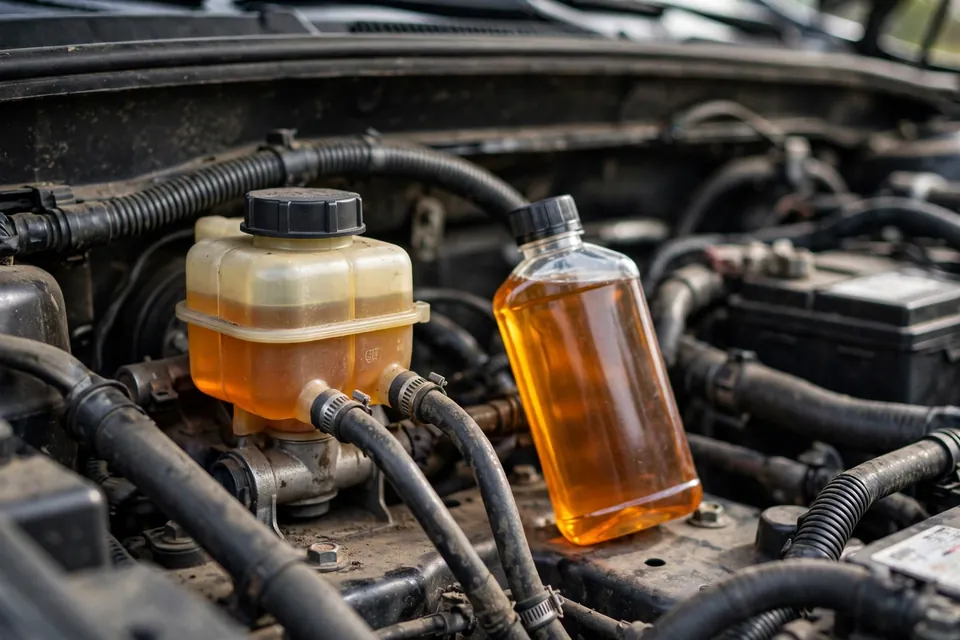
Most glycol-based brake fluids are hygroscopic, so they absorb moisture through hoses, seals, and the reservoir vent. Water lowers the boiling point and can promote corrosion in lines, calipers, wheel cylinders, and the ABS unit. Dark color alone is not a reliable test.
Step 1 — Find the brake reservoir: check that the fluid is between MIN and MAX and clear to light amber.
When a flush matters
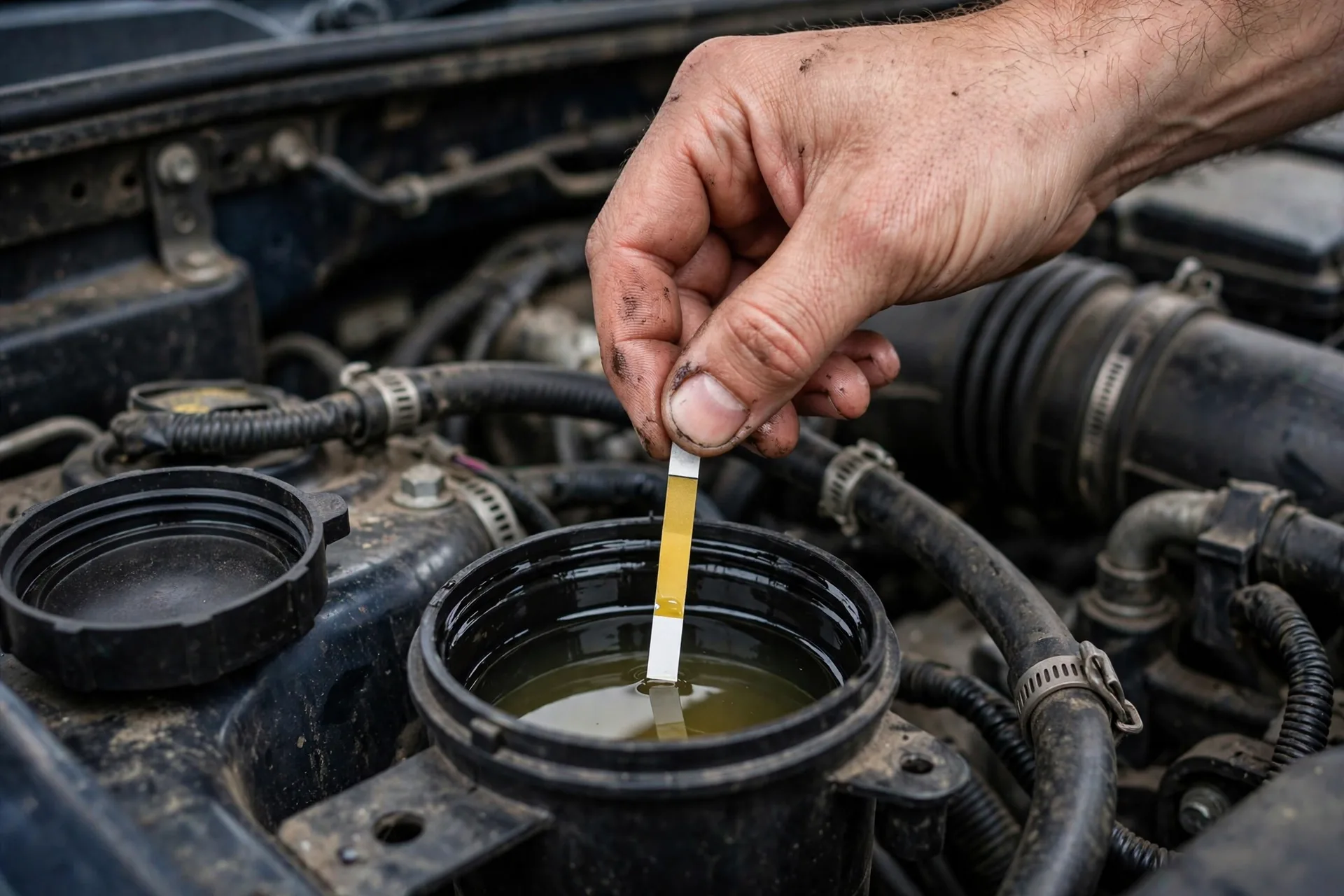
Many vehicles call for a brake-fluid flush about every two years, but follow the owner's manual and the vehicle's use. A flush may also be due after a hydraulic component is opened, fluid is contaminated, or a test shows high moisture or a low boiling point. Topping up is not the same as replacing old fluid throughout the system.
Related guide: 2014-2024 Mini Cooper - Brake Fluid Flush — Full flush procedure with the two-person and pressure-bleeder methods.
DOT types and compatibility
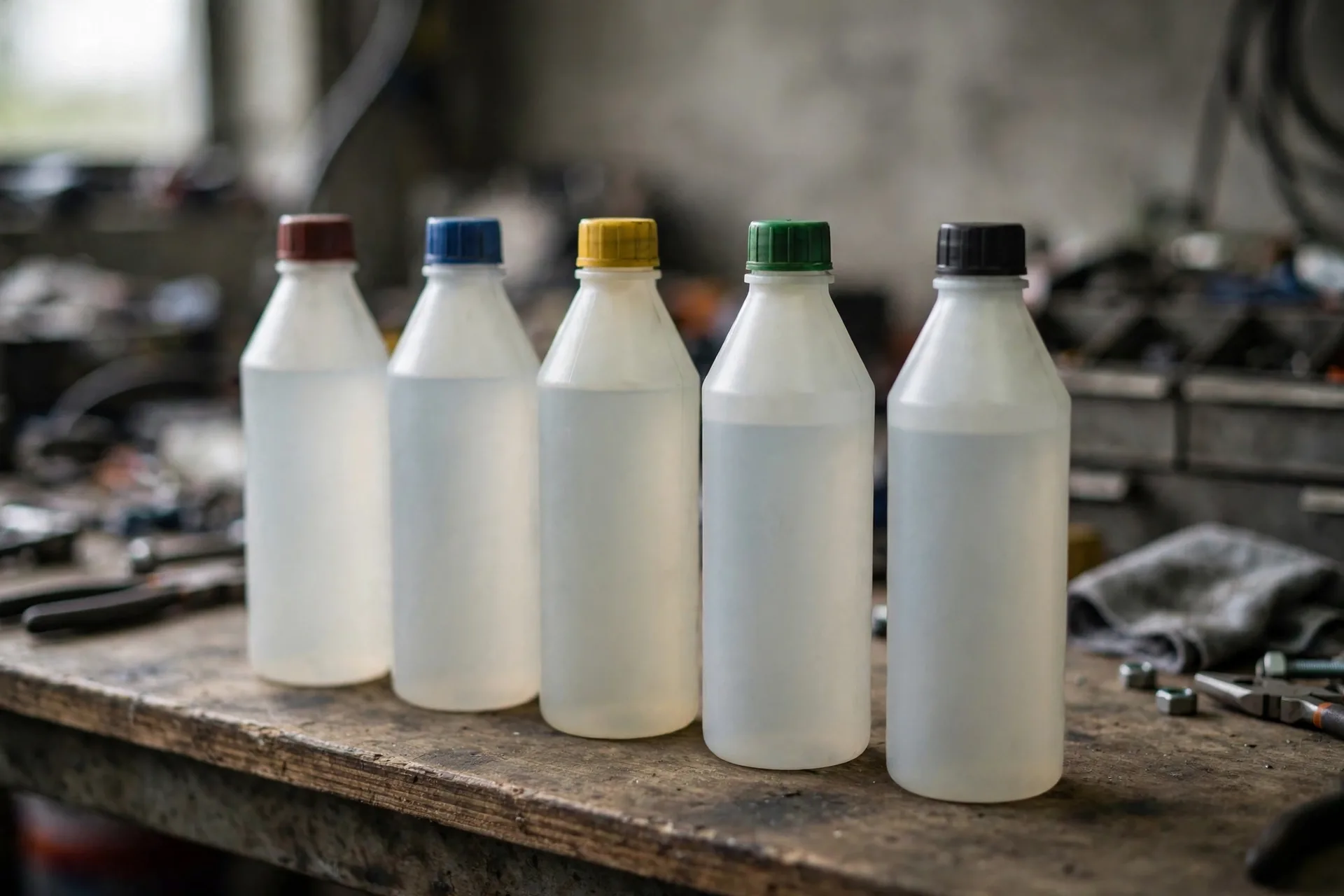
Read the reservoir cap and manual first. Never mix DOT 5 silicone fluid with DOT 3 or DOT 4 glycol fluid. DOT 5.1 is glycol-based, but specifications still matter; use only the approved type from a sealed container. Keep fluid off paint because it can damage finishes.
DOT type compatibility: use DOT 3 or DOT 4 (glycol); do not use DOT 5 (silicone) — never mix the two.
Spongy-pedal symptoms
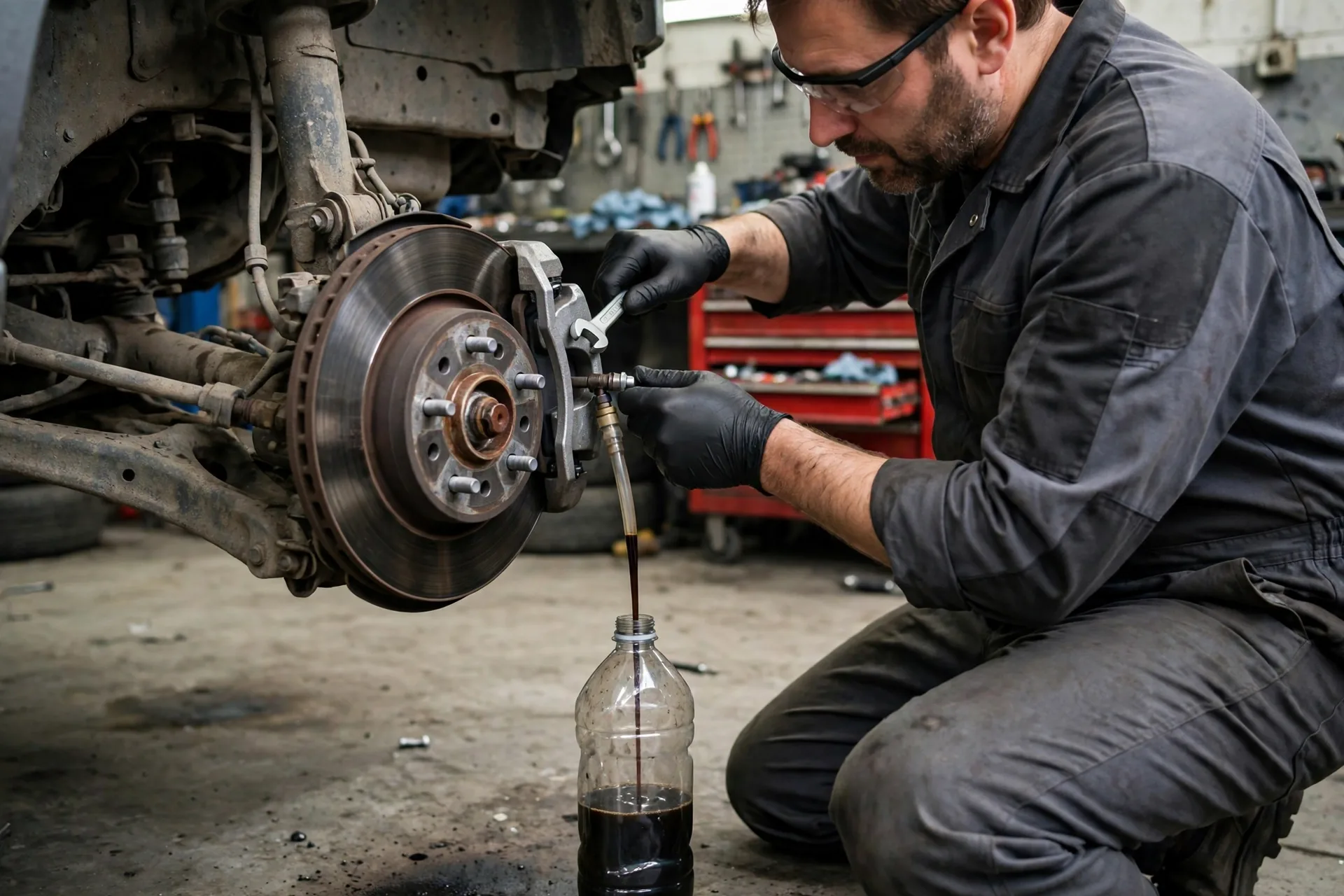
A soft pedal may mean air, water-contaminated fluid, a leak, an overheated brake, a failing hose, or a hydraulic problem. Look for wetness around lines, calipers, wheel cylinders, and the master cylinder, but do not assume a flush alone will fix it. If the pedal sinks, stopping distance increases, a warning light appears, or fluid leaks, do not drive until diagnosed.
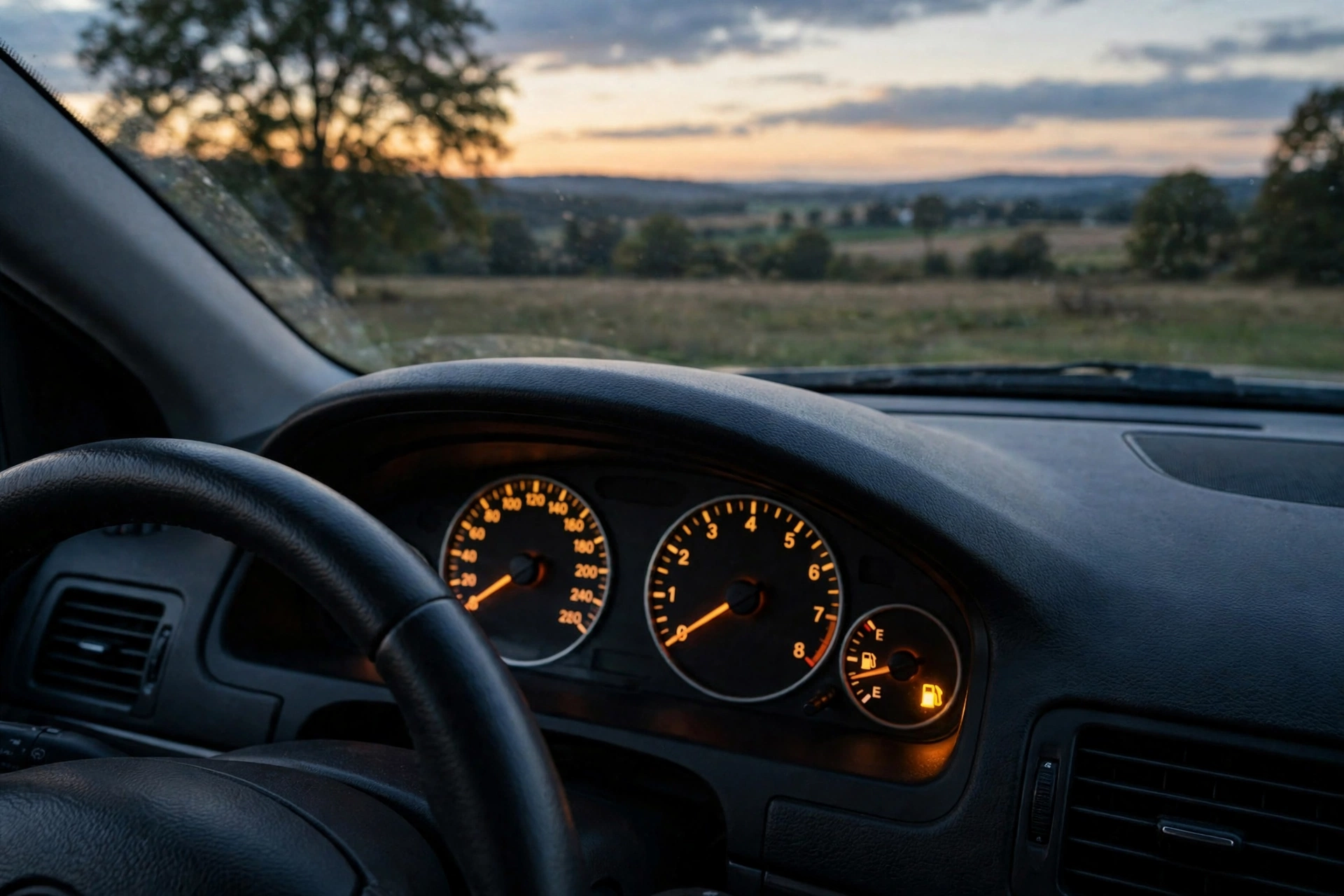
Stop if spongy pedal, ABS warning light, or no firm pedal — have it diagnosed before driving.
Related guide: 2016-2023 Toyota Tacoma - Brake Pad Replacement — A long, soft pedal can also mean worn pads — here is how to inspect and replace them.
ABS bleeding caution
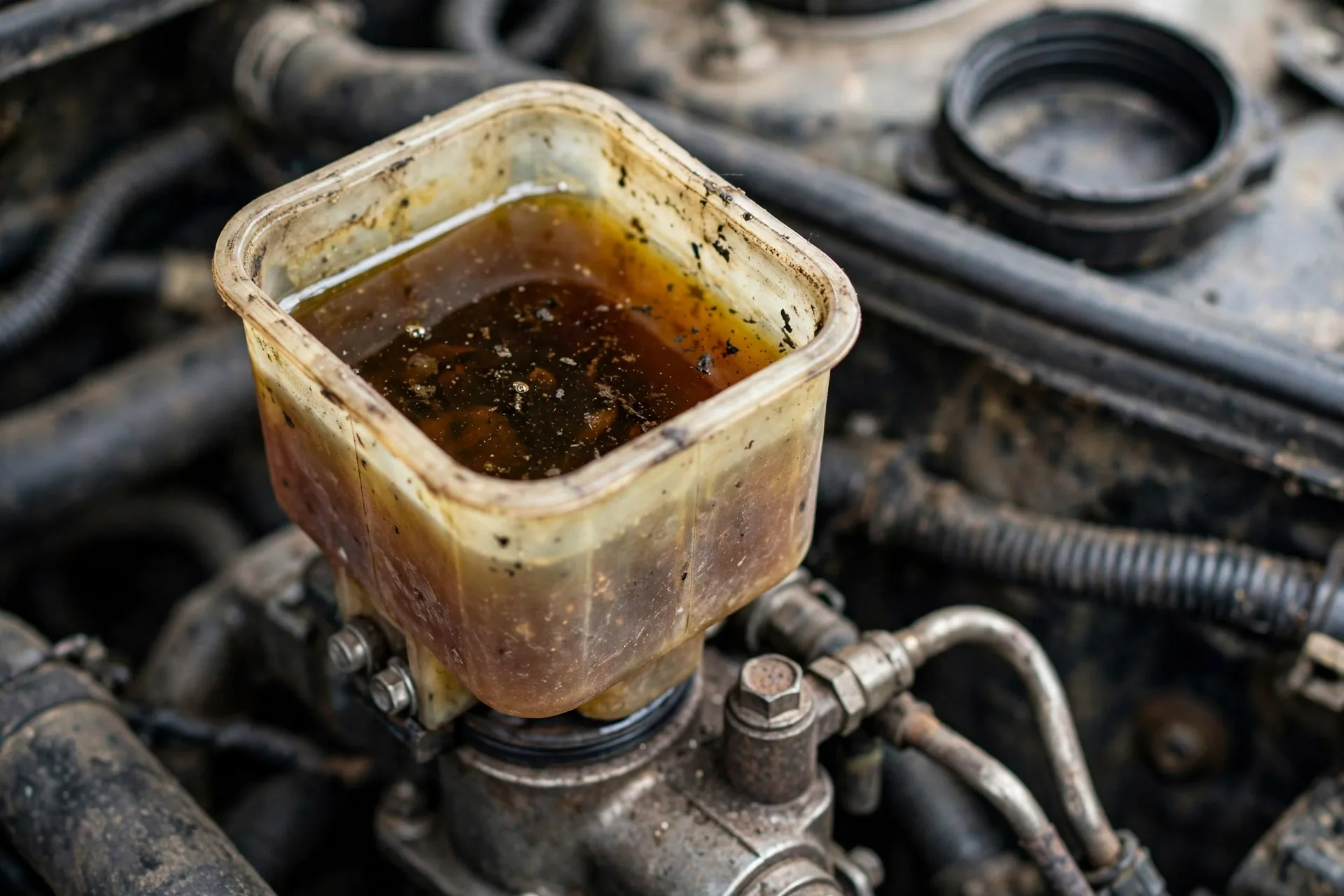
Some ABS systems require a scan tool to cycle internal valves during a complete bleed. Follow the manufacturer procedure, use clean equipment, and never let the reservoir run dry. Brake work is safety-critical; use a qualified technician if unsure.
Safety first
Wear eye protection, support the vehicle securely, keep the reservoir clean, and dispose of used fluid properly. EZ Car Fix is informational only, not a shop or a substitute for qualified brake service.