Coolant Disappearing With No Visible Leak: Where It Goes
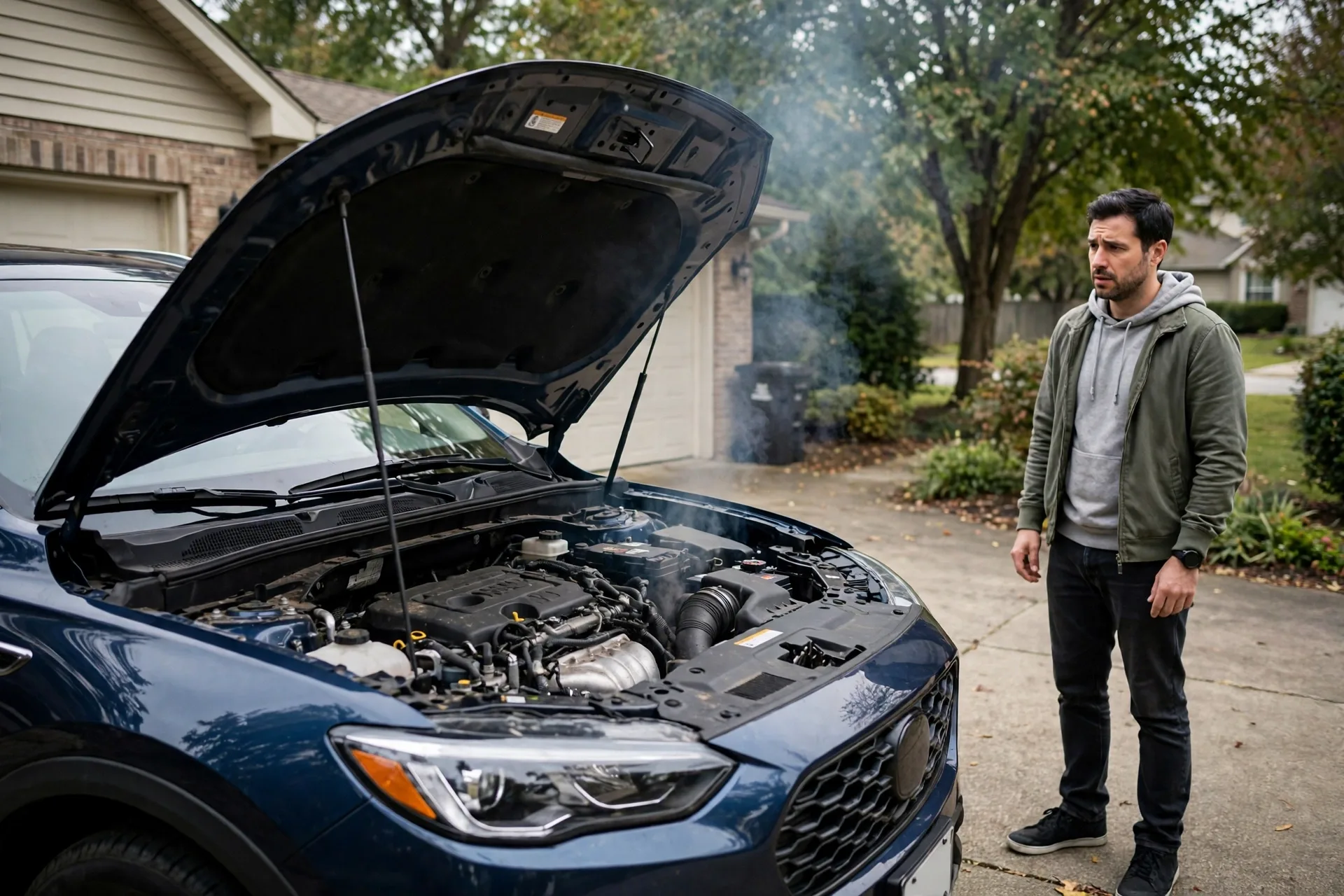
Your coolant level keeps dropping, but the driveway is dry and there is no puddle under the car. Coolant that disappears with no visible leak is almost always still leaking, it is just leaking somewhere you cannot see it: out of a hot part that evaporates it before it hits the ground, into the cabin through the heater core, or inside the engine itself. Top it off, track the loss for a week, and find the path before a low coolant level turns into an overheated engine.
First, Confirm You Are Actually Losing Coolant
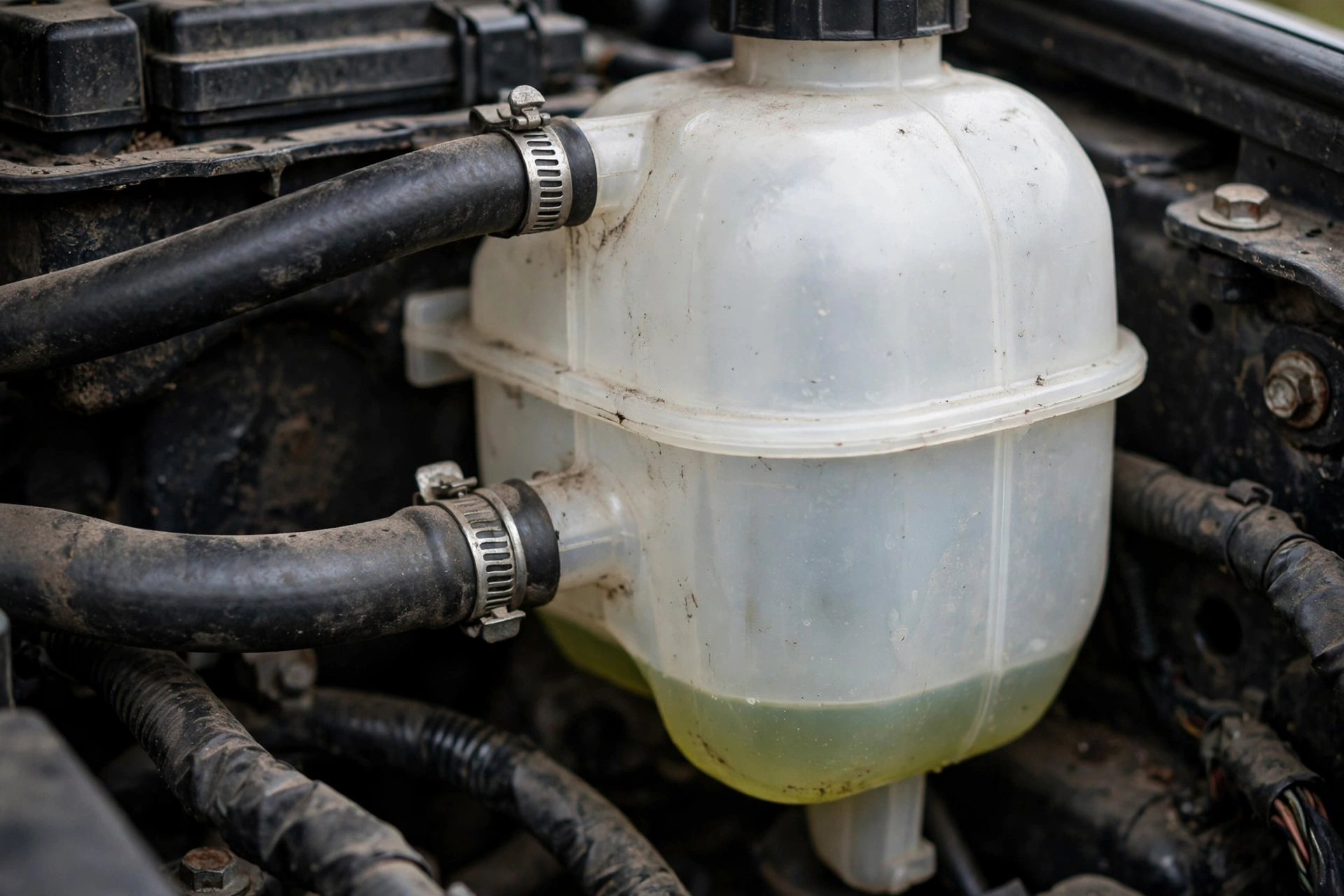
Coolant level moves a little with temperature, so a single low reading proves nothing. Park on level ground, let the engine cool completely overnight, and check the overflow reservoir at the same time every morning for 7 days. If the level falls steadily across that week while the car is driven normally, you have a real loss, not a one time burp of trapped air after a recent service.
While you are there, look at the coolant itself. Healthy coolant is clear and brightly colored, usually green, orange, or pink depending on the type your car uses. Brown, rusty, or oily looking coolant is a clue on its own, and so is a sweet smell under the hood after a drive. Do not open the radiator cap or the reservoir cap on a hot engine. Wait until everything is cold, and check your owner's manual for the correct coolant type before adding anything, because mixing incompatible types can cause sludge and deposits.
One more quick check costs nothing: look at the oil dipstick and the underside of the oil filler cap. Oil that looks milky, or a cap coated in creamy residue, points to coolant mixing with the oil inside the engine. That is a stop driving situation, not a top it off and watch it situation.
The Leaks You Cannot See
Most invisible coolant leaks are still external leaks. They just never reach the ground as a puddle.
The first suspect is a leak that only happens under pressure and heat. A pinhole in a radiator hose, a seeping water pump gasket, or a hairline crack in a plastic radiator end tank can spray a fine mist that evaporates on the hot engine before it drips anywhere. A radiator cap that no longer holds pressure can also vent coolant a little at a time, with no stain to show for it. Look for dried crusty residue around hose clamps, the water pump, and the radiator seams.
The second suspect is the heater core, the small radiator behind the dashboard that gives you cabin heat. When it seeps, coolant drains out of the air conditioning drain under the car, where it looks like plain water, or soaks into the carpet and padding. Signs include a sweet smell inside the car when the heat is on, windows that fog up and stay fogged, and damp carpet on the passenger side footwell. The sweet smell is the giveaway.
The third suspect is a leak at the back of the engine you simply cannot see from above. Intake manifold gaskets, heater hose connections at the firewall, and coolant lines to the throttle body or turbo sit where a flashlight and a mirror are needed to inspect them. On some engines the water pump is driven by the timing belt and buried behind covers, so a failing pump can weep with no external sign at all.
Coolant Going Inside the Engine
The serious version of this problem is coolant getting into the combustion chambers or the oil. The usual cause is a failing head gasket.
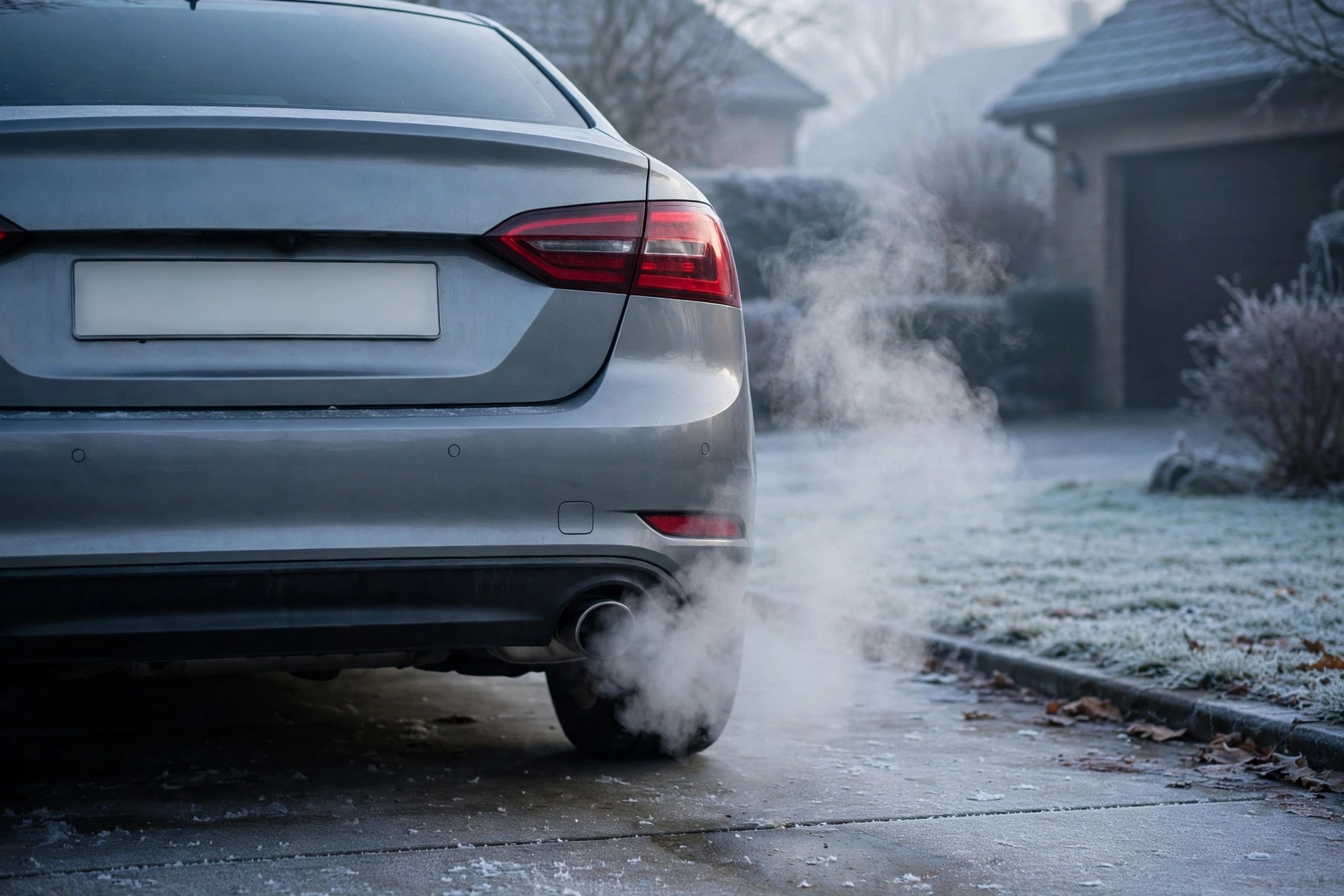
Watch the exhaust. A head gasket leak into a cylinder burns coolant, and the classic sign is thick white smoke from the tailpipe that does not clear up once the engine is warm. Normal condensation makes a little vapor on a cold morning and stops within a few minutes. Coolant smoke is heavier, smells sweet, and keeps coming after a full warm up drive. Misfires on cold start and bubbles in the overflow reservoir point the same direction.
Coolant in the oil is the other internal path, and it is the one that does the most damage the fastest. Coolant strips oil of its ability to lubricate, so bearings and cam surfaces wear quickly once the two mix. If the oil looks milky, stop driving the car except to get it to a shop. Driving it to "see if it gets worse" is how a gasket job becomes an engine job.
For the worst case, read Blown Head Gasket Symptoms: Tests, Repair Cost, Worth Fixing?.
How to Track It Down
Work through these in order, cheapest and easiest first. Stop at the step that finds the leak.
- Do the 7 day cold level test described above, and note how fast the level falls. A slow fall over weeks points to a seep. A fast fall over days points to an active leak that needs attention now.
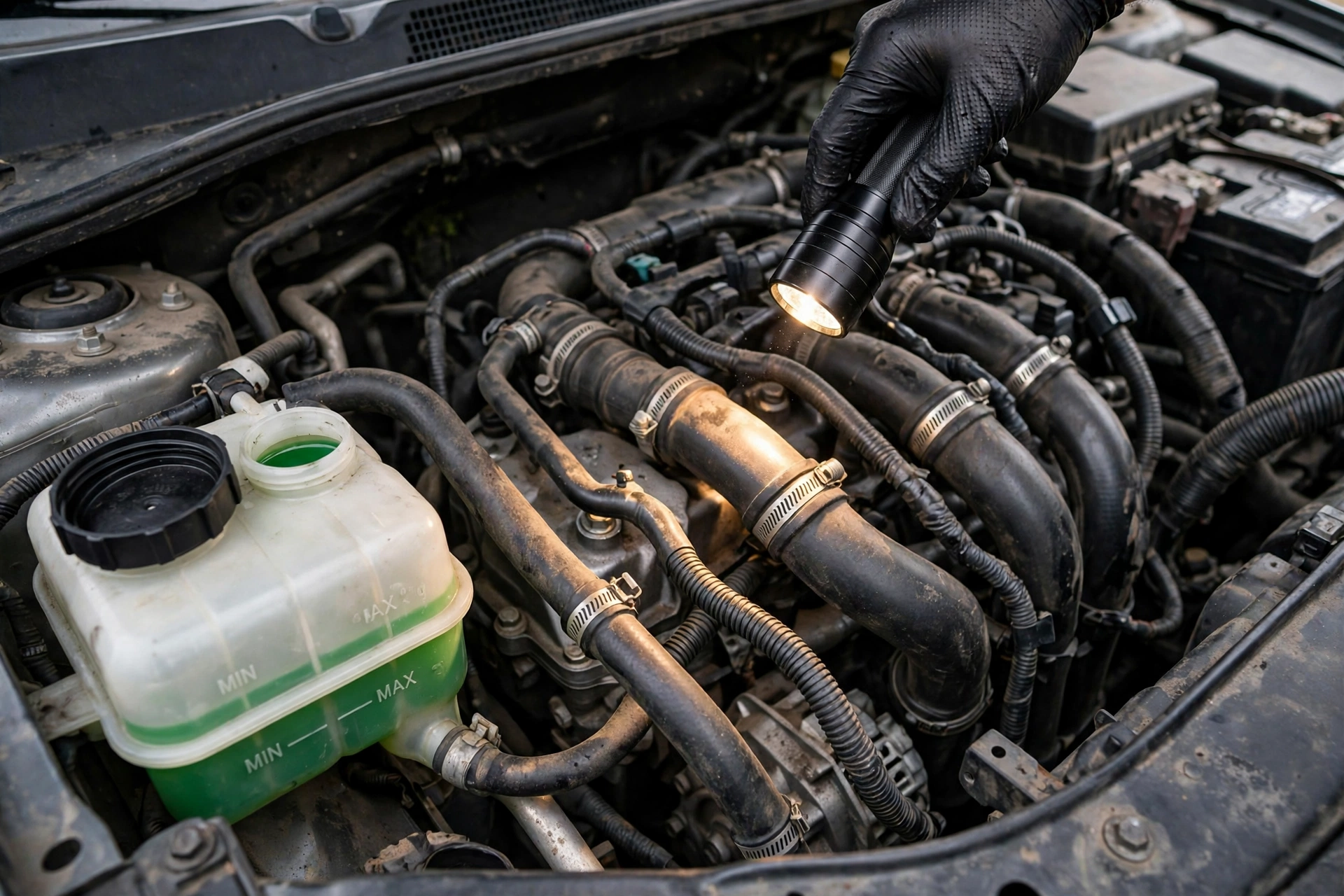
- With the engine cold, inspect every hose, clamp, and connection with a flashlight, and check the radiator seams, the water pump area, and the heater hoses at the firewall.
- Check the cabin for a sweet smell with the heat on, foggy windows, or a damp passenger footwell. Any of those means the heater core is a prime suspect.
- Check the oil dipstick and filler cap for milky residue, and watch the exhaust for sweet smelling white smoke after full warm up.
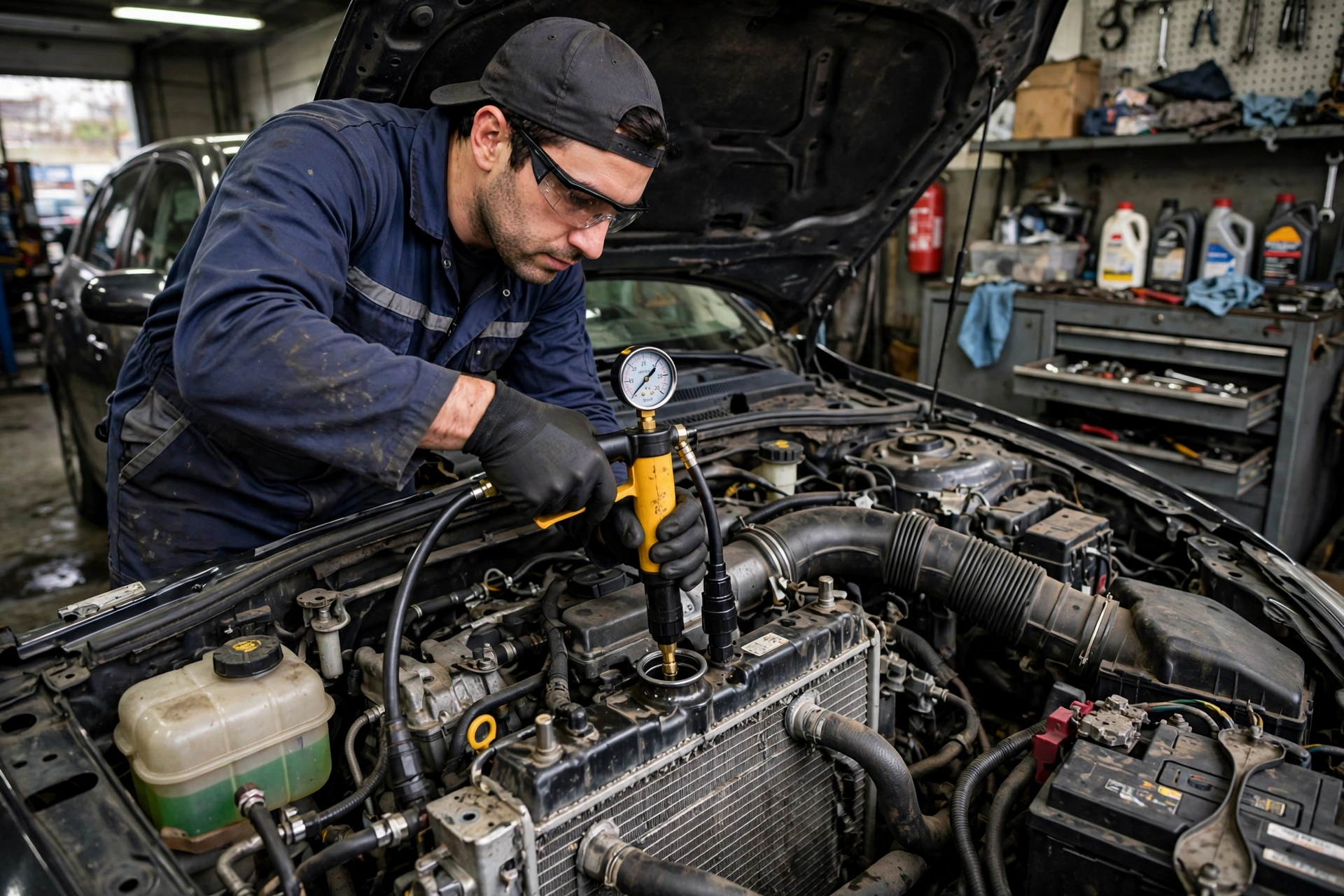
- Get a cooling system pressure test. A shop pressurizes the cold system with a hand pump and watches the gauge: if pressure falls and no external leak appears, the coolant is going somewhere internal. This is the single most useful test for a mystery loss, and it is inexpensive relative to the parts people replace while guessing.
- If the pressure test points internal, a combustion gas test confirms a head gasket problem before anyone takes the engine apart.
What not to do: do not keep pouring in stop leak products and driving. They can clog the heater core and radiator passages, and they mask the symptoms long enough for a small gasket leak to become warped head damage. And do not ignore a slow loss because the gauge reads normal: once the level drops far enough for the sensor to sit in air instead of coolant, the gauge can read normal while the engine is cooking.
What the Fix Costs
The range here runs from trivial to engine out.
A radiator cap, a hose clamp, or a short section of hose is a cheap part and a short job. A heater hose, a thermostat housing gasket, or an overflow tank is still a modest repair. A water pump replacement is mostly labor, and the bill depends heavily on whether the pump is easy to reach or buried behind the timing covers. A heater core replacement is also mostly labor, because the dashboard often has to come partly apart to reach it. A head gasket repair is a big ticket job on any car, with machine shop work and a long labor time, and it is the repair where a second opinion is worth the effort.
The expensive mistake is not the repair itself, it is the guessing that comes before it. Replacing a radiator, a thermostat, and a water pump one at a time while the real leak is a head gasket costs more than the pressure test that would have pointed at the gasket first.
DIY vs Shop Verdict
The checks are DIY friendly. The level test, the visual inspection, the smell test, and the oil check are all free and need no tools beyond a flashlight. Topping off with the correct coolant type and replacing a cap or a clamp are reasonable driveway jobs if you can reach the part and the engine is cold.
The pressure test and anything internal belong at a shop. A head gasket, heater core, or timing belt driven water pump is not a first time DIY project. The teardown, the torque sequence, and the risk of getting it wrong are the hard part.
My verdict: spend a week confirming the loss and doing the free checks yourself, then hand a shop a clean story: how fast it drops, what you smelled, what the oil looks like, and what the exhaust does when warm. That story plus a pressure test gets you a straight answer instead of a parts guessing game.
If the culprit turns out to be a pump or a gasket, the model specific walkthroughs show what the job involves, for example 2009-2016 Audi A4 - Water Pump Replacement and 2010–2014 Subaru Outback - Head Gasket Replacement. Once the leak is fixed, Coolant Flush: Why It Matters and How to Do It Without Making a Mess covers refilling and bleeding the system properly.
FAQ
Can coolant just evaporate on its own?
A tiny amount can escape past an old radiator cap over a long time, but a healthy sealed system does not lose a noticeable amount between services. If you are topping off more than once between oil changes, something is leaking, even if you cannot see it.
Is it safe to drive with a slow coolant loss?
Short trips with the level topped off and the gauge watched are usually survivable, but it is a gamble that gets worse with distance and heat. A slow leak becomes a fast leak without warning, and an overheated engine can warp a head in one bad drive. Fix the leak, do not manage it indefinitely.
Why does the coolant disappear but the temperature gauge stays normal?
The gauge reads coolant temperature at the sensor. As long as enough coolant still covers the sensor, the reading looks fine. The danger zone starts when the level drops below the sensor or an air pocket forms, and then the gauge can read normal while parts of the engine overheat. The reservoir level is a better warning than the gauge.
Does a bad thermostat cause coolant loss?
Not directly. A stuck thermostat causes overheating or slow warm up, and the overheating can push coolant out of the overflow, which looks like a loss. If the thermostat is the cause, fixing it stops the overflow, but a car that keeps losing coolant with a normal temperature gauge has a leak somewhere else.
Coolant that vanishes goes to one of three places: out of a hot part before it drips, into the cabin, or inside the engine. Start with the free checks, get a pressure test before replacing parts, and treat milky oil or constant white exhaust smoke as a stop driving sign. The ones that end up scrapped are the ones whose owners kept topping off and hoping for months.
Safety: Informational DIY. EZ Car Fix is not a shop or dealer.