Fuel Injector Cleaning vs Replacement: Symptoms and Cost
A bad fuel injector usually announces itself with a rough idle, a misfire, or a sudden drop in fuel economy, and the fix is almost never a bottle of cleaner from the parts store shelf. Cleaning helps when an injector is dirty but still mechanically sound. Replacement is the answer when an injector leaks, sticks, or fails electrically. The trick is telling the two apart before you spend money on the wrong one, because a cleaning service on a dead injector is wasted money and a new injector will not fix a problem that was never the injector at all.
Bad Fuel Injector Symptoms
Fuel injectors spray a fine mist of fuel into each cylinder at exactly the right moment. When one sprays too little, too much, or in the wrong pattern, that cylinder stops pulling its weight and the whole engine feels it.
The most common symptom is a rough idle. The engine shakes at stoplights, the idle speed hunts up and down, and the vibration smooths out once you get moving. A misfire is the sharper version: the engine stumbles under acceleration or hesitates when you press the gas. On many cars a misfire turns on the check engine light, and a scan will show a misfire code for one specific cylinder, a strong clue the problem is local to that cylinder.
Other signs are less obvious. Fuel economy drops because a leaking injector dumps extra fuel, or because the engine computer enriches the whole mixture to compensate for a weak one. A raw fuel smell after the car sits, or hard starting after a few hours parked, points to an injector leaking down after shutdown and flooding one cylinder. A cylinder running lean can overheat and damage the spark plug or worse, so a persistent misfire is not something to drive on for months.
One symptom people misread is ticking. Fuel injectors tick normally as they open and close, so a light tick at idle is usually fine. A loud knock or a tick that appeared suddenly alongside a misfire deserves a real diagnosis.
What Causes Injectors to Go Bad
Injectors fail in three ways, and the failure mode decides whether cleaning has any chance.
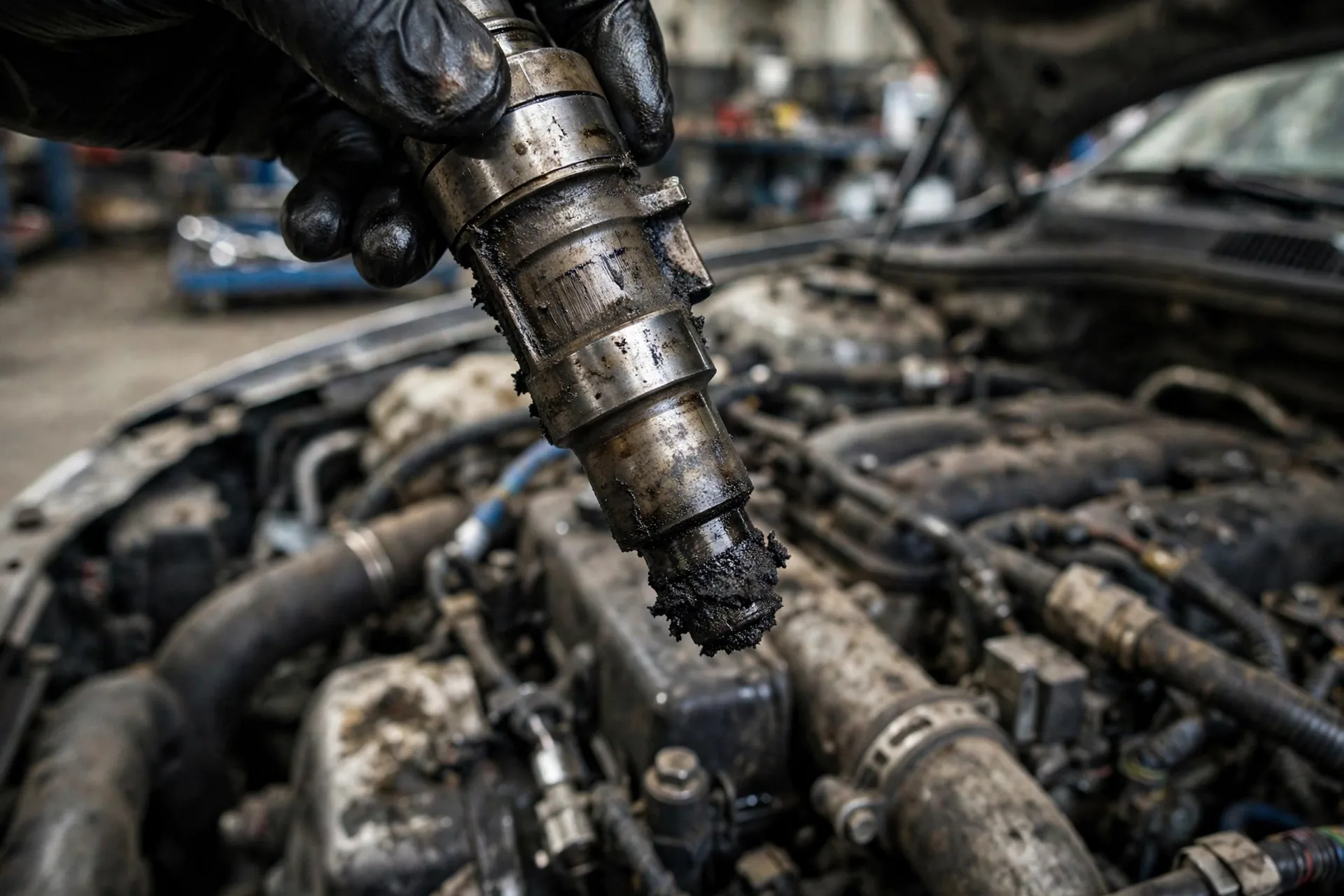
The first is deposits. Fuel leaves varnish and carbon on the nozzle over time, especially on cars that do short trips, sit unused for weeks, or run low quality fuel. Deposits narrow the spray pattern so fuel arrives as a dribble instead of a mist. This is the one failure mode cleaning can fix.
The second is mechanical wear and leakage. Injector seals harden with heat and age, the nozzle wears, and the injector starts to drip fuel when it should be closed. No cleaning fixes a worn seal or a nozzle that no longer seats. Leaking injectors are a replacement job.
The third is electrical failure. Each injector is opened by an electrical signal, and the coil inside can fail, or the wiring and connector can corrode or break. An injector that never opens is a dead cylinder, and it will not respond to any cleaner. Electrical failures are also a replacement job, plus a check of the wiring feeding it.
There is no magic mileage where injectors die, and many cars run originals for life. Contaminated fuel, a failing fuel filter, and long storage with old fuel all shorten injector life. Keeping the filter on schedule is the cheapest injector insurance there is. For the filter side, see 2019-2024 Chevrolet Silverado: Fuel Filter Replacement.
How to Diagnose a Bad Injector
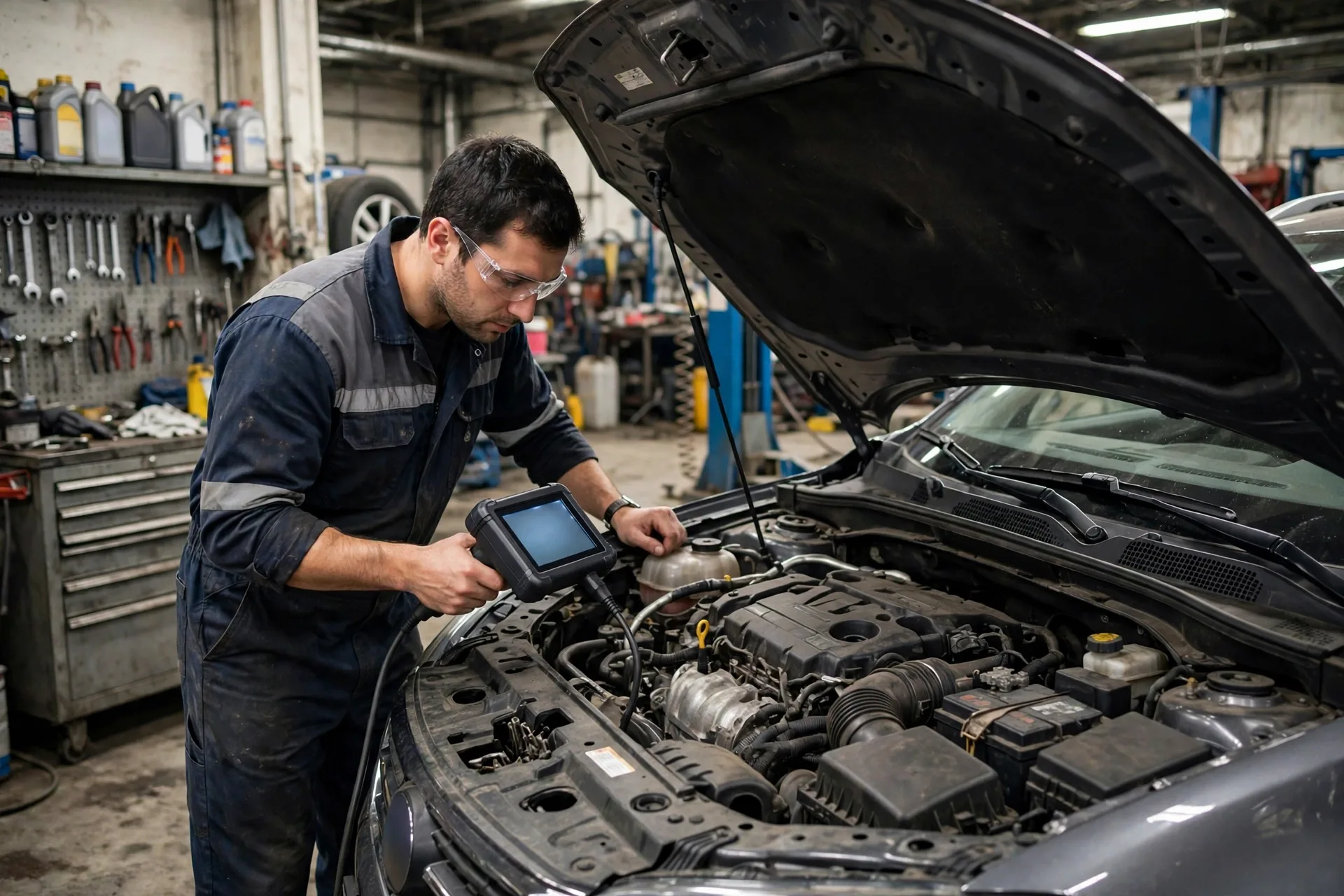
Do not replace injectors on a guess. A misfire can come from a spark plug, a coil, a vacuum leak, or low compression, and injectors are too expensive to swap on suspicion. Work through these steps in order.
- Scan for codes. A misfire code tied to one cylinder narrows the search to that cylinder's plug, coil, and injector. A code that moves around or affects multiple cylinders points elsewhere.
- Swap the easy parts first. Move the coil and then the spark plug from the misfiring cylinder to a different cylinder and see if the misfire follows. If it does, you found a bad coil or plug, not a bad injector. If the misfire stays put, the injector is a real suspect.
- Listen and feel. With the engine idling, hold a long screwdriver against each injector body and your ear against the handle. A healthy injector clicks steadily. A silent injector is not opening, and that is an electrical or mechanical failure.
- Test the electrical side. A shop can measure the injector's resistance and compare it with the spec for your engine, and check that the connector is delivering a signal. Check your owner's manual or a repair manual for your car before testing anything electrical, and do not probe wiring you are unsure about.
- Test spray and leakdown. A professional cleaning machine runs each injector on a bench, measures flow rate and spray pattern, and checks whether it leaks after closing. Even flow after cleaning is a success. An injector that still leaks or flows unevenly after cleaning needs replacing.
A bottle of cleaner in the tank is the weakest version of this test. It can help a mildly dirty injector, but it cannot measure anything and will not fix a leak or an electrical failure. If a bottle fixes your misfire, the injector was dirty. If not, you need a real test.
Cleaning vs Replacement: What Actually Works
Professional cleaning, done off the car on a flow bench with ultrasonic cleaning, is a legitimate repair for deposit fouled injectors. It costs a fraction of replacement, and the before and after flow numbers prove whether it worked. On car cleaning, where pressurized solvent runs through the fuel rail with the engine running, is a middle option: stronger than a bottle, weaker than a bench service, still unable to fix leaks or electrical faults.
Replacement is the right call when the injector leaks, fails electrically, or still performs badly after a proper cleaning. As a set or one at a time? If one failed from age and the rest share its mileage, a set avoids repeating the labor months later. If one failed early from contamination or a wiring fault, replacing just that one is reasonable. Ask the shop which situation you are in.
One caution: on direct injection engines the job is harder, with high pressure fuel lines and seals that demand care, and carbon buildup there also affects the intake valves, which injector cleaning does not touch. Get a clear explanation of what the service actually cleans before approving it.
What the Job Costs
Cleaning is the cheap end of this repair and replacement is the expensive end, and the gap between them is wide enough that a correct diagnosis pays for itself.
A bottle of cleaner is a cheap part and a do it yourself job. A professional on car cleaning service is a moderate shop bill, mostly labor for setup and run time. An off car ultrasonic cleaning service is a step up from that, because the injectors have to come out and go back in, but it is still well below replacement cost.
Replacement is a big ticket job on most cars, and the spread comes from access. On an engine where the injectors sit on top and come out easily, the job is mostly parts. Where the intake manifold has to come off or the injectors are buried, labor dominates and the same parts cost far more installed. Direct injection injectors are pricier parts than port injection ones, and some require new seals and hardware too.
Dealer pricing runs higher than independent shop pricing for the same job, and parts markup is part of that gap. If a shop quotes replacement without a cylinder swap test or a flow test first, get a second opinion: diagnosis separates a necessary replacement from an expensive guess. If the real problem is fuel delivery rather than the injectors, the pump is next, covered in Fuel Pump Failure: Why Your Car Suddenly Won't Start and What It Costs.
DIY vs Shop Verdict
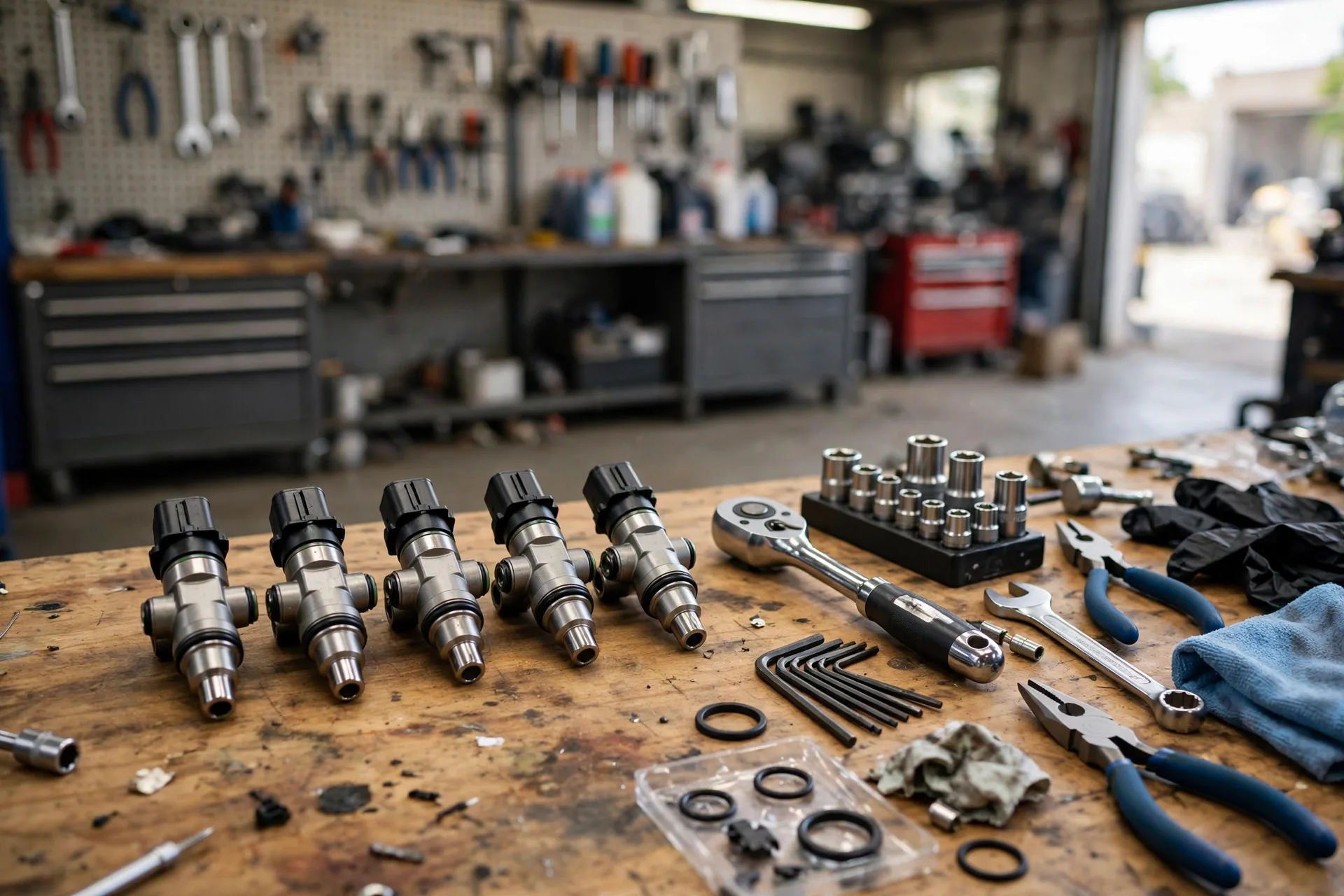
Diagnosis is a good DIY job up to a point. Scanning codes, swapping coils and plugs, and listening for the injector click are all safe driveway work. Removing injectors is where it gets serious: you are opening a pressurized fuel system, fuel will spill, and a mistake can cause a fire. If you do go in, work on a cold engine, relieve fuel pressure by the procedure in your repair manual, keep a fire extinguisher nearby, and never work on fuel lines with the ignition on or the engine hot.
For most owners, the smart split is this: diagnose what you can in the driveway, pay a shop for the flow test and the injector work, and never approve a replacement without a test result naming the failed injector. Cleaning is worth trying first when the injector is dirty but tests good electrically and does not leak. Replacement is the honest answer when it leaks, fails electrically, or still fails the flow test after cleaning.
For the broader fuel system picture, read Fuel System Maintenance: Injectors, Filters, and Why Your Car Needs Clean Fuel. If a check engine light is part of your symptoms, Check Engine Light: What It Actually Means and What You Should Do explains what to do first.
FAQ
Can a fuel injector cleaner fix a misfire? Sometimes, if the misfire is caused by deposits narrowing the spray pattern. It will not fix a leaking injector, a failed coil, or a wiring problem, and if the misfire persists after a bottle, get a real diagnosis instead of a second bottle.
How do I know if I need cleaning or replacement? A flow and leak test decides it. An injector that flows evenly after cleaning and does not leak is a cleaning success. One that still leaks, fails electrically, or flows unevenly after cleaning needs replacing.
Is it okay to drive with a bad fuel injector? Short trips to a shop are usually fine, but a misfiring cylinder can overheat the catalytic converter and damage the engine if ignored for weeks. Do not put it off.
Should I replace all injectors or just the bad one? If the failure is age related and the rest have the same mileage, a set avoids repeat labor. If one failed early from contamination or a wiring fault, replacing just that one is reasonable. Let the test results and the failure mode decide.
The take is simple: test before you spend. Cleaning is real medicine for dirty injectors and a waste of money for dead ones, and the only way to know which you have is a flow test, not a guess and not a bottle. Start with the cheap diagnosis, fix the injector the test condemns, and keep the fuel filter on schedule so the next set lasts longer.
Safety: Informational DIY. EZ Car Fix is not a shop or dealer.