
What Is Leaking From My Car? Identify by Color and Smell
That puddle under your car is telling you exactly what is wrong, if you know how to read it. Grab a white paper towel, dab the fluid, and match the color and smell. In about 60 seconds you can tell whether it is coolant, oil, transmission fluid, brake fluid, power steering fluid, fuel, or just air conditioner condensation. That one ID decides whether you drive it to a shop today or finish your coffee first.
The quick color and smell chart
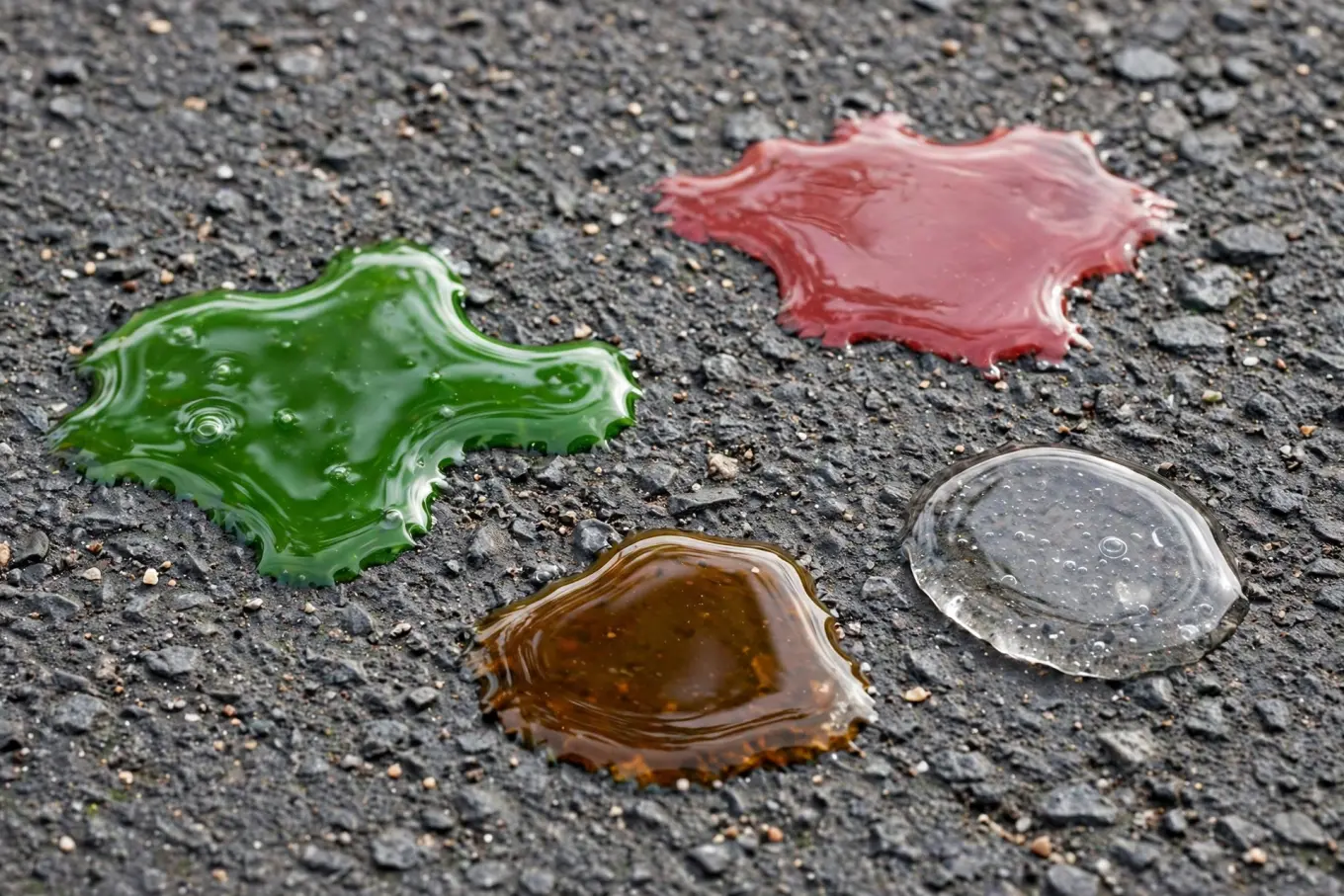
Work through this chart with a dab of the fluid on white paper. White paper makes colors honest. Brown pavement lies.
Clear and watery, no smell. That is almost certainly air conditioner condensation. It drips from a small drain hose under the passenger side, usually near the middle of the car. It is clear, thin like water, and leaves no stain on paper. Totally normal on hot days. If it never stains and never smells, ignore it.
Bright green, orange, or pink, with a sweet smell. Coolant, also called antifreeze. It is slippery between your fingers and smells faintly sweet, almost like maple syrup. Green is the classic color, but many cars now run orange, pink, or yellow coolant, and mixing colors is a bad idea, so top up only with what your car already has. Coolant is poisonous to pets. As little as a teaspoon can be fatal to a cat, so clean every spill and keep animals away from the driveway until you do.
Dark amber to black, oily, with a faint burnt smell. Engine oil. Fresh oil is honey colored. Used oil goes dark brown or black. It is thick, slick, and leaves a dark stain. If it smells burnt, the oil is overdue for a change, not necessarily that the leak is worse.
Red or pink, oily, and a little sweet. Transmission fluid. Fresh ATF is cherry red and smells faintly sweet. Old fluid turns dark red or brown and smells burnt. Most cars with a transmission dipstick will show low levels fast if this leak is real, so check your owner's manual for the check procedure on your car.
Clear to light yellow, very slippery, near a wheel. Brake fluid. This one is the urgent one. Brake fluid is thin, oily, and feels slicker than engine oil. It also eats paint, so if the fluid drips down a fender or a wheel well you will see bubbled paint later. A brake fluid leak means your pedal can go soft without warning.
Red or brown, oily, with a sour or burnt smell near the front. Power steering fluid on many cars is the same color family as transmission fluid, and on a lot of cars it literally is ATF. If the puddle sits near the front and your steering has started to whine or feel heavy, suspect this one. Our Power Steering Problems: Why Your Steering is Heavy, Noisy, or Leaking guide walks through that diagnosis.
Strong gasoline smell, anywhere. Fuel. You do not need a chart for this one. Your nose is the chart. A fuel leak is the one leak where the answer is always the same: do not drive it, do not start it in a garage, and get it to a shop or get a tow.
Thick, dark, with a sulfur or rotten egg note. Gear oil from a differential or a manual transmission. It is thick like honey and smells sulfurous. On many cars it shows up near the rear axle or under the middle of the car.
Where the puddle sits tells you as much as the color

Before you crawl under anything, just note where the spot lands relative to the car:
- Front of the engine bay: engine oil or coolant. The oil pan and most coolant hoses live here.
- Middle, under the seats: transmission fluid or AC condensation. Coolant can show up here too if the heater hoses run back through the firewall.
- Near a wheel: brake fluid from a caliper or brake line, or thick axle grease flung from a torn CV boot. Grease looks like black tar and barely flows, so if it splattered rather than puddled, look at the boots.
- Rear, under the trunk or back seats: fuel from the pump or lines, or gear oil from the rear differential on a rear wheel drive car.
Color plus location beats either one alone. Red fluid at the middle of the car is transmission fluid. Red fluid at the front corner might be power steering. Context does half the diagnosis.
The 60-second confirmation test
Do this before you spend a dollar or call a shop:
- Park clean and dab. Slide a sheet of white paper or cardboard under the suspect spot overnight, or dab the fresh puddle with a white paper towel. Note the true color, not the color on dirty concrete.
- Smell it. Sweet means coolant. Burnt oil is engine oil. Gasoline is fuel. No smell and watery is condensation.
- Touch it. Rub a drop between your fingers. Watery means condensation or rain. Slick and thin means brake fluid or coolant. Oily and thick means engine or gear oil.
- Check the reservoirs. Pop the hood and look at the coolant overflow tank, the oil dipstick, the brake fluid reservoir, and the transmission dipstick if your car has one. One of them will be low, and that confirms your paper towel reading. Check your owner's manual for where each one sits on your car.
- Recheck in the morning. The cardboard test shows you drip rate too. A spot the size of a quarter after a full night is a seep you can monitor. A spot that grows while you watch is an active leak that needs same-day attention.
What to do about each leak, ranked by urgency
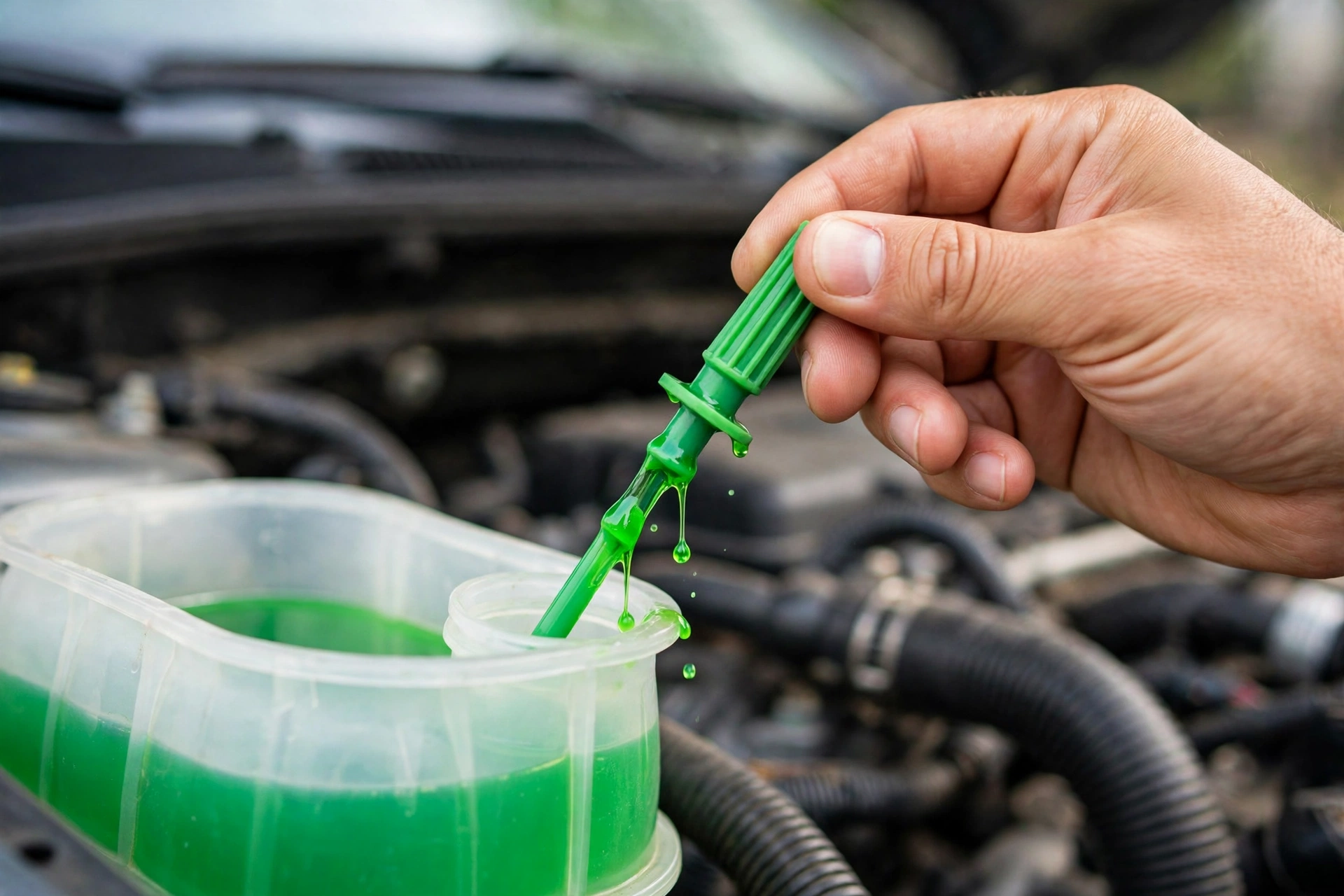
Brake fluid: do not drive it. This is the one fluid that can strand you or worse with no warning. The fluid itself is a cheap part, but bleeding air out of the lines is fiddly work, so this one is mostly a shop job for most people. See Brake Fluid Flush: When You Need One and Why It Matters for what the job involves.
Fuel: do not drive it. A fuel leak near a hot exhaust is a fire risk, and fuel evaporates into fumes that can ignite. Tow it. If the leak is at the tank, the fix ranges from a line repair to a pump replacement, and a pump job is a big-ticket repair on most cars because of the labor to reach it. Our guide on 2016-2025 Chevrolet Malibu, Fuel Pump Replacement shows what that job actually looks like, and the pattern is similar across makes.
Coolant: top up and drive gently to a shop, then park it. Low coolant leads to overheating, and overheating kills engines fast. A hose or clamp is a cheap-parts fix. A radiator or water pump is mid-ticket. A head gasket, which is what you get if you drive it hot, is big-ticket. See our Coolant Flush Guide and the 2018-2024 Chevrolet Equinox, Coolant Flush walkthrough for what the cooling system service involves.
Transmission fluid: top up and drive gently, soon. Low ATF causes slipping and hard shifts, and running a transmission low on fluid shortens its life. Check the level, top up only with the exact fluid your owner's manual specifies, and schedule the repair. This is mostly labor and fluid, not a cheap-parts job. More in Transmission Fluid: Why It Matters and When 'Lifetime' Fluid Actually Isn't and the 2017-2021 Acura MDX, Transmission Fluid Change walkthrough.
Engine oil: top up now, schedule the fix. A slow oil leak is the least urgent of the real leaks. Keep the level between the marks, because running low on oil is what actually destroys engines, not the drip itself. A drain plug washer or a valve cover gasket is cheap-parts territory. A rear main seal is mostly labor.
Power steering fluid: top up and drive carefully to a shop. Steering gets heavy and the pump whines when fluid runs low. Running the pump dry kills the pump, so top it up and get it fixed before a cheap seal job turns into a pump job.
AC condensation: nothing to do. Enjoy your working air conditioner.
FAQ
Is clear water under my car normal? Usually, yes. Air conditioners pull moisture out of the cabin air and drain it under the car, and tailpipes drip condensation on cool mornings. If it is clear, thin, odorless, and leaves no stain on white paper, it is water. Watch for color or smell, and if neither ever appears, forget about it.
Can I drive with a small oil leak? A slow seep, yes, as long as you check the dipstick weekly and keep the level topped up. What you cannot do is ignore it for months. Oil leaks do not fix themselves, and running even two quarts low causes real wear. If the spot grows or the level drops between checks, move it up the priority list.
Why does coolant smell sweet? Ethylene glycol, the base of most antifreeze, has a sweet taste and smell, which is exactly why it is dangerous to pets and kids. Propylene glycol coolants are marketed as less toxic, but treat every coolant spill the same: clean it up and keep animals away.
My car smells like gas but I see no puddle. Should I worry? Yes. Fuel evaporates fast, especially on a hot engine, so a fuel smell with no visible drip can still mean a weeping line or a loose connection. Check under the car after it sits overnight, look for damp spots on fuel lines, and if the smell persists, get it inspected. Do not write this one off.
The bottom line
Learn three things once, color, smell, and where the puddle sits, and you will never again pay a shop to tell you there is a wet spot under your car. Most leaks are a cheap part or a seep you can monitor, but brake fluid and fuel are the two that should change your plans the moment you ID them. Identify first, then decide how fast to act. And if the leak turns out to be coolant, the cooling system guides on EZ Car Fix will take you from diagnosis to the actual fix.
Safety: Informational DIY. EZ Car Fix is not a shop or dealer.


