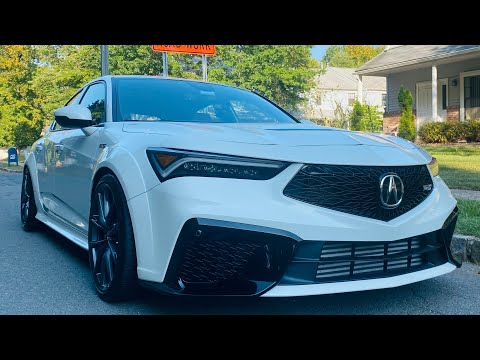
Quick answer: Check Engine Light / OBD2 Diagnosis on a 2023–2026 Acura Integra is rated Easy and takes about 15-30 minutes. You'll need 2 tools for this job, and parts cost about $25. This guide walks you through the full job step by step, including the mistakes to avoid.
| Part Name |
Part Number |
Price |
Buy |
| OBD2 scanner |
— |
$25.00 |
|
About prices: shown prices are typical retail averages and change frequently; cheaper alternatives may be available. Confirm the current price before buying.
💡 Pro tip: Order all parts at once to save on shipping
Step-by-Step Instructions
Follow these steps carefully
1
Confirm warning severity
A flashing light means a misfire that can overheat the catalytic converter — pull over and shut the engine off. If the light is steady, rule out a weak 12-volt battery or an unplugged mass airflow sensor; it's usually an emissions or sensor fault.
2
Connect the OBD-II scanner
With the ignition off, plug the scanner into the 16-pin connector under the driver's-side dash. Turn the ignition to ON with the engine off and confirm the tool talks to the powertrain module. A generic OBD-II reader covers engine codes on both engines.
🔧 Mechanic's note — Tom Becker
I've watched guys plug in the scanner with the engine running and wonder why it won't link. Key ON, engine OFF — and if it still won't talk, try the reader on another car before blaming the Integra.
3
Read and record codes
Log every code plus freeze-frame data. Known patterns: P0420 catalyst efficiency, P0442 and P0456 EVAP leaks, P0300–P0304 misfires (injectors on 1.5L), P0128, P050A, P0172, P0100 after intake work. Check recalls: the fuel pump impeller recall hit 2023-2024 models and causes stalling and hard starting.
4
Check the likely cause
Check each cause: misfires — flagged plug, coil, then 1.5L injectors; P050A — throttle-body carbon and idle relearn completion; P0420 — exhaust leaks, then steady downstream signal versus switching upstream; EVAP — fuel cap, filler neck seal; P0100 — plugged-in mass airflow sensor, intact wiring.
5
Repair, clear, and verify
Clear the codes after the fix and run the Honda drive cycle: cold start, brief idle, 50–60 mph cruise, tank 1/4–3/4 full, overnight cold soak. Rescan and verify the monitors complete. See a professional for a flashing-light misfire, recall-style stalling, or persistent misfires.
🔧 Mechanic's note — Ray Delgado
This is one of my go-to tricks: Don't clear codes before the repair is done. Clearing wipes the freeze-frame data with it, and you'll lose the RPM and temperature clues that show when the fault actually set.
All Done!
Test your repair before closing everything up. If something doesn't work right, double-check your steps.
⚠️ Common Mistakes to Avoid
- • Replacing parts based on a code without checking wiring, connectors, or vacuum leaks
- • Clearing codes before recording confirmed, pending, and permanent codes
- • Using a scanner that cannot communicate with the vehicle protocol
- • Treating a stored code as proof that the named sensor itself failed