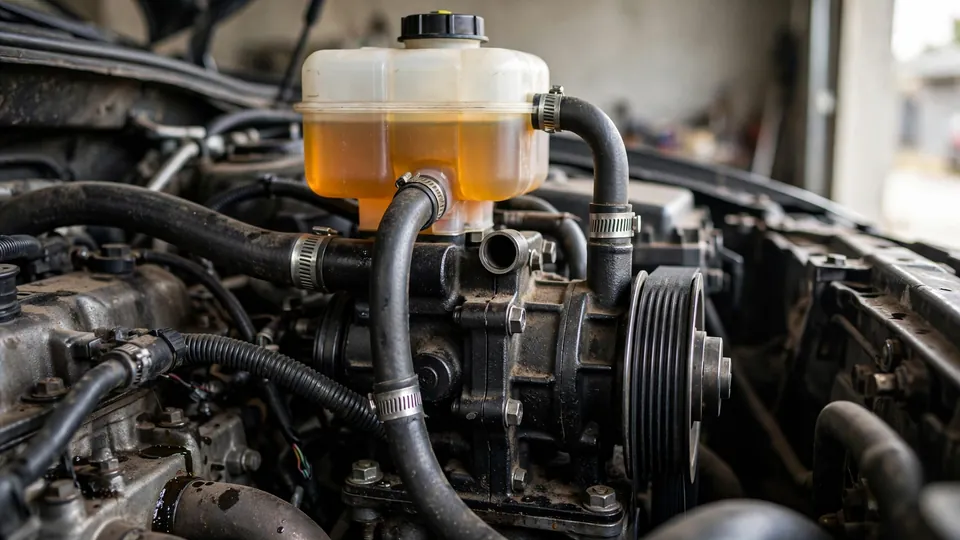
When Your Steering Gets Heavy
You turn the steering wheel and it's harder than usual. Or you hear whining when you turn. Or you see fluid dripping under your car.
That's power steering problems. Range from simple ($20 fluid top-off) to expensive ($1,000+ rack replacement).
Ignoring power steering issues leads to:
- Increasingly difficult steering
- Complete loss of assist (very heavy steering)
- Damage to expensive components
- Possible loss of steering control
I've had customers ignore whining noises until their pump seized, contaminating the entire system. Now instead of a $30 fix (fluid and hose), they need a $1,500 repair (pump, rack, flush).
Let me show you what to watch for and when it's serious.
How Power Steering Works
Two types:
Hydraulic Power Steering (Older Cars)
Components:
- Power steering pump (belt-driven)
- Fluid reservoir
- High-pressure hoses
- Steering rack or steering box
- Hydraulic fluid
How it works:
- Pump pressurizes fluid (1,000-1,500 PSI)
- When you turn wheel, valve opens
- Pressurized fluid assists your steering input
- Makes steering effortless
Advantages: Simple, reliable, strong assist
Disadvantages: Parasitic power loss (pump always running), can leak
Electric Power Steering (Modern Cars)
Components:
- Electric motor on steering column or rack
- Computer control
- Sensors
How it works:
- Sensors detect steering input
- Computer commands electric motor
- Motor assists steering
Advantages: More efficient, no fluid, less maintenance
Disadvantages: Expensive when it fails, requires programming
This guide focuses on hydraulic systems (common on older and many 2010s cars — most newer cars use electric steering)
Symptoms of Power Steering Problems

Whining Noise
High-pitched whine when turning:
- Most common symptom
- Pump struggling
Causes:
- Low fluid (check this first)
- Air in system
- Failing pump
- Restriction in system
Gets worse: As problem progresses
Heavy Steering
Steering requires more effort:
- Especially at low speeds (parking)
- Highway speeds less noticeable
Causes:
- Low/no fluid
- Failed pump
- Broken serpentine belt
- Failed rack
- Air in system
Progressive: Gets worse over time, or sudden (belt breaks)
Fluid Leaks
Red or brown fluid under car:
- Oily texture
- Often near front wheels
Common leak points:
- Pump (shaft seal)
- Hoses (age-related cracks)
- Rack end seals
- Rack pinion seal
- Reservoir
- Hose connections
Small leaks become big leaks - address promptly
Groaning When Turning
Low, groaning noise:
- Especially when turning wheel at full lock
- Pump or rack struggling
Often caused by:
- Low fluid
- Contaminated fluid
- Failing pump
- Internal rack wear
Steering Wheel Difficult to Turn When Cold
Heavy steering when first driving:
- Improves as it warms up
- Thick fluid when cold
Usually means:
- Wrong fluid used
- Fluid old and degraded
- Internal wear in pump or rack
Foaming or Bubbly Fluid
Look in reservoir:
- Fluid looks foamy, bubbly
- Air in system
Causes:
- Low fluid level (sucking air)
- Leak allowing air in
- Internal pump wear
Air causes:
- Whining
- Reduced assist
- Accelerated wear
Steering Wheel Shakes When Turning
Vibration through steering wheel:
- When turning at low speeds
- Pump or rack issue
Could also be:
- Failing pump
- Bad motor mounts (engine shaking)
- Worn rack bushings
Checking Power Steering Fluid
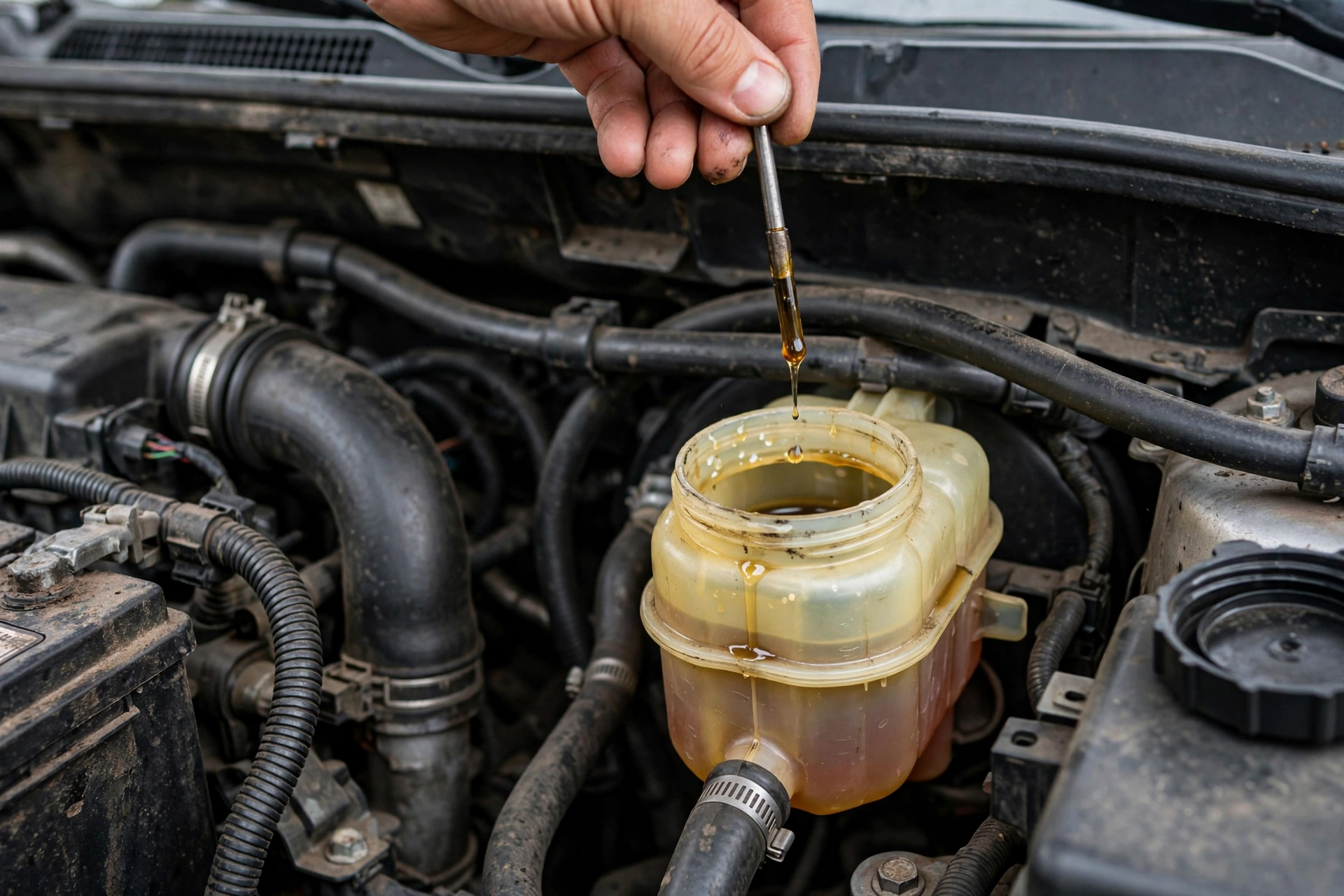
Do this first when you have any symptoms:
Process:
- Locate reservoir (usually on pump, driver's side of engine)
- Engine should be warm (or cold, check cap for instructions)
- Check level on dipstick or sight glass
- Should be between MIN and MAX marks
If low:
- Top off with correct fluid
- Find out why it's low (leak?)
- Monitor level
Fluid condition:
- Good: Translucent red or clear
- Contaminated: Brown, black, or smells burnt
- Foamy: Air in system
If contaminated: Need flush
Related guide: 2015-2023 Dodge Challenger - Add Power Steering Fluid — how to top off the reservoir correctly if your level is just low.
Types of Power Steering Fluid
Not all fluids are the same:
Generic power steering fluid: Most common, works in many cars
ATF (Automatic Transmission Fluid): Some cars use this
- Dexron III or Dexron VI most common
- Honda uses ATF
Manufacturer-specific: Some brands require special fluid
- GM vehicles: GM power steering fluid
- Honda: Genuine Honda PSF or ATF DW-1
- VW/Audi: Often ATF or Pentosin
Check your owner's manual - using wrong fluid causes problems
Don't mix types if possible
Common Power Steering Leaks
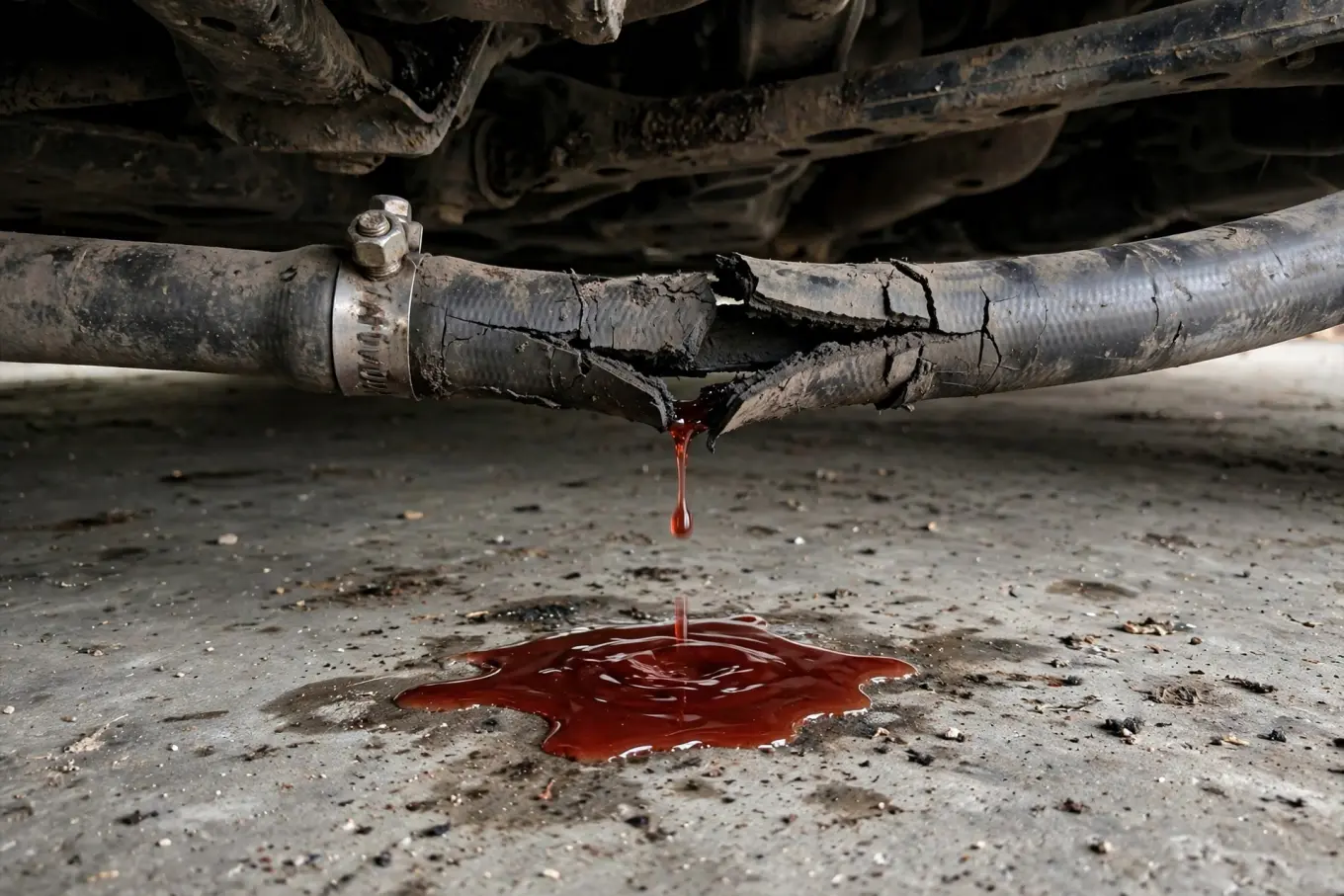
Pump Shaft Seal Leak
Leak location: Front of pump where shaft enters
Symptoms:
- Fluid drips from pump
- Pump area wet with fluid
Fix: Replace pump or rebuild (if rebuildable)
Cost: $200-500 installed
Rack and Pinion Seal Leaks
Leak location: Where rack shaft exits housing (by inner tie rod boots)
Symptoms:
- Fluid on inner tie rod boots
- Fluid dripping from steering rack area
- Visible when wheels turned fully
Fix: Replace rack or rebuild (if possible)
Cost: $500-1,500 installed
Most expensive common power steering leak
Pressure Hose Leak
Leak location: High-pressure hose from pump to rack
Symptoms:
- Visible leak at hose
- Often at crimp or connection
- Can burst (sudden loss of fluid)
Fix: Replace hose
Cost: $100-300 installed
Hoses age and crack - common on older cars
Return Hose Leak
Leak location: Low-pressure return hose
Symptoms:
- Leak at hose or connection
- Usually less dramatic than pressure hose
Fix: Replace hose
Cost: $50-150 installed
Often just needs hose clamp tightened
Reservoir Leak
Leak location: Fluid reservoir itself or connection
Fix: Replace reservoir or tighten connection
Cost: $50-200
Power Steering Pump Failure
Pump creates pressure to assist steering
Symptoms of failing pump:
- Whining, especially when cold
- Groaning when turning
- Hard steering
- Leaking from pump
- Foamy fluid
Causes of pump failure:
- Old age (100,000-150,000 miles typical)
- Running low on fluid (damages pump)
- Contaminated fluid
- Locked steering (turning against stops)
- Belt issues
Cost to replace:
- Pump: $100-300
- Labor: 1-2 hours ($100-200)
- Fluid: $20
- Total: $220-520
Sometimes can rebuild for less
Related guide: 2006-2010 Kia Optima - Power Steering Pump Replacement — the full pump swap procedure when a rebuild is not worth it.
Rack and Pinion Failure
The rack converts steering wheel rotation to left/right motion of wheels
Symptoms of failing rack:
- Fluid leaks (most common)
- Heavy steering
- Loose or wandering steering
- Clunking when turning
- Visible play in steering
Causes:
- Wear over time (150,000+ miles)
- Running dry (no fluid)
- Impact damage (hitting curbs)
- Contaminated fluid
Cost to replace:
- Rack: $300-800 (more for luxury/imports)
- Labor: 3-5 hours ($300-700)
- Alignment: $100
- Total: $700-1,600
Most expensive power steering repair
Some racks can be rebuilt for $200-400 less
DIY Power Steering Repairs
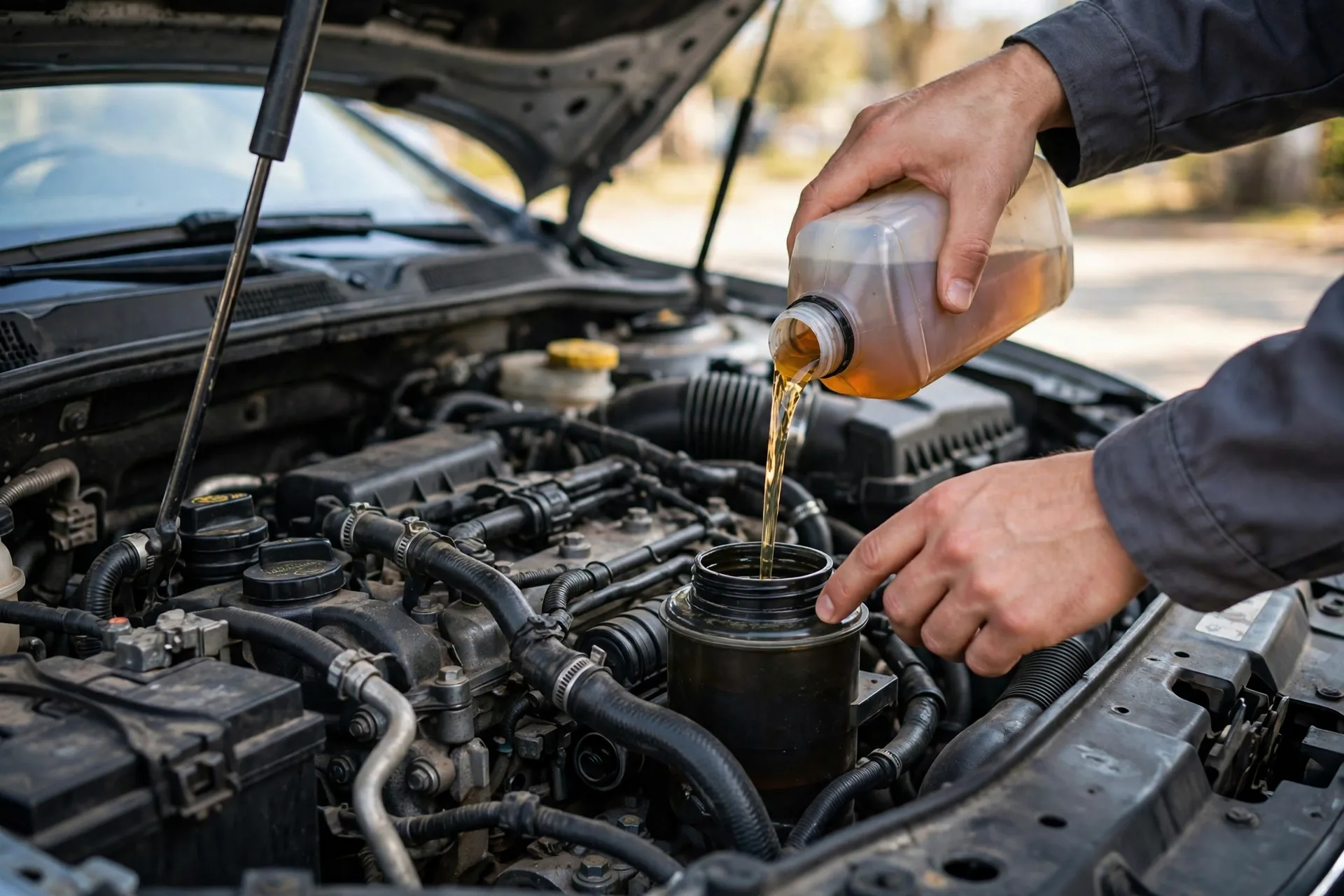
Fluid Top-Off (Easy)
Difficulty: 1/10
Process:
- Buy correct fluid
- Remove reservoir cap
- Pour to MAX line
- Replace cap
Cost: $10-20
Takes 2 minutes
Hose Replacement (Moderate)
Difficulty: 4/10
Process:
- Place drain pan below
- Remove old hose (fluid will drain)
- Install new hose
- Refill fluid
- Bleed air from system
- Check for leaks
Cost: $50-150 (parts only)
Takes 30-60 minutes
Pump Replacement (Moderate-Hard)
Difficulty: 6/10
Process:
- Remove serpentine belt
- Drain fluid
- Disconnect hoses
- Unbolt pump
- Install new pump
- Reconnect hoses
- Install belt
- Fill fluid
- Bleed system
- Check for leaks
Cost: $150-350 (pump + fluid)
Takes 2-3 hours
Requires some mechanical skill
Rack Replacement (Hard)
Difficulty: 8/10
Process:
- Lift car
- Remove wheels
- Disconnect tie rods
- Disconnect steering shaft
- Drain fluid
- Disconnect pressure lines
- Unbolt rack
- Remove rack
- Install new rack
- Reverse process
- Fill fluid
- Bleed system
- Get alignment
Cost: $400-900 (rack + parts + alignment)
Takes 4-6 hours
Requires experience, special tools
Most people have shop do this
Bleeding Power Steering System
After any repair, must bleed air:
Process:
- Fill reservoir to MAX
- Start engine
- Turn steering wheel lock to lock slowly (10-20 times)
- Watch fluid level, keep topped off
- Continue until no bubbles in fluid
- Check for leaks
Air in system causes:
- Whining
- Poor assist
- Foamy fluid
- Accelerated wear
Take your time - rushing leaves air in system
Power Steering Flush
When to flush:
- Every 50,000-100,000 miles (preventive)
- Fluid is dark brown or black
- Fluid smells burnt
- After component replacement
- Contamination suspected
Why flush:
- Removes degraded fluid
- Removes contaminants
- Extends component life
- Prevents damage
DIY flush:
- Siphon old fluid from reservoir
- Refill with new
- Start engine, turn wheel lock to lock
- Repeat until fluid runs clean
Shop flush:
- Machine exchanges fluid
- More thorough
- Cost: $100-150
Worth doing as preventive maintenance
Related guide: 2001-2006 Acura MDX - Power Steering Fluid Flush — the complete flush procedure to get contaminated fluid out of the system.
Electric Power Steering Issues
Modern cars with EPS:
Symptoms:
- Warning light
- Heavy steering (assist shuts off)
- Intermittent assist loss
- Steering pulls
Diagnosis requires:
- Scan tool
- Check for codes
- Often need dealer diagnosis
Common issues:
- Sensor failure ($100-400)
- Motor failure ($500-1,500)
- Control module ($300-800)
- Software update needed (free-$150)
EPS repairs are expensive but no fluid to leak
Preventing Power Steering Problems
How to extend life:
1. Check fluid regularly
- Every oil change
- Keep at proper level
- Top off if needed
2. Fix leaks promptly
- Small leaks become big leaks
- Running low damages pump and rack
3. Use correct fluid
- Check manual
- Don't mix incompatible fluids
4. Flush on schedule
- 50,000-100,000 miles
- Or when fluid looks dark
5. Don't turn against stops
- Don't hold wheel at full lock
- Stresses pump unnecessarily
6. Fix serpentine belt issues
- Slipping belt reduces assist
- Can damage pump
The Bottom Line
Power steering problems range from simple to expensive:
Simple/cheap fixes:
- Top off fluid: $10-20
- Replace hose: $100-300
- Flush system: $100-150
Moderate repairs:
- Replace pump: $220-520
Expensive repairs:
- Replace rack: $700-1,600
Symptoms to watch for:
- Whining noise
- Heavy steering
- Fluid leaks
- Groaning sounds
- Foamy fluid
Prevention:
- Check fluid regularly
- Fix leaks promptly
- Flush every 50-100k miles
- Use correct fluid
- Don't run low
Simple maintenance prevents expensive repairs.
Ignoring whining noise (just low fluid) leads to $1,500 rack replacement when pump fails and contaminates system.
Questions? Drop them below.
- Roberto Gil
Last reviewed: October 2026.


