
That Moment of Pure Panic
You turn the key. Nothing happens. Or you hear clicking. Or grinding. Your car is dead.
Now the guessing game begins: Battery? Starter? Alternator? Something else?
Most people immediately blame the starter and drop $300-600 on replacement. Then they discover it was actually a loose battery cable or bad connection.
I've diagnosed thousands of no-start conditions. Let me teach you how to figure out what's actually wrong before spending money.
What the Starter Actually Does
The starter is an electric motor that:
- Spins the engine to get combustion started
- Engages flywheel through a pinion gear (Bendix)
- Requires massive current (150-200 amps)
- Operates for seconds at a time (not continuous duty)
When you turn the key:
- Ignition switch sends signal
- Starter solenoid engages
- Solenoid pushes pinion gear into flywheel
- Motor spins
- Engine cranks
- Once running, starter disengages
Simple system, but lots can go wrong.
Symptoms and What They Mean
Different sounds/behaviors tell you different things:
Nothing at All - Dead Silence
You turn key, absolutely nothing happens:
- No clicks
- No lights
- No sounds whatsoever
Most likely causes:
- Completely dead battery (most common)
- Corroded battery terminals
- Broken/loose battery cable
- Ignition switch failure
- Neutral safety switch (won't start in wrong gear)
- Anti-theft system activated
NOT usually the starter - starter would at least click
Single Loud Click
You turn key, hear ONE solid CLICK:
Most likely causes:
- Weak battery (not enough power to crank)
- Bad battery terminals
- Failing starter solenoid
- Bad ground connection
What's happening: Solenoid engages (click) but not enough power to spin motor
Rapid Clicking (Click-Click-Click-Click)
You turn key, hear rapid clicking:
Most likely causes:
- Weak/dead battery (90% of the time)
- Bad battery connection
- Failing alternator (battery wasn't charged)
What's happening: Solenoid trying to engage repeatedly, but not enough voltage to hold it
NOT usually the starter motor itself
Engine Cranks Slowly
Engine turns over but very slowly (rrr... rrr... rrr...):
Most likely causes:
- Weak battery (worn out, cold weather)
- Bad alternator (battery wasn't charged)
- Starter motor wearing out
- Engine problem (seized, timing issue, too much resistance)
- Heavy oil in cold weather
Grinding Noise
You turn key, hear grinding metal-on-metal:
Most likely causes:
- Starter Bendix gear not engaging properly
- Flywheel teeth damaged
- Starter mounting loose
This is serious - continued operation can damage flywheel ($500-1500 repair)
Whirring/Spinning (No Engagement)
Starter spins but engine doesn't turn:
Most likely causes:
- Bendix gear failure (not extending)
- Stripped flywheel teeth
- Broken starter drive
Starter runs but isn't engaging the engine
Intermittent Starting
Sometimes starts fine, sometimes nothing:
Most likely causes:
- Loose battery connection
- Failing starter solenoid
- Bad ignition switch
- Worn starter brushes
- Starter relay failure
How to Diagnose Step-by-Step

Follow this process to find the real problem:
Step 1: Check the Obvious Stuff
Automatic transmission:
- Is it fully in Park?
- Try shifting through gears and back to Park
- Try starting in Neutral
Manual transmission:
- Clutch pedal fully depressed?
Steering wheel:
- Is it locked? (jiggle wheel while turning key)
Anti-theft:
- Is security light flashing?
- Try spare key if you have one
Sounds dumb, but I've seen all of these.
Step 2: Check Battery Voltage
You need: Multimeter ($15 from any hardware store)
Process:
- Set multimeter to 20V DC
- Touch red probe to positive (+) terminal
- Touch black probe to negative (-) terminal
- Read voltage
What voltage means:
12.6V or higher: Battery is fully charged ✓
12.4-12.6V: Battery is okay, probably not the issue
12.0-12.4V: Battery is weak, might not have enough cranking power
Under 12.0V: Battery is discharged, probably the problem
Under 11.5V: Battery is very dead or has bad cell
If battery is below 12.4V, charge or jump it and try starting.
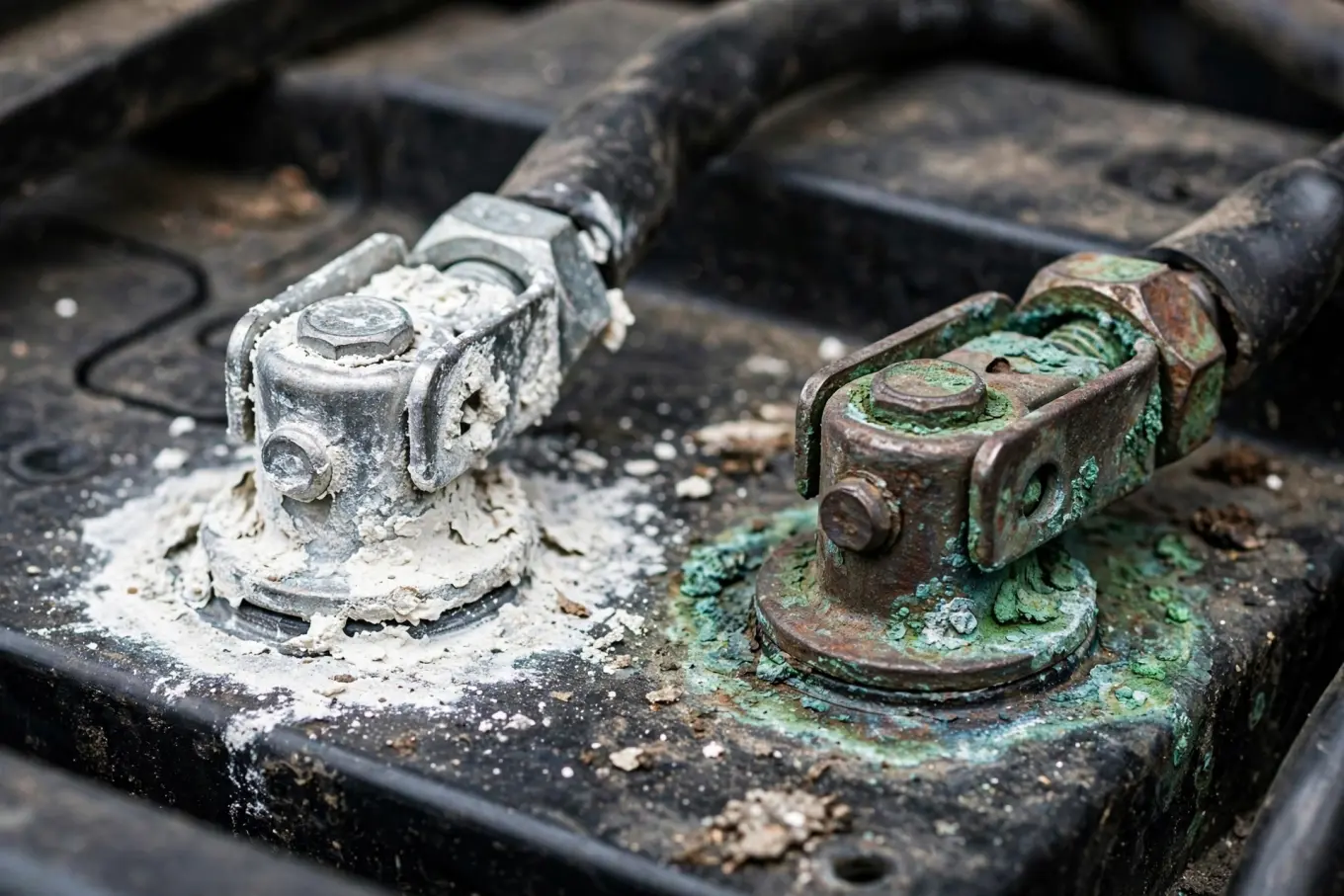
Step 3: Inspect Battery Terminals
Look for:
- White/blue/green corrosion
- Loose connections
- Cracked terminals
- Frayed cables
Fix:
- Disconnect negative (-) first, then positive (+)
- Clean terminals with baking soda and water
- Use wire brush
- Dry completely
- Reconnect (positive first, then negative)
- Tighten firmly
- Apply dielectric grease
I've fixed countless "starter problems" by cleaning battery terminals.
Step 4: Try Jump Starting
If you have jumper cables:
- Connect to known good car
- Let it charge for 5-10 minutes
- Try starting
If it starts:
- Battery was dead (charge it)
- Or alternator isn't charging (test it)
- Probably NOT the starter
If it still doesn't start:
- Might be starter
- Or bad connection
- Or other issue
Step 5: Test Starter Solenoid
You need: Screwdriver or wrench (metal)
WARNING: This is advanced and can be dangerous. Sparks will occur.
Process (if you're comfortable):
- Locate starter (usually near transmission bellhousing)
- Find two large terminals on starter solenoid
- With key in OFF position
- Bridge the two terminals with metal tool
- Sparks will occur
What happens:
Engine cranks: Solenoid is bad, starter motor is fine
Nothing happens: Starter motor is bad
Only do this if you know what you're doing. You're bypassing the solenoid.
Step 6: Check Ground Connection
Bad ground = no start
Check:
- Battery negative to engine block
- Engine block to chassis/body
- Connections tight?
- Corrosion present?
Fix: Clean and tighten ground connections
I've fixed many "bad starters" with a $0 ground wire cleaning.
Step 7: Test at the Starter
You need: Multimeter or test light
Process:
- Locate starter
- Find small wire on solenoid (trigger wire)
- Have helper turn key to START
- Test for voltage at trigger wire
Has voltage but starter doesn't engage: Starter is bad
No voltage: Problem is upstream (ignition switch, relay, neutral safety switch)
Related guide: 2006-2011 Honda Civic battery replacement — rule out the battery first, it is the culprit more often than the starter.
Common Causes That Aren't the Starter
Before replacing starter, rule these out:
Dead Battery
Most common reason for clicking
Causes:
- Old age (3-5 years is typical life)
- Leaving lights on
- Parasitic draw
- Alternator not charging
- Cold weather
Test: Voltage test, load test at parts store
Fix: Charge or replace battery ($100-200)
Bad Alternator
Battery keeps dying even after charging/jumping
Cause: Alternator not charging battery while driving
Test: Voltage test with engine running (should be 13.7-14.7V)
Fix: Replace alternator ($300-600)
Corroded Battery Terminals
Creates resistance, prevents current flow
Fix: Clean terminals ($0, 10 minutes)
This is SO common and SO easy to fix.
Bad Ignition Switch
Key turns but no power to starter
Symptoms: Intermittent, works sometimes
Test: Check for power at starter trigger wire when key turned
Fix: Replace ignition switch ($150-400)
Neutral Safety Switch
Prevents starting unless in Park/Neutral
When it fails: Car won't start even in Park
Test: Try starting in Neutral
Fix: Adjust or replace switch ($100-300)
Starter Relay/Fuse
Small relay or fuse controls starter
When it fails: Click or nothing
Test: Check fuse, swap relay with another if possible
Fix: Replace relay or fuse ($5-20)
Anti-Theft System
Immobilizer prevents starting
Symptoms: Security light flashing, everything electrical works but won't crank
Fix: May need dealer scan tool or relearn procedure
Seized Engine
Engine won't turn over at all
Causes: No oil, overheating, major internal failure
Test: Try turning crankshaft by hand (with breaker bar on crank pulley bolt)
Fix: Probably need new engine ($3,000-8,000+)
Related guide: 2017-2021 Acura MDX alternator replacement — if the battery tests good but keeps dying, the alternator is your next suspect.
When It Actually IS the Starter

Real starter problems:
Worn Brushes
Inside motor: Carbon brushes wear down over time
Symptoms: Intermittent starting, works when tapped
Lifespan: 80,000-150,000 miles usually
Solenoid Failure
Contacts wear out inside solenoid
Symptoms: Single click, no crank
Can sometimes be replaced separately
Bendix Drive Failure
Gear that engages flywheel
Symptoms: Grinding, whirring without engagement
Cause: Wear, damaged teeth
Burnt Armature
Motor overheated from excessive cranking
Symptoms: Starter doesn't spin or spins weakly
Cause: Extended cranking attempts, flood starting
DIY Starter Replacement

Difficulty: 3/10 to 9/10 (depends HEAVILY on car)
Some cars: Starter is right there, 2 bolts, 30 minutes
Other cars: Starter is buried, requires removing exhaust, transmission mounts, or other components. 4+ hours.
General process:
- Disconnect battery (negative terminal)
- Lift and support vehicle
- Locate starter
- Disconnect wiring (photo first)
- Remove mounting bolts (usually 2-3)
- Remove starter
- Install new starter
- Torque bolts to spec
- Reconnect wiring
- Reconnect battery
- Test
Tips:
- Keep track of shims if present (affects engagement)
- Don't overtighten bolts (can crack starter housing)
- Make sure all wires are tight
- Test immediately after installation
When to DIY:
- Starter easily accessible
- You have tools and jack stands
- You're comfortable with basic mechanical work
When to pay shop:
- Starter requires major disassembly to access
- You lack tools or space
- Not confident in your skills
Cost Breakdown
Parts:
- Remanufactured starter: $80-200
- New starter: $150-400
- OEM starter: $300-600+
Labor:
- Easy access: 0.5-1 hour ($50-100)
- Average: 1-2 hours ($100-200)
- Difficult: 3-5 hours ($300-500)
Total typical cost: $200-600
Some cars are expensive:
- Certain Subarus: Starter under engine
- Some Audis: Front of car disassembly
- Some Cadillacs: $1,000+ labor
Check forum for your car before assuming it's easy.
Preventing Starter Failure
How to extend starter life:
- Don't crank excessively - if engine doesn't start in 10 seconds, stop and diagnose
- Keep battery charged - weak battery makes starter work harder
- Fix battery connections - corrosion creates resistance
- Let starter cool - don't crank continuously, wait 30 seconds between attempts
- Maintain engine - engine that's hard to turn over wears starter faster
Average starter lifespan: 80,000-150,000 miles
Some last 200,000+, some fail at 50,000 - depends on quality and use.
The "Tap the Starter" Trick
Old mechanic's trick:
If starter won't engage:
- Have someone turn key
- Tap starter housing with hammer or wrench
- Sometimes it starts
Why this works: Worn brushes not making contact, tapping can reseat them temporarily
Is it a fix? No, starter is failing. But might get you home or to a shop.
Shop Diagnosis
Good shop will:
- Test battery first
- Test alternator
- Check connections
- Test starter draw
- Test at starter
- Give you honest answer
Red flags:
- "You need a starter" without testing
- Not checking battery/alternator first
- Charging diagnostic fee then not crediting it to repair
- Pushing for immediate replacement without explaining why
Diagnostic should be $50-100 and should identify actual problem
The Bottom Line
When car won't start:
- Check battery first - voltage test, clean terminals
- Try jump starting - if it works, battery or alternator issue
- Listen to the sound - tells you a lot about what's wrong
- Check connections - corrosion and looseness cause problems
- Test before replacing - don't guess
Most no-start problems are NOT the starter. They're:
- Dead/weak battery (most common)
- Bad battery connections
- Bad alternator
- Other electrical issues
- And only sometimes actually the starter
Before spending $400 on starter:
- Test battery
- Clean terminals
- Test alternator
- Check connections
Starter problems are real, but they're blamed for everything. Diagnose properly first.
Questions? Drop them below.
- Tom Becker, Senior Technician
Last reviewed: October 2026.


