Quick answer: Water Pump Replacement on a 2009–2016 Audi A4 is rated Advanced and takes about 2-3 hours. You'll need 11 tools for this job, and parts cost about $180. This guide walks you through the full job step by step, including the mistakes to avoid.
| Part Name |
Part Number |
Price |
Buy |
| Water Pump Assembly |
131-2460 |
$150.00 |
|
| Coolant |
G013A8J1G1 |
$20.00 |
|
| Water Pump Gasket |
06H121011A |
$10.00 |
|
About prices: shown prices are typical retail averages and change frequently; cheaper alternatives may be available. Confirm the current price before buying.
💡 Pro tip: Order all parts at once to save on shipping
Step-by-Step Instructions
Follow these steps carefully
1
Prepare (plastic housing — upgrade!)
The 2009–2016 Audi A4 B8 (2.0T) water pump replacement: NOTORIOUS plastic (composite) water pump housing — cracks/deforms near the block-side mounts, seal swells. Driven by its OWN small belt (not the timing chain, not the serpentine). OE: 06H121026DD (kit), union 06H121131C. You'll need: new water pump (STRONGLY consider the ALUMINUM upgrade — URO Premium 06H121131CPRM — the plastic is a repeat failure), G12/G13 coolant (ONLY — no green, no Dex-Cool), basic sockets, drain pan, torque wrench. The auxiliary electric pump (V51) has a safety recall on B8.5 (2013-2016) — check with a dealer. No factory replacement schedule (60-100k is aftermarket guidance only). The plastic housing is the A4's defining failure — the aluminum upgrade is the smart money.
🔧 Mechanic's note — Tom Becker
I prep the A4 water pump job knowing the housing is plastic — I torque every bolt to spec because plastic threads forgive nothing. I snapped a housing ear once going by feel, and I still remember the sound.
2
Drain, Remove the Small Belt
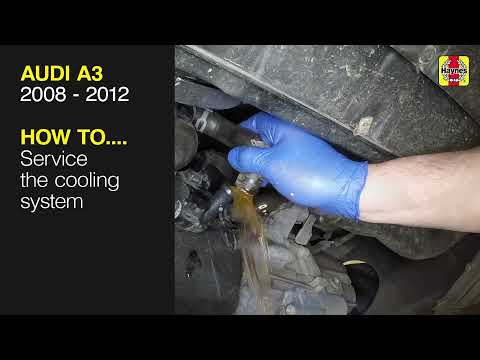
Drain the G12/G13 coolant. Remove the small pump belt. Inspect the old plastic housing for cracks/deformation at the block-side mounts (the notorious failure). If you're here for a leak, the plastic housing is almost certainly the cause.
🔧 Mechanic's note — Tom Becker
I drain the A4 and remove the small belt — for the small water-pump fasteners I use one hand on the ratchet. I have learned my calibrated elbow lies about what snug means, and one hand keeps me honest.
3
Remove the Plastic Pump
Remove the water pump. The B8's pump is a composite (plastic) unit — inspect for cracks, warping, seal swelling. The block-side mounts are the crack point. Clean the mating surface on the block. If the auxiliary electric pump (V51) is leaking, check the recall (B8.5 2013-2016) — it may be a dealer fix. The plastic housing's failure mode is the reason for this job — don't install another plastic unit if you can avoid it.
4
Install Aluminum Pump (recommended!)
Install the new water pump — ALUMINUM (URO Premium or equivalent) is strongly recommended over another plastic unit. Use the OE union 06H121131C if needed. Torque to spec (service data).
5
Refill G12/G13
Refill with G12/G13 coolant ONLY — the B8 2.0T uses VW/Audi-spec coolant. Do NOT use green, Dex-Cool, or Asian — mixing causes sludge. Fill the expansion tank. Bleed: run to operating temp with heat on max, let the thermostat open, cool, recheck.
🔧 Mechanic's note — Tom Becker
I've learned never to mix coolant types — they gel up and clog the heater core. When in doubt, drain it all and start fresh with the right stuff.
6
Verify, Check Recall, Recheck
Start the engine — check for leaks at the pump. The gauge should climb to normal. Verify the small belt is tracking. The NOTORIOUS plastic housing (upgrade to aluminum), the dedicated small belt (not timing/serpentine), G12/G13 only, and the V51 recall check are the 2009-2016 A4 B8 2.0T's defining specs. If you installed another plastic pump, expect to do this again — the aluminum is the fix. Check the V51 auxiliary pump recall status with a dealer for 2013-2016.
All Done!
Test your repair before closing everything up. If something doesn't work right, double-check your steps.
⚠️ Common Mistakes to Avoid
- • Not properly draining the coolant before starting the repair
- • Failing to replace the timing belt during the water pump replacement
- • Over-tightening bolts, leading to gasket damage
- • Neglecting to clean the engine block surface before installing the new pump
- • Not properly tensioning the timing belt after installation