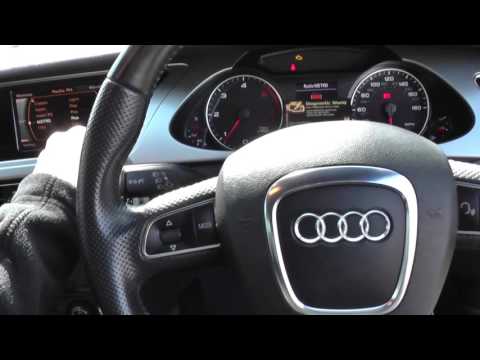
Quick answer: Check Engine Light / OBD2 Diagnosis on a 2018–2024 Audi Q5 is rated Easy and takes about 30–45 minutes. You'll need 2 tools for this job, and parts cost about $25. This guide walks you through the full job step by step, including the mistakes to avoid.
| Part Name |
Part Number |
Price |
Buy |
| OBD2 scanner |
— |
$25.00 |
|
About prices: shown prices are typical retail averages and change frequently; cheaper alternatives may be available. Confirm the current price before buying.
💡 Pro tip: Order all parts at once to save on shipping
Step-by-Step Instructions
Follow these steps carefully
1
Let the light tell you how urgent this is
Start the Q5. Steady light = stored fault; drive gently while planning the diagnosis. Flashing = active misfire: pull over and kill the engine — it overheats the catalytic converter. Stop driving immediately for a red oil-pressure lamp, a coolant-temperature warning, or violent shaking.
2
Find the port under the driver-side dash
The FY (2018–2024) Q5's 16-pin OBD2 connector sits under the driver-side dashboard, left of the steering column — the standard VAG location. The trapezoid plug faces down, no tools needed to reach it. Wear a headlamp, keeping both hands free to seat the plug firmly.
3
Connect a generic scanner and read everything
Ignition OFF, push the scanner connector fully home — VAG ports can feel seated when they aren't. Ignition ON, engine OFF, then “Read Codes.” Log each code exactly as displayed with its status (stored/pending/permanent) plus freeze-frame data; it separates intermittent ghosts from real faults.
4
Match code families to the 2.0T’s habits
EA888 repeat offenders: P0171 lean idle = failed PCV diaphragm. P00B7 = thermostat or low coolant. P0300-series = coils (swap-test), then plugs, then intake-valve carbon. P0440 = EVAP (check fuel cap). P0420 = cat efficiency (check exhaust leaks first).
5
Do the Q5-specific free diagnostics
Three free checks: (1) PCV — idling, loosen oil cap; strong suction = torn diaphragm. (2) Coil swap — move it to another cylinder, clear, drive; code follows = bad coil. (3) Coolant — check tank cold; slow drop, no puddle = weeping thermostat housing.
🔧 Mechanic's note — Ray Delgado
I do the PCV oil-cap test on every EA888 misfire complaint before touching a coil. If the cap fights you with strong suction, that torn diaphragm is your lean code — I've seen people buy four coils when a $60 PCV valve was the fix.
6
Clear after repair, verify with real driving
Erase only after repair — early clearing kills freeze-frame evidence. Erase with ignition on, engine off, then drive 20–30 minutes of stop-and-go and highway. Monitors need several warm-up/cool-down cycles to report ready. Dark light = fix held; same code back = re-test from step 4.
7
Know the jobs that belong at a shop
See Audi/VW specialist for: flashing CEL; misfire that won't follow a coil swap (carbon needs walnut blasting, injectors need flow testing); unlocated coolant loss; P0420 on sealed exhaust; or limp mode with EPC light. Codes across unrelated systems = weak 12V battery logging phantom faults.
🔧 Mechanic's note — Tom Becker
The weak-battery phantom-fault pattern has burned me before — I'd clear codes and chase sensors for hours. Now I test the 12V battery first whenever I see codes from unrelated systems.
All Done!
Test your repair before closing everything up. If something doesn't work right, double-check your steps.
⚠️ Common Mistakes to Avoid
- • Replacing the PCV valve for a lean code without doing the oil-cap suction test first — it's a 30-second confirmation
- • Throwing a new MAF sensor at a P0171 when the actual leak is the PCV diaphragm or a cracked breather hose
- • Erasing a thermostat code and ignoring a slowly dropping coolant level — the housing weep only gets worse