Quick answer: Engine Oil & Filter Change on a 2014–2019 Cadillac CTS is rated Moderate and takes about 30-60 minutes. You'll need 3 tools for this job, and parts cost about $57. This guide walks you through the full job step by step, including the mistakes to avoid.
Oil spec
2.0L I4
Capacity 5.0 qt with filter Viscosity 5W-30 (alt: 0W-30) Spec dexos1
| Part Name |
Part Number |
Price |
Buy |
| Engine Oil (5W-30) |
— |
$45.00 |
|
| Correct engine oil filter and drain-plug washer for 2014-2019 Cadillac CTS |
— |
$12.00 |
|
About prices: shown prices are typical retail averages and change frequently; cheaper alternatives may be available. Confirm the current price before buying.
💡 Pro tip: Order all parts at once to save on shipping
Step-by-Step Instructions
Follow these steps carefully
1
Confirm your CTS's engine, drivetrain, and oil spec
3.6L LGX V6 takes 6 quarts (RWD) or 6.5 quarts (AWD) of 5W-30 dexos1 Gen 3; 2.0T takes 5.0 (RWD) or 6.0 (AWD) quarts. Top-of-engine cartridge filter. Confirm your drivetrain. Park level, brake set, wheels chocked.
2
Locate the top cartridge housing and drain plug
Warm and shut off. Open the hood and find the cartridge housing cap on top — a 15/16-inch socket fits it. Get underneath, slide the pan under the oil-pan plug (remove any undertray), and pry the fragile engine-cover clips gently.
3
Drain the oil and replace the cartridge
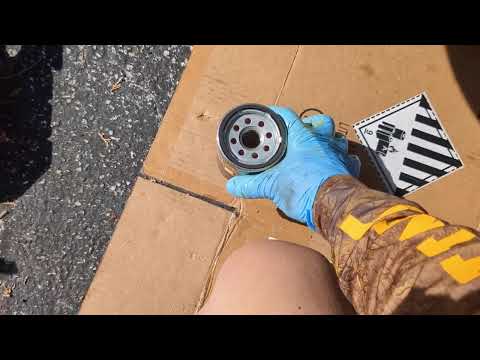
Drain; refit the plug with a fresh washer at 18 ft-lbs. Open the housing cap with the 15/16-inch socket, swap the element, fit pre-lubed housing O-rings. Torque the cap per the manual — non-dexos oil endangers the LGX timing chain.
4
Refill and check the dipstick
Double-check the plug and cap, then pour in 5W-30 dexos1 Gen 3: 6 quarts (3.6 RWD) or 6.5 (3.6 AWD). Wait five minutes and check the dipstick — add small splashes to reach the full mark, never above it.
5
Check for leaks and reset the oil-life monitor
Run 30 seconds and check the plug and housing cap for leaks. Shut off, wait two minutes, and recheck the dipstick. Reset oil-life monitor through the cluster, and recheck underneath after driving — pinched housing O-rings are the leak source.
🔧 Mechanic's note — Tom Becker
Pinched O-rings are the classic leak on these top housings. I always look underneath after the first drive — catching it then is a five-minute re-seat, not a tow.
All Done!
Test your repair before closing everything up. If something doesn't work right, double-check your steps.
⚠️ Common Mistakes to Avoid
- • Using the wrong viscosity, capacity, or filter
- • Working under a vehicle supported only by a jack
- • Reusing a crushed drain-plug washer or leaving the old filter gasket stuck
- • Over-tightening the filter or drain plug
- • Starting the engine without first verifying oil was added