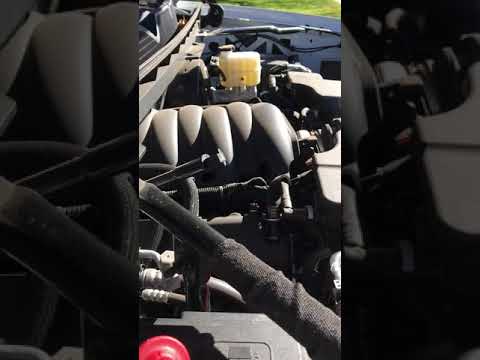
Quick answer: Transmission Fluid on a 2019–2024 Chevrolet Silverado 1500 is rated Moderate and takes about 1.5–2.5 hours. You'll need 6 tools for this job, and parts cost about $35. This guide walks you through the full job step by step, including the mistakes to avoid.
| Part Name |
Part Number |
Price |
Buy |
| Transmission fluid (exact spec) |
— |
$35.00 |
|
| Transmission filter (if pan-off) Optional |
— |
$25.00 |
|
| Transmission pan gasket |
— |
— |
|
About prices: shown prices are typical retail averages and change frequently; cheaper alternatives may be available. Confirm the current price before buying.
💡 Pro tip: Order all parts at once to save on shipping
Step-by-Step Instructions
Follow these steps carefully
1
Identify which automatic your Silverado has
The 2019–2024 Silverado 1500 used two different automatics: the 2019 trucks mostly carry the 8-speed 8L90, while 2020-and-newer trucks (and every 3.0L Duramax) run the 10-speed 10L80. Both are sealed units with no dipstick — the fluid level is set through plugs, not checked on a stick — so the procedure below ends with a temperature-based level check. Check your RPO sticker or owner's manual to confirm which transmission you have, because the fill-port location differs between the two boxes.
2
Gather fluid, a pump, and a level setup
Buy only the automatic transmission fluid your owner's manual specifies for your truck's transmission — the wrong fluid will ruin shift quality and can damage the unit, and fluid specs are never something to guess at. You will also need a fluid transfer pump or long-neck squeeze bottle to fill from below, a large drain pan, nitrile gloves, and safety glasses. The truck must sit perfectly level for the final check, so use a lift or four jack stands on flat concrete — a tilted truck gives a false level reading.
3
Warm the fluid and open the fill port first
Drive the truck until the transmission is up to operating temperature — warm fluid drains far more completely. With the truck level and secure, crawl under and locate the fill port on the side of the transmission case; remove its plug now, before draining anything. This is the golden rule of sealed transmissions: if the fill port won't open, you stop, because a drained transmission you cannot refill is a tow-truck situation.
🔧 Mechanic's note — Ray Delgado
I've learned: open the fill plug before you drain a single drop — golden rule of sealed transmissions. Discovering a seized fill port after the pan is empty turns a Saturday fluid change into a tow-truck Monday.
4
Drain by dropping the pan
Many factory pans on these transmissions have no separate drain plug, so the standard service is to drop the pan: place your large drain pan underneath, loosen the pan bolts gradually, and lower the rear of the pan first so fluid pours in a controlled stream instead of splashing everywhere. Expect several quarts. Once the pan is down, pour the remaining fluid into your drain container and inspect the pan — wipe it clean, check the magnet for an unusual amount of metal debris, and note the filter if your manual calls for replacing it at this mileage.
5
Reinstall the pan and pump in fresh fluid
Fit a new pan gasket (never reuse a crushed one), reinstall the pan, and tighten the bolts evenly in a crisscross pattern so the gasket seals without distortion. Then pump fresh fluid in through the side fill port until fluid begins to run back out of the port. Reinstall the fill plug for the moment. At this stage the transmission is roughly filled — the precise level comes next, with the engine running.
6
Set the level hot, running, and level
This is the step that makes or breaks the job. With the truck still perfectly level, start the engine and let the transmission fluid reach 131–149°F — read it with a scan tool through the OBD-II port, which is how GM intends this check. With your foot firmly on the brake, shift slowly through each gear position and back to Park to circulate fluid. Then, engine still running, remove the level-check/inspection plug on the bottom of the transmission pan and let excess fluid drain until it slows to a thin, steady trickle. Reinstall the plug. Too much or too little fluid causes harsh shifts and overheating.
🔧 Mechanic's note — Tom Becker
I've found that that 131–149°F window isn't a suggestion — fluid expands with heat, and checking cold or hot sets the level wrong. Read it through the OBD-II port with a scan tool like GM does.
7
Road-test and recheck for leaks
Take the truck for a short drive with several gentle stops and starts so the transmission works through its gears, then park on level ground and look underneath for any seepage at the pan rail, fill port, and level plug. If anything weeps, correct it now — transmission fluid on a hot exhaust is a fire risk. Wipe the area clean, and take the old fluid to a parts store or municipal collection point; it must never go down a drain or into the trash.
All Done!
Test your repair before closing everything up. If something doesn't work right, double-check your steps.
⚠️ Common Mistakes to Avoid
- • Draining the fluid before confirming the side fill port will open
- • Setting the level with the truck tilted or the engine off — both give a false reading
- • Using a generic Dexron fluid instead of the exact spec your transmission requires