Quick answer: 12V Battery Replacement on a 2019–2023 Hyundai Santa Fe is rated Easy and takes about 30-90 minutes. You'll need 2 tools for this job, and parts cost about $180. This guide walks you through the full job step by step, including the mistakes to avoid.
| Part Name |
Part Number |
Price |
Buy |
| Replacement 12-volt battery for 2019-2023 Hyundai Santa Fe; verify group size, CCA, terminal layout, and VIN fitment |
— |
$180.00 |
|
| Anti-corrosion terminal protectant or felt washers (optional) Optional |
— |
$8.00 |
|
About prices: shown prices are typical retail averages and change frequently; cheaper alternatives may be available. Confirm the current price before buying.
💡 Pro tip: Order all parts at once to save on shipping
Step-by-Step Instructions
Follow these steps carefully
1
Verify battery fitment and charging symptoms
Confirm the job on your 2019-2023 Hyundai Santa Fe and check which engine you have, because the battery spec splits by year. Do not downgrade to flooded. Check for a charging warning, a swollen case, or white corrosion on the terminals before replacing.
🔧 Mechanic's note — Tom Becker
I read your old battery's label before you buy — 2021–2023 2.5L models take a Group H7 AGM, but 2019–2020 2.4L cars can be 124R flooded or H7 depending on trim. And if you have idle stop-and-go, it's AGM, no downgrade.
2
Make the vehicle safe and preserve settings when permitted
Pop the hood - the battery sits in the engine bay on the driver's side in a plastic tray with a hold-down bracket. Keep the key fob away from the vehicle so the modules go to sleep. Wear gloves and eye protection.
3
Disconnect the old battery
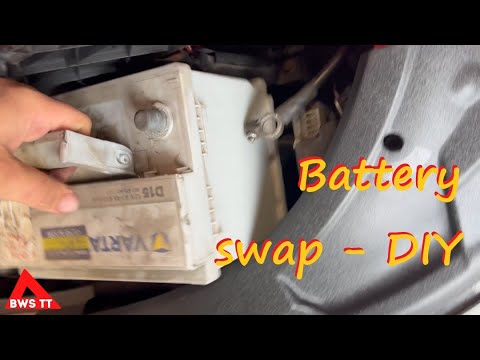
Remove the hold-down bracket (usually a single bolt at the base of the battery) and any insulating cover. Disconnect the negative cable first, then the positive, loosening the 10mm terminal nuts without twisting the posts or shorting your wrench against the fender or strut tower.
🔧 Mechanic's note — Ray Delgado
From my bay, unplug that sensor module on the negative cable gently — don't force the cable off around it. Those little AGM sensor modules crack easily, and then you've got a parts run mid-job.
4
Compare and install the replacement
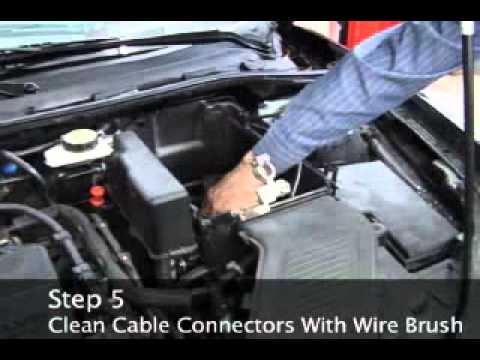
Set the new battery next to the old one and compare. Clean the tray and brush any corrosion off the cable terminals. Wiggle each terminal to confirm it is tight.
5
Reset and verify operation
Start the Santa Fe and confirm the charging voltage and that no battery or charging warning lights stay on. Let it idle a few minutes so the ECM can re-learn idle after the power loss, and reset the clock and any driver preferences. The idle stop-and-go system may take a drive cycle or two to resume normal operation with the new AGM battery. If the battery feels hot, smells of sulfur, or the charging warning remains lit, stop and have the alternator and charging system tested - do not keep driving on a fault.
All Done!
Test your repair before closing everything up. If something doesn't work right, double-check your steps.
⚠️ Common Mistakes to Avoid
- • Buying by appearance instead of group size, CCA, polarity, and hold-down fit
- • Shorting the positive terminal to the body with a metal tool
- • Lifting the battery by damaged terminals or leaving it unsecured
- • Skipping battery registration, window/clock resets, or charging-system checks when required
- • Assuming a new battery fixes a parasitic draw or charging fault