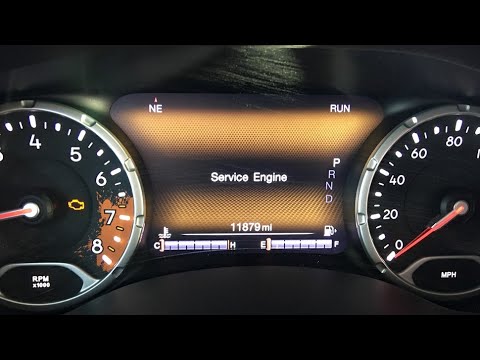
Quick answer: Battery Replacement on a 2015–2023 Jeep Renegade is rated Easy and takes about 30-90 minutes. You'll need 2 tools for this job, and parts cost about $180. This guide walks you through the full job step by step, including the mistakes to avoid.
| Part Name |
Part Number |
Price |
Buy |
| Replacement 12-volt battery for 2015-2023 Jeep Renegade; verify group size, CCA, terminal layout, and VIN fitment |
— |
$180.00 |
|
| Anti-corrosion terminal protectant or felt washers (optional) Optional |
— |
$8.00 |
|
About prices: shown prices are typical retail averages and change frequently; cheaper alternatives may be available. Confirm the current price before buying.
💡 Pro tip: Order all parts at once to save on shipping
Step-by-Step Instructions
Follow these steps carefully
1
Confirm the AGM battery size and symptoms
The 2015-2023 Jeep Renegade uses a 12-volt AGM battery in the engine bay, sized by engine: the 1.4L turbo takes a Group 47/H5 (around 500 CCA), while the 1.8L and 2.4L engines take a Group 48/H6 (around 600 CCA). AGM construction is required, not optional, because the Renegade's stop-start system and electronics depend on it. Read the label on your existing battery before buying and match group size, CCA, and AGM type. Confirm the battery is the true problem first: slow cranking, a charging warning, stop-start faults, or a battery older than four years point to replacement, while a battery that drains overnight may signal a parasitic draw instead.
🔧 Mechanic's note — Tom Becker
I've learned this is the part people get wrong: I confirm the battery is the true problem first — slow cranking, a charging warning, or a battery older than four years point to replacement; a battery that drains overnight may signal a parasitic draw.
2
Park and power down
Park the Renegade on level ground, shift to Park, set the parking brake, and switch the ignition fully off. Remove the key fob from the vehicle so modules can go to sleep. Open the hood and secure it. Wear safety glasses and gloves, and keep metal tools and jewelry away from the battery posts.
3
Disconnect the battery under the junction block
Disconnect the negative (-) cable first, then the positive (+) cable. Remove the hold-down bracket bolts securing the battery case and lift the battery straight out of the tight engine bay, keeping it upright and noting exactly how it was oriented. Set the new battery into the tray and secure the hold-down bracket.
4
Reconnect the cables
Reconnect the positive (+) cable first, then the negative (-), pressing each clamp firmly onto its post and tightening the nuts until the cables cannot twist.
5
Verify charging and stop-start operation
Start the Renegade and confirm there are no warning lights. Check charging voltage around 13.5 to 14.8 volts while running. Stop and recheck your work if the battery feels hot or the charging warning stays lit, and recycle the old battery for the core refund.
🔧 Mechanic's note — Ray Delgado
I've learned the hard way — Don't learn this the expensive way: Stop and recheck your work if the battery feels hot or the charging warning stays lit, and recycle the old battery for the core refund.
All Done!
Test your repair before closing everything up. If something doesn't work right, double-check your steps.
⚠️ Common Mistakes to Avoid
- • Buying by appearance instead of group size, CCA, polarity, and hold-down fit
- • Shorting the positive terminal to the body with a metal tool
- • Lifting the battery by damaged terminals or leaving it unsecured
- • Skipping battery registration, window/clock resets, or charging-system checks when required
- • Assuming a new battery fixes a parasitic draw or charging fault