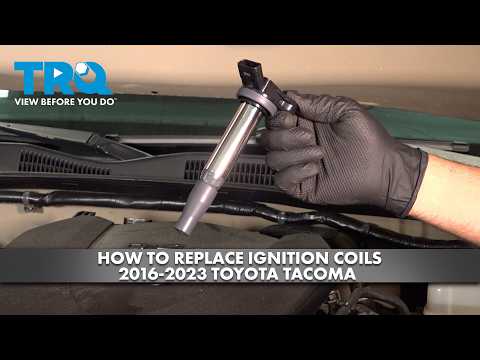
Quick answer: Spark Plug Replacement on a 2016–2023 Toyota Tacoma is rated Moderate and takes about 2–3 hours. You'll need 7 tools for this job, and parts cost about $41. This guide walks you through the full job step by step, including the mistakes to avoid.
| Part Name |
Part Number |
Price |
Buy |
| Spark plugs (correct heat range) |
— |
$35.00 |
|
| Dielectric grease |
— |
$6.00 |
|
About prices: shown prices are typical retail averages and change frequently; cheaper alternatives may be available. Confirm the current price before buying.
💡 Pro tip: Order all parts at once to save on shipping
Step-by-Step Instructions
Follow these steps carefully
1
Identify your engine and know the intake-manifold shortcut
The 2016–2023 Tacoma sold with two engines: the 3.5L V6 (2GR-FKS) and the 2.7L four-cylinder (2TR-FE). Toyota's factory repair manual tells you to remove the intake manifold to reach the driver's-side plugs on the 3.5L V6, but owners have done this job for years without removing it — the coils can be wiggled out past the manifold once the brackets and hoses are moved aside. You save an hour and avoid disturbing intake gaskets. The 2.7L four-cylinder is simpler: four coil-on-plug coils right on top with nothing in the way.
🔧 Mechanic's note — Tom Becker
I've done the V6 both ways — the coil-snake shortcut past the manifold is real and saves about an hour. But the first time through, budget the whole afternoon anyway; rushing past the manifold is how brackets get bent.
2
Work cold and clear the passenger side first
Let the engine go completely cold. Pop off the plastic engine cover — it lifts straight off its mounts. On the 3.5L V6, start with the passenger-side bank: remove the air intake tube and resonator box between the airbox and throttle body (a few hose clamps and one 10mm bolt) to open up the working space. Disconnect the coil connectors one bank at a time and remove the 10mm coil hold-down bolts, pulling each coil up and out. Keep the coils in order on a clean rag.
3
Free the driver's-side coils past the intake manifold
On the driver's side, remove the two intake plenum support brackets — four 12mm bolts — plus the 10mm bolt holding the sound insulation and the AFR sensor harness bracket, and pop the fuel lines out of their hold-down clips without bending or kinking them.
4
Pull the old plugs and check what they tell you
Tacoma owners have found factory plugs barely more than finger-tight — even completely loose, with blow-by staining the coil boot brown — so check the old plug's tightness as a clue to how the truck was running.
🔧 Mechanic's note — Tom Becker
Check how tight the old plugs are coming out — I've pulled factory Tacoma plugs that were barely finger-tight, with blow-by staining the boots brown. Loose plugs on these trucks are common enough that I always check before assuming the misfire was the plug's fault.
5
Gap-check against the sticker and thread every plug by hand
Check each new plug's gap with a wire-type gauge against the value on the under-hood emissions sticker or in the owner's manual — note that Toyota's own manual for some of these trucks says not to re-gap iridium plugs, so if the box says the plug is pre-gapped, install it as-is rather than prying at the fragile iridium tip. Thread each plug in by hand for several full turns using just the extension; it should spin freely. Any early resistance means it is cross-threading — back it out and restart, because the aluminum heads do not forgive a forced plug.
6
Seat the plugs gently
Once finger-tight, finish with the seating turn given on the plug box — about a quarter to a half turn past finger-tight for washer-seat plugs — and stop there.
7
Reinstall brackets, intake tube, and verify under load
Reinstall the plenum support brackets (snug the 12mm bolts evenly), the sound insulation, the AFR harness bracket, and the fuel line hold-downs. Reconnect every coil connector until the tab clicks, refit the air intake tube and resonator, and pop the engine cover back on. Start the engine and idle for two minutes, then take a drive that includes one firm uphill pull — a misfire from a loose plug or unseated coil on this truck often only shows up under load. If the check-engine light flashes, recheck that cylinder's coil connector and plug tightness first.
🔧 Mechanic's note — Ray Delgado
I've learned never to call this job done after idling in the driveway — a loose plug or unseated coil on these trucks often only misfires under load. One firm uphill pull tells you more than twenty minutes of idling ever will.
All Done!
Test your repair before closing everything up. If something doesn't work right, double-check your steps.
⚠️ Common Mistakes to Avoid
- • Removing the entire intake manifold because the factory manual says to — the driver's-side coils on the 3.5L V6 come out with the support brackets and hold-downs removed, saving gaskets and an hour
- • Bending or kinking the fuel lines when popping them out of their hold-down clips on the driver's side
- • Re-gapping iridium plugs that the manufacturer ships pre-gapped — the iridium tips are fragile and Toyota's own guidance for some trucks says not to adjust them
- • Leaving a plug barely tight like some came from the factory — a loose plug causes blow-by, a brown-stained coil boot, and spark knock on hot days