The $2,000 Part Thieves Can Steal in 60 Seconds
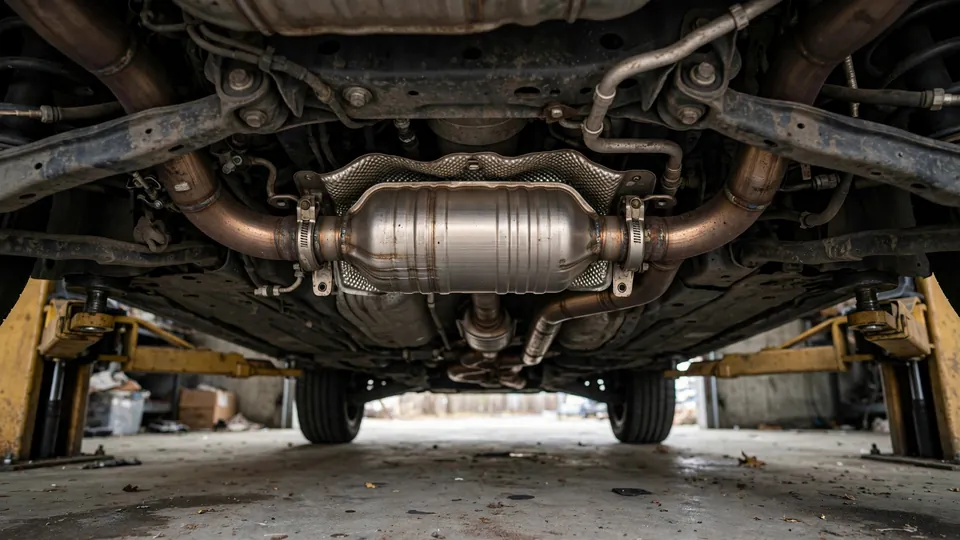
Your catalytic converter sits underneath your car. It contains platinum, palladium, and rhodium - precious metals worth $300-1,500 depending on the cat.
Thieves know this. They slide under your car with a cordless saw, cut it out in 60 seconds, and sell it to a scrap yard for cash.
You discover it when you start your car and it sounds like a NASCAR race car. Now you need a $1,000-3,000 repair.
Even if yours doesn't get stolen, catalytic converters eventually fail and need replacement.
Let me explain how they work, why they fail, how to prevent theft, and what to do when yours needs replacement.
What a Catalytic Converter Does
Your engine produces harmful exhaust gases:
- Hydrocarbons (HC) - unburned fuel
- Carbon monoxide (CO) - poisonous gas
- Nitrogen oxides (NOx) - smog and acid rain
The catalytic converter converts these to:
- Carbon dioxide (CO2) - less harmful
- Water vapor (H2O)
- Nitrogen (N2) - harmless
Inside the cat:
- Honeycomb structure coated with precious metals
- Platinum, palladium, rhodium act as catalysts
- Chemical reactions occur at 400-800°F
- Reduces emissions by 90%+
Without a working catalytic converter:
- Illegal to drive in most states
- Won't pass emissions testing
- Harmful emissions
- Check engine light
- Possibly fines
Types of Catalytic Converters
OEM (Original Equipment Manufacturer)
From the car manufacturer:
- Highest quality
- Longest warranty
- Best fit and performance
- Most expensive ($1,000-3,000+)
Pros: Best choice, matches original specs exactly
Cons: Very expensive
Aftermarket Direct-Fit
Made to fit your specific car:
- Good quality
- Reasonable warranty (5 years usually)
- Specific to your make/model
- Mid-price ($300-800)
Pros: Good balance of quality and price
Cons: Quality varies by brand
Good brands: Walker, Magnaflow, DEC, Eastern
Universal Fit
Generic cat with pipes:
- Requires welding to fit
- Cheapest option
- Varies in quality
- ($150-400)
Pros: Cheapest
Cons: Requires welding, may not fit perfectly, quality concerns
CARB Compliant vs Federal
Important: California (and states adopting CARB standards) require CARB-compliant cats
CARB cats:
- More expensive
- Higher standards
- Required in: CA, NY, ME, VT, MA, RI, CT, DE, MD, NJ, OR, WA, CO
Federal cats:
- Cheaper
- Legal in other states
- Won't pass inspection in CARB states
Check your state requirements before buying
Signs Your Catalytic Converter is Failing
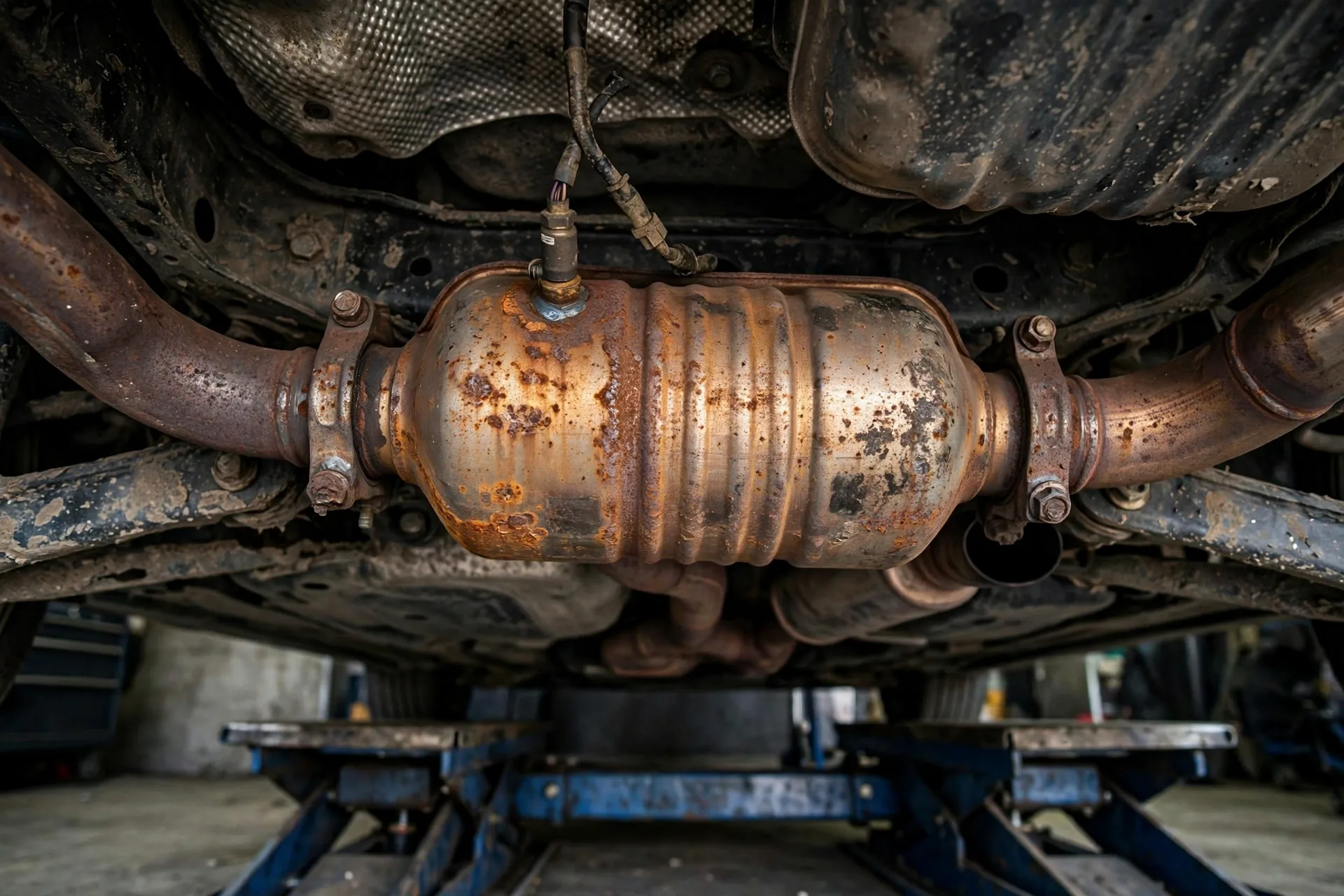
Check Engine Light - P0420/P0430
Most common codes:
- P0420: Catalyst Efficiency Below Threshold (Bank 1)
- P0430: Catalyst Efficiency Below Threshold (Bank 2)
What it means: Cat not reducing emissions effectively
Could also be: Bad downstream O2 sensor (try replacing that first - $100)
Reduced Performance
Clogged cat symptoms:
- Loss of power, especially accelerating
- Engine struggles at highway speeds
- Feels like car is choking
- Won't rev past certain RPM
Why: Clogged cat restricts exhaust flow, engine can't breathe
Rattling Noise
Loose honeycomb inside:
- Rattling sound from underneath
- Especially when starting
- Honeycomb substrate breaking apart
Means: Cat is failing internally
Failed Emissions Test
Automatic fail if:
- Check engine light on
- High emissions readings
- Cat not functioning
Sulfur/Rotten Egg Smell
Strong sulfur smell:
- Cat overheating
- Not converting sulfur compounds properly
- Sign of failing cat or rich-running engine
Very Loud Exhaust
Sounds like race car:
- Cat has been stolen OR
- Cat has rusted through
- Exhaust leak at cat
Immediate diagnosis - check if cat is still there
Related guide: 2019-2024 Cadillac XT4 — Check Engine Light / OBD2 Diagnosis DIY Guide | EZ Car Fix — how to scan for P0420 and P0430 codes that point to a failing converter.
How Catalytic Converters Fail
Thermal Damage (Most Common)
Overheating causes:
- Engine running too rich (too much fuel)
- Misfiring engine (unburned fuel in exhaust)
- Ignoring check engine light
Result: Honeycomb melts, clogs, breaks apart
Prevention: Fix engine problems promptly
Impact Damage
Hitting road debris, bottoming out:
- Dents cat housing
- Crushes internal honeycomb
- Restricts flow
Common in:
- Low cars
- Off-roading
- Poor roads
Internal Contamination
Oil or coolant in exhaust:
- From worn engine (oil burning)
- Head gasket leak (coolant)
- Coats honeycomb
- Reduces efficiency
Prevention: Fix oil consumption and coolant leaks
Old Age
Catalytic converters wear out:
- Typical lifespan: 100,000-150,000 miles
- Some last 200,000+
- Precious metals get used up
- Efficiency drops
Theft
Most common "failure":
- Someone cuts it out
- Instant catastrophic failure
- Still common in many areas — check local crime trends
Catalytic Converter Theft
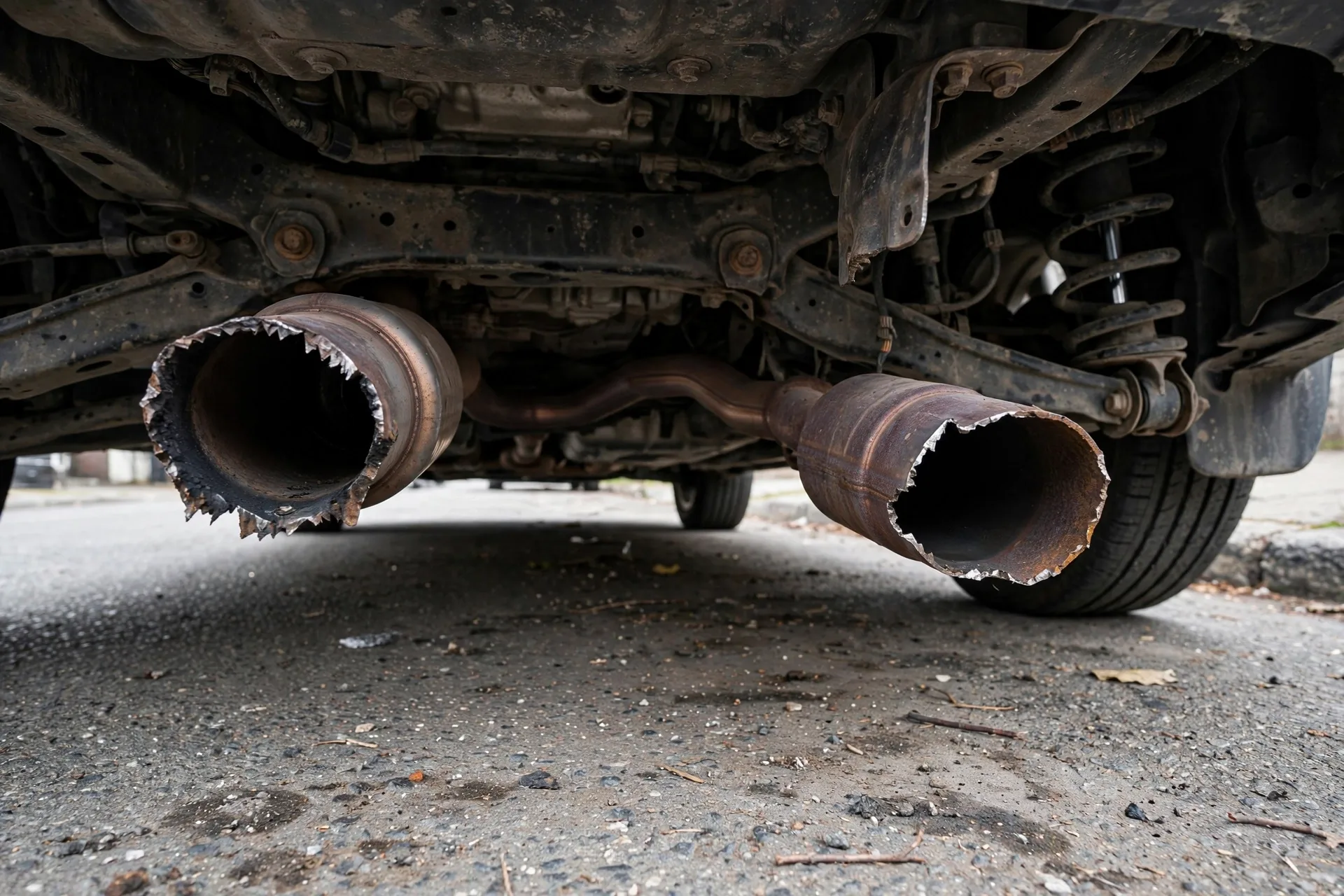
Why cats are stolen:
- Contain platinum, palladium, rhodium
- Worth $100-1,500 at scrap yard
- Easy to steal (60 seconds with cordless saw)
- Difficult to trace
- High demand from scrap dealers
Most targeted vehicles:
- Toyota Prius (cats contain more precious metals)
- Honda Element
- Toyota Tacoma (high ground clearance)
- Toyota Tundra
- Ford F-150/F-250
- Honda Accord
- Chevy Silverado
- Any truck or SUV with high ground clearance
How theft happens:
- Thief slides under car (30 seconds)
- Cuts cat out with battery-powered saw (30-60 seconds)
- Thief leaves with cat
- Total time: 1-2 minutes
You discover it:
- Extremely loud exhaust
- Check engine light
- Loss of power
- Replacement cost: $1,000-3,000
How to Prevent Catalytic Converter Theft
Best options:
1. Cat Shield/Guard ($150-400)
- Metal plate bolted over cat
- Makes it much harder to cut
- Professional installation recommended
- Best protection
Brands: CatClamp, MillerCat, CatStrap
2. Park in Garage
- Safest option
- Not always possible
3. Well-Lit Areas
- Park under lights
- Visible locations
- Deters some thieves
4. Security Camera
- Visible camera aimed at parking spot
- Deterrent value
5. Etch VIN on Cat
- Some police departments offer this free
- Makes cat harder to sell
- Slight deterrent
6. Alarm System
- Tilt sensor alarms
- Detect when car is jacked up
- Loud siren
7. Lower Cars
- Harder to slide under
- Not practical for trucks/SUVs
Honestly? Cat shields are most effective. $300 for shield beats $2,000 replacement.
Insurance:
- Comprehensive coverage covers theft
- But deductible usually $500-1,000
- Plus rate increase
DIY Catalytic Converter Replacement?
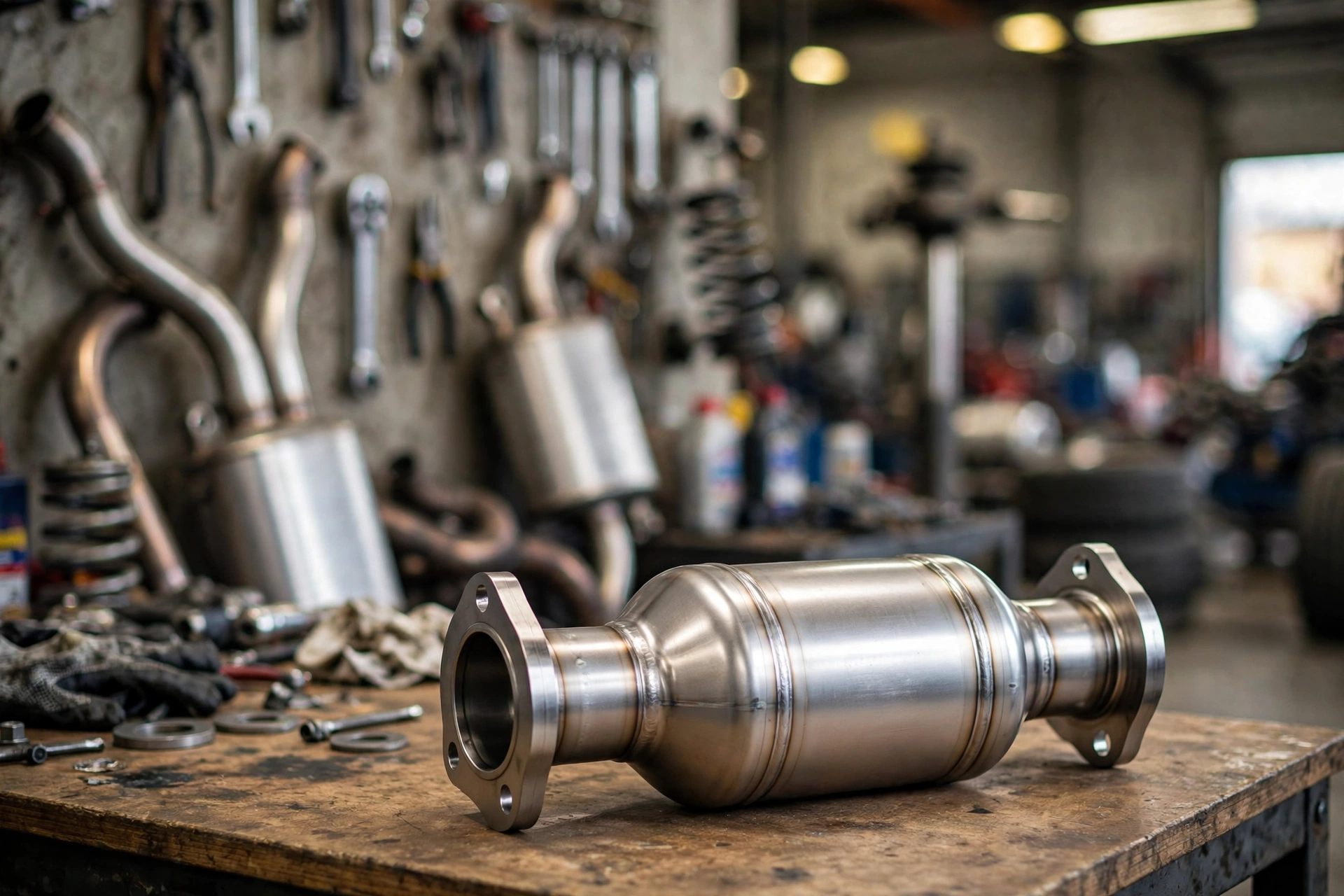
Difficulty: 5/10 (if cat is bolted on)
Difficulty: 7/10 (if cat needs welding)
Bolted Catalytic Converter
Some cats bolt on with flanges:
Process:
- Lift and support car
- Spray bolts with penetrating oil
- Remove O2 sensors (keep them)
- Unbolt old cat
- Remove old gaskets
- Install new gaskets
- Install new cat
- Torque bolts to spec
- Install O2 sensors with anti-seize
- Start and check for leaks
Time: 2-3 hours
Tools: Basic hand tools, jack stands, penetrating oil
Challenge: Rusty bolts often break
Welded Catalytic Converter
Most cats are welded:
Requires:
- Cutting old cat out
- Welding new cat in
- Or using clamps (not ideal)
Most people lack welding equipment
Shop job unless you're experienced welder
Universal Cat Installation
Cheap option but requires work:
- Cut out old cat
- Measure pipes
- Cut new cat to fit
- Weld or clamp in place
- Make sure fits properly
Time: 3-5 hours
Requires: Welding skills or good clamping
Quality varies - might not seal well, might not fit right
Related guide: 2015-2023 Dodge Challenger - Replace Catalytic Converter — a full replacement walkthrough if you decide to tackle the job yourself.
Cost Breakdown
Parts:
- OEM cat: $1,000-3,000+
- Aftermarket direct-fit: $300-800
- Universal cat: $150-400
- Gaskets/hardware: $20-50
Labor:
- Bolt-on cat: 1-2 hours ($100-200)
- Welded cat: 2-4 hours ($200-400)
- Includes cutting and welding
Total typical cost:
- Bolt-on DIY: $320-850
- Bolt-on shop: $500-1,200
- Welded shop: $800-2,000
- OEM at dealer: $1,500-4,000
High-end cats (Prius, luxury): $2,000-5,000
Testing a Catalytic Converter
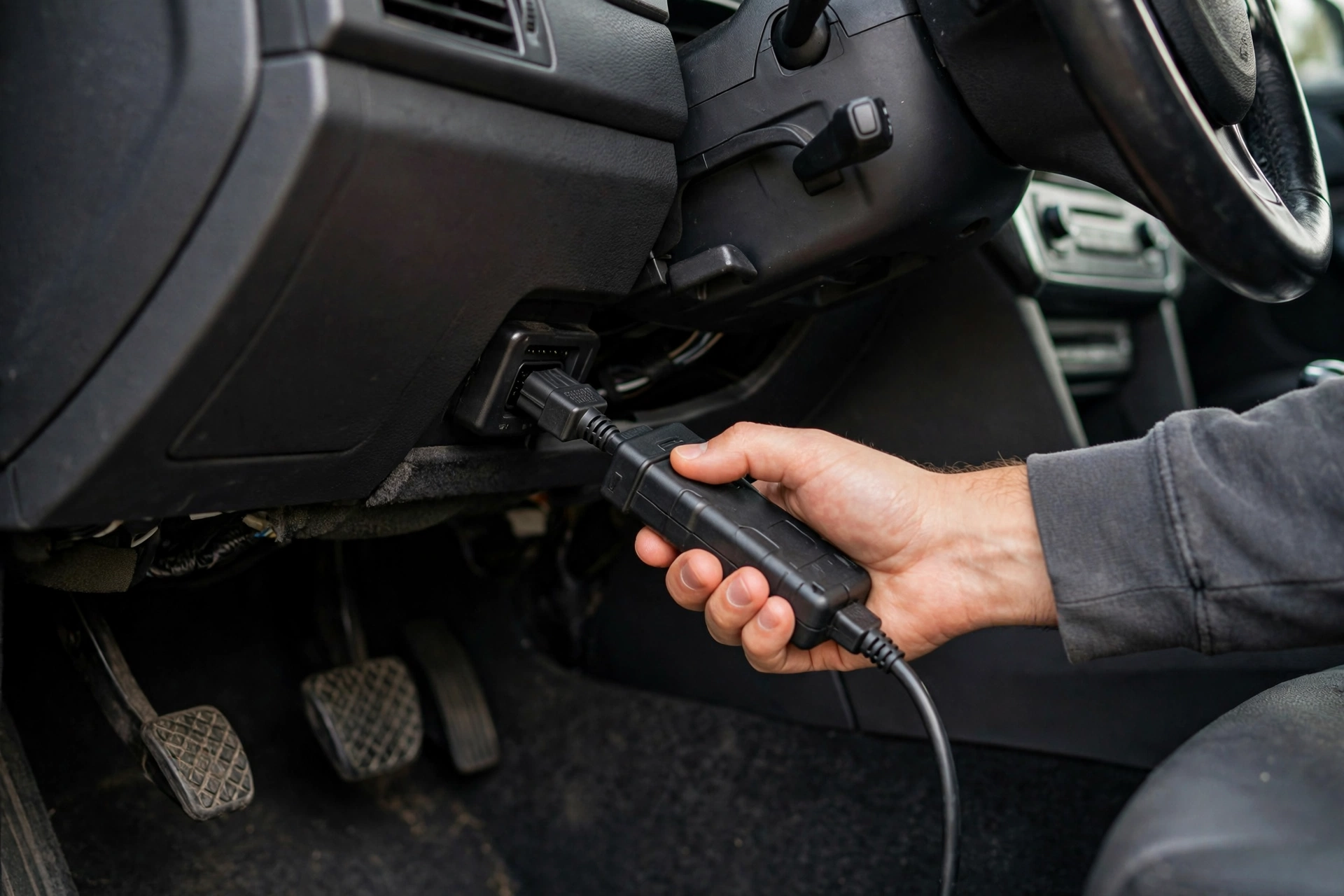
How shops test:
Back Pressure Test
Remove O2 sensor:
- Install pressure gauge
- Run engine at 2,000 RPM
- Check pressure
Normal: Under 1.5 PSI
Clogged: Over 2.5 PSI
Temperature Test
Infrared thermometer:
- Measure inlet temp
- Measure outlet temp
- Outlet should be hotter (cat working)
Normal: Outlet 100-200°F hotter
Not working: Similar temps
Scan Tool Data
Check O2 sensor readings:
- Upstream fluctuates (normal)
- Downstream steady (normal)
- Downstream matches upstream = bad cat
Visual Inspection
Look inside cat:
- Remove it
- Look through with flashlight
- Melted/clogged = bad
Related guide: 2018-2024 Jeep Wrangler - Oxygen Sensor — O2 sensor readings are how you confirm a dead cat, and the sensors often get replaced at the same time.
Can You Drive Without a Catalytic Converter?
Technically: Yes (engine will run)
Legally: No (illegal in all 50 states)
Consequences:
- Extremely loud exhaust
- Failed emissions test
- Ticket if caught
- Heavy fines under federal law
- Check engine light
- Poor performance possible
Don't drive without cat - get it fixed
Cleaning a Catalytic Converter
Catalytic converter cleaners exist:
- Pour in gas tank
- Drive
- "Cleans" cat
Reality:
- Might help slightly clogged cat
- Won't fix failed cat
- Won't pass emissions if cat is bad
- Waste of money usually
Cataclean, Seafoam, others - all have limited effectiveness
If cat is bad, replace it - no magic cleaner will fix it
What to Do After Catalytic Converter Theft
Immediate steps:
- Don't drive (or drive carefully to shop)
- File police report (for insurance)
- Contact insurance (comprehensive coverage)
- Get quotes from shops
- Consider cat shield for replacement
Insurance claims:
- Comprehensive covers theft
- Pay deductible
- Rates might increase
- Get multiple cats stolen? Insurance might drop you
Replacement options:
- OEM: Most expensive, best quality
- Aftermarket: Good middle ground
- Used: Cheaper but risky (might be stolen, might fail soon)
Common Mistakes
Ignoring P0420/P0430 Code
Code appears:
- Could be O2 sensor ($100-150)
- Could be cat ($1,000+)
Try O2 sensor first (much cheaper)
Using Cheap Cats
$150 universal cat:
- Often fails quickly
- Might not pass emissions
- Might not fit right
Spend $500 on quality cat - lasts 100,000+ miles
Spend $150 on cheap cat - fails in 20,000 miles, replace again
Not Fixing Root Cause
If cat failed from:
- Rich running
- Misfiring
- Oil burning
Fix engine problem or new cat will fail too
Forgetting Anti-Seize on O2 Sensors
When replacing cat:
- Remove O2 sensors
- Apply anti-seize to threads
- Reinstall sensors
Without anti-seize: Next removal breaks sensors
Not Protecting Replacement Cat
After theft:
- Replace cat
- Don't install cat shield
- Get stolen again
Install cat shield - $300 beats $2,000 replacement
The Bottom Line
Catalytic converters are:
- Expensive ($1,000-3,000 to replace)
- Frequently stolen (precious metals inside)
- Necessary (illegal to drive without)
- Long-lasting (100,000-150,000 miles usually)
Failure symptoms:
- P0420/P0430 code
- Loss of power
- Rattling noise
- Failed emissions
- Loud exhaust (if stolen)
Prevention:
- Fix engine problems promptly (don't run rich, fix misfires)
- Install cat shield ($150-400)
- Park in garage when possible
Replacement cost:
- DIY bolt-on: $320-850
- Shop: $800-2,000
- Dealer OEM: $1,500-4,000
Theft prevention:
- Cat shield (best option)
- Well-lit parking
- Garage
- Insurance
If you get P0420/P0430 code:
- Replace downstream O2 sensor first ($100-150)
- If still fails, probably need cat
- Use quality aftermarket or OEM
- Fix any engine problems first
Don't cheap out on catalytic converters - quality matters.
Questions? Drop them below.
- Roberto Gil
Last reviewed: October 2026.