Struts and Shocks: When to Replace Them
Replace your struts or shocks when they can no longer control the springs, and the clearest sign is a car that bounces, sways, or nose dives instead of settling down. There is no single mileage where every car needs them, so judge by symptoms, a simple bounce test, and a look underneath for leaks or damage. If the ride has gone soft and floaty, or the car feels unstable over bumps and in turns, the dampers are probably done.
Struts vs Shocks: What Each One Does
Struts and shocks do the same core job, which is damping. Springs hold the car up and absorb bumps, and the damper stops the spring from bouncing on and on after each bump. Without working dampers, the tire spends less time pressed firmly to the road, and that hurts braking, handling, and tire wear.
The difference is structural. A strut is part of the suspension structure itself: it carries the coil spring, locates the wheel, and on most front suspensions it also plays a role in steering and alignment. A shock absorber is a separate damper that bolts between the frame and the suspension arm, and it does not hold the car up or set alignment on its own. Many cars run struts up front and shocks in the rear, and some run shocks at all four corners. Your car has one or the other at each corner, never both doing the same job at the same wheel.
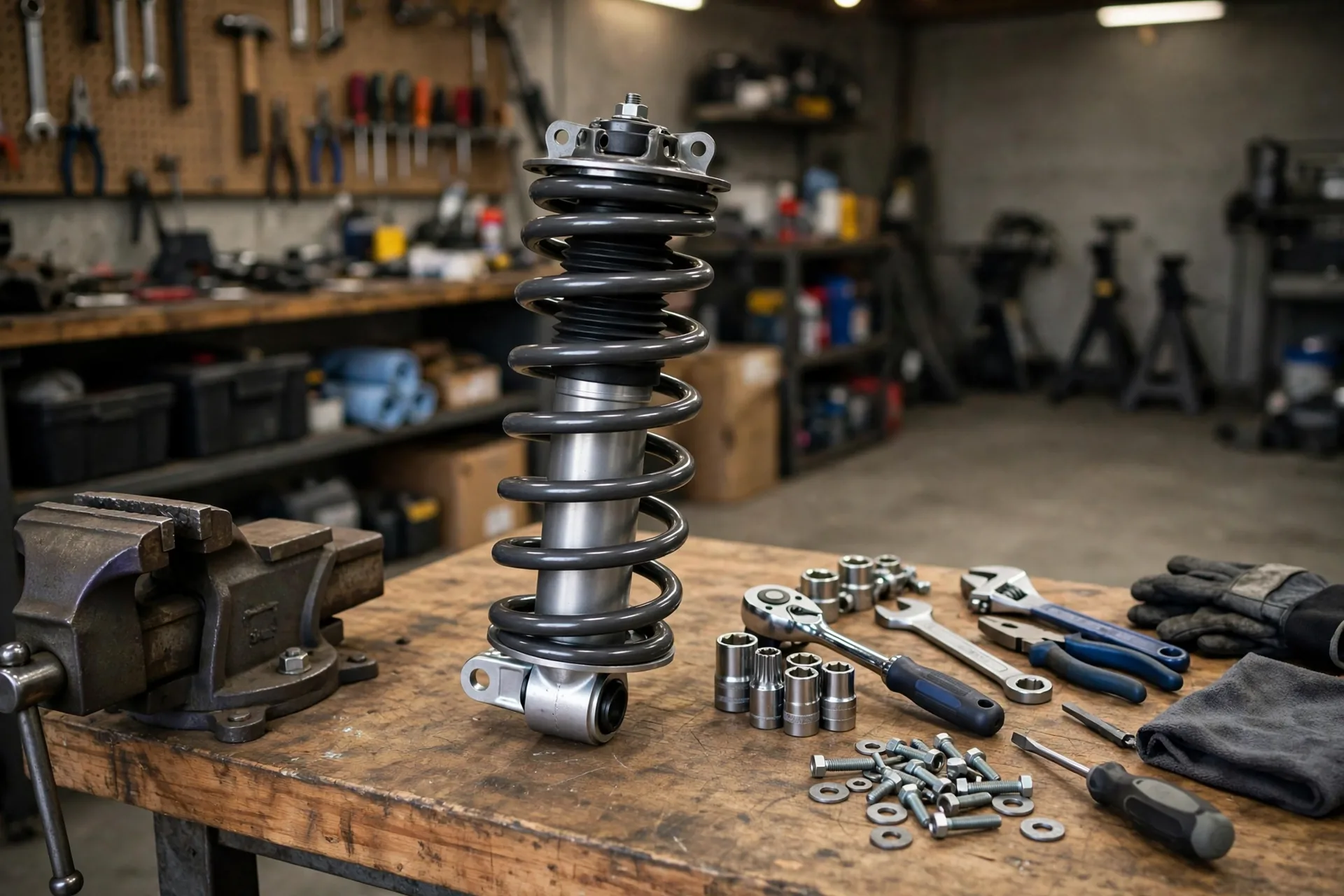
That difference matters when you replace them. A worn shock is usually a straightforward unbolt and bolt on job. A strut is a bigger job because the coil spring has to come off, the assembly has to be reassembled, and the car needs an alignment afterward. That is why shops often recommend complete strut assemblies, which arrive with a new strut, spring, and mount already put together.
Signs Your Struts or Shocks Are Worn Out
Worn dampers rarely fail all at once. They fade gradually, which is exactly why so many drivers get used to a bad ride and stop noticing it. These are the symptoms worth taking seriously:
- Excessive bouncing. After a bump or a dip, the car keeps rocking up and down instead of settling quickly. On a rough road it can feel like riding in a boat.
- Nose dive and squat. The front end dives hard when you brake, and the rear squats when you accelerate. Both point to dampers that are no longer controlling weight transfer.
- Sway and body roll. The car leans more than it used to in turns, or it feels wallowy on highway curves and when changing lanes.
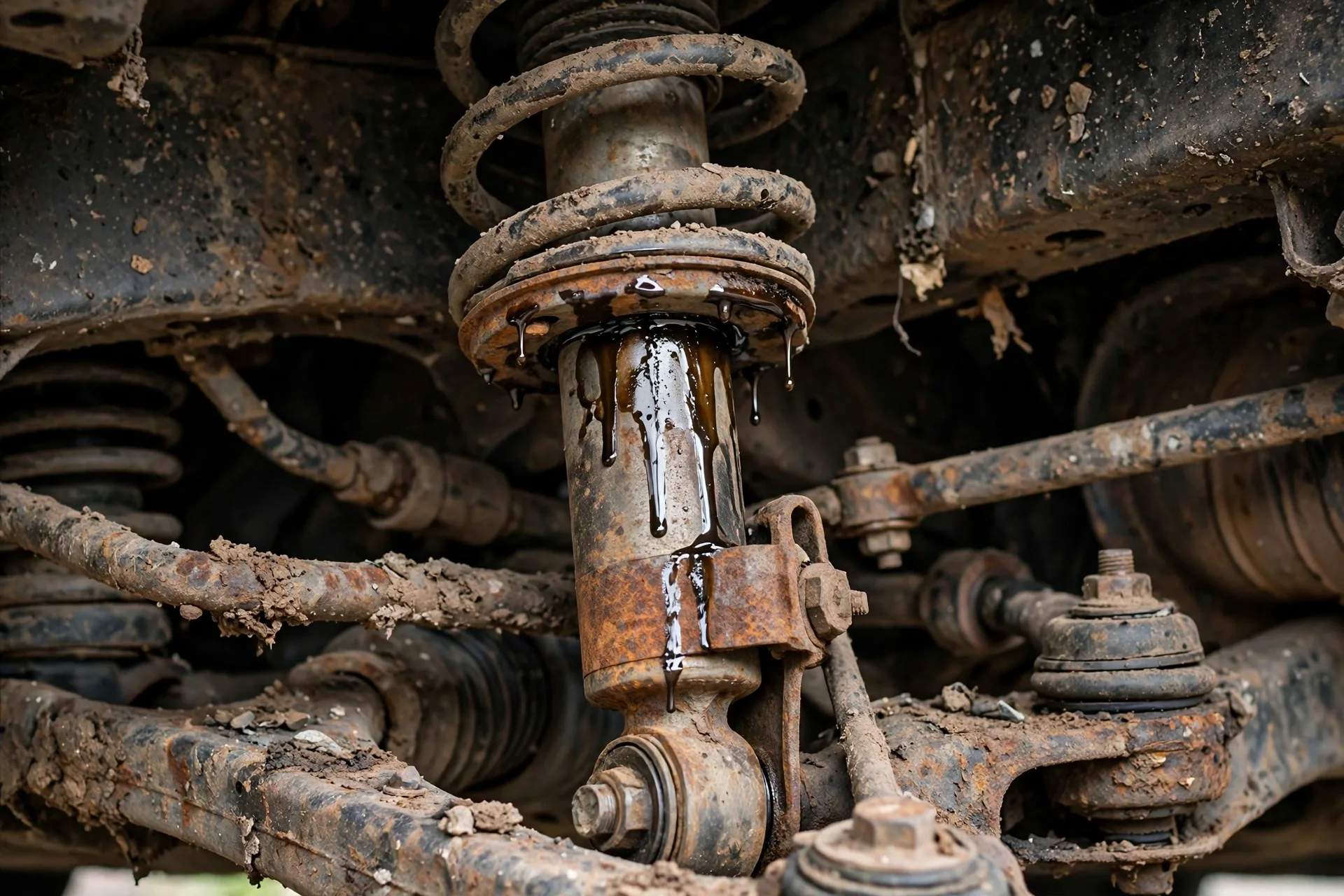
- Leaking fluid. A damper that is wet with oil, or has fluid running down its body, is finished. A little road grime is normal, but visible wet oil is not.
- Uneven or cupped tire wear. Tires that bounce instead of staying planted wear in a scalloped, cupped pattern. If your tires are wearing oddly and the alignment is fine, suspect the dampers.
- Knocking or clunking over bumps. A worn strut mount, a broken spring, or a loose damper can clunk over every small bump. This one deserves a look soon, because a broken spring is a safety issue, not just a comfort problem.
- A ride that just feels tired. If the car used to feel tight and now feels loose and floaty, trust that. You drive it every day, and gradual change is still change.
How to Test Struts and Shocks Yourself
You can check a lot without any tools. Work through these steps in order, and do them on level ground with the car parked and the parking brake on:
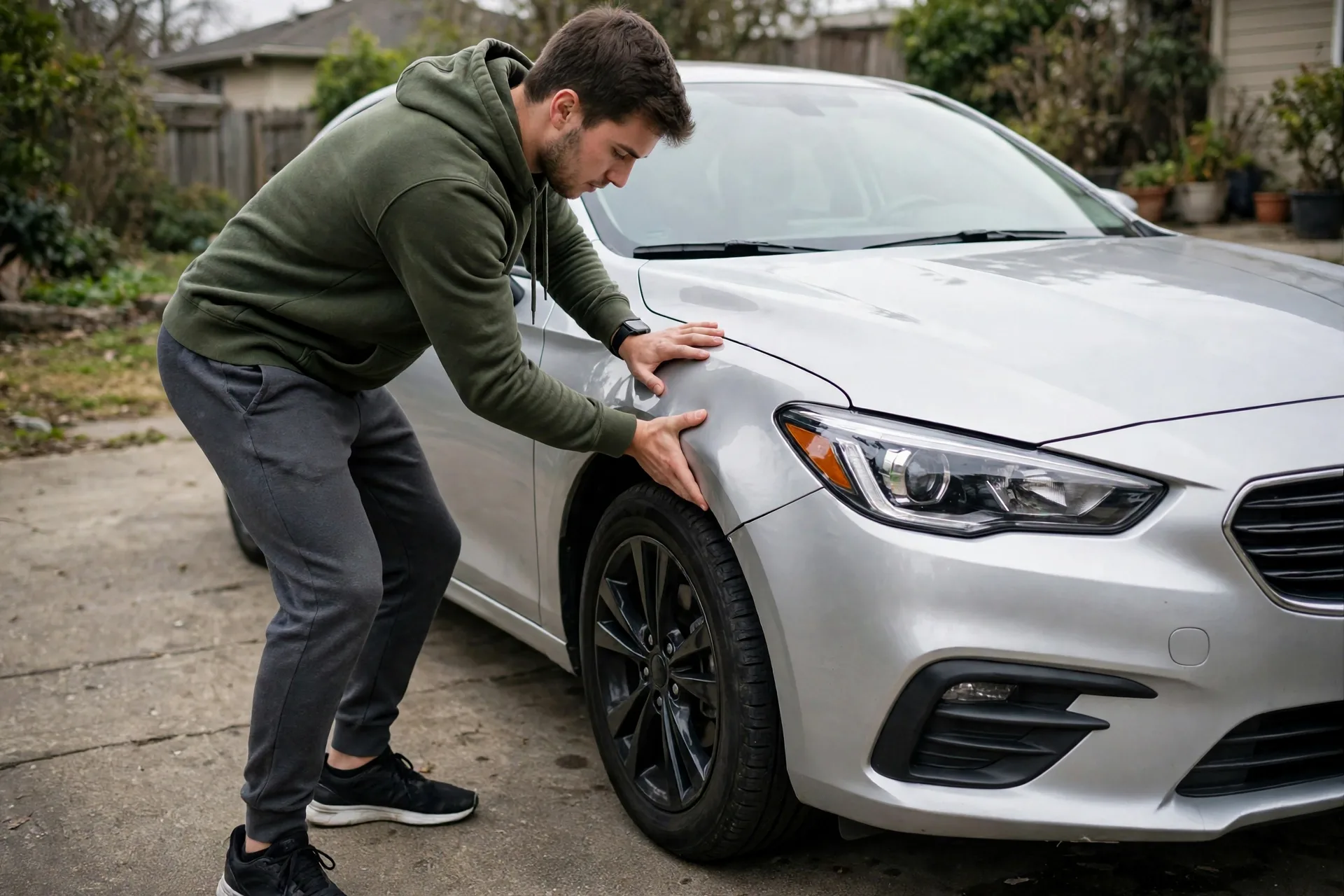
- Do the bounce test. Push down firmly on one corner of the car, over the fender, and let go. A healthy corner settles after one or two bounces. A corner that keeps bouncing three or more times has a weak damper.
- Test all four corners. Dampers wear at different rates, and one bad corner is enough to upset handling. Compare sides: if the left front bounces noticeably more than the right front, that corner needs attention.
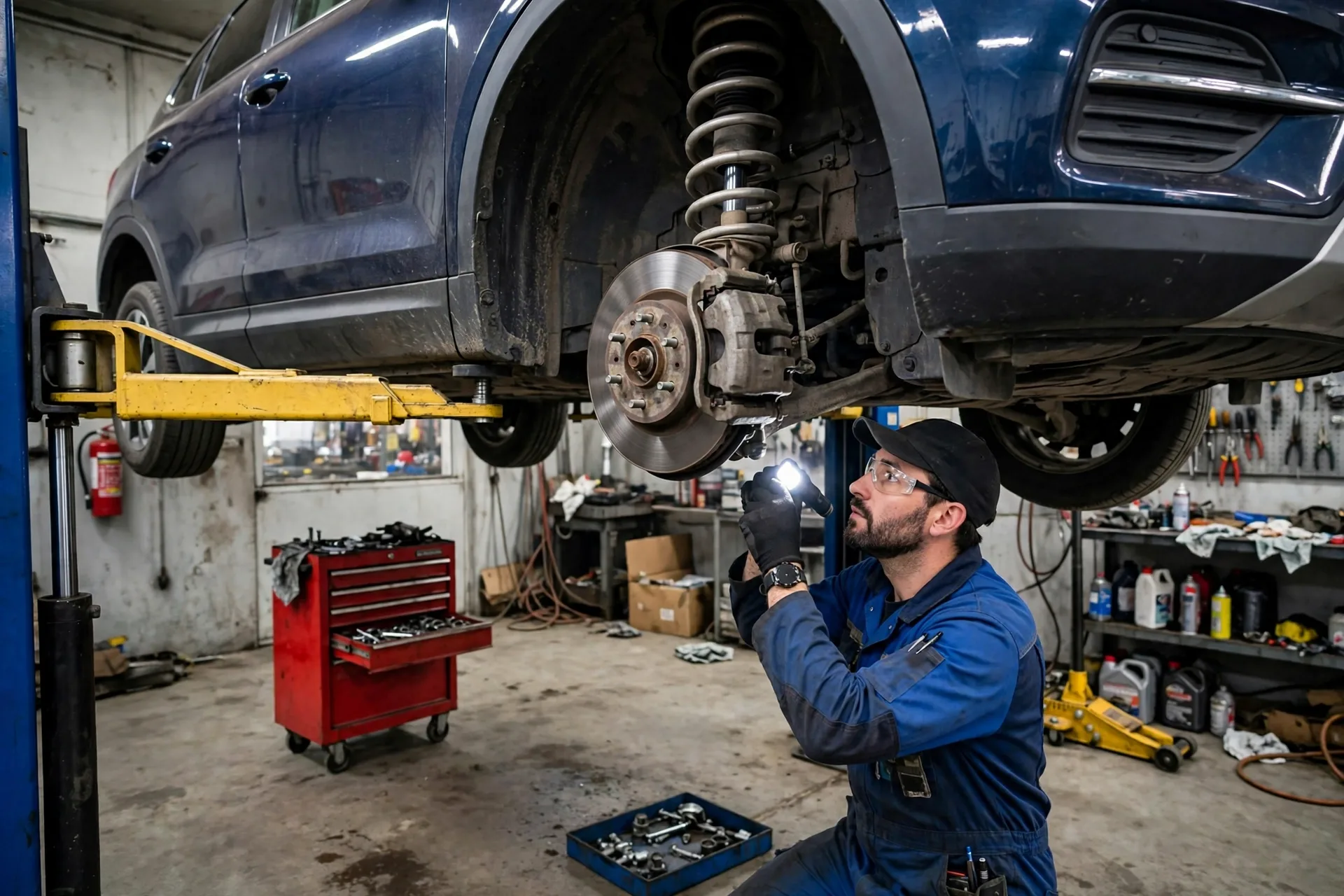
- Look underneath for leaks. Get low with a flashlight and look at each damper body. Wet oil, a coating of fresh fluid, or a damper caked in oily dirt means it is leaking and done.
- Check the springs and mounts. Look for a broken coil, a spring that sits crooked, or a strut mount that looks cracked or shifted. Do not touch a broken spring with your hands, and do not drive far on one.
- Look at the tires. Run your hand across the tread and feel for cupping or scalloped dips. Uneven wear plus a failed bounce test is a strong case for new dampers.
- Drive a familiar bumpy road. Pay attention to how the car recovers after dips, how much it leans in turns, and whether braking feels stable. A short drive on roads you know well tells you more than a drive on smooth new pavement.
If the bounce test is borderline but the car drives fine and nothing leaks, you can keep driving and recheck in a few weeks. If a damper is leaking, a spring is broken, or the car feels unstable at highway speed, do not put it off. Dampers are safety parts, not just comfort parts, because they keep tires in contact with the road.
What Replacement Costs, in General Terms
This topic has no verified shop price range to quote, so here is the honest shape of the cost instead of a made up number. Rear shocks are usually the cheaper end of the job: the parts are simpler, and the labor is straightforward. Front struts are a big ticket job by comparison, because the part is more complex, the spring work takes time, and an alignment is needed after the work is done. Complete strut assemblies cost more in parts than a bare strut, but they save labor and they replace the worn mount and spring at the same time, so the total often lands in the same neighborhood.
Dealers tend to charge more than independent shops for the same job, and the gap is mostly labor rate and parts markup rather than a different repair. An independent shop that does suspension work every day is usually the best value here. DIY saves the labor bill entirely, but only if you already have the tools and you are comfortable with the spring work, which is covered below. Get a written quote that separates parts, labor, and alignment before you approve the work.
One cost trap to avoid: replacing a single strut or shock. Dampers should be replaced in pairs across an axle, both fronts or both rears. A new damper on one side and a worn one on the other gives you uneven handling, and the older side will fail soon anyway. The only exception is a nearly new damper damaged in an accident, and even then a shop should confirm the other side is still healthy.
DIY vs Shop: The Honest Verdict
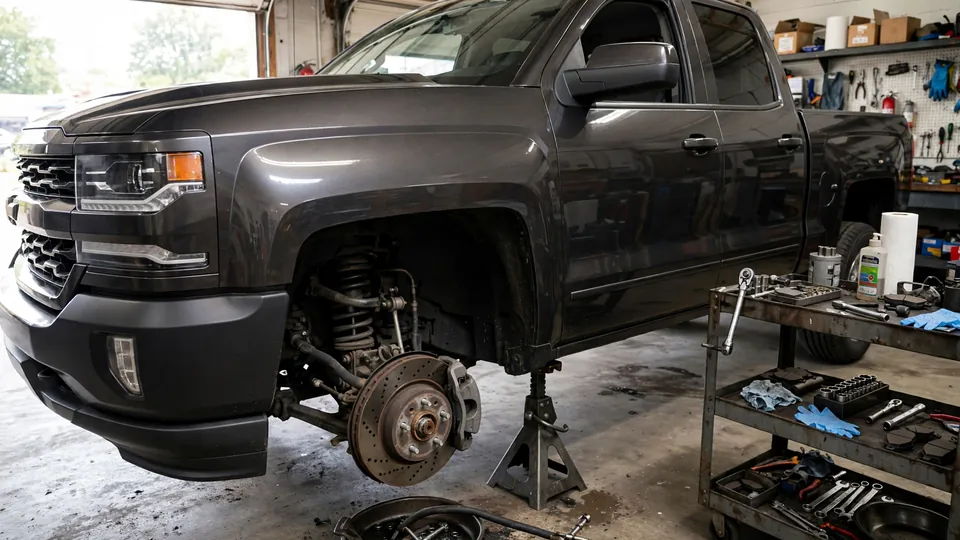
Rear shocks are a realistic DIY job for a careful home mechanic. You need jack stands, basic hand tools, and penetrating oil for rusty bolts, and you need to follow the jacking and support steps properly. Front struts are a different story. The coil spring stores a lot of energy, and compressing it with cheap or rented spring compressors is one of the riskier jobs in home auto repair. If the spring slips, it can cause serious injury.
That is why the practical verdict splits by end of the car. Rear shocks: DIY if you are comfortable under a car and you have jack stands. Front struts: use complete strut assemblies and still think twice, or hand the job to a shop. A complete assembly removes the spring compressor from the job, which makes it far more approachable, but you still need an alignment afterward, and that is shop work no matter what. If you do any of it yourself, torque specs come from your owner's manual or a repair manual for your exact model, never from memory or a guess.
For a step by step look at a real front strut job, see the 2007-2010 BMW X3 Front Shock Strut Replacement guide, and for a rear shock example, the 2007-2012 Nissan Sentra Rear Shock Absorber Replacement guide shows how the simpler end of the car comes apart. If you are still sorting out whether the problem is dampers or something else in the suspension, the Suspension Problems: How to Diagnose Shocks, Struts, and Worn Components post walks through the wider diagnosis, and the Wheel Bearings: The Humming Noise That Gets Louder Until Your Wheel Falls Off post covers a noise that is often confused with suspension trouble.
FAQ
How long do struts and shocks last? There is no universal number, because road quality, load, and driving style matter more than a calendar. Rough roads, heavy loads, and lots of rough pavement wear them faster. Judge by the bounce test, leaks, and handling, not by a mileage figure someone quoted online.
Should I replace struts and shocks in pairs? Yes, always across the same axle. Both fronts together, or both rears together. Mixing a new damper with a worn one gives uneven handling and braking.
Can I drive with worn struts or shocks? For a short time, if the car still feels stable and nothing is broken or leaking badly. But worn dampers lengthen stopping distances and reduce control in an emergency maneuver, so it is not something to ignore for months. A leaking damper, a broken spring, or a car that feels unstable at speed needs attention right away.
Do I need an alignment after replacing struts? Yes, after front strut work. Struts affect alignment angles, and skipping the alignment will chew through tires. Rear shock replacement does not normally change alignment, but a shop should still confirm nothing else moved during the job.
Struts and shocks are the parts that turn a bouncy, tiring car back into a controlled one, and they are also the parts people put off longest because the decline is gradual. Do the bounce test this weekend. If a corner bounces on and on, or you find a damper wet with oil, book the job and replace both sides. Your tires, your brakes, and your nerves on a rough road will all be better for it.
Safety: Informational DIY. EZ Car Fix is not a shop or dealer.