Starter Relay: The $15 Fix to Try Before Replacing the Starter
Your car will not start. You turn the key and get one click, or nothing at all, and the dashboard lights look fine. Before you pay for a new starter, check the starter relay. It is a small cube in the fuse box, it costs little, and swapping it takes minutes. A bad relay mimics a dead starter almost perfectly, and plenty of starters get replaced over a part that was never the problem.
Bad Starter Relay Symptoms

A relay fails in two ways: it stops closing, or it sticks closed. Both leave clear clues.
- One loud click, then nothing. This is the classic sign. You hear the relay or the solenoid snap once, but the starter never turns. The lights stay bright, which rules out a weak battery.
- Silence when you turn the key. No click, no crank, no dimming. The start signal never reaches the starter.
- Intermittent no-start. The car starts fine in the morning and refuses in the afternoon, or it starts on the third try. Heat makes a failing relay worse, so the problem often shows up after the engine bay warms up.
- The starter keeps cranking after you release the key. A relay stuck closed keeps feeding power to the starter. Turn the car off right away if this happens, because a starter that keeps spinning can overheat and damage itself.
- It only starts after you tap the fuse box. A light tap that brings the car back to life points straight at a relay with worn contacts inside.
If your symptoms match this list and the battery is healthy, the relay is the cheapest suspect on the board. Test it before you test anything else.
What a Starter Relay Actually Does
Your ignition switch cannot handle the heavy current the starter needs. Instead, the switch sends a small signal to the relay, and the relay closes a much heavier circuit that feeds the starter solenoid. Think of it as a remote-controlled switch: a tiny signal in, a big jolt out.
Inside the cube are a coil and a set of contacts. Power the coil and it pulls the contacts closed. Cut power and a spring snaps them open. After years of heat cycles under the hood, those contacts pit, burn, and wear thin. The coil still pulls, you still hear the click, but the burned contacts cannot pass enough current to spin the starter. That is why a bad relay can sound alive and still be dead.
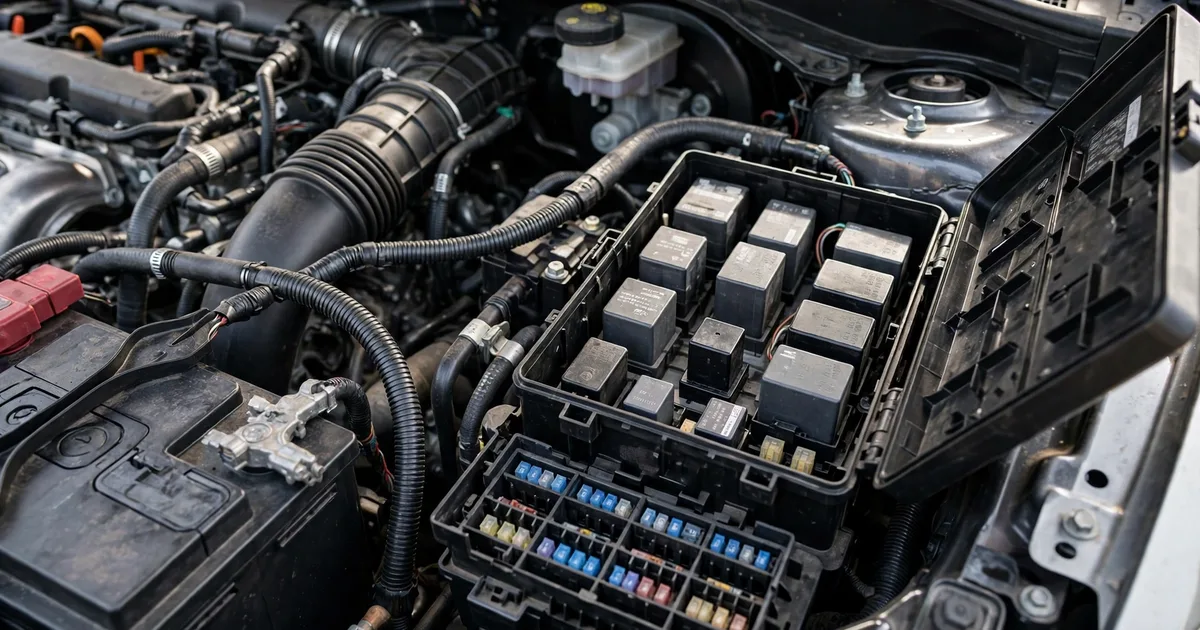
Most cars keep the starter relay in the under-hood fuse box, next to the other relays. Some cars put it under the dash or in a second fuse box near the battery. Your owner's manual shows the exact spot.
How to Test a Starter Relay

You need no special tools for the first two tests. A multimeter helps for the third, but it is optional.
- Find the relay. Open the under-hood fuse box and read the diagram on the lid. If the lid diagram is worn off, check your owner's manual. Never guess which cube is the starter relay.
- Do the swap test. Find an identical relay in the same box, one with the same part number printed on its side, such as the horn relay or the air conditioning relay. Swap the two. If the car starts and the horn stops working, the starter relay was bad. This test costs nothing and settles the question in two minutes. Only swap relays with matching part numbers.
- Listen and feel. Put your finger on the relay and have someone turn the key to start. A working relay gives a sharp click you can feel. No click at all means the relay is not getting a signal or its coil is dead, so check the fuse and the wiring before blaming the relay itself.
- Test it with a multimeter. Pull the relay out and check continuity across the switch terminals while you apply power to the coil terminals. Your repair manual lists the expected reading for your car, so check the manual rather than guessing. No continuity with power applied means the contacts are shot.
- Inspect the socket. Look for green corrosion, melted plastic, or bent pins in the socket. A relay can test fine on the bench and still fail in a corroded socket. Clean light corrosion with electrical contact cleaner and let it dry fully before you plug the relay back in.
If the swap test fixes the no-start, you are done diagnosing. Buy a new relay, put the borrowed one back where it belongs, and move on.
How to Replace a Starter Relay

- Turn the key off and remove it from the ignition.
- Open the fuse box and find the starter relay using the lid diagram or your owner's manual.
- Pull the old relay straight up. It should come out with firm finger pressure. If it is stuck, wiggle it gently side to side. Do not pry it with a screwdriver, because you will crack the socket.
- Match the part number on the old relay to the new one. Relays that look identical can have different ratings inside, so the number on the side is what matters.
- Push the new relay straight down until it seats fully. It should sit level with the relays around it.
- Start the car. If it fires right up, the job is done.
The whole swap takes about five minutes, and there are no bolts, no wiring, and nothing to torque. It is one of the simplest repairs on the car, and it is the reason a relay should always be the first suspect, not the last.
Starter Relay vs Starter vs Battery: How to Tell Them Apart
These three failures feel similar from the driver's seat, but they leave different evidence.
- Dead or weak battery: Lights dim, the engine cranks slowly, or you hear rapid machine-gun clicking. A jump start helps. If a jump start fixes it, the relay was never the problem. Battery replacement is a straightforward job on most cars, see the 2023-2026 Acura Integra — Battery Replacement guide for what the job looks like.
- Bad starter relay: One solid click or total silence, bright lights, and a jump start changes nothing. The swap test confirms it.
- Bad starter: A single loud clunk from the engine bay, grinding, or a relay that tests good while the starter still will not spin. If the relay is proven good and the battery is proven good, the starter is what is left.
Work the list in that order: battery, relay, starter. Skipping the relay and going straight to the starter is how a cheap fix turns into an expensive one. Our Starter Problems: How to Tell If It's Your Starter, Battery, or Something Else walks through the full no-crank checklist, and if your car only clicks, our guide Car Won't Start and Just Clicks: What the Clicking Means breaks down each sound.
What a Starter Relay Costs
The relay itself is a cheap part, one of the cheapest in the starting system. A shop visit for a relay is mostly a diagnostic fee and a small amount of labor, because the swap itself takes minutes. Compare that with a starter replacement, which is a big-ticket job with real labor hours and a far more expensive part. That gap is the whole point of this post: a relay test costs you five minutes, and skipping it can cost you a starter you did not need.
Buy the relay by part number, not by looks. Keep the receipt and the old relay until the car has started reliably for a few days.
DIY or Shop?
Do it yourself. This is a five-minute, no-tools job, and the swap test needs nothing but your fingers and a matching relay from the same fuse box. Go to a shop when the relay tests good but the car still will not start, when the socket is melted or corroded, or when the swap test is inconclusive. Intermittent starting problems can hide in wiring and ignition switches, and that is shop territory.
FAQ
Can I drive with a bad starter relay?
No. A relay that fails once will fail again, usually at the worst time. Intermittent relays get worse, not better, and a stuck relay can keep the starter engaged. Fix it before your next trip.
Will a bad starter relay drain the battery?
A relay stuck closed can keep the starter circuit powered and drain the battery fast. If your battery keeps dying overnight and the relay feels warm with the car off, pull the starter relay and see if the drain stops. Our guide Car Battery Keeps Dying Overnight: Find the Parasitic Drain covers the full test.
Where is the starter relay located?
Usually in the under-hood fuse box. Some cars hide it under the dash or in a second fuse box. Check your owner's manual for the exact location, because guessing wrong wastes more time than looking it up.
Can I bypass the starter relay to get the car going?
Do not. Jumping the relay socket sends full starter current through wiring that was never meant to carry it by hand, and a slip can short the circuit or damage the fuse box. Get a tow or swap in a matching relay instead.
A car that will not start feels like a big problem, and sometimes it is. But the starter relay is the cheapest possible cause, it fails often, and it takes five minutes to rule out. Test the relay first, every time. If it turns out the starter itself is bad, the 2017-2021 Acura MDX - Starter guide shows what that job looks like.
Safety: Informational DIY. EZ Car Fix is not a shop or dealer.