The $4,000 Mistake Nobody Talks About
Your owner's manual might say "lifetime transmission fluid." That's marketing BS, and I'll tell you why.
Transmissions are the most expensive single component to replace on your car. In my experience, expect roughly $3,000–6,000 for the average car and $8,000–12,000 for trucks and luxury vehicles — actual quotes vary a lot by vehicle and area.
Yet automakers tell you the fluid never needs changing. Why? Because powertrain warranties typically run 60,000–100,000 miles, and that's the horizon the "lifetime" claim is really built around — not 200,000 miles.
I've serviced hundreds of transmissions over 22 years in the shop. The ones that made it to 150,000+ miles had all had their fluid changed — at least, every one I've personally seen. The ones that died at 80,000-120,000? "Lifetime" fluid that turned into sludge.
Let me save you thousands of dollars.
What Transmission Fluid Actually Does
Transmission fluid isn't just a lubricant. It's doing five critical jobs:
1. Lubrication
- Reduces friction between moving parts
- Prevents metal-on-metal wear
- Extends life of internal components
2. Hydraulic Fluid
- Operates clutches in automatic transmissions
- Controls shift timing and smoothness
- Operates torque converter
- Powers valve body
3. Cooling
- Transfers heat to transmission cooler
- Prevents overheating from friction
- Critical for towing and hot climates
4. Cleaning
- Carries away metal particles
- Suspends contaminants
- Keeps internal passages clear
5. Corrosion Prevention
- Protects metal components
- Prevents rust and oxidation
- Extends seal life
When fluid degrades, ALL of these jobs suffer. Your transmission starts dying.
How Transmission Fluid Breaks Down
Transmission fluid doesn't last forever. Here's what happens over time:
Heat Damage (Most Common):
- Normal operation: 175-200°F
- Heavy towing/city traffic: 220-240°F
- Severe conditions: 250-280°F
The rule of thumb we use in the shop: every 20°F over 200°F cuts fluid life roughly in half.
Towing in Arizona summer? Your fluid is cooking.
Chemical Breakdown:
- Additives deplete over time
- Oxidation occurs from heat cycles
- Viscosity changes (gets thicker or thinner)
- Detergency decreases
- Corrosion inhibitors wear out
Contamination:
- Metal particles from wear (clutches, gears)
- Friction material breakdown
- Seal deterioration
- Water intrusion (coolant leaks)
- Dirt from worn seals
What you see:
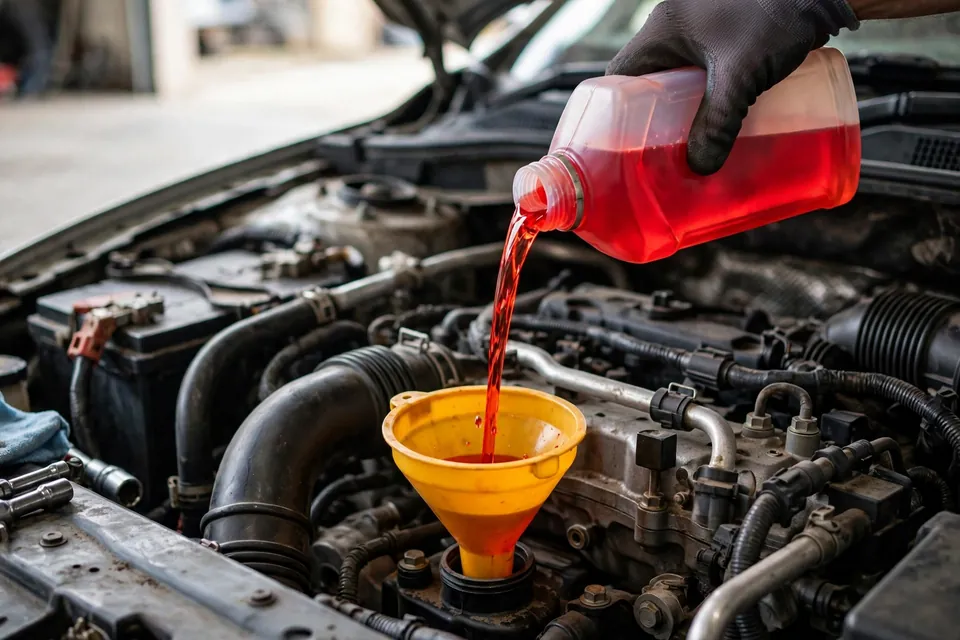
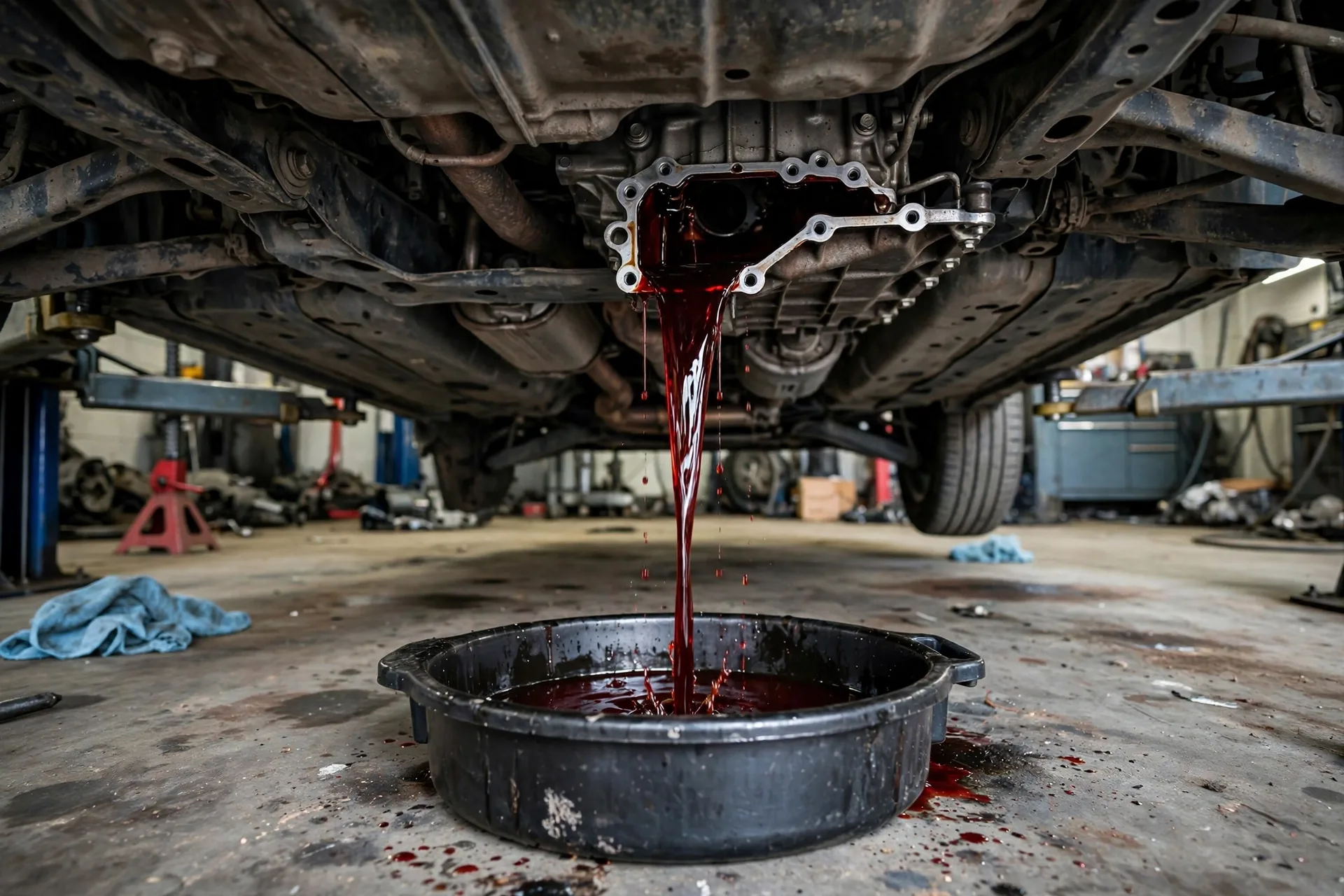
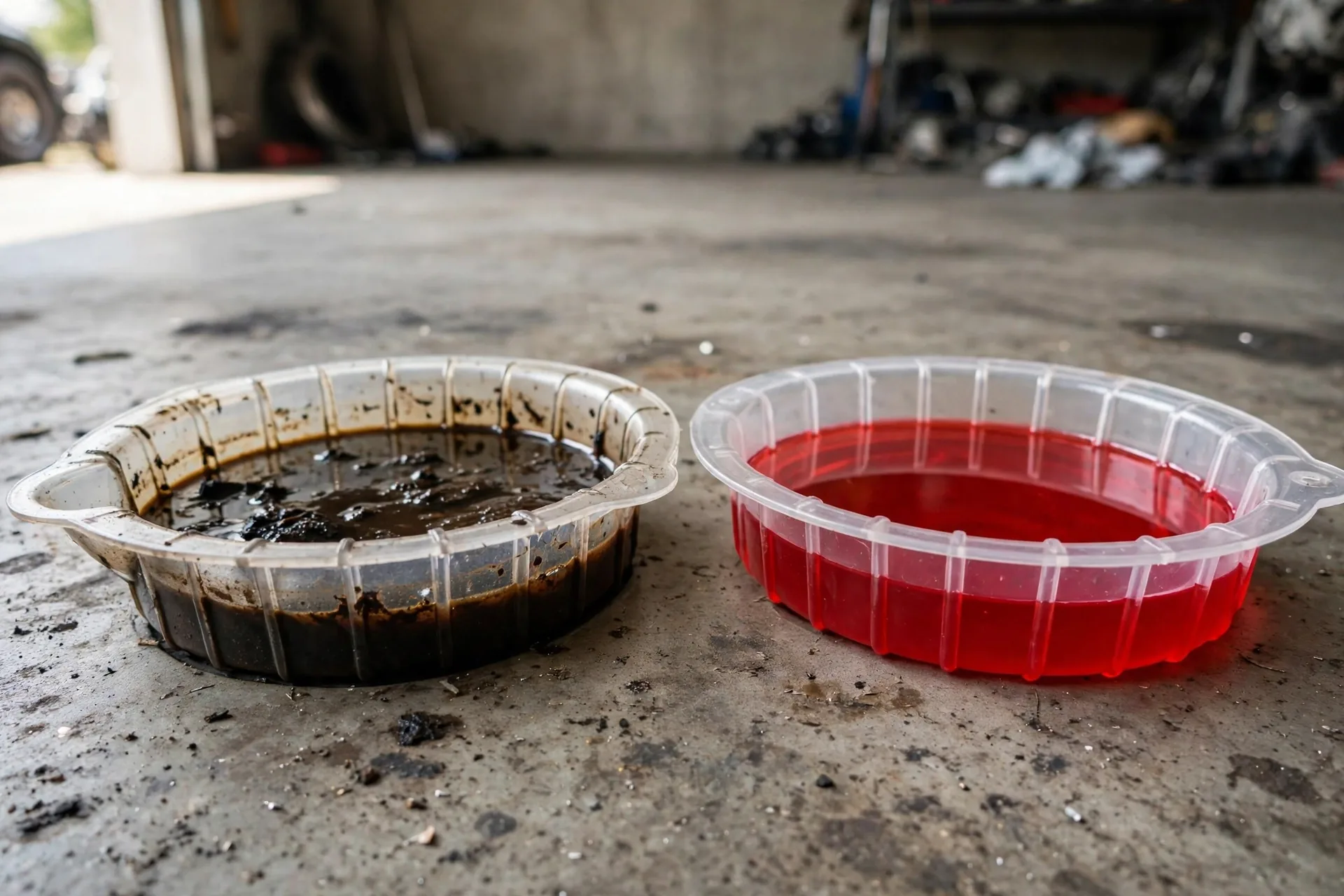
- Fresh ATF: Bright red, transparent, sweet smell
- 50,000 miles: Darker red, slight smell
- 100,000 miles: Brown, burnt smell
- 150,000+ miles: Black, burnt, particles visible
Once fluid turns dark brown or black, damage is already happening.
The "Lifetime Fluid" Lie
Why manufacturers say "lifetime fluid":
- Lower maintenance costs in marketing - "No transmission service needed!"
- Cheaper during warranty period - fewer service visits
- Cars designed for 150,000 miles - not 250,000+
- Encourages new car purchases - transmission fails after warranty, buy new car
The reality:
"Lifetime" means the life of the WARRANTY, not the car.
In 22 years in the shop, I've never seen a transmission with unchanged fluid make it to 200,000 miles without problems.
Transmission shops tend to agree with me on "lifetime fluid" — and sure, rebuild work is their livelihood, but when the people who fix these things for a living tell you the fluid should be changed, it's worth listening.
Independent transmission builders will tell you: Change fluid every 50,000-60,000 miles. They want your transmission to LAST, not fail.
When to Change Transmission Fluid
Manufacturer says "lifetime":
- Actually change at: 60,000-80,000 miles
- Severe conditions: 40,000-50,000 miles
Manufacturer says "100,000 miles":
- Follow that schedule
- Severe conditions: Cut in half (50,000)
Manufacturer says "60,000 miles":
- Follow that schedule
- Severe conditions: 30,000-40,000
Severe conditions include:
- Towing (especially heavy loads)
- Mountain driving
- Stop-and-go traffic (city driving)
- Hot climates (consistent 90°F+ summers)
- Cold climates (below 0°F winters)
- Taxi/delivery/police use
- Short trips under 5 miles
Honestly? Most people's driving qualifies as "severe conditions."
My recommendation for ANY transmission:
- First change: 60,000 miles
- Subsequent: Every 50,000 miles
- Severe use: Every 40,000 miles
- Check fluid annually
This interval applies whether the manufacturer says "lifetime" or not. One caveat: some CVTs and dual-clutch transmissions have manufacturer-specific service procedures and fluid requirements — check your owner's manual before assuming the standard intervals apply to yours.
How to Check Transmission Fluid
Some cars make this easy. Others make it nearly impossible.
Traditional Dipstick Method (Older Cars)
- Warm up transmission (drive 10-15 minutes)
- Park on level ground
- Engine running (usually, check manual)
- Shifter in Park (some say Neutral, check manual)
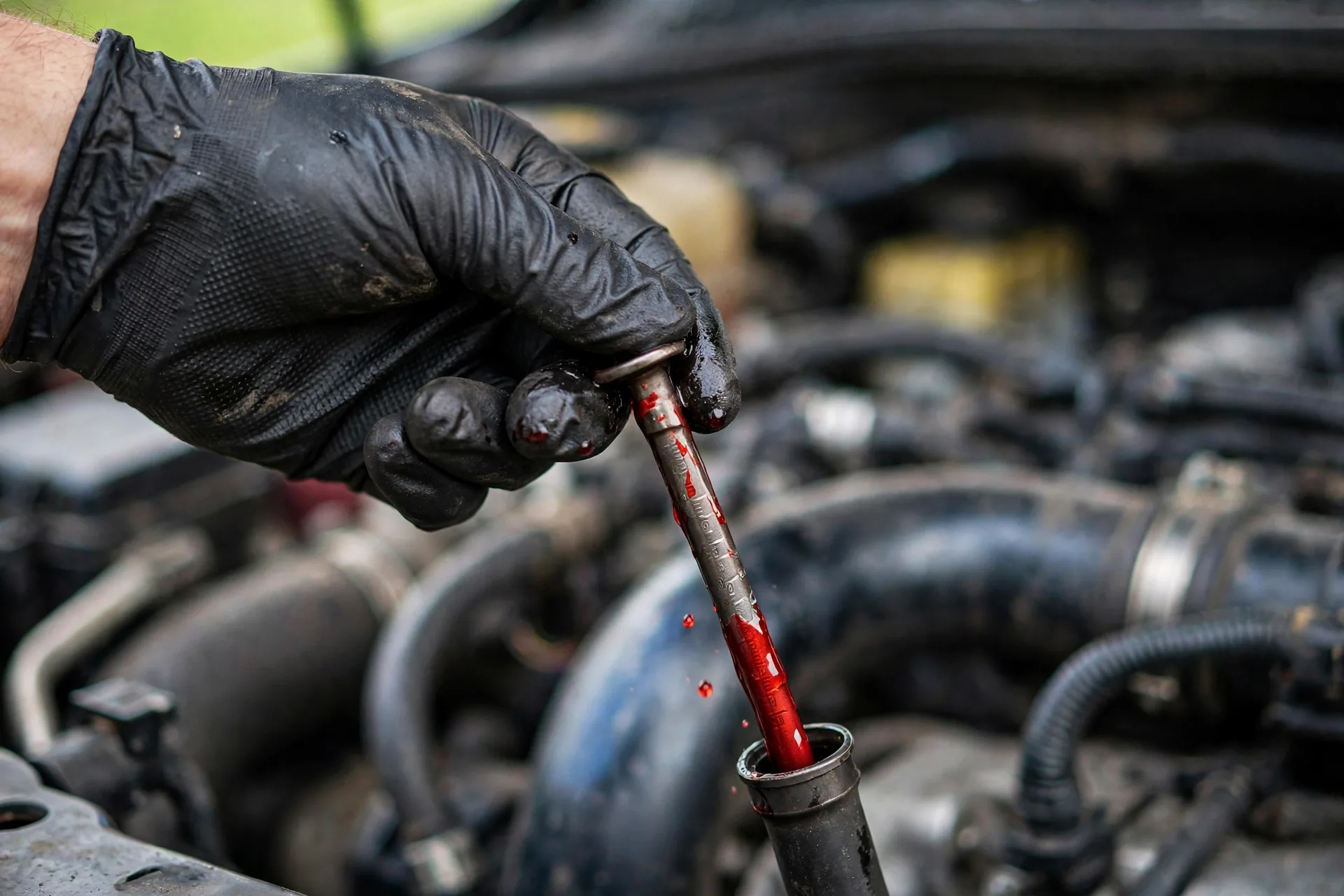
- Pull dipstick, wipe clean
- Reinsert fully
- Pull out and check level
Reading level:
- "Hot" marks: Use these when warmed up
- "Cold" marks: Use when cold (less accurate)
- Between min and max = good
- Below min = add fluid (see below)
Checking condition:
- Color: Should be red/pink, not brown/black
- Smell: Sweet is good, burnt is bad
- Particles: Clean is good, metal flakes are very bad
- Consistency: Should be somewhat thin, not thick like syrup
"Sealed" Transmissions (Many Modern Cars)
No dipstick = pain in the ass
Options:
- Fill/check plug on transmission (underneath car)
- Requires lifting car
- Requires special fill procedure
- Temp must be specific range (120-140°F usually)
Many people don't check because it's difficult. This is by design - discourages maintenance.
My advice: Pay shop $30-50 to check it annually. Worth it.
Warning Signs Fluid is Bad
Visual signs (if you can check):
- Dark brown or black
- Burnt smell (like burnt popcorn)
- Particles visible
- Foamy (air in system)
- Milky (coolant contamination)
Performance signs:
- Delayed engagement (into gear)
- Harsh shifting
- Slipping (RPM rises but car doesn't accelerate)
- Shuddering during acceleration
- Strange noises (whining, clunking)
If you notice these: Get fluid checked immediately. Might save your transmission.
Types of Transmission Fluid
Using wrong fluid will destroy your transmission. Not eventually - quickly.
ATF (Automatic Transmission Fluid)
Dexron VI (GM)
- Red colored
- Most common
- Many Asian cars also use this
- Backward compatible with older Dexron III
Mercon V / Mercon LV (Ford)
- Red colored
- LV is low viscosity (newer)
- Not interchangeable with Dexron
ATF+4 (Chrysler)
- Red colored
- Specific to Chrysler/Dodge/Jeep
- Do not substitute
Type F (Older Fords)
- Rare now
- Some classic cars
- Higher friction coefficient
CVT Fluid (Continuously Variable Transmission)
CRITICAL: CVT fluid is COMPLETELY DIFFERENT from ATF
- Green colored usually
- Much different properties
- Vehicle-specific (Honda CVT ≠ Nissan CVT)
- Using ATF in CVT = destroyed transmission
- Using CVT fluid in automatic = destroyed transmission
If you have a CVT: Use ONLY the specified fluid. No substitutes. No "universal" fluids.
DCT/DSG Fluid (Dual-Clutch Transmissions)
- Specialized fluid
- Different from ATF and CVT
- Follow manufacturer specs exactly
Manual Transmission Fluid
- Manual transmission oil (gear oil)
- Or sometimes ATF (Honda, some others)
- Check manual for correct type
Never assume. Using wrong fluid can cost you $5,000.
Transmission Service Types
There are different levels of service:
Drain and Fill (Most Common)
Process:
- Remove drain plug
- Drain fluid (40-50% of total)
- Replace filter if accessible
- Reinstall pan with new gasket
- Refill with new fluid
Pros:
- Safe for high-mileage transmissions
- Affordable ($150-300)
- Removes some old fluid
Cons:
- Doesn't remove all old fluid
- 50-60% remains mixed
My recommendation: This is fine for regular maintenance
Fluid Exchange / Flush
Process:
- Connect machine to transmission cooler lines
- Pump out old fluid while pumping in new
- Exchanges 90-100% of fluid
Pros:
- Removes almost all old fluid
- Faster (30 minutes)
- More thorough
Cons:
- More expensive ($200-400)
- Some say risky on high-mileage neglected transmissions
- Pressure could dislodge debris and clog passages
Controversial:
Some mechanics swear by flushes. Others say they kill transmissions.
My take:
- If transmission has been maintained regularly: flush is fine
- If transmission has 150,000 miles on original fluid: drain and fill only (flush might dislodge too much crud)
Multiple Drain and Fills
Process:
- Drain and fill (gets 50% new fluid)
- Drive 500 miles
- Drain and fill again (now 75% new fluid)
- Drive 500 miles
- Optional third time (87.5% new fluid)
Pros:
- Safest method for neglected transmissions
- Gradual exchange reduces risk
- Gets most of the old fluid out eventually
Cons:
- More expensive (multiple services)
- Takes longer (time and miles)
Best for: High-mileage transmissions that have been neglected
Related guide: Nissan Altima - Transmission Fluid and Filter Service — A full fluid and filter service walkthrough — the most thorough service type.
DIY Transmission Service (Is It Possible?)
Depends on the transmission:
Easy (Older Cars with Dipstick and Drain Plug)
Difficulty: 4/10 Time: 1-2 hours Cost: $50-100
Process:
- Warm up transmission
- Lift car safely
- Place large drain pan underneath
- Remove drain plug (if available)
- Drain fluid
- Remove pan bolts (if no drain plug)
- Drop pan carefully (fluid spills out)
- Clean pan and magnet
- Replace filter if possible
- Install new gasket
- Reinstall pan with new gasket/RTV
- Torque bolts properly
- Refill through dipstick tube
- Check level
- Run through gears
- Recheck level
Challenges:
- Fluid is messy (have LARGE drain pan)
- Getting fluid IN can be difficult (pump usually needed)
- Checking level precisely
- Correct fluid amount critical
Difficult (Modern Sealed Transmissions)
Difficulty: 7/10 Requires:
- Specific fill procedure
- Temperature monitoring
- Special tools
- Correct fill level procedure
Most people should NOT DIY these. Let shop handle it.
CVT Transmissions
Difficulty: 8/10
My advice: Don't DIY. These are finicky. Let dealer or transmission shop do it.
Why:
- Fluid level critical
- Special procedures
- Easy to damage
- Expensive to fix mistakes
Related guide: 2008-2014 Smart Fortwo - Transmission Fluid Change — Here is an actual transmission fluid change walkthrough on a real car.
What NOT to Do
Don't Flush a Neglected High-Mileage Transmission
If transmission has 150,000+ miles on original dark fluid:
Don't flush it. The old fluid is actually holding worn components together. Flushing can:
- Dislodge varnish and debris
- Clog passages and valves
- Cause immediate failure
Instead: Drain and fill, drive, drain and fill again
Don't Mix Fluid Types
Using wrong fluid or mixing types will cause:
- Seal swelling/shrinking
- Clutch pack failure
- Valve body issues
- Complete transmission failure
Use ONLY specified fluid.
Don't Overfill
Too much fluid causes:
- Foaming (air mixed in fluid)
- Poor lubrication (foam doesn't lubricate)
- Overheating
- Seal leaks from pressure
Don't Ignore Leaks
Small transmission leak = transmission losing fluid = transmission damage
Fix leaks immediately. Running low on fluid destroys transmissions fast.
Don't Skip the Filter
If your transmission has a replaceable filter, replace it during service.
Old filter = restricted flow = transmission damage
Filter cost: $20-40 usually. Cheap insurance.
Signs Your Transmission is Failing
Even with maintenance, transmissions can fail. Warning signs:
Early warning:
- Slight delay going into gear
- Occasional harsh shift
- Slight shudder under light acceleration
Get it checked now. Might be simple fix.
Serious warning:
- Slipping (RPM rises but car doesn't accelerate)
- Won't go into gear
- Grinding or clunking noises
- Burning smell
- Check engine light (transmission codes)
Immediate attention needed. Could save transmission.
Too late:
- No movement in any gear
- Severe grinding
- Metal in fluid
- Already failed
Cost of Neglecting Transmission Fluid
Let's do the math:
Preventive maintenance:
- Transmission service every 50,000 miles: $200
- Over 200,000 miles: $800 total
Neglecting it:
- Transmission failure at 110,000 miles
- Rebuilt transmission: $3,000-5,000
- New transmission: $4,000-8,000
- Used transmission: $1,500-3,000 (+ labor)
Savings by maintaining: $2,200-7,200
That's a no-brainer.
Manual Transmission Fluid
Manual transmissions are simpler but still need service:
When to change:
- Every 60,000-80,000 miles
- Or if fluid is dark/smells burnt
- Or if shifting becomes difficult
What to use:
- Check manual (could be gear oil, ATF, or special fluid)
- Honda uses ATF in many manuals
- Most use 75W-90 or 75W-85 gear oil
Signs of problems:
- Hard to shift into gear
- Grinding when shifting
- Popping out of gear
- Whining noise
Easier to service: Usually just drain and fill. No filter usually.
Related guide: 2012-2015 Honda Civic - Manual Transmission Fluid Change — The manual-transmission version of the job, step by step.
The Bottom Line
Transmission maintenance is the most ignored and most expensive mistake.
What you need to know:
- "Lifetime fluid" is marketing BS - change it every 50,000-60,000 miles
- Use correct fluid - wrong fluid destroys transmissions
- Check fluid annually - catch problems early
- Fix leaks immediately - low fluid kills fast
- Severe conditions = more frequent changes - towing, city traffic, extreme temps
How to save your transmission:
- Change fluid every 50,000 miles
- Use correct fluid type
- Keep it cool (add transmission cooler if towing)
- Fix leaks immediately
- Address symptoms early
$200 every 50,000 miles beats $4,000 transmission replacement.
This is the maintenance people skip most often, and it costs them the most.
Don't be one of them.
Questions about transmission maintenance? Drop them below. I've serviced hundreds of transmissions and seen every failure mode.
- Tom Becker, Senior Technician, Becker's Garage
Last reviewed: October 2026.