Buying Tires: When, Where, and How to Choose
Buy new tires when your current ones can no longer grip safely, not when a calendar or a salesperson tells you to. Tread depth, tire age, and visible damage are the three things that decide it, and you can check all three in your driveway in about ten minutes. This guide walks through those checks, how to pick the right tire for your car and your driving, and where to buy without overpaying.
When Your Tires Are Done
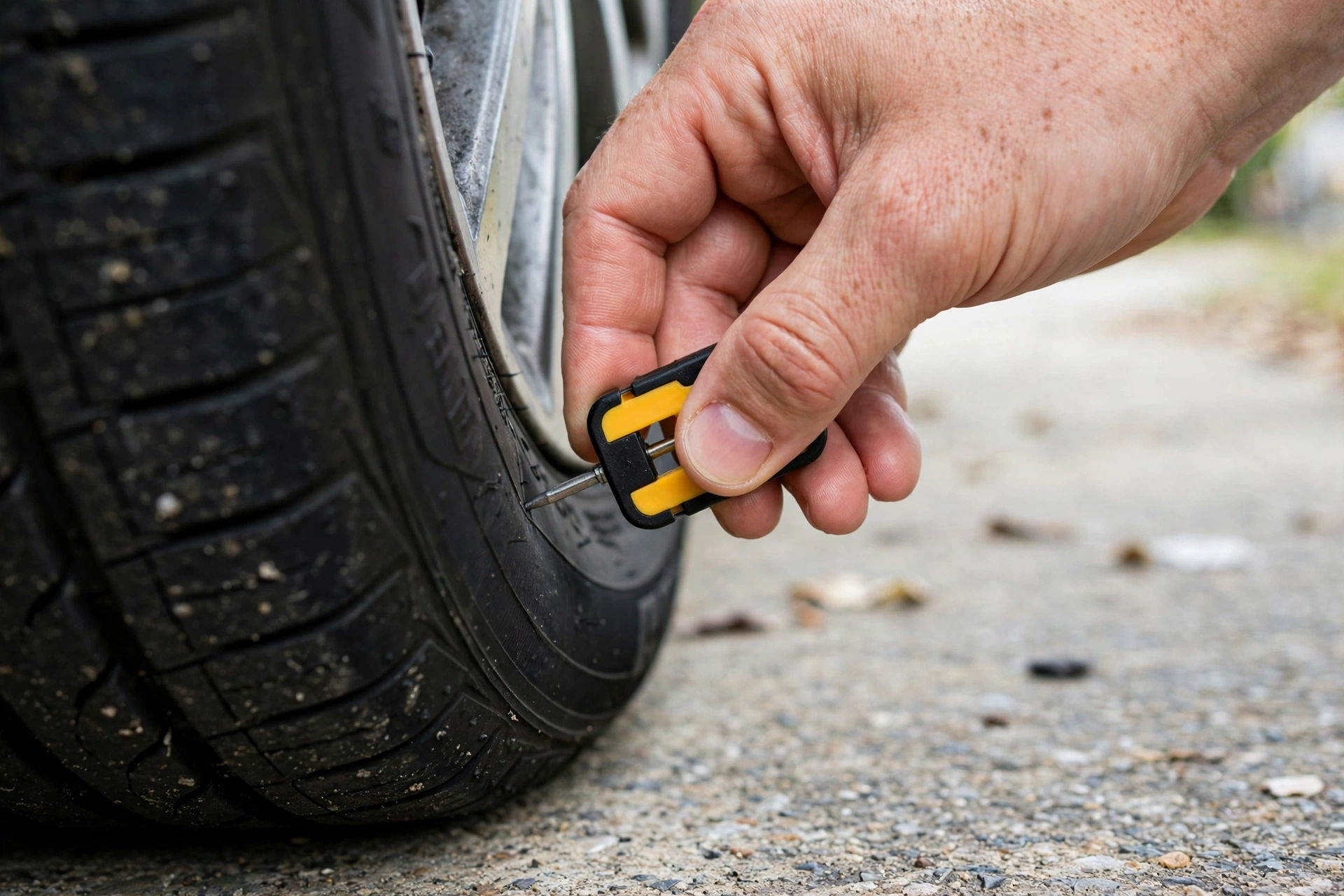
Start with tread. The legal minimum in most states is 2/32 of an inch, and by that point a tire is already struggling in rain. The penny test is a quick check you can do right now: put a penny into a tread groove with Lincoln's head pointing down. If you can see the top of his head, the tread is too shallow for wet roads and it is time to shop.
Look at the whole tire, not just one spot. Tread worn bald on one edge points to an alignment or inflation problem that will eat a new set just as fast if you do not fix it first. Cracks in the sidewall, bulges, cuts deep enough to show cord, and any puncture in the sidewall or shoulder are replacement reasons on their own, no matter how much tread is left.
Age matters even when tread looks fine. Find the DOT code on the sidewall: the last four digits are the week and year the tire was made, so 3221 means the 32nd week of 2021. A tire that has spent years in sun and heat can be dried out and brittle while the tread still looks healthy, so have old tires inspected even if the penny test passes.
Finally, think about how the car feels. Longer stopping distances in rain, sliding on wet pavement, new vibration, and a tire that keeps losing air are all signs the set is finished. One bad tire is a reason to replace at least a pair on the same axle, and replacing all four is cleanest when the set is worn evenly.
How to Read Your Tire Size and Pick the Right Type
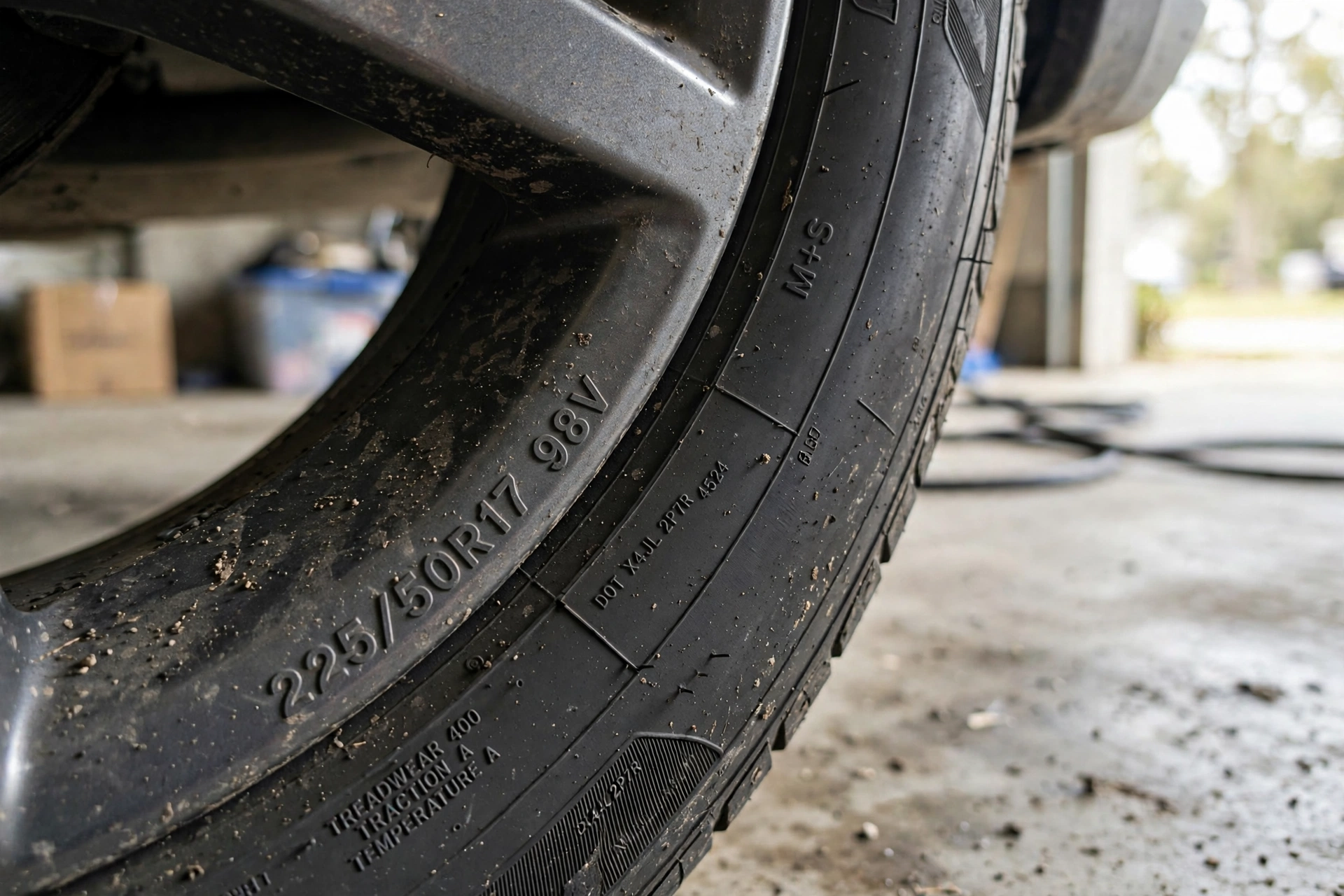
Your tire size is printed on the sidewall and on a sticker in the driver door jamb. The only safe move is to match it exactly unless a shop confirms a different size fits your wheels and your car. The door jamb sticker also gives the recommended pressure, which is the number to use when you fill up. The maximum pressure on the sidewall is not the recommended pressure, it is the tire's limit.
Next, pick a type that matches your weather and your driving:
- All season tires are the default for most drivers. They handle dry roads, rain, and light snow, and they last a long time. If you see real winter where you live, they are a compromise, not a solution.
- Winter tires use softer rubber and a tread pattern built for snow and ice. They are the right call if your winters are long and harsh, and they should go on all four wheels, never just the front or rear pair.
- All terrain tires suit trucks and SUVs that split time between pavement and dirt. They are louder and wear faster on the highway than a road tire, so buy them only if you actually use them off pavement.
- Performance tires grip hard in dry and wet conditions but wear faster and cost more over the life of the car. They make sense on a car you drive hard, not on a commuter you just want to be cheap and quiet.
Within a type, the differences that matter are tread life, wet grip, noise, and ride comfort. Read owner reviews for your exact size, but weigh them lightly. A tire with a long tread life warranty that rides harshly is a bad deal if you hate driving on it for years, and a quiet tire that wears out early is a bad deal in the other direction. Pick the balance you will actually live with.
Load and speed ratings are printed on the sidewall too. Never buy a tire rated below what your car calls for, and check your owner's manual if you are unsure, because the manual is the final word for your car.
Where to Buy: Shop, Dealer, or Online
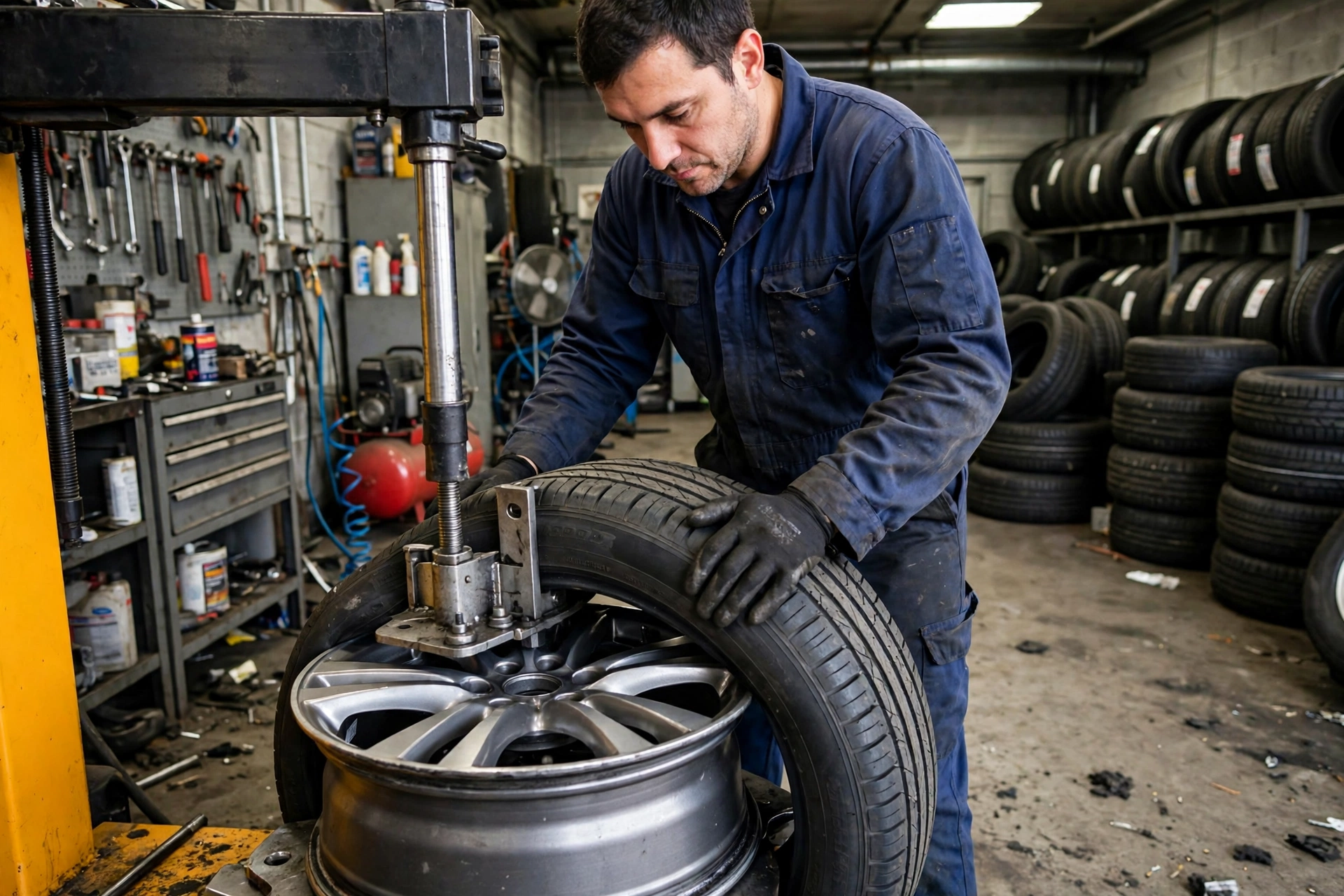
You have three main options, and each one fits a different buyer.
A local independent tire shop is the best default. The staff sees your car, checks the old tires, and can spot alignment wear or a bent wheel before the new set goes on. Installation, balancing, and disposal are usually handled in one visit, and if a vibration shows up a week later, you can drive back and have it fixed. Ask what the quoted price includes before you agree, because mounting, balancing, valve stems, and disposal can be bundled or billed separately.
A dealership is the simplest option if your car needs an unusual size or you want the exact tire it came with, but it is rarely the cheapest route. Dealers also tend to stock fewer options, so you may get one or two choices instead of a real comparison.
Buying online and having the tires shipped to a local installer can save money, especially on common sizes. The catch is logistics: you pay for installation separately, you wait for shipping, and if a tire arrives damaged or wrong, you are the one sorting it out. This route works best when you know your exact size, have a trusted installer lined up, and have confirmed the total cost including installation before ordering.
Whichever route you pick, get the full out the door figure in writing before work starts: tires, mounting, balancing, valve stems, disposal, and alignment if you need it. That is the only number that lets you compare two quotes fairly. Do get an alignment if your old tires wore unevenly or you just replaced suspension parts, because new tires on a car with bad alignment is money thrown away.
What the Shop Visit Should Include
A proper tire job is more than swapping rubber. Expect the shop to mount and balance each tire, fit new valve stems, and set pressures to the door jamb figure, not the sidewall maximum. Ask them to check the wheels for bends and cracks while the old tires are off, and to look at the brakes, since the wheels are already off.
After installation, the car should drive straight on a flat road and feel smooth at highway speed. Vibration through the steering wheel usually means a balance problem, and a pull to one side usually means alignment or pressure. Both are worth a return visit right away, while the job is fresh.
Keep the paperwork. The receipt proves the purchase date for warranty claims. Tread life warranties are prorated and come with conditions, so read the terms before you need them, and ask whether road hazard coverage is included, because it is not automatic.
Cost Without the Guesswork
This post gives no prices, because tire prices swing widely by size, brand, and region, and a number from one market would mislead readers in another. What you can count on is the shape of the bill. The tires themselves are most of the cost. Mounting and balancing, valve stems, and disposal are smaller add ons. Alignment is a separate job with its own charge, and it is worth paying for only when your old tires or your car's behavior say you need it.
The way to save real money is not to chase the cheapest tire, it is to avoid buying twice. A set that wears evenly because pressures are right and alignment is straight lasts far longer than a bargain set ruined by neglect. Check pressures monthly, rotate on the schedule in your owner's manual, and check tread every few months. Those three habits cost almost nothing and stretch every tire you buy.
DIY vs Shop Verdict
Mounting and balancing tires is a shop job. It needs a tire machine and a balancer, and no driveway workaround does it safely or well. What you should do yourself is everything around the purchase: checking tread and age, reading your size, comparing quotes, and keeping pressures right after installation. That split keeps the skilled work where it belongs.
FAQ
How many tires should I replace at once?
Replace at least both tires on the same axle. Replacing all four is best when the set is worn evenly, because matched tires give predictable braking and handling.
Can I put a different size tire on my car?
Only if a shop confirms the new size fits your wheels, clears the brakes and suspension, and keeps the overall diameter close to stock. The wrong size throws off your speedometer, can rub, and can confuse traction control. When in doubt, stick with the size on the door jamb sticker.
Do I need winter tires if I have all wheel drive?
All wheel drive helps you get moving, it does not help you stop. Stopping and turning on snow and ice come down to the tires. If your winters are serious, winter tires on all four wheels are worth more than any drivetrain badge.
How long do new tires last?
It depends on the tire, your driving, your roads, and your maintenance. Highway miles on a touring tire with correct pressures and regular rotation last far longer than city miles on a soft performance tire that never gets checked. Tread and pressure checks tell you where your set actually stands, better than any mileage promise.
The Bottom Line
Buy tires when tread, age, or damage says the set is done, match your size exactly, pick the type that fits your real weather, and compare full out the door quotes before anyone touches a wrench. Keep pressures right and rotate on schedule, and the set you buy will last as long as it should. For the maintenance that protects a new set, read Tire Rotation and Maintenance: The Simple Job That Doubles Tire Life, and if a flat catches you before you buy, How to Change a Flat Tire: Spare Tire Guide covers the roadside fix. A related step by step is Tire Pressure and Rotation for the 2013-2022 Acura ILX, with a second example in Tire Pressure and Rotation for the 2018-2022 Honda Accord. For cold weather choices, Winter Tires vs All-Season vs All-Weather: What You Actually Need lays out the tradeoffs.
Safety: Informational DIY. EZ Car Fix is not a shop or dealer.