How Far Can You Drive on Empty?
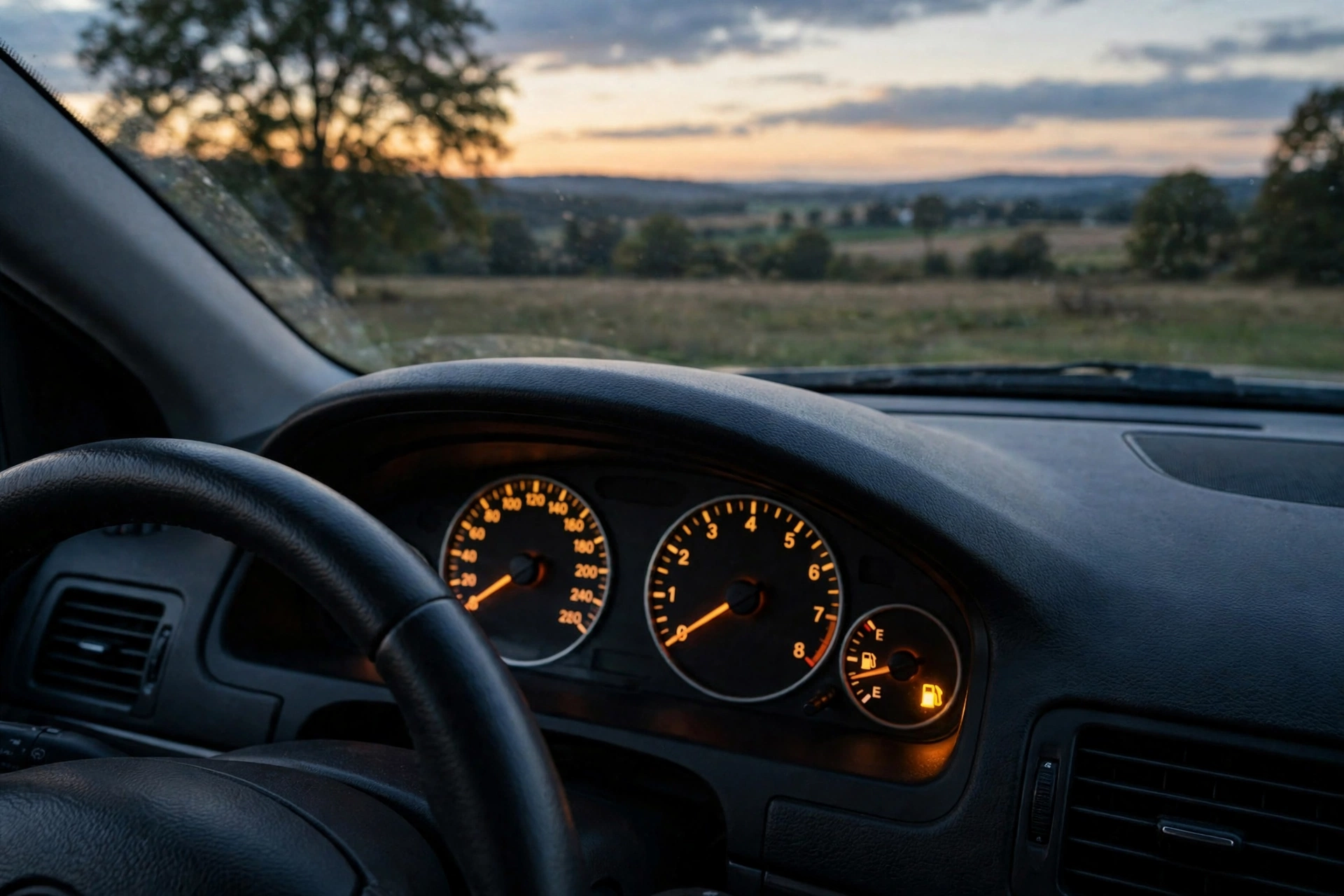
Short answer: think tens of miles, not hundreds. When the low fuel light comes on, you still have a reserve, but that reserve is a cushion, not a promise. Treat the light as an order to find fuel now, not as the start of a game you can win by coasting to the next exit.
Every driver has done the math in their head at least once: the next station is a few miles away, the gauge says empty, and turning around feels silly. Sometimes you make it. The problem is that the one time you do not make it costs you a tow, a missed appointment, and a long walk in bad weather. The light is not there to test your nerve. It is there to tell you the easy part of the trip is over.
What the Low Fuel Light Actually Means
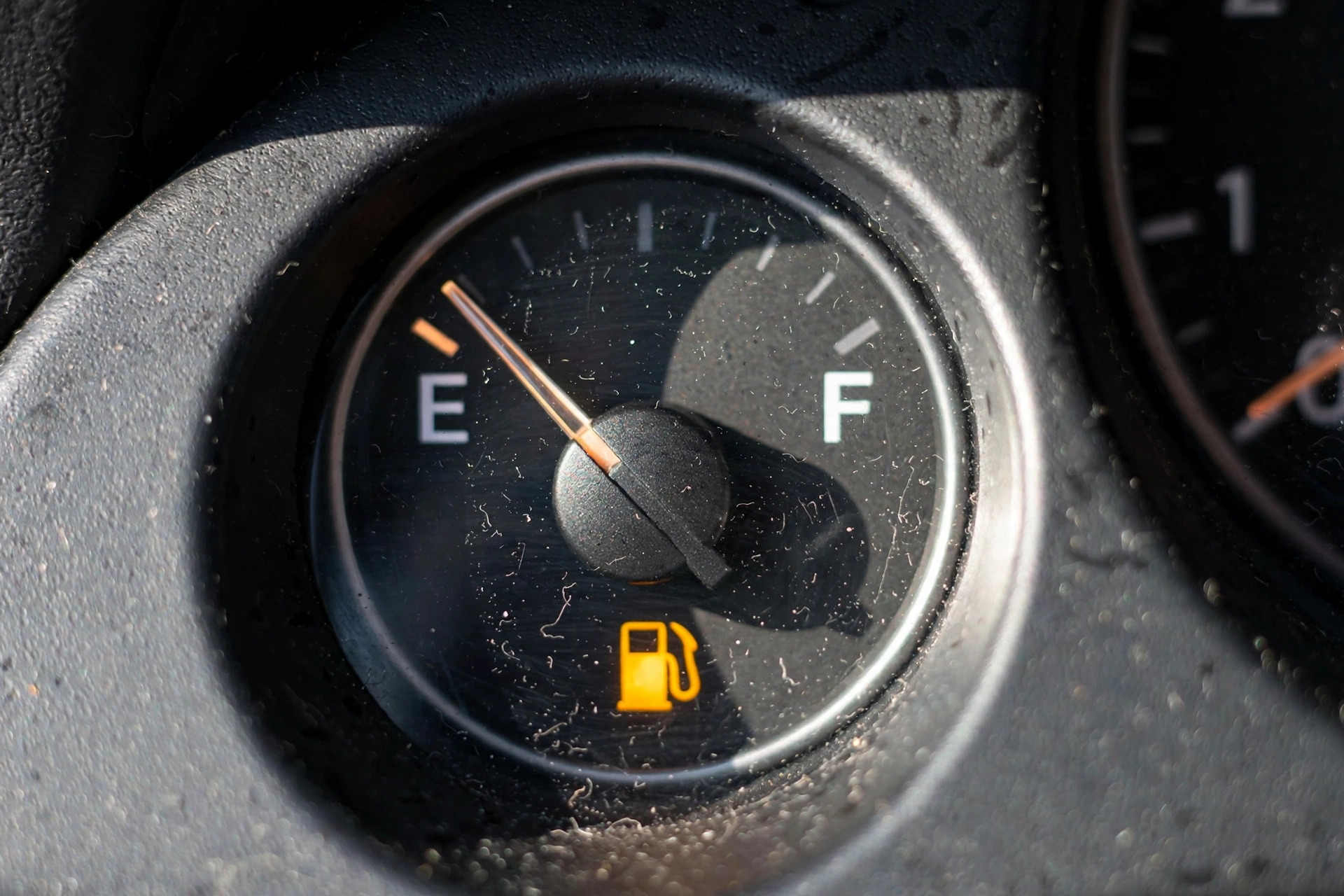
The light does not mean the tank is dry. It means you have reached the reserve your carmaker built in, the last portion of fuel the gauge treats as a warning zone rather than normal driving range. How big that reserve is depends on the car. A small hatchback and a full size truck do not carry the same cushion, and your owner's manual is the only place that states your car's exact figure, so check it before you need it.
Two things make the light easy to misread. First, the gauge itself is an estimate, not a measuring cup. Fuel sloshes around as you drive, park on slopes, and take corners, so the needle moves. Second, the "miles to empty" number on the dash is a guess built from your recent driving. Spend an hour in stop and go traffic and that number falls fast. Spend the same hour cruising on a flat highway and it climbs. Neither reading is a lie. Both are just estimates based on conditions that keep changing under you.
Why Your Range Estimate Keeps Changing
Your car burns fuel at very different rates depending on what you ask it to do. Steady highway cruising sips fuel. Stop and go traffic, steep hills, a loaded roof rack, and long idling all drink it. Air conditioning adds load too, and cold weather makes engines run richer while they warm up. So the same reserve that carries one driver comfortably to a station can leave another driver stranded a few miles short, even in the same model of car.
This is why two drivers can argue about this topic forever and both be telling the truth. The driver who nursed a car 40 miles past the light on a flat highway in summer was not driving the same trip as the driver who stalled 10 miles past it in winter traffic. The light is the same. The conditions are not.
What Running on Empty Does to Your Car
Here is the part most people get wrong. One trip to the light will not ruin your car. Making a habit of it can shorten the life of your fuel pump, and that is a repair you want to avoid.
Most modern fuel pumps sit inside the tank, and the fuel around them helps keep them cool. When you run the tank down to fumes again and again, the pump runs hotter and works harder to pull up the last of the fuel. Over time, that extra heat and strain can wear it out early. A fuel pump replacement is a big ticket job, mostly labor, because the tank often has to come down to reach it. That is a steep price for a habit that saves you nothing, since you buy the same fuel either way.
There is also the old story about sediment at the bottom of the tank clogging everything the moment you run low. The truth is less dramatic. Your fuel filter exists to catch debris, and it does that job whether the tank is full or nearly empty. If your car stumbles under load or struggles to hold speed, a restricted filter is one suspect worth knowing about, and 2019-2024 Chevrolet Silverado — Fuel Filter Replacement shows what that job involves on one common truck. The real risk of running dry is simpler: the pump starves, the engine sputters, and you stall somewhere you did not plan to stop. On a busy highway or a dark road, that is a safety problem before it is a mechanical one.
If your car has started sputtering or cutting out on low fuel before, read our Fuel Pump Failure Guide to learn the warning signs of a pump on its way out. And if you want the full picture of how the system works, our Fuel System Maintenance Guide walks through the parts involved.
What to Do the Moment the Light Comes On
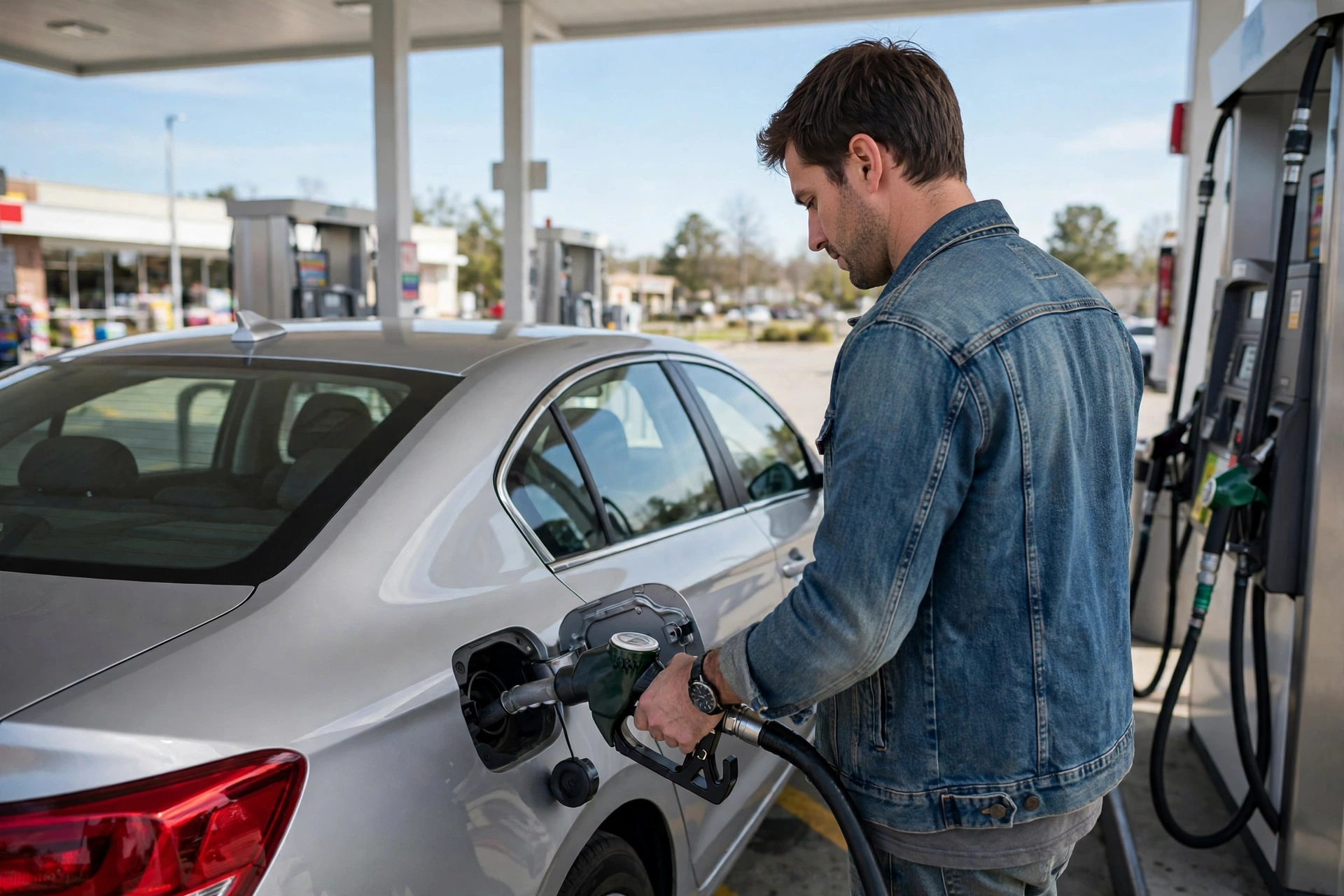
Do not panic, and do not try to set a personal record. Do this instead:
- Find the nearest station right away. Use your phone or the car's navigation and pick the closest one in the direction you are already traveling, not the cheapest one across town.
- Slow down and drive smoothly. Hard acceleration and high speeds burn fuel fast. A steady, moderate pace stretches every drop further than any trick.
- Turn off the air conditioning if you can stand it, and cut any accessory load you do not need, like heated seats and the rear defroster.
- Skip the detours. No drive through food, no "one quick errand." Every extra mile is a mile you do not have to spare.
- If the engine starts sputtering, get off the road as soon as it is safe. Do not try to push through a sputter to the next exit. A stalled car in a travel lane is far worse than a stalled car on a shoulder.
How to Stretch the Tank in a Pinch
If the nearest station is further than you would like, smooth driving is your best tool. Anticipate stops so you coast up to red lights instead of braking hard at the last second. Keep your speed steady instead of surging and slowing. At highway speed, keep the windows closed, since open windows add drag that costs fuel. None of this will double your range. It might buy you the few extra miles that get you to a pump instead of a shoulder.
One more honest point: if you are already on a long stretch with no station in sight, say a rural highway at night, the right move is to pull over somewhere safe and call for help early, while your phone still has charge and you still have options. Waiting until the car dies to make that call only narrows them.
When It Is Already Too Late and You Ran Dry
If the engine dies, steer to the safest spot you can reach, turn on your hazard lights, and stay with the car if the location is safe. Do not keep cranking the engine over and over. That drains the battery and does nothing without fuel to burn.
Once you have fuel in the tank, most gasoline cars will start after a few key cycles, turning the key to run for a few seconds so the pump can prime the lines, then starting normally. Check your owner's manual for your car's exact procedure, especially if you drive a diesel, since diesels can be fussier about air in the fuel lines after running dry. If the car still will not start after fuel and a few careful attempts, stop and call a shop or a tow. Something else may be wrong, and guessing at it on the roadside will not fix it.
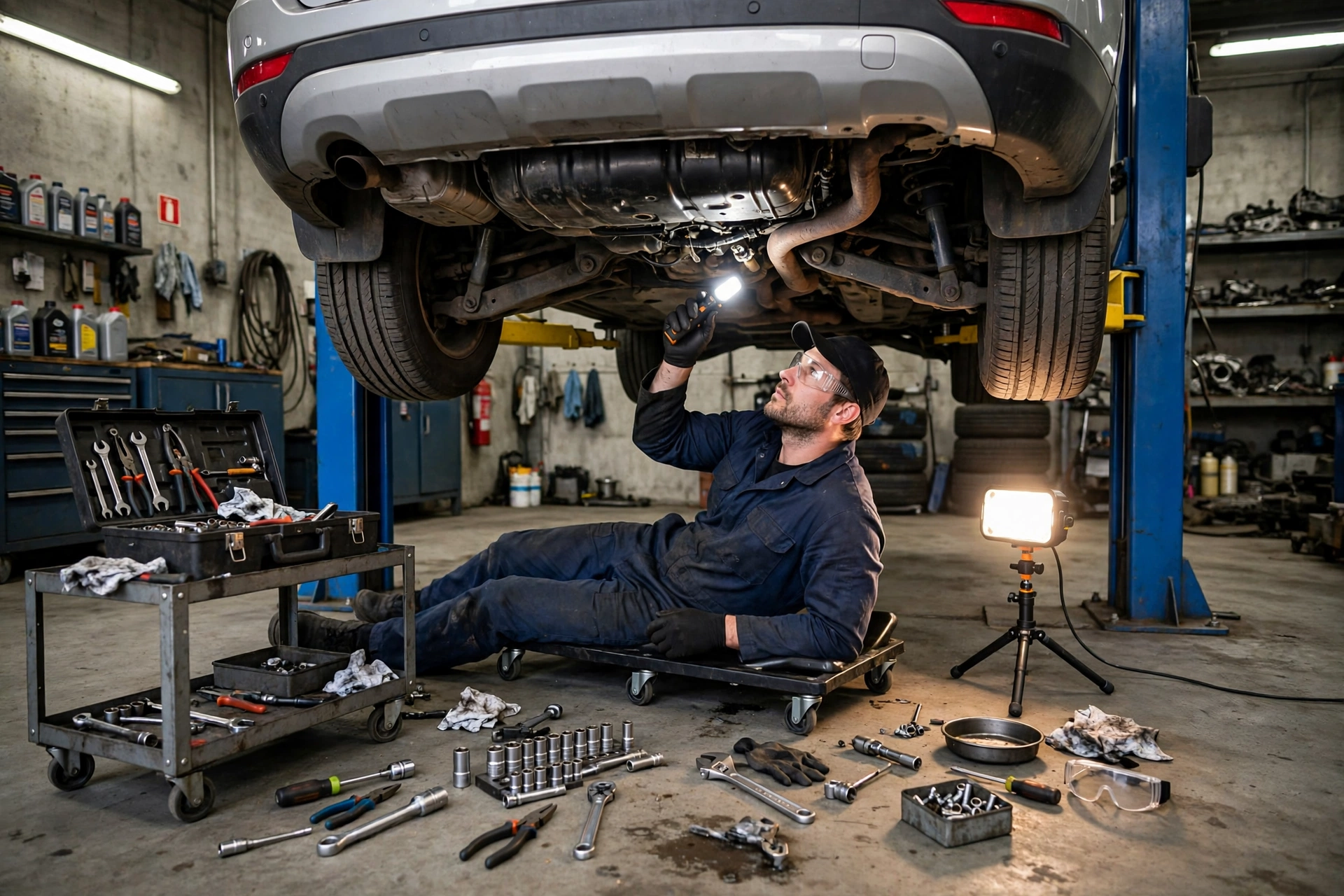
A fuel pump that has been starved repeatedly is one of the things a shop will check first, and the repair is not a small one. The step by step for one common model is laid out in 2016-2025 Chevrolet Malibu — Fuel Pump Replacement, and the same job on other models follows the same general pattern. Keeping the tank above a quarter is a lot cheaper than paying for that job.
FAQ
Does driving on empty damage the fuel pump?
Doing it once will not kill it. Doing it all the time can. The pump relies on surrounding fuel to stay cool, and repeated low running adds heat and strain that shortens its life. A fuel pump job is a big ticket repair, mostly labor, so the habit is an expensive one.
Can I trust the miles to empty display?
Trust it as a rough guide, not a fact. It is calculated from your recent driving, so it changes as conditions change. Treat it as "roughly this far under similar driving" and plan with a margin, not as a precise countdown.
Is it worse to run low in winter?
Winter makes it a worse idea, for two reasons. Cold starts use more fuel, and a nearly empty tank leaves less room for error if you get stuck in weather or traffic. Keeping the tank fuller in winter is cheap insurance.
My gauge reads empty right after I filled up. What is wrong?
That points to a gauge or fuel level sender problem, not an empty tank. The sender is the part that reports the fuel level, and when it fails the gauge can stick, jump, or read empty. That is a diagnosis job for a shop.
The Verdict
Stop treating the low fuel light as a challenge. It is a reminder that you are driving on borrowed range, and borrowed range runs out without warning. The drivers who never worry about this are not the ones with the biggest tanks. They are the ones with the simplest habit: refill at a quarter tank, every time, no exceptions.
That one habit costs you nothing, since you buy the same fuel either way, and it keeps you out of the two worst outcomes: a dangerous stall and a big ticket fuel pump bill. Fill up early, drive calmly, and let the light be something you rarely see.
Safety: Informational DIY. EZ Car Fix is not a shop or dealer.