Quick answer: Front Brake Pads Replacement on a 2018–2022 Honda Accord is rated Moderate and takes about 1 hour. You'll need 7 tools for this job, and parts cost about $250. This guide walks you through the full job step by step, including the mistakes to avoid.
| Part Name |
Part Number |
Price |
Buy |
| Front Brake Pads |
SCD2115 |
$100.00 |
|
| Front Brake Rotors |
— |
$150.00 |
|
About prices: shown prices are typical retail averages and change frequently; cheaper alternatives may be available. Confirm the current price before buying.
💡 Pro tip: Order all parts at once to save on shipping
Step-by-Step Instructions
Follow these steps carefully
1
Loosen lugs and raise the vehicle
Verify your trim/engine BEFORE ordering — this is the #1 mistake. The 2.0T shares its engine family with the Civic Type R — the 312mm brakes match the performance. Loosen lugs (80 ft-lbs on reinstall), jack up, support with stands.
🔧 Mechanic's note — Tom Becker
Measure your rotors before you order — the 293mm versus 312mm split is the #1 mistake on this car, and I have seen the wrong rotors unboxed in the driveway more than once. Your trim code settles it.
2
Remove the wheel
Remove the front wheel. Verify your rotor size: measure or check your trim. 1.5L = 293mm, 2.0L/Hybrid = 312mm. If you're replacing rotors, confirm the new ones match your trim's size — a 293mm rotor won't work on a 312mm car and vice versa.
3
Remove the bracket bolts and slide the rotor off
If replacing rotors, remove the bracket bolts and slide the rotor off (penetrating oil if rusted). Verify the new rotor matches your trim: 293mm for 1.5L, 312mm for 2.0L/Hybrid.
4
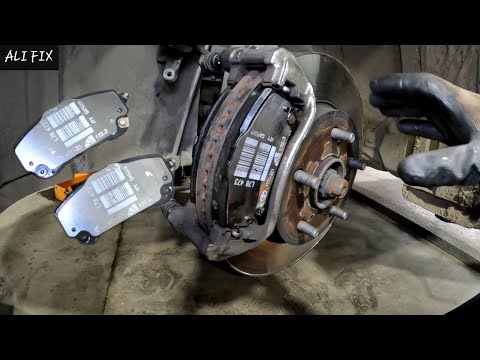
Remove old pads and hardware
Remove the old pads. Note the mechanical squeal tab position. Inspect the rotor: check for scoring, warping, or minimum thickness. Ensure the slide pins move freely. The 293mm vs 312mm split means pads may also differ — verify your pads match your rotor size.
5
Compress the piston
Push the single piston back with a C-clamp or piston tool. Open the brake fluid reservoir cap first. The piston should retract smoothly — no rotation needed. If the piston is seized or the boot is torn, the caliper needs service. Clean around the piston.
6
Clean and install hardware
Clean the caliper bracket thoroughly — remove rust and debris from the pad slides. Install new hardware/clips. Install the new pads — ensure they slide freely in the bracket. Position the squeal tab correctly. Verify the pads are for your rotor size (293mm vs 312mm).
7
Install new pads and caliper
Slide the caliper back over the new pads. Reinstall the slide-pin bolts to Honda spec (verify against service manual — specific torque not confirmed for 10th gen). Pump the brake pedal several times to seat the pads against the rotor.
🔧 Mechanic's note — Ray Delgado
I've been burned enough times that I always look up the slide-pin bolt torque in the service manual before you guess — the spec was not confirmed for the 10th gen, and guessing on brake hardware is not where you save time.
8
Refit wheel and pump the pedal
Reinstall the wheel and torque lug nuts to 80 ft-lbs (108 Nm) in a star pattern. Lower the Accord. Bed the new pads with moderate stops from 30-40 mph (avoid hard stops for the first 200 miles). Test drive: the Accord should stop smoothly with no pulling or vibration. If you feel pulsation, the rotors may be warped — verify you installed the correct size (293mm vs 312mm). The 10th-gen Accord's brakes are excellent when properly maintained.
All Done!
Test your repair before closing everything up. If something doesn't work right, double-check your steps.
⚠️ Common Mistakes to Avoid
- • Not properly securing the vehicle before starting the repair
- • Failing to lubricate the back of the brake pads, leading to noise
- • Over-tightening the caliper bolts, which can damage components