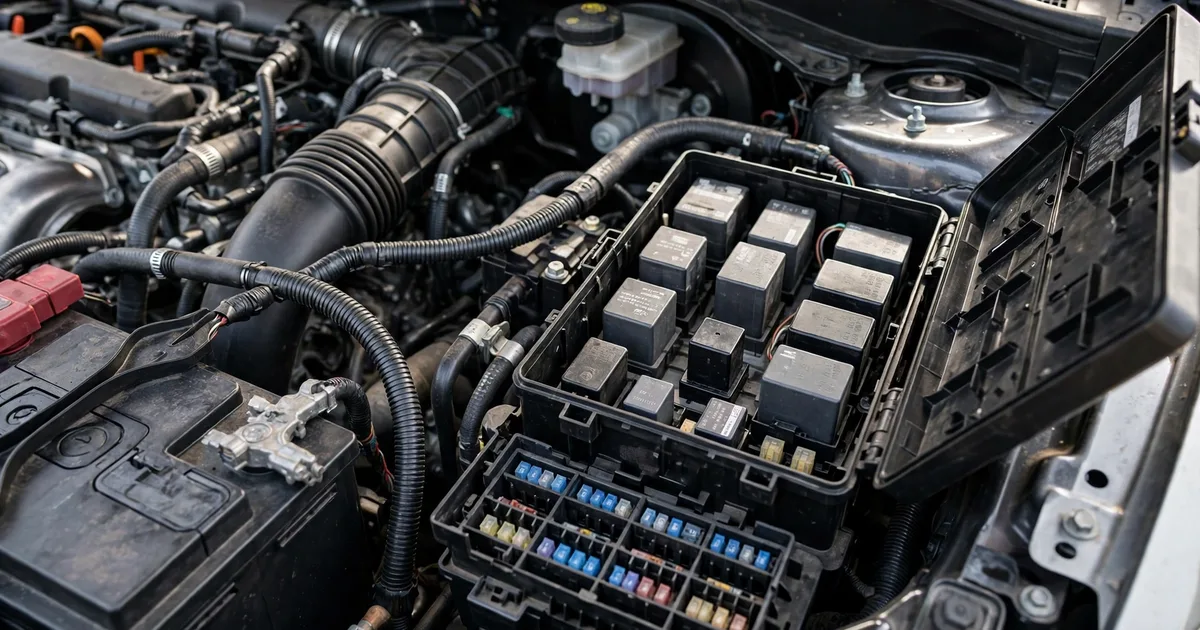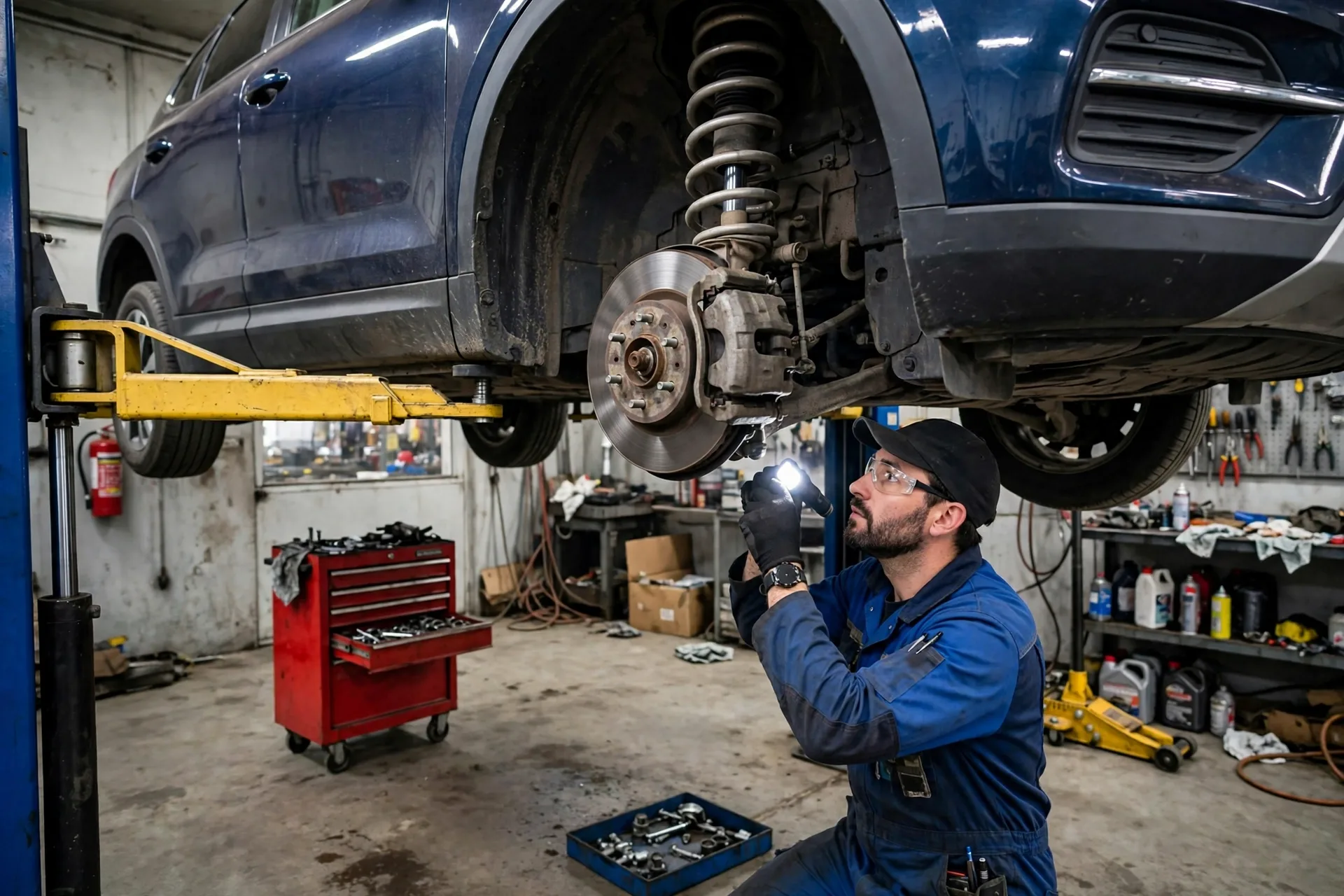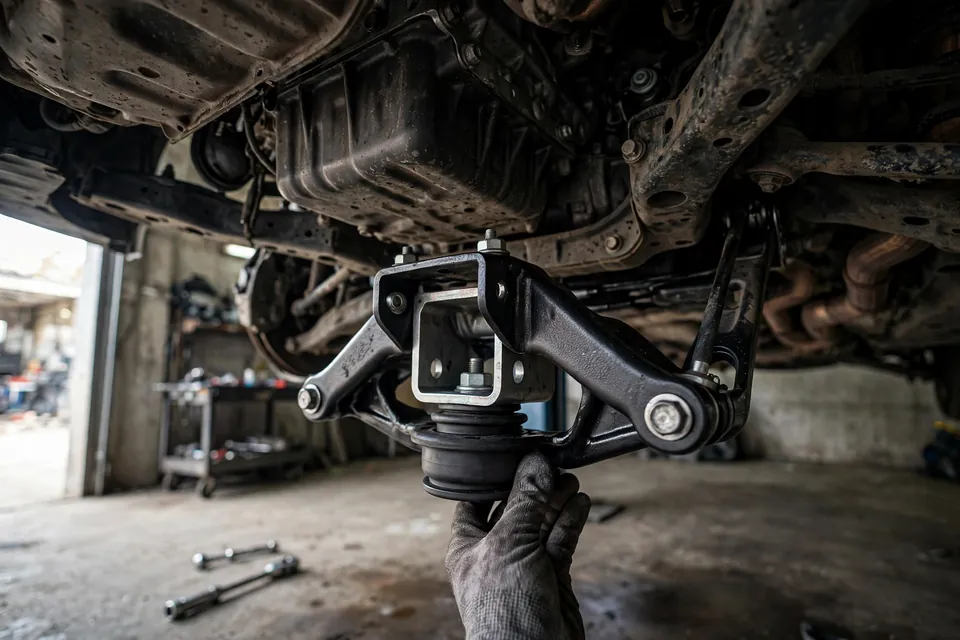
The Mounts Holding 500 Pounds of Shaking Metal
Your engine weighs 300-500 pounds and shakes constantly from combustion. It sits on rubber and metal mounts that isolate this vibration from your car's body.
When mounts fail:
- Excessive vibration through steering wheel and floor
- Clunking when shifting or accelerating
- Engine visibly moves too much
- Wears out other components faster
- Uncomfortable driving experience
I see people ignore bad engine mounts because "the car still runs." But worn mounts cause excessive movement that damages CV axles, exhaust components, wiring, hoses, and makes driving miserable.
Cost to fix? $150-400 per mount usually. Most cars have 3-4 mounts.
Let me show you what mounts do, how they fail, and when to replace them.
What Engine Mounts Do
Three main functions:
1. Support engine weight (300-500 lbs)
2. Prevent excessive movement:
- From torque (acceleration/deceleration)
- From engine vibration
- From bumps and impacts
3. Isolate vibration:
- Rubber absorbs engine shake
- Keeps vibration from reaching cabin
- Makes driving comfortable
Typical car has 3-4 mounts:
Front engine mount:
- Supports front of engine
- Controls engine rock during acceleration
Rear engine mount:
- Supports rear of engine
- Controls engine movement
Transmission mount:
- Supports transmission
- Prevents excessive movement during shifting
Side mount (if applicable):
- Provides lateral support
- Some cars have left or right mount
Types of Engine Mounts
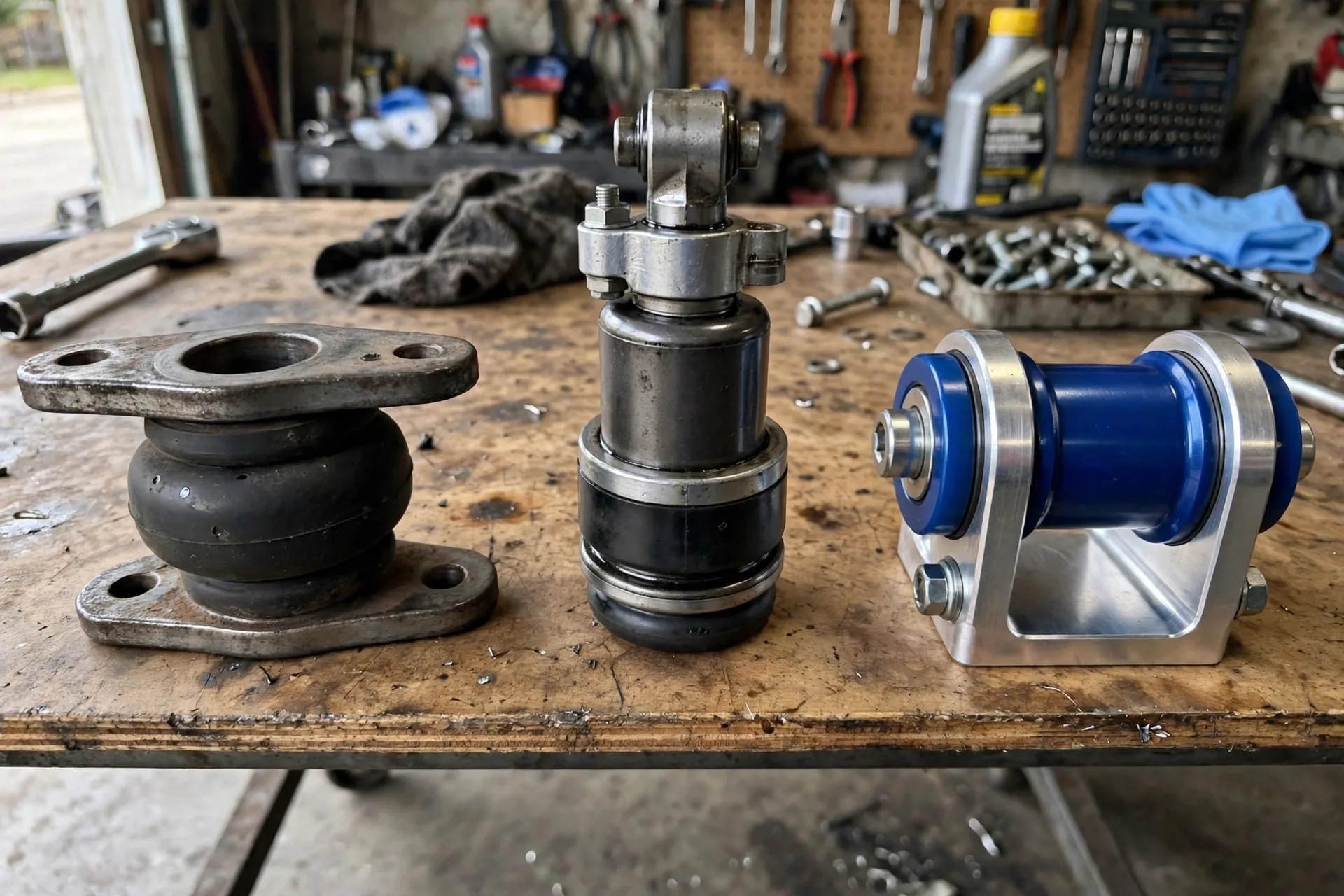
Solid Rubber Mounts (Older Cars)
Design:
- Metal brackets
- Solid rubber between them
- Simple, reliable
Pros: Cheap, simple
Cons: Less isolation, harsher
Hydraulic Mounts (Modern Cars)
Design:
- Rubber mount filled with fluid
- Fluid dampens vibration better
- More complex
Pros: Better vibration isolation
Cons: More expensive, can leak fluid
Most modern cars use these
Active Mounts (High-End Cars)
Design:
- Computer-controlled
- Variable dampening
- Vacuum or electronically actuated
Pros: Best vibration control
Cons: Very expensive, complex
Found on: Luxury vehicles, performance cars
Symptoms of Bad Engine Mounts
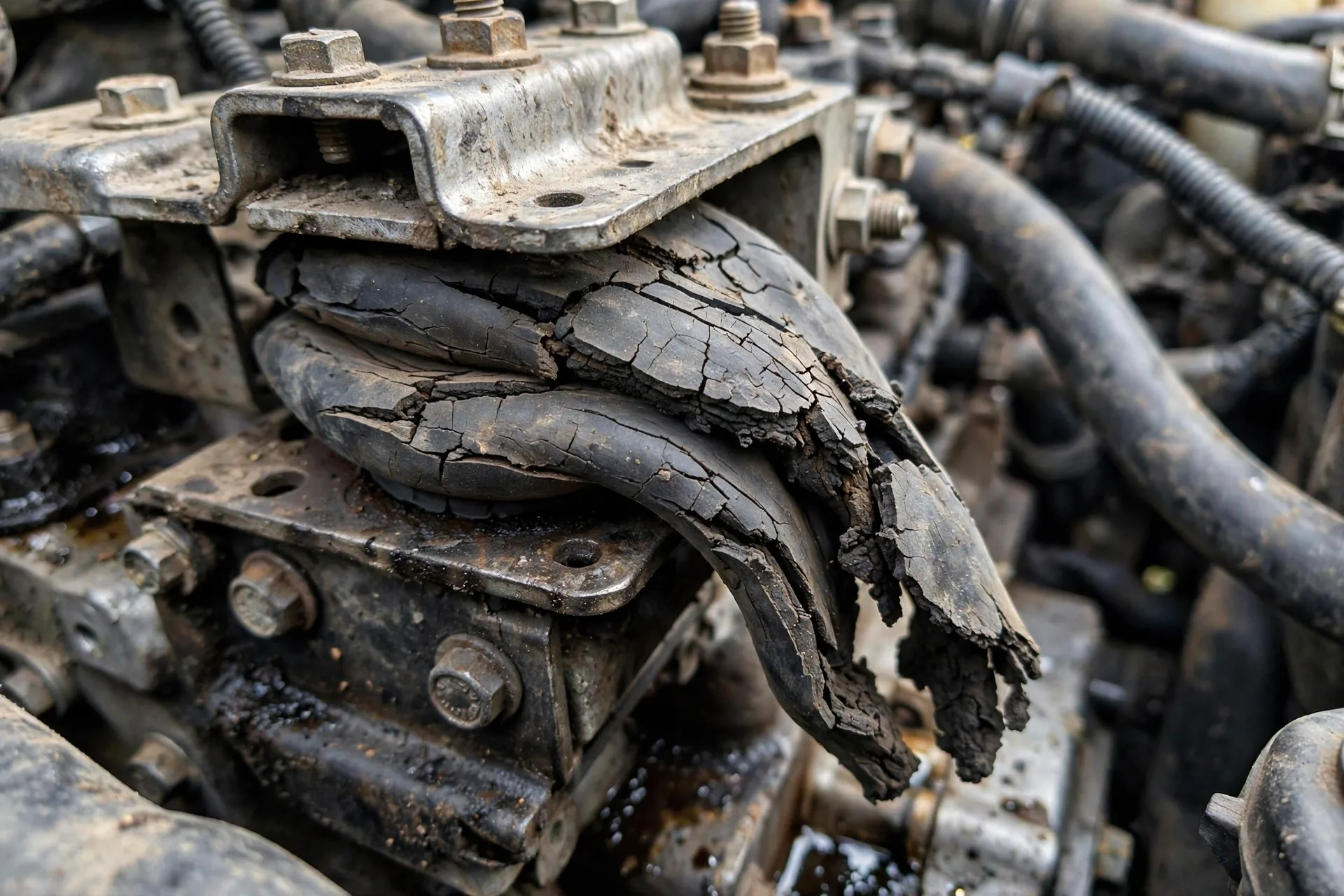
Excessive Vibration
Where you feel it:
- Steering wheel shakes
- Seat vibrates
- Floor vibrates
- Entire cabin shakes
When:
- At idle (engine idling)
- When stopped at light in gear
- Worse when AC on (more load)
Bad mounts can't isolate vibration anymore
Clunking When Accelerating
Loud clunk or bang:
- When accelerating from stop
- When letting off throttle
- When shifting (manual transmission)
Why: Engine rocks excessively on broken mount, hits something
Can sound like CV axle but doesn't change with turning
Visible Engine Movement
Pop hood, have someone:
- Shift from Park to Drive (automatic)
- Or shift from Neutral to 1st (manual)
- Or rev engine
Watch engine:
- Should move slightly (normal)
- Excessive movement = bad mount
- Engine rocks way over = definitely bad
Most obvious diagnostic test
Clunking Over Bumps
Clunk from engine bay:
- When hitting bumps
- Engine moving excessively
- Hitting frame or other components
Could also be suspension but check mounts
Rougher Idle Than Before
Engine idles rougher:
- More vibration than it used to
- But engine itself is fine
- Mount can't dampen vibration anymore
Compare to when car was new (if you remember)
Misaligned Belts or Hoses
Engine sagging:
- Belts misaligned
- Hoses stretched or kinked
- Engine sitting lower on one side
Broken mount allows engine to drop
What Causes Engine Mount Failure
Normal Wear (Most Common)
Rubber deteriorates:
- Heat cycles
- Oil contamination
- Age
- Ozone exposure
Typical lifespan: 60,000-100,000 miles
Some last 150,000+, some fail at 50,000
Oil Contamination
Oil leaks onto mounts:
- Degrades rubber quickly
- Accelerates failure
- Common on older engines with leaks
Fix oil leaks or new mounts will fail too
Aggressive Driving
Hard acceleration:
- Stresses mounts
- Especially in powerful cars
- Shortens mount life
Neutral drops, burnouts = mount killers
Overloading
Excessive weight:
- Towing beyond capacity
- Overloaded vehicle
- Stresses mounts
Fluid Leakage (Hydraulic Mounts)
Hydraulic mounts can leak:
- Rubber cracks
- Fluid escapes
- Mount loses dampening ability
Visible fluid around mount = failed
Diagnosing Bad Engine Mounts
Visual Inspection
Look at mounts:
Good mount:
- Rubber intact
- No cracks or tears
- Proper shape
- No fluid leaks
Bad mount:
- Rubber cracked or torn
- Rubber separated from metal
- Collapsed/flattened
- Fluid leaking (hydraulic types)
- Visible damage
Movement Test
With helper and engine running:
- Pop hood
- Have someone shift from Park to Drive
- Watch engine movement
- Shift back to Park
- Watch engine movement
Excessive movement = bad mount
Engine rocks way over = definitely bad
Do this for each mount location to identify which one
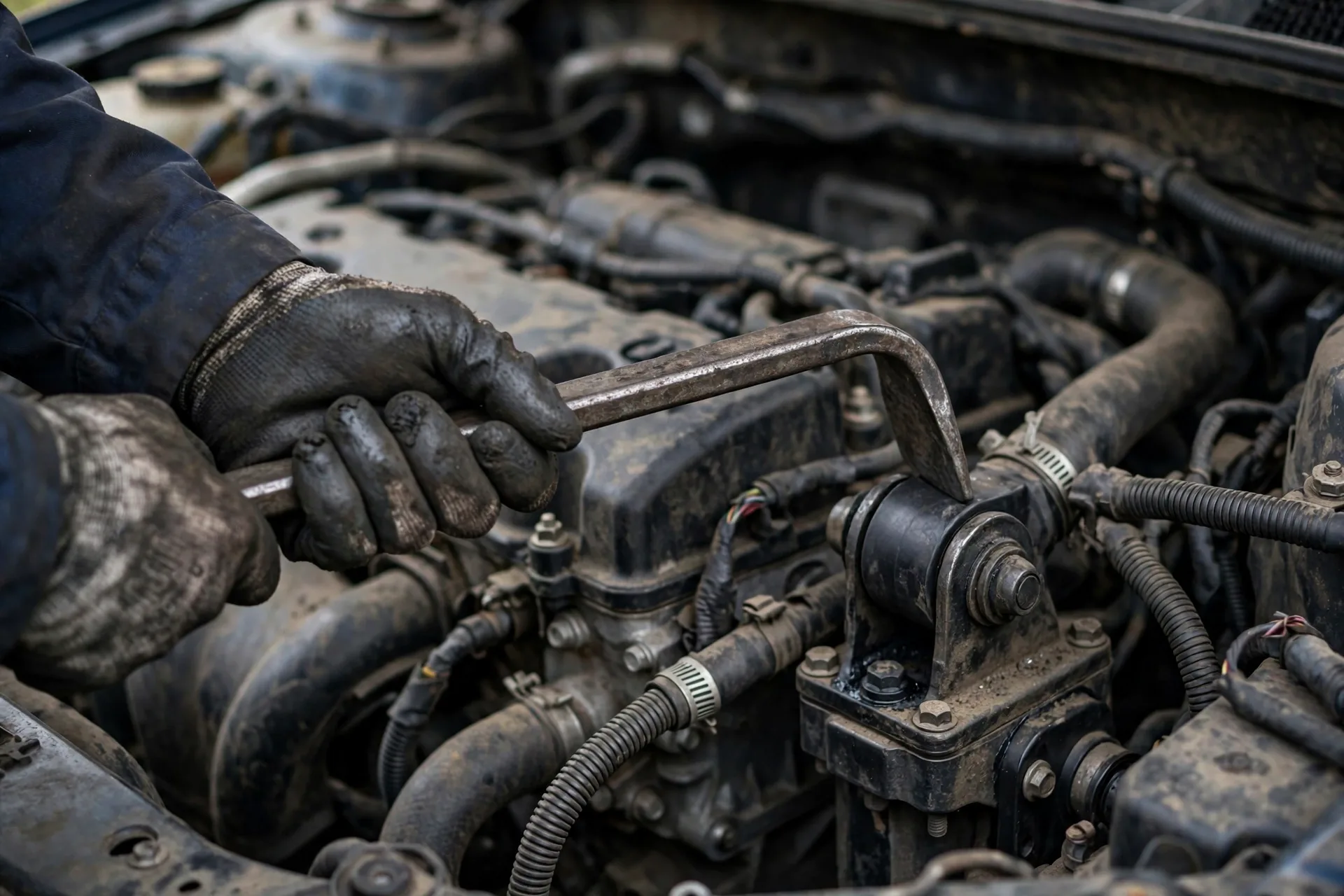
Pry Bar Test
Engine off:
- Use pry bar to lift engine slightly at each mount
- Look at mount
- Should be some give but not excessive
Mount separating or tearing = bad
Professional Diagnosis
Shops have lift:
- Can see mounts better from below
- Can test each mount individually
- More thorough inspection
Worth having shop check if unsure
Engine Mount Replacement
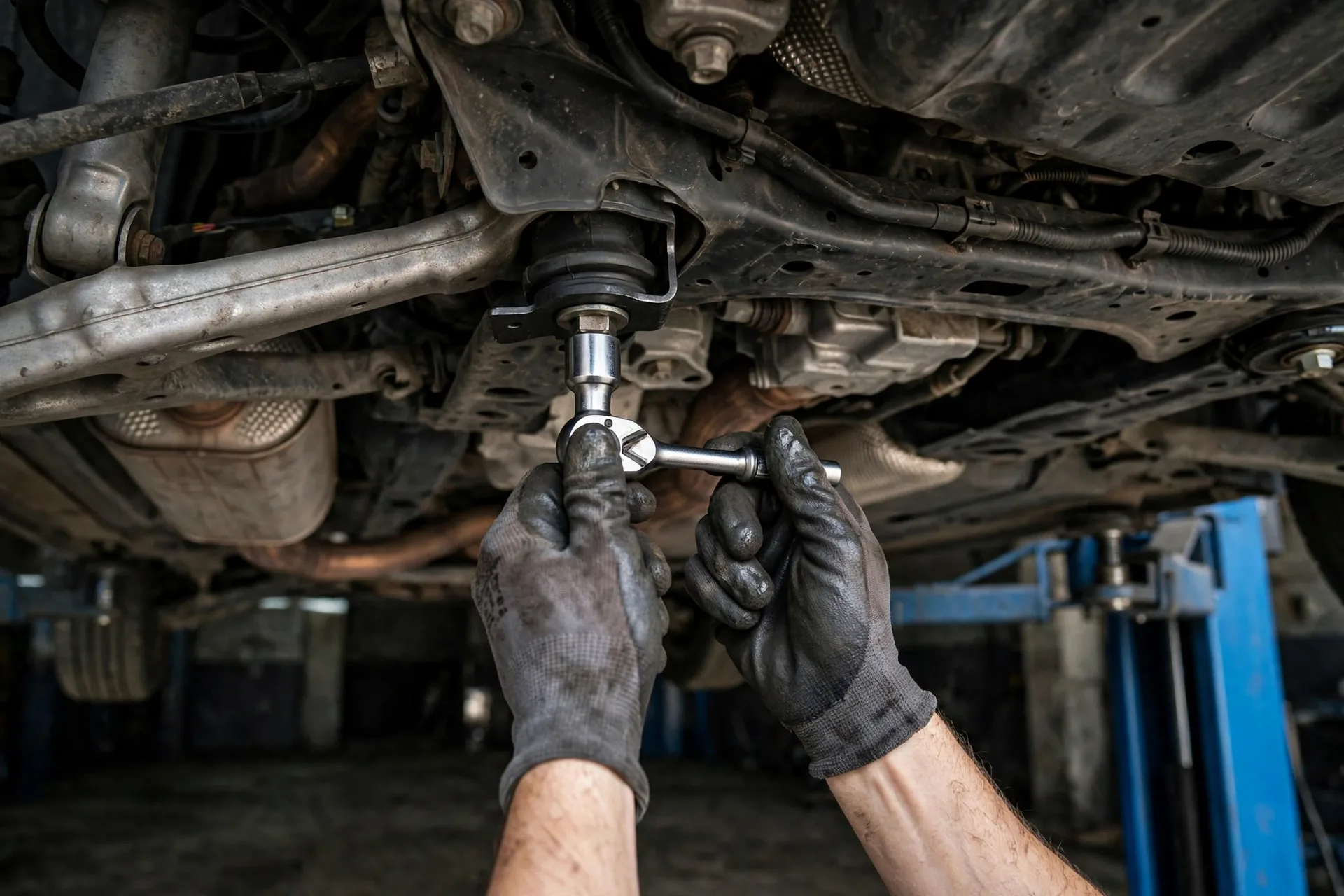
Difficulty: 4/10 to 8/10 (depends on location)
Some mounts: Easy, bolt-on from top
Other mounts: Require lifting engine, working from underneath
Time: 1-3 hours per mount
Related guide: 2016-2024 Volvo XC90 — Engine Mount Replacement — Vehicle-specific engine mount replacement walkthrough.
General Process
Easy mount (top access):
- Support engine (with jack or engine support bar)
- Remove mount bolts
- Lift engine slightly
- Remove old mount
- Install new mount
- Lower engine onto mount
- Torque bolts to spec
Difficult mount (bottom access):
- Lift car
- Support engine from below (with jack)
- Remove skid plates if equipped
- Remove mount bolts (often tight, rusty)
- Lift engine to take weight off mount
- Remove old mount
- Install new mount
- Lower engine
- Torque bolts
- Reinstall skid plates
Transmission mount usually easier - accessed from below but straightforward
Which Mounts to Replace
Replace the bad one(s):
- Whichever is visibly failed
- Whichever causes symptoms
Consider replacing all if:
- High mileage (100,000+)
- Multiple mounts look worn
- Don't want to repeat job
- Labor to access is similar for all
Mounts wear at similar rates - if one failed, others are probably close
Cost Breakdown
Parts (per mount):
- Budget mounts: $40-100
- Quality mounts: $80-200
- OEM: $150-400
- Hydraulic mounts more expensive than solid
Labor (per mount):
- Easy mount: 0.5-1 hour ($50-150)
- Difficult mount: 1.5-3 hours ($150-450)
Total per mount:
- Easy DIY: $80-200
- Easy shop: $150-350
- Difficult shop: $250-650
All mounts (3-4 total):
- DIY: $240-800
- Shop: $600-2,000
Varies greatly by:
- Car make/model
- Engine configuration (inline vs V)
- Access difficulty
Choosing Replacement Mounts
OEM mounts:
- Best quality
- Exact fit
- Most expensive
- Best choice for normal driving
Quality aftermarket:
- DEA, Anchor, Westar
- Good quality
- Mid-price
- Fine for most cars
Performance mounts:
- Stiffer (polyurethane or solid)
- Reduce engine movement
- More vibration in cabin
- For performance/track cars only
Budget mounts:
- Cheap ($30-50)
- Often fail quickly
- Not worth savings
My recommendation: OEM or quality aftermarket for daily driver
Performance vs. Comfort
Stock mounts:
- Soft rubber
- Maximum comfort
- More engine movement
- Best for daily driving
Performance mounts:
- Harder material (poly)
- Reduced engine movement
- Better power transfer
- More vibration in cabin
Only use performance mounts if:
- Track car
- High-performance application
- You understand trade-off
For daily driver: Stick with OEM-type mounts
Transmission Mount Specific
Symptoms of bad trans mount:
- Clunking when shifting
- Vibration at idle in gear
- Excessive movement when shifting
- Gear shift moves when revving
Usually easier to replace than engine mounts
Accessed from underneath typically
Cost: $150-400 installed usually
Related guide: 2007-2012 Lexus ES350 - Engine & Transmission Mount Replacement — Transmission mounts fail the same way — here is a full replacement guide.
What Happens If You Don't Replace Bad Mounts
Driving with bad mounts causes:
Accelerated wear on:
- CV axles (excessive engine movement strains them)
- Exhaust components (flexing causes cracks)
- Hoses and wiring (chafing and strain)
- Other mounts (compensating for failed one)
Possible damage:
- Engine hits frame or body (clunking)
- Wiring harness damage
- Cooling hose damage
- Exhaust pipe cracking
Uncomfortable driving:
- Excessive vibration
- Rough ride
- Noise
Not immediately catastrophic but causes progressive damage
The Bottom Line
Engine mounts are:
- Wear items (60,000-100,000 mile life)
- Important for comfort (isolate vibration)
- Prevent damage to other components
- Moderate DIY (some easier than others)
Symptoms:
- Excessive vibration
- Clunking (acceleration, shifting)
- Visible engine movement
- Rougher idle
Diagnosis:
- Visual inspection (cracks, tears, leaks)
- Movement test (watch engine while shifting)
- Professional inspection
Cost per mount:
- DIY: $80-200
- Shop: $150-650 (depends on access)
All mounts:
- Shop: $600-2,000 typically
When to replace:
- When symptoms appear
- When visibly damaged
- Preventively at 100,000+ miles
- When doing other engine work
Use OEM or quality aftermarket mounts for daily drivers.
Worn mounts make driving miserable and damage other parts. Fix them.
Questions? Drop them below.
- Roberto Gil
Last reviewed: October 2026.