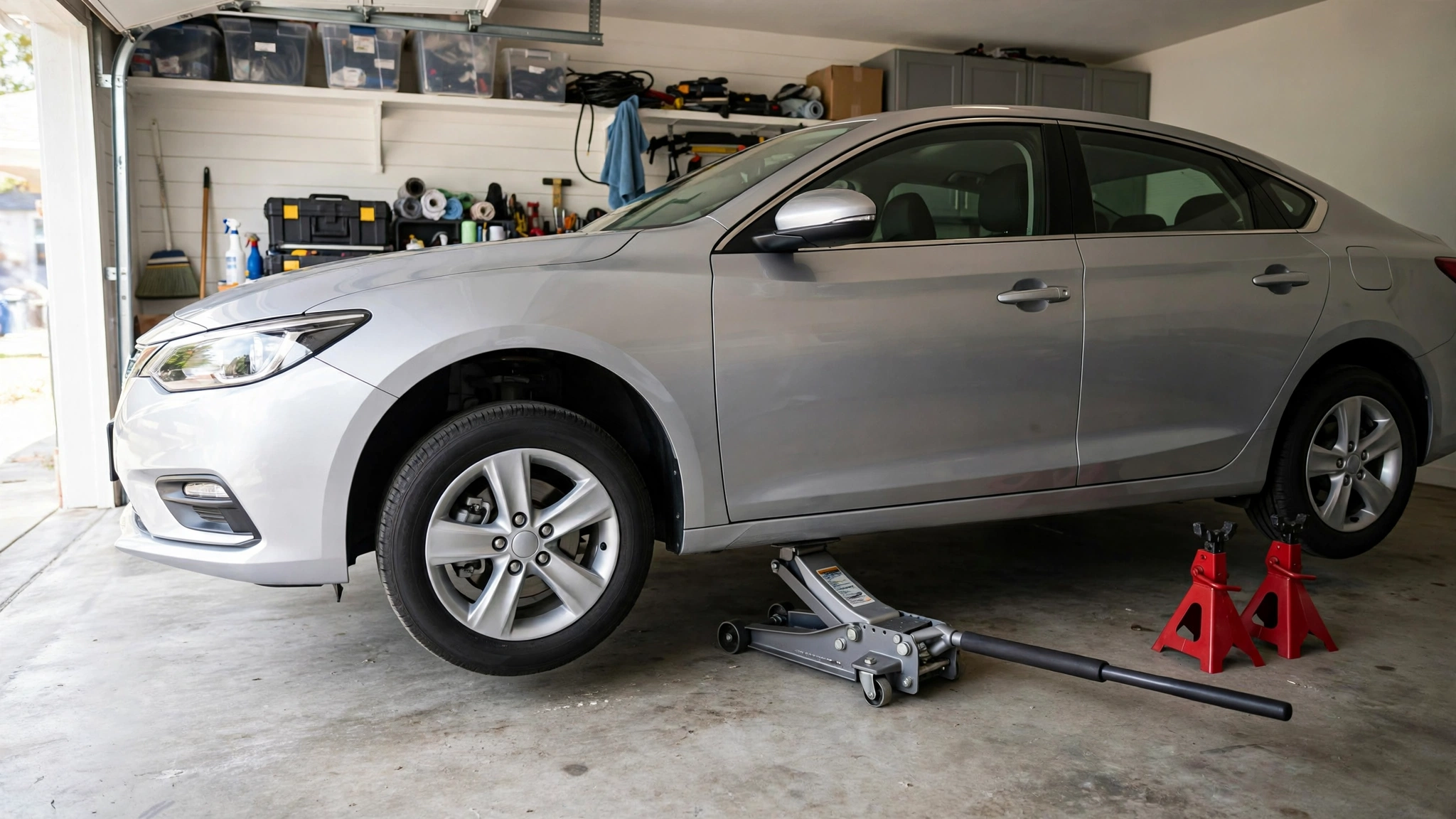
How to Change a Flat Tire: Spare Tire Guide
A flat tire is a 20-minute problem, not a ruined day. Pull somewhere safe, flip on your hazards, and swap on the spare with the jack and lug wrench that came with your car. You do not need to be a car person for this. You need flat ground, a spare that actually has air in it, and the discipline to do the steps in order instead of rushing.
Most people who end up stranded by a flat were not beaten by the tire itself. They were beaten by a spare that had gone flat from years of neglect, a jack they had never touched, or lug nuts they tried to loosen after the car was already in the air. Fix all three in your driveway this weekend and a roadside flat becomes an errand instead of an emergency.
Know where your tools live
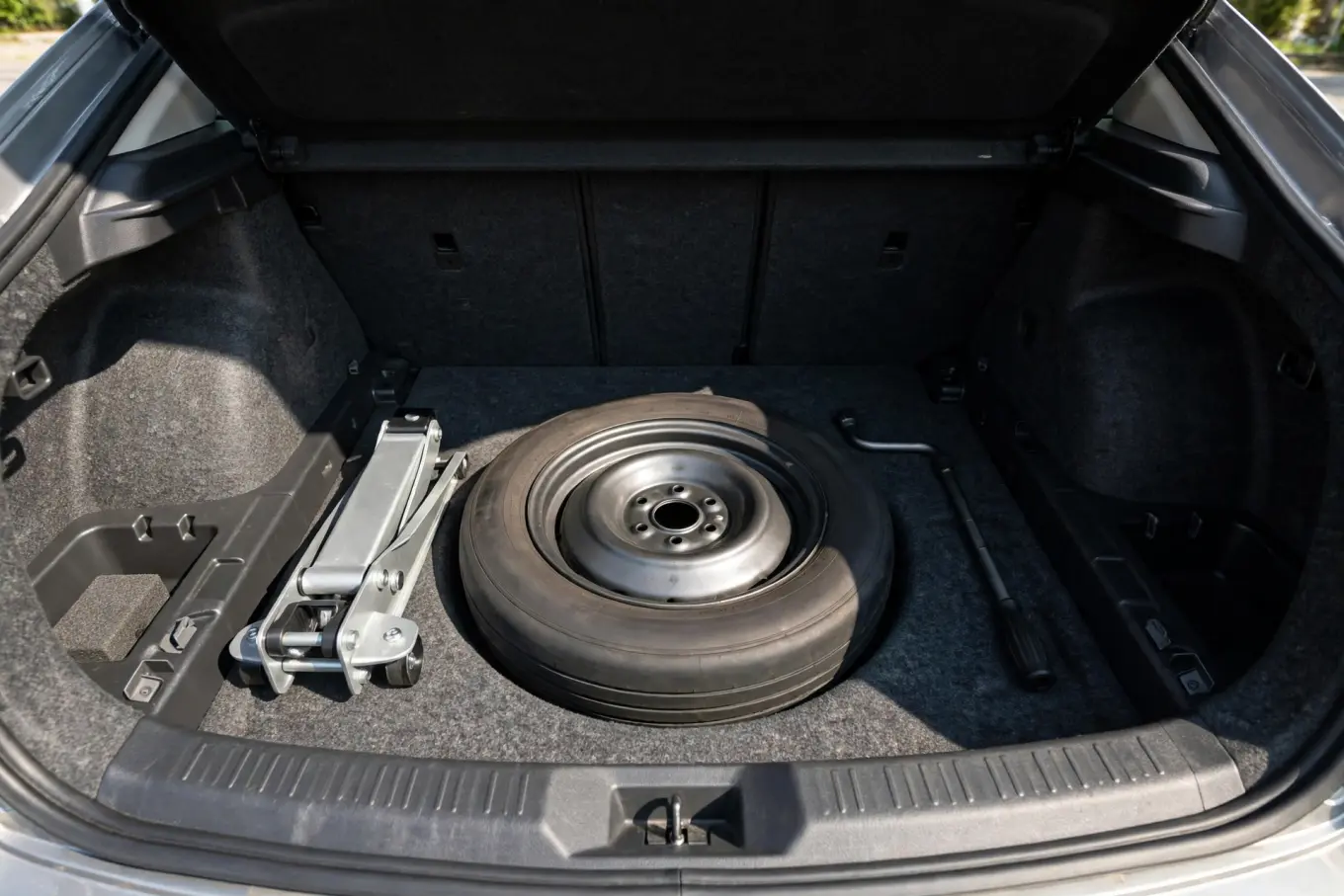
Your car came with everything you need, but "somewhere in the trunk" is not a location you want to be discovering at night in the rain. Most spares sit under the trunk floor panel, in a well under the cargo area, or bolted underneath the rear of the car, which is common on trucks and SUVs. The jack and lug wrench are usually clipped into foam or a bag right next to it.
Go look now. Confirm three things: the spare is there, the jack and wrench are there, and the spare has air. A donut spare that has sat for six years can be half flat, and a flat spare is just dead weight. While you are in there, find the jacking points in your owner's manual. Every car has reinforced spots, usually on the pinch welds behind the front wheels and ahead of the rear wheels, and the manual has a diagram. Jacking anywhere else can bend sheet metal or crack the floor pan.
Know which spare you have. A full-size spare is a normal wheel and tire, with no special limits, just check its pressure. A compact donut is smaller, lighter, and temporary by design. Some newer cars skip the spare entirely and ship a tire inflator kit with sealant instead. That is covered below.
The steps, in order
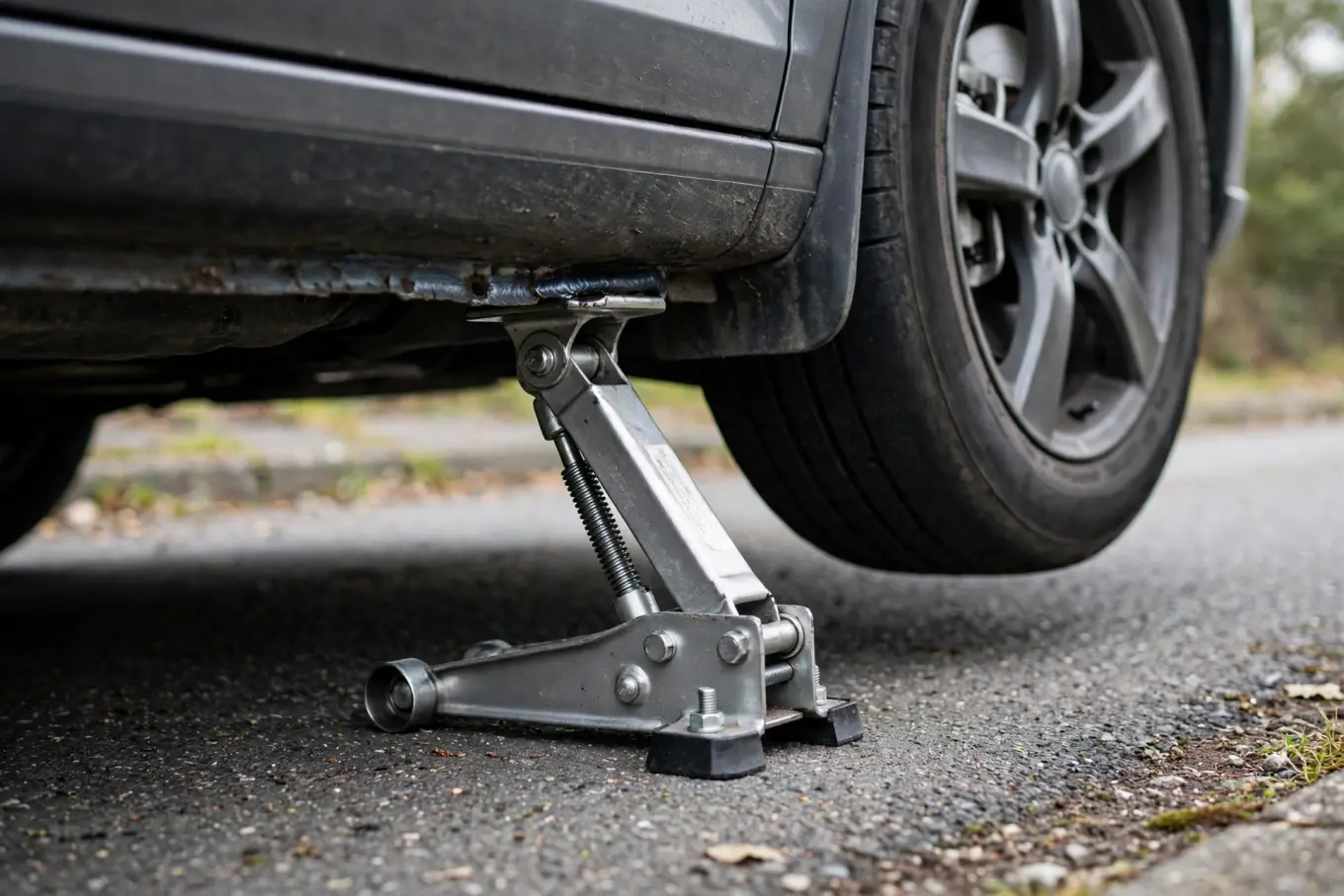
- Get off the road. Take the nearest exit or pull as far onto the shoulder as you can. Flat, solid pavement matters more than speed here. A jack on soft dirt or a slope is dangerous. Hazards on, parking brake set, transmission in Park, or first gear on a manual.
- Loosen the lug nuts before you lift. This is the step everyone gets backwards. With the flat tire still on the ground, fit the lug wrench on each nut and break it loose, counterclockwise, about half a turn. The weight of the car holds the wheel still for you. If you wait until the wheel is in the air, it will just spin.
- Put the jack on the factory jack point. Use the spot from your owner's manual diagram, not whatever looks sturdy. Crank until the flat tire is just barely off the ground. Keep your body out from under the car. The jack is for lifting, not for holding, and nobody goes under a car supported only by the emergency jack.
- Remove the nuts and swap the wheel. Finish unscrewing the lug nuts and pull the flat straight off. Mount the spare, pushing it flush against the hub, and thread every nut on by hand first. Hand-threading avoids cross-threading, which is how wheel studs get ruined.
- Snug the nuts in a star pattern, then lower the car. Tighten each nut a little, then the one across from it, working around in a star. Lower the jack until the spare just touches the ground, enough to stop the wheel from turning, and tighten the star pattern again. Lower the car fully, remove the jack, and do one final star-pattern pass.
- Stow everything and check the spare. Throw the flat, jack, and wrench back in the trunk. You will want the flat if it is repairable. Drive to the nearest gas station and check the spare's pressure, since spares lose air sitting in the trunk for years.
The final torque on lug nuts varies by car, so check your owner's manual if you want the exact number. And recheck the nuts after about 50 miles of driving. They can settle as the wheel seats against the hub, and a loose wheel is a serious problem.
Donut spare rules: speed and distance limits
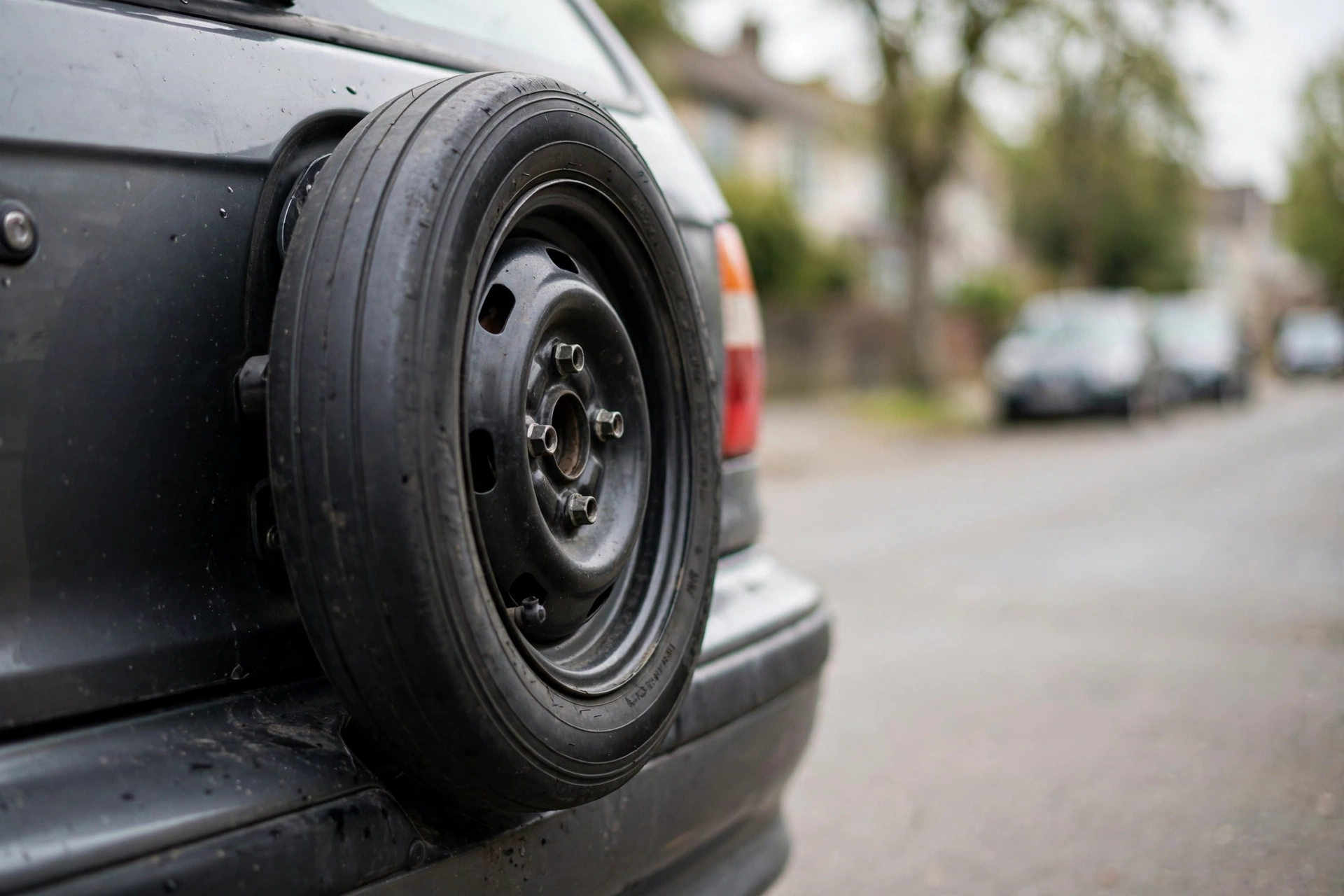
Donut spares are built for the trip to the tire shop, not for your commute all week. Most are rated for about 50 mph and roughly 70 miles, and the real limit is stamped or molded on the tire itself, so check yours. Those numbers exist because the donut is narrower and smaller than your real tires, which changes handling, braking distance, and the load on your differential.
Treat it like a temporary fix. Keep your speed down, avoid highways if you can, and get the flat repaired or replaced promptly. Your car's safety systems also expect four matching tires, so a donut can confuse traction control or set off the tire pressure warning on some cars. Do not panic about the light. It usually clears once the real wheel is back on.
What to do when you have no spare
Plenty of new cars ship without one. Check what you have instead:
- Inflator kit with sealant. It handles small punctures in the tread, and that is about it. It will not fix a sidewall tear, a blowout, or a bent rim. Follow the kit's instructions exactly, and know the sealant makes a mess inside the tire that the shop has to clean out.
- Run-flat tires. These let you drive a limited distance at reduced speed with zero pressure. The limit is printed on the tire. Respect it, because driving on a flat run-flat for too long destroys the tire.
- Roadside assistance. If the damage is beyond a sealant kit, or you are somewhere unsafe, call. There is no prize for changing a tire on a narrow highway shoulder at 2 a.m. with trucks blowing past. Your insurance, your automaker, or a motor club membership usually includes it.
What a flat actually costs you
The roadside swap itself is free, so the real question is what the tire costs after. A simple puncture in the tread can usually be patched or plugged at a shop, which is a cheap fix and mostly labor. A shredded sidewall, a blowout, or a damaged wheel means a replacement tire, which is the big-ticket version of the same day. All-wheel-drive cars add one wrinkle: a brand-new tire with a much larger diameter than the other three can strain the drivetrain, so some shops recommend replacing in pairs or shaving the new tire to match. Ask the shop. Do not guess.
The verdict: DIY or call for help?
Do it yourself when the car is somewhere safe, the ground is flat and solid, and your spare has air. It is genuinely one of the simplest car jobs there is, and the tools are already yours. Call for help when you are on a narrow shoulder with fast traffic, on a slope or soft ground, when the spare is flat or missing, or when the lug nuts will not budge. Paying for a tow is cheaper than a hospital visit. Neither choice is embarrassing. The only wrong move is driving on the flat and destroying the wheel.
FAQ
Can I drive on a flat tire, even a short distance? No. A flat tire driven even a few hundred yards can destroy the tire beyond repair and gouge or crack the wheel, turning a cheap patch into an expensive replacement. Stop as soon as it is safe.
How far can I drive on a donut spare? Follow the rating stamped on the tire, typically around 50 mph and roughly 70 miles. Get the real tire fixed or replaced as soon as you reasonably can.
Do I need to re-tighten the lug nuts? Yes. Recheck them after about 50 miles of driving. Nuts can settle as the wheel seats against the hub, and a loose wheel is a serious problem.
What if a lug nut will not budge? Make sure you are turning counterclockwise, and try putting your weight on the end of the wrench for leverage while keeping your balance. If it still will not move, or a nut is rounded off, that is a job for a shop with an impact wrench, not for roadside heroics.
My take: changing a tire is the single most useful roadside skill you can own, and it takes one practice run in your driveway to learn it cold. Do that practice run on a Saturday afternoon, not on a dark highway shoulder. When the real flat happens, you will be the calm person with the plan while everyone else is searching on their phone.
Once you are rolling again, keep all four tires healthy. The 2017-2024 Jeep Compass Tire Pressure and Rotation DIY Guide and the 2018-2023 Subaru Crosstrek Tire Pressure and Rotation DIY Guide walk through pressure checks and rotation together, and the tire rotation maintenance guide covers the schedule that keeps tires wearing evenly.
Safety: Informational DIY. EZ Car Fix is not a shop or dealer.