Bad Water Pump Symptoms and Replacement Cost
A bad water pump gives you a short window to act. It is the part that keeps coolant moving through your engine, and when it stops doing that job, overheating follows fast. Catch the early signs and the fix is a routine repair. Ignore them and you are looking at engine damage that costs far more than the pump ever would. Here is how to spot it, confirm it, and decide what to do.
What a Water Pump Does and Why It Fails
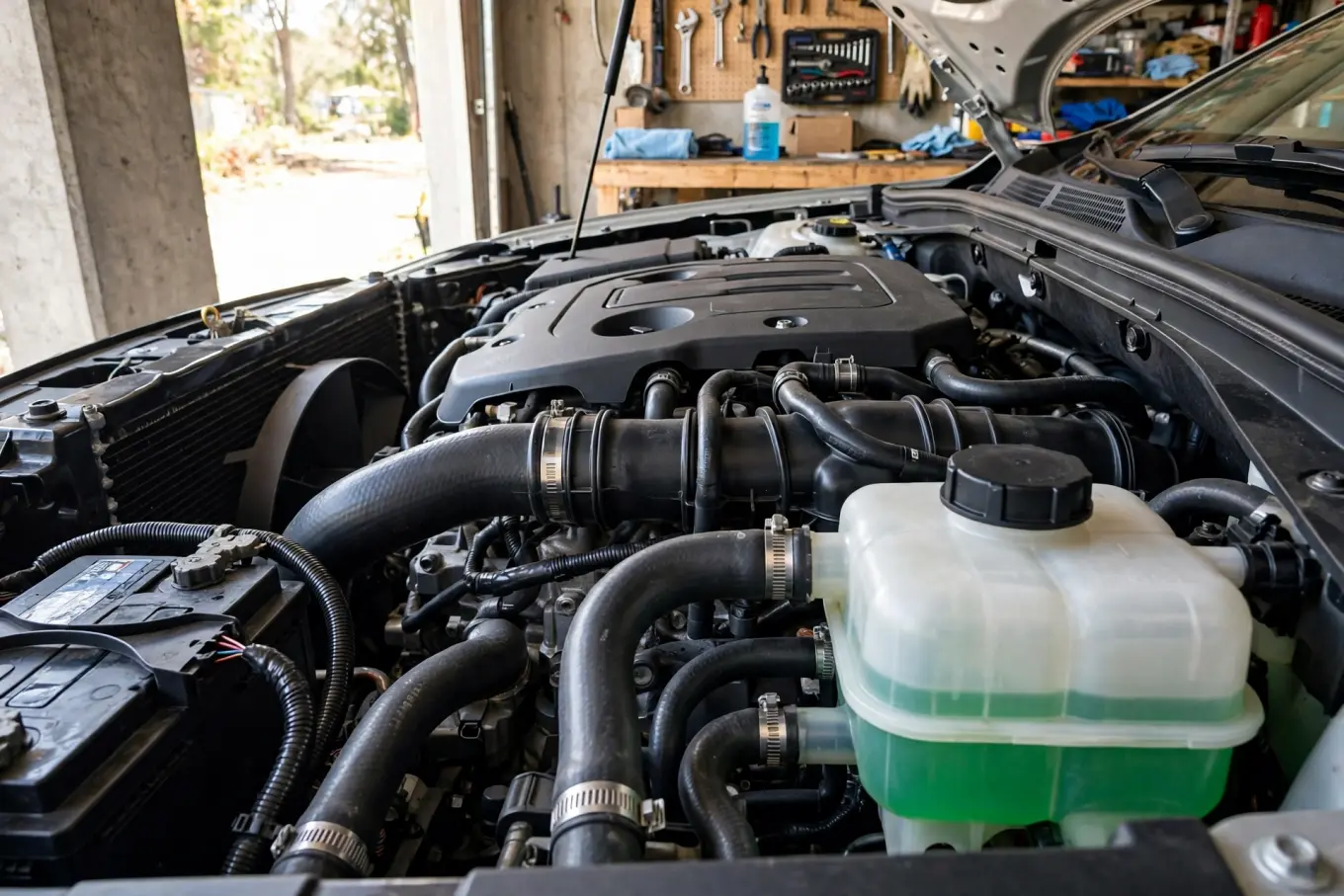
Your engine makes an enormous amount of heat, and coolant carries that heat away to the radiator. The water pump is what keeps the coolant moving. On most cars it is driven by the serpentine belt or the timing belt, and on some newer cars it is electric.
Pumps fail in a few predictable ways. The shaft seal wears out and starts to weep coolant. The bearing wears and the pulley develops play, which makes noise and can throw the belt off. The impeller, the part that actually pushes coolant, can corrode or come loose, so the pump spins but moves little or no coolant.
There is no universal replacement interval for a water pump. On cars where the pump sits behind the timing belt, it is commonly replaced along with the belt as preventive maintenance, because you are already paying for the labor to reach it. Check your owner's manual for your car's service schedule.
Symptoms of a Bad Water Pump
Watch for this combination of signs:
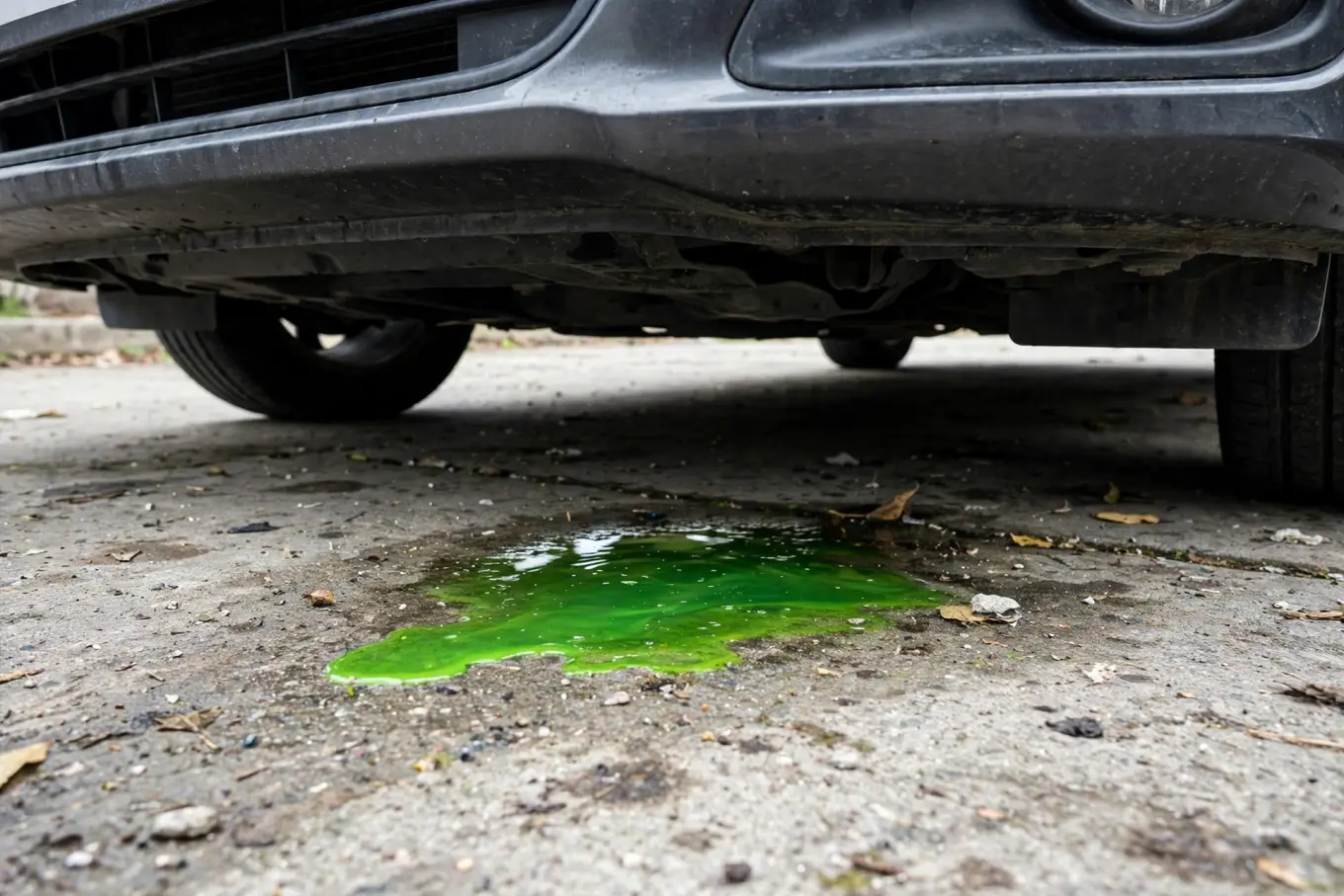
Coolant leaking from the front of the engine. This is the classic one. Look for green, orange, or pink fluid under the front of the car, or dried crusty residue around the pump area. Many pumps have a small weep hole that starts to drip when the internal seal fails. A drip from the weep hole is the pump telling you it is done.
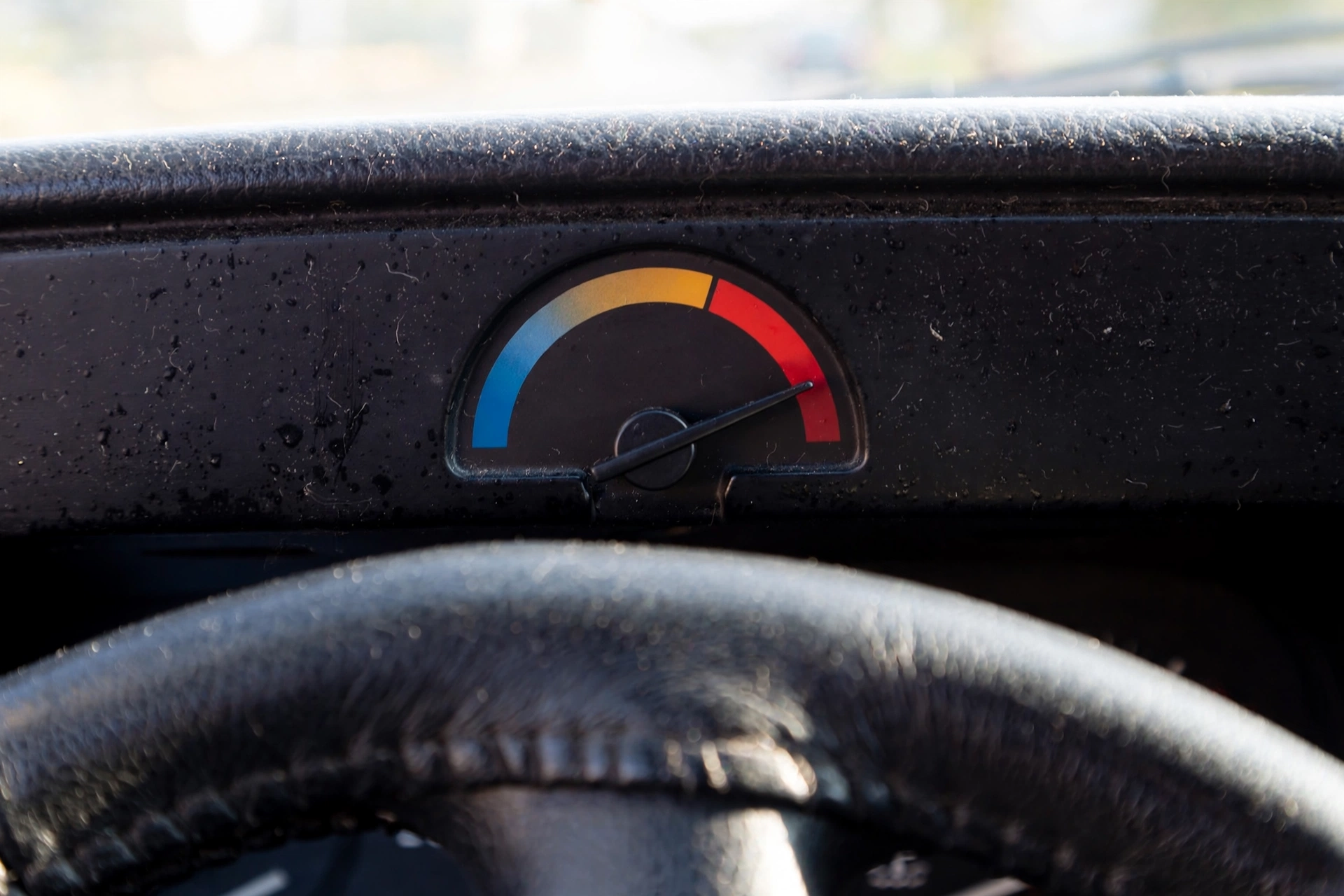
Temperature gauge climbing. If the gauge creeps above its normal spot, especially in traffic or on hills, the coolant may not be circulating. A gauge that rises and falls with engine speed is another hint that flow is the problem.
Whining or grinding noise from the front of the engine. A worn pump bearing makes a low grinding, groaning, or whining sound that changes with engine speed. It is easy to confuse with belt noise, so do not diagnose by sound alone.
Steam from under the hood. Steam means coolant is escaping somewhere hot. Stop and let the engine cool before you look. Never open a radiator cap on a hot engine.
Heater blowing cold air. The heater core is part of the cooling system. If coolant is low or not circulating, the heater is often one of the first things to go cold, even before the gauge climbs.
Coolant level dropping with no obvious leak. A slow weep can evaporate on a hot engine before it ever reaches the ground. If you keep topping up the reservoir and the level keeps dropping, something is leaking, and the pump is a prime suspect.
How to Confirm It Is the Water Pump
Work through these steps before you buy parts:
- Check the coolant level with the engine cold. The reservoir has fill marks. If it is low, top it up with the coolant type your owner's manual calls for and watch whether it drops again.
- Slide cardboard under the front of the car overnight. In the morning you will see the color and the location of any drip. Coolant is usually green, orange, or pink and feels slippery. Clear water from the air conditioning drain is normal and is not a leak.
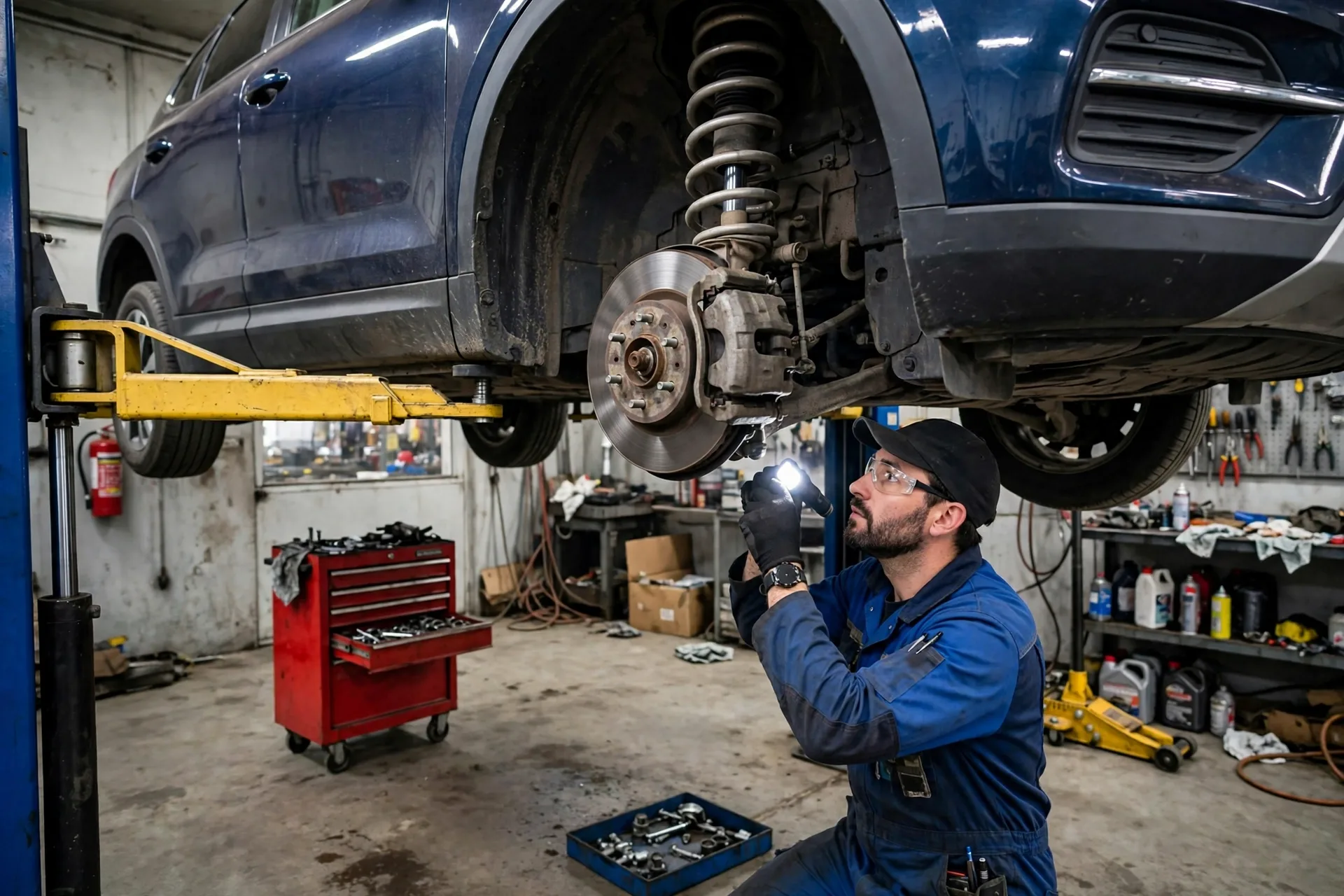
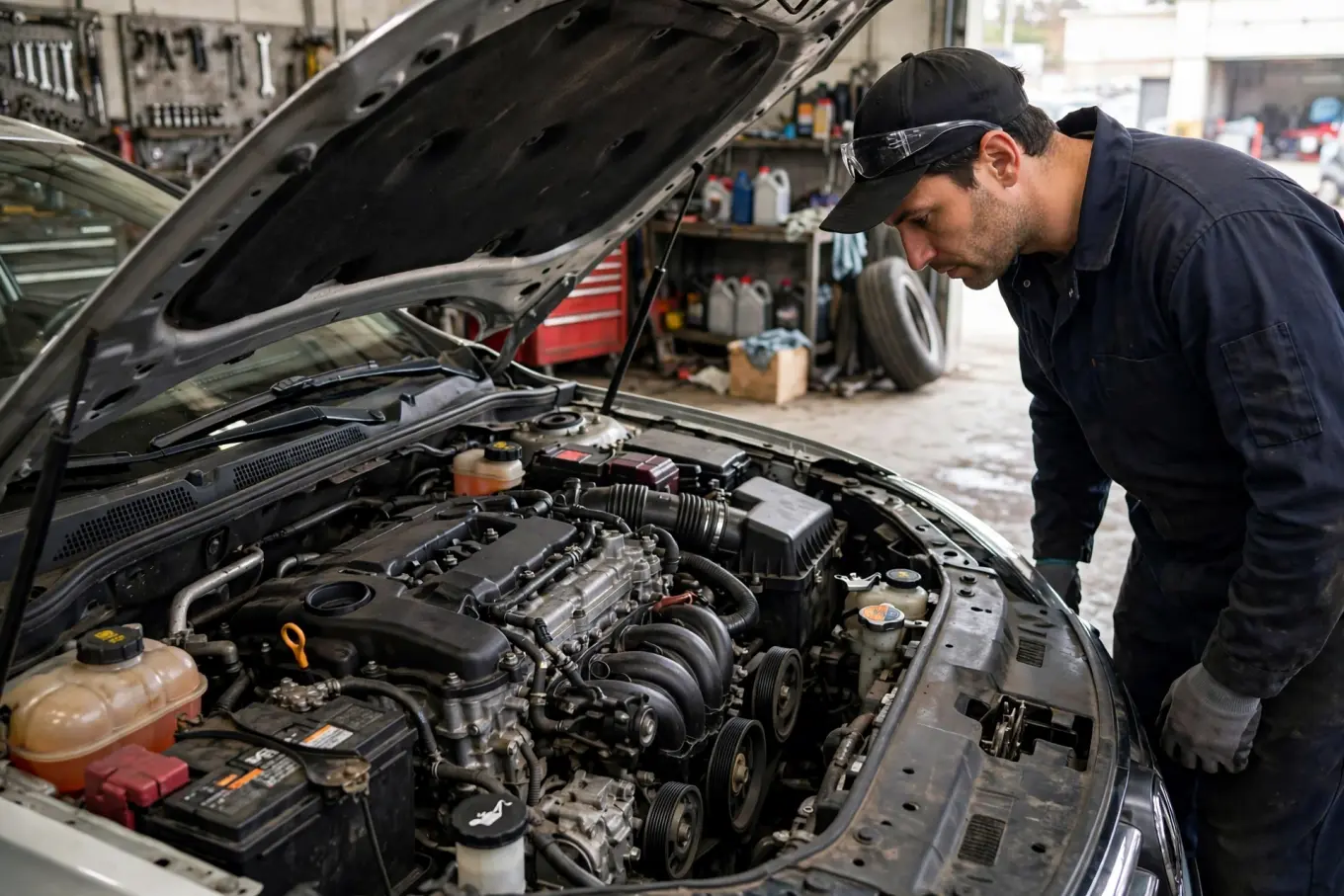
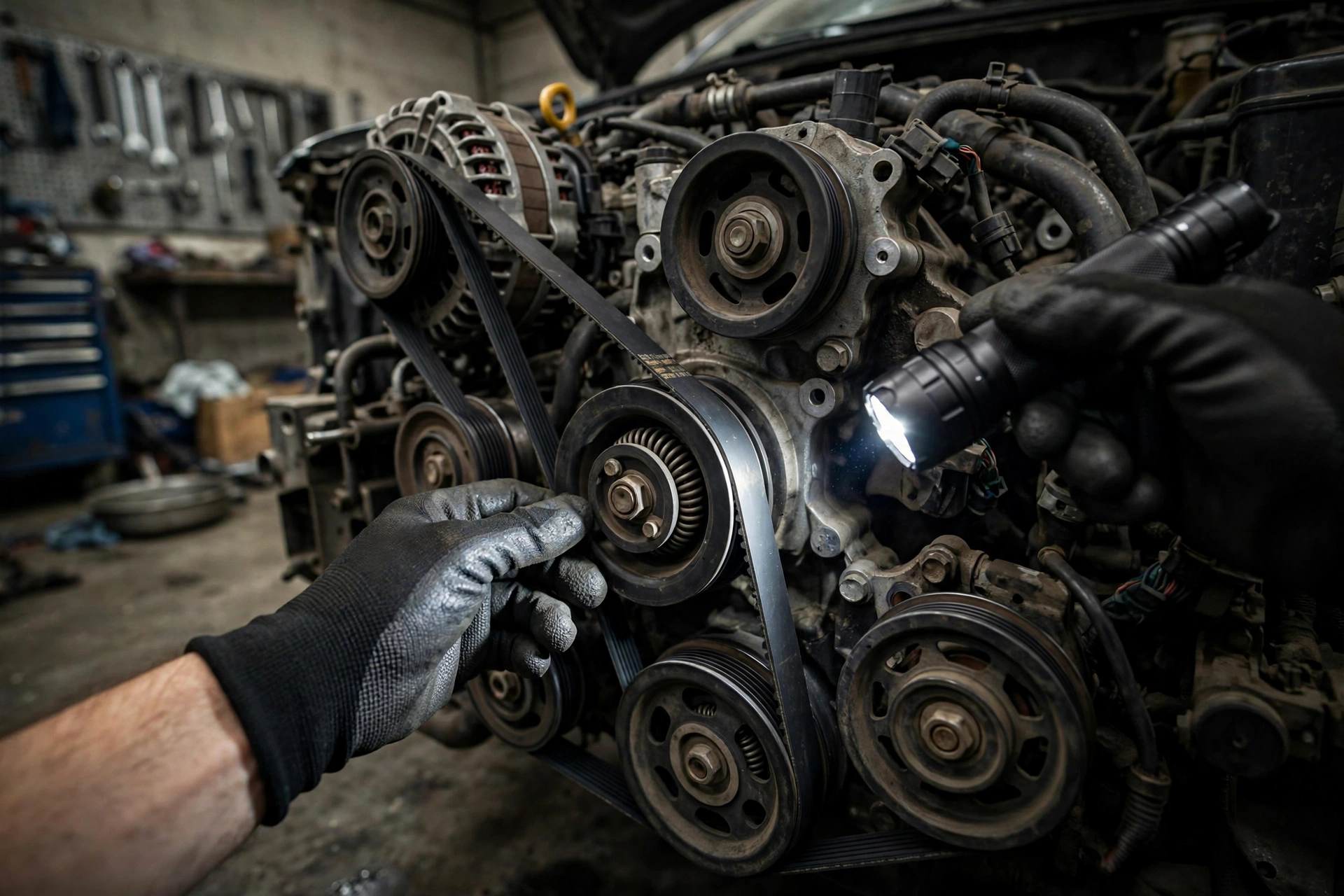
- Look at the front of the engine with a flashlight. Search for wet streaks, crusty residue, or fresh drips around the pump housing and the hoses that connect to it. The pump is usually low on the front of the engine, driven by a belt.
- Listen with the engine running. A grinding or whining sound from the pump area that tracks engine speed points at a worn bearing. Belt squeal usually changes when you turn the steering wheel or switch the air conditioning on and off, so compare the two.
- Watch the gauge on a short drive. A gauge that climbs in traffic and settles at speed, or climbs steadily no matter what, combined with coolant loss, points at a circulation problem in the cooling system.
- Rule out the cheap stuff first. A loose hose clamp, a cracked hose, or a weak radiator cap can all lose coolant and mimic a pump failure. Check the hoses and clamps before you commit to a pump job.
- Accept that some pumps are hidden. On many cars the pump sits behind the timing cover, where you cannot see it at all. If you cannot see the pump, a pressure test at a shop is the honest next step.
If the evidence points at the pump but you cannot see it, a shop can pressure test the cooling system and trace the leak to its source. That diagnosis costs far less than replacing the wrong part.
What Happens If You Keep Driving
This is the part people get wrong. A water pump job is a repair. An overheated engine is a rebuild-or-replace decision. The distance between those two outcomes is one ignored gauge.
When the pump stops moving coolant, heat builds up inside the engine with nowhere to go. The gauge climbs, the engine loses power, and if you keep going, the head gasket fails or the cylinder head warps. That turns a cooling system repair into engine work. Our guide to Blown Head Gasket Symptoms: Tests, Repair Cost, Worth Fixing? covers what that road looks like.
If the gauge hits the red zone, pull over somewhere safe, shut the engine off, and let it cool. Do not open the radiator cap while the engine is hot. Do not try to limp home with an overheating engine. A tow is cheap insurance compared with a cooked engine.
Water Pump Replacement Cost
Here is the honest breakdown of what you are paying for. The pump itself is a cheap part. Labor is most of the bill. Everything about the cost comes down to how hard the pump is to reach on your car.
On cars where the pump sits on the outside of the engine, driven by the serpentine belt, the job is straightforward. A shop can reach it without taking much apart, and the bill stays on the modest side of repair work.
On cars where the pump sits behind the timing belt or timing chain, the job is bigger. The belt or chain, tensioners, and seals usually get replaced at the same time, because you are already paying for the labor to reach them, and paying that labor twice makes no sense. That adds parts and hours, but it is the right call.
Dealer versus independent shop follows the usual pattern. A dealer charges more for the same job, and an independent shop usually charges less. Quality depends on the shop, not the sign on the building. Ask for an itemized quote and check whether it includes a new thermostat, a new belt, fresh coolant, and new gaskets.
If you do the job yourself, you pay for parts and your own time, and you skip the labor charge entirely. That is real savings on an accessible pump. On a timing-belt-driven pump, the savings are still real, but the job demands more tools, more time, and more care, because getting the timing wrong can cost you an engine.
One more cost note: use the coolant type your owner's manual calls for, and never run the system on plain water except as a short emergency measure to get to safety. A coolant flush at the time of the repair makes sure the fresh pump is not circulating old, contaminated fluid.
DIY or Pay a Shop
This one depends on your car and your comfort level. If the pump is easy to reach, you have done belt and hose work before, and you have a full day to give the job, a DIY replacement is realistic. If the pump sits behind the timing belt or chain, or the engine bay gives you no room to work, pay a shop. One mistimed belt can cost you an engine, and that is not a mistake worth making to save a labor bill.
My take: for most drivers, this is a pay-a-shop job, and that is fine. The money goes to labor, not the part, and a good shop will replace the belt, thermostat, and seals while they are in there. The DIY win goes to the owner whose pump is right out in the open and who treats the job as a full cooling system service, not just a part swap.
If you want the step by step for your exact car, start with one of these guides: 2009-2016 Audi A4 - Water Pump Replacement, 2012-2019 Fiat 500 - Timing Belt and Water Pump Replacement, or 2011-2018 Volvo S60 - Water Pump and Thermostat Replacement.
FAQ
Can you drive with a bad water pump?
Not safely, and not for long. If the leak is slow and the gauge stays normal, you can drive to a shop, but watch the gauge and stop if it climbs. If the engine is overheating, stop and get a tow.
How long does a water pump last?
It varies widely by car and design, and there is no universal interval. On timing-belt cars it is commonly replaced with the belt as preventive maintenance. Check your owner's manual for your car's schedule.
Does a bad water pump cause the check engine light?
Sometimes. Overheating and coolant temperature problems can trigger the light, but the temperature gauge and the coolant level are the better early warnings. If the light is on, read the codes before you guess.
Should I replace the thermostat at the same time?
Often yes. It is a cheap part, it lives in the same neighborhood, and you are draining the coolant. Ask your shop to include it in the quote.
A bad water pump is one of those repairs where speed is the whole game. Catch the leak early and it is a routine job. Drive through the warning signs and it becomes engine work. Check your coolant level, watch your gauge, and act on the first drip, not the first cloud of steam.
Safety: Informational DIY. EZ Car Fix is not a shop or dealer.