The Noise That Starts Quietly and Ends Catastrophically
You hear a faint humming when you're driving. Gets louder at highway speeds. Changes pitch when you turn.
That's a wheel bearing starting to fail.
Ignore it long enough and your wheel can fall off while driving. I'm not exaggerating. I've seen it happen. 70 mph on the highway, wheel separates from the car, vehicle crashes.
Wheel bearings don't heal themselves. They only get worse. And when they finally let go, it happens suddenly.
Let me teach you how to catch this before it becomes catastrophic.
What Wheel Bearings Actually Do
Each wheel has a bearing that allows it to spin freely while supporting the vehicle's weight.
Wheel bearing's jobs:
- Support vehicle weight (1,000+ lbs per wheel)
- Allow wheel to spin with minimal friction
- Handle lateral forces (cornering, bumps)
- Maintain wheel alignment
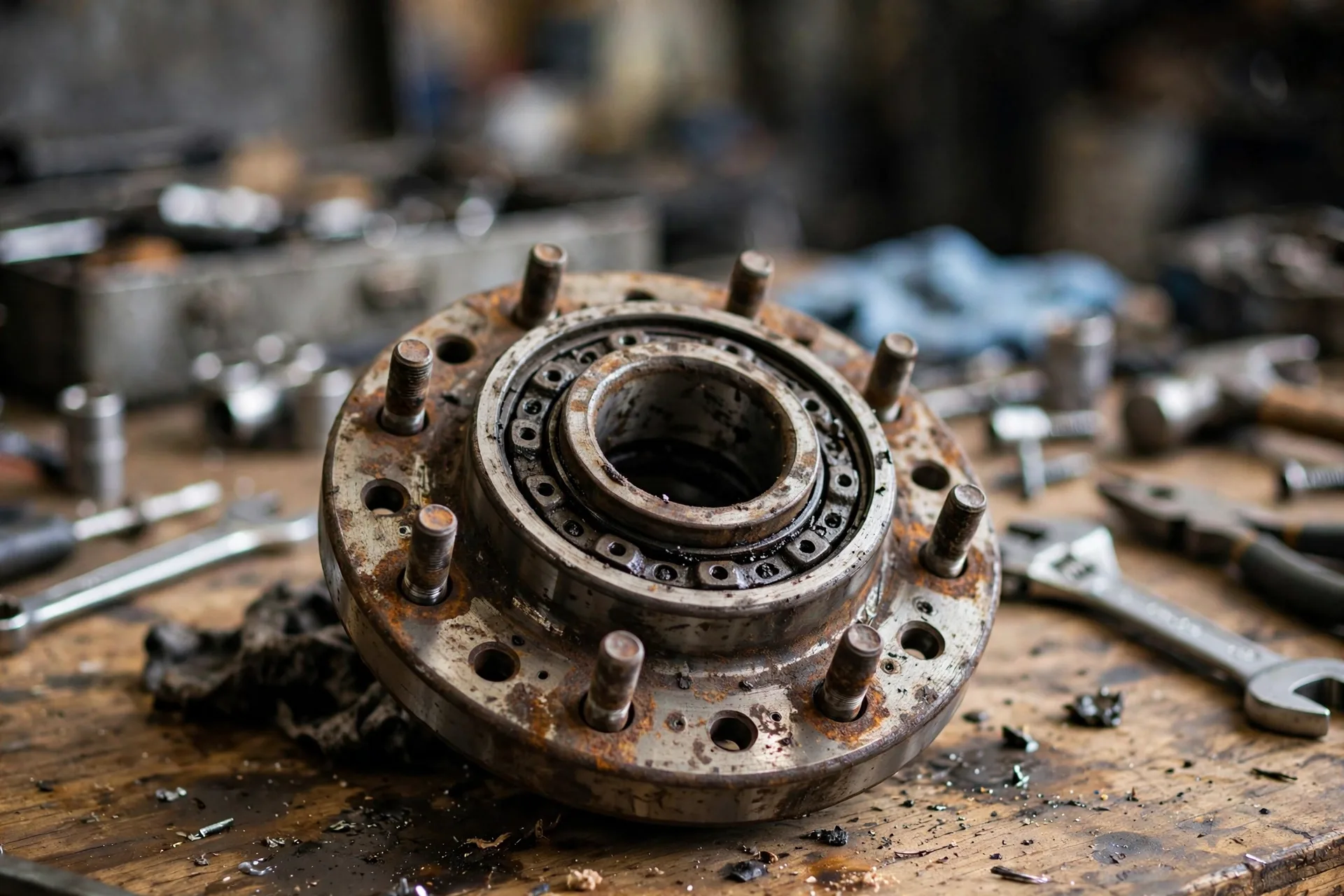
Inside a wheel bearing:
- Inner race (connects to spindle/axle)
- Outer race (sits in hub)
- Ball bearings or roller bearings between races
- Grease for lubrication
- Seal to keep grease in, water/dirt out
When new: Smooth, quiet, minimal friction
When failing: Rough, noisy, excessive play
Types of Wheel Bearings
Serviceable Bearings (Older Cars, Some Trucks)
Design:
- Inner and outer bearings separate
- Can be removed, cleaned, repacked with grease
- Adjustable preload
Found on:
- Older cars (pre-1990s mostly)
- Some trucks (especially rear wheels)
- Trailers
Maintenance:
- Can be repacked with grease
- Can be adjusted
- Individual bearings can be replaced
Cost to service: $50-150 for parts and grease
Sealed Hub Assembly (Modern Cars)
Design:
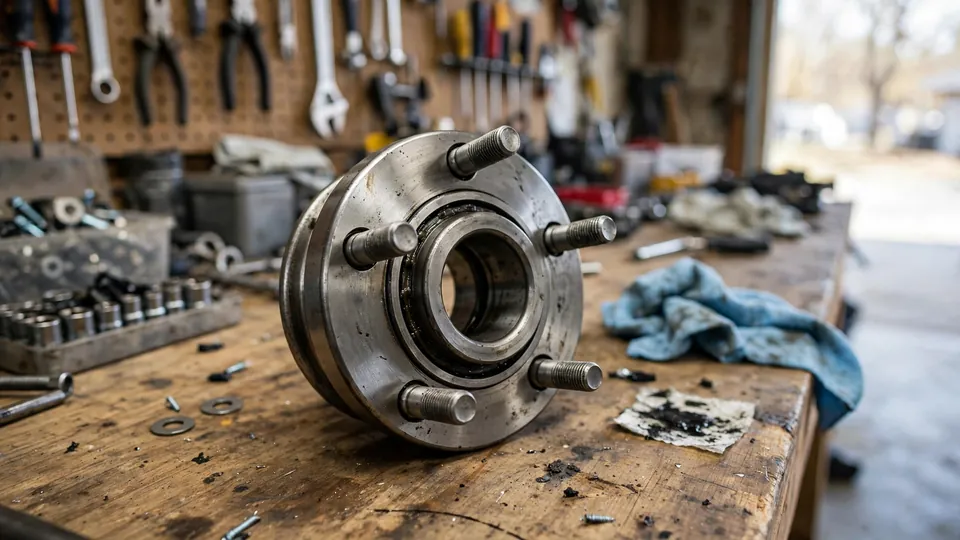
- Complete hub with bearing pressed in
- Sealed unit, no maintenance
- Non-adjustable
- Replace entire unit when it fails
Found on:
- Most cars 1990s+
- Modern trucks (front wheels)
- Easier to replace but more expensive
Cannot be serviced - when it fails, replace whole thing
Cost to replace: $100-300 per hub assembly
Symptoms of Failing Wheel Bearing
Humming or Growling Noise
Most common symptom:
- Humming that increases with speed
- Sounds like airplane taking off
- Gets louder as you go faster
- Might change pitch when turning
Why: Bearing races or balls are worn, creating vibration/noise
Progressive: Starts quiet, gets louder over weeks/months
Changes When Turning
Noise changes when you turn steering wheel:
Louder when turning right: Usually left wheel bearing
Louder when turning left: Usually right wheel bearing
Why: Turning shifts weight to opposite side, loading that bearing more
This is the KEY diagnostic test - helps identify which wheel
Grinding Noise
Worse than humming:
- Grinding, crunching sound
- Bearing is severely damaged
- Metal-on-metal contact
This is urgent - bearing is near failure
Wheel Wobble or Play
Jack up car, grab wheel:
- 12 o'clock and 6 o'clock positions
- Push/pull
- Should be almost no movement
Excessive play: Bearing worn out
Also test:
- 3 o'clock and 9 o'clock
- Movement here might be tie rod ends instead
ABS Light or Traction Control Light
Modern cars with ABS:
- Wheel speed sensor built into hub
- Failing bearing damages sensor
- ABS light comes on
- Might lose ABS/traction control
Vibration in Steering Wheel
As bearing worsens:
- Vibration transmitted through suspension
- Steering wheel shakes
- Gets worse at higher speeds
Uneven Tire Wear
Loose bearing:
- Changes wheel alignment
- Tire wears unevenly (inside or outside edge)
- Might need alignment after bearing replacement
How to Diagnose Which Wheel
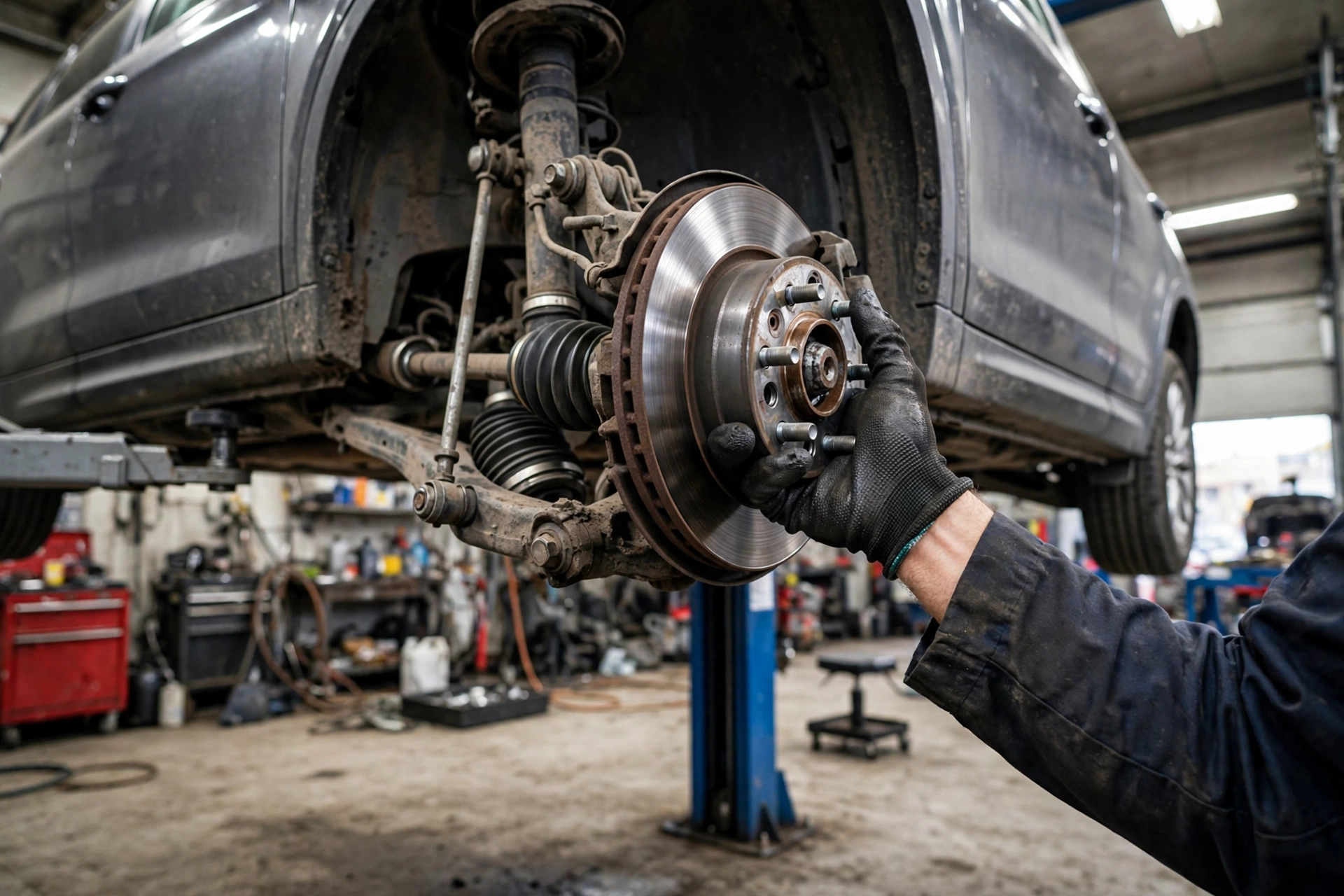
You hear the noise, but which wheel is bad?
Method 1: Turn Test
While driving:
- Drive at speed where noise is present (40-50 mph usually)
- Note the noise
- Turn steering wheel gently right
- Does noise get louder or quieter?
- Turn steering wheel gently left
- Does noise change?
Result:
- Louder when turning right = left bearing
- Louder when turning left = right bearing
- No change = might be both, or tire noise
Why this works: Weight shifts to outside wheel during turns, loading that bearing more
Method 2: Jack and Spin
In your driveway:
- Safely lift car
- Secure with jack stands
- Spin each wheel by hand
- Listen for grinding, roughness
- Feel for roughness
Good bearing: Smooth, quiet rotation
Bad bearing: Rough, grinds, makes noise
Method 3: Play Check
With wheel jacked up:
- Grab wheel at 12 and 6 o'clock
- Push/pull (rocking motion)
- Feel for movement
Acceptable: Tiny amount of play (1-2mm)
Bad: Obvious clunking or movement
Note: Some play might be ball joints, not bearing
Method 4: Mechanic's Stethoscope
Professional method:
- Use mechanic's stethoscope
- Touch probe to hub area while spinning wheel
- Can hear exactly which bearing is bad
Cost: $15-30 for stethoscope
Very effective at pinpointing problem
Method 5: Process of Elimination
Check all four wheels:
- Front left
- Front right
- Rear left
- Rear right
Front bearings fail more often (carry more weight, handle steering forces)
What Causes Wheel Bearing Failure
Normal Wear (Most Common)
Wheel bearings are wear items:
- Constant use
- Millions of rotations
- Eventually wear out
Typical lifespan: 80,000-150,000 miles
Some last 200,000+, some fail at 60,000
Impact Damage
Hitting potholes, curbs:
- Impacts shock the bearing
- Dents bearing races
- Creates rough spots
- Accelerates failure
One big impact can damage bearing enough to fail within months
Water/Dirt Contamination
Seal failure:
- Seal cracks or tears
- Water gets into bearing
- Grease washes out
- Bearing rusts, fails quickly
Driving through deep water can force water into bearings
Improper Installation
If bearing was recently replaced:
- Not torqued properly
- Wrong bearing
- Seal damaged during install
- Can fail quickly
Overloading
Excessive weight:
- Towing too much
- Overloaded vehicle
- Puts extra stress on bearings
- Shortens life
Lack of Maintenance (Serviceable Bearings)
On serviceable bearings:
- Not repacked with grease
- Grease dries out
- Bearing fails
These should be serviced every 30,000-50,000 miles
DIY Wheel Bearing Replacement
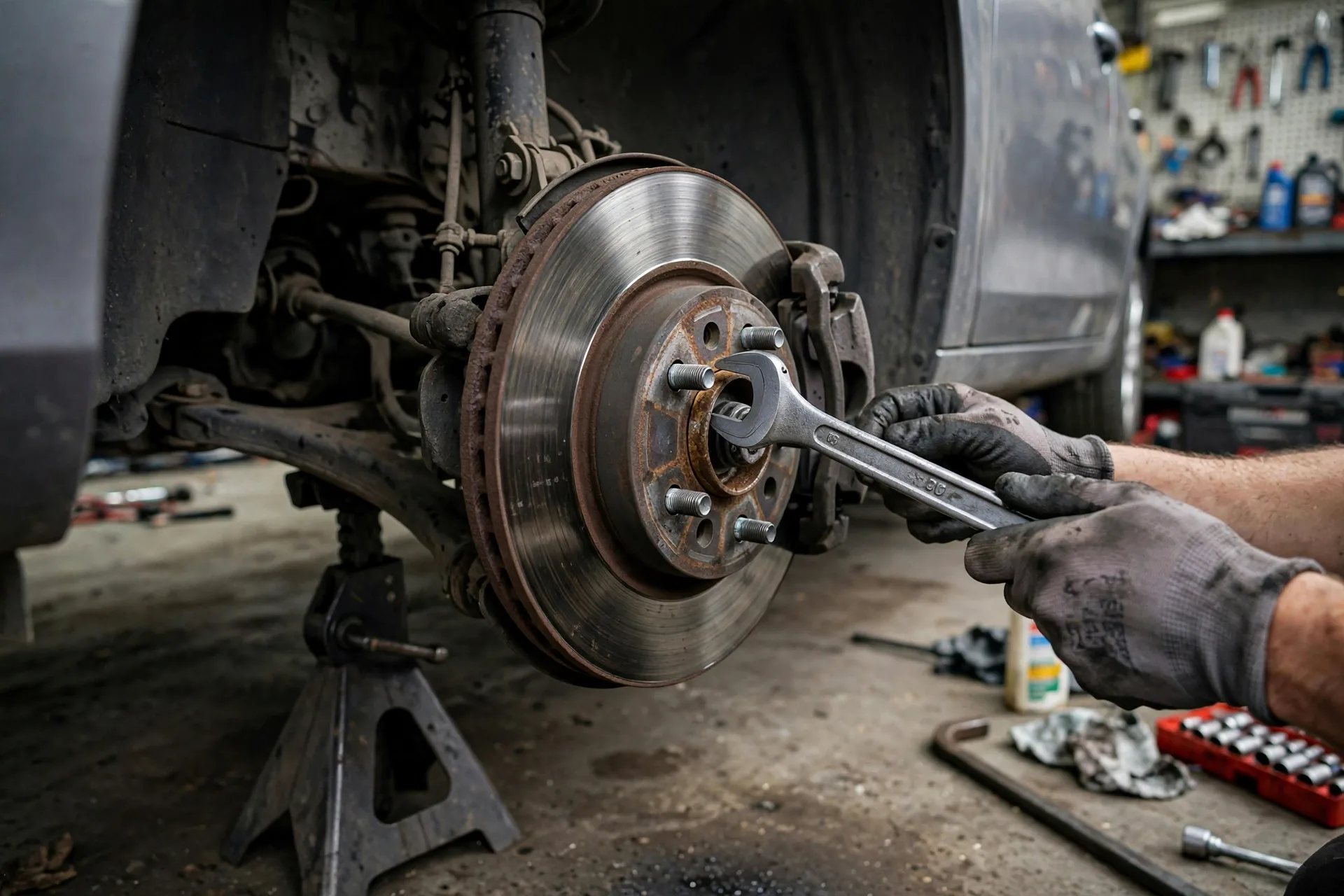
Difficulty: 5/10 to 8/10 (depends on type and car)
Sealed hub assembly: Easier (bolt-on)
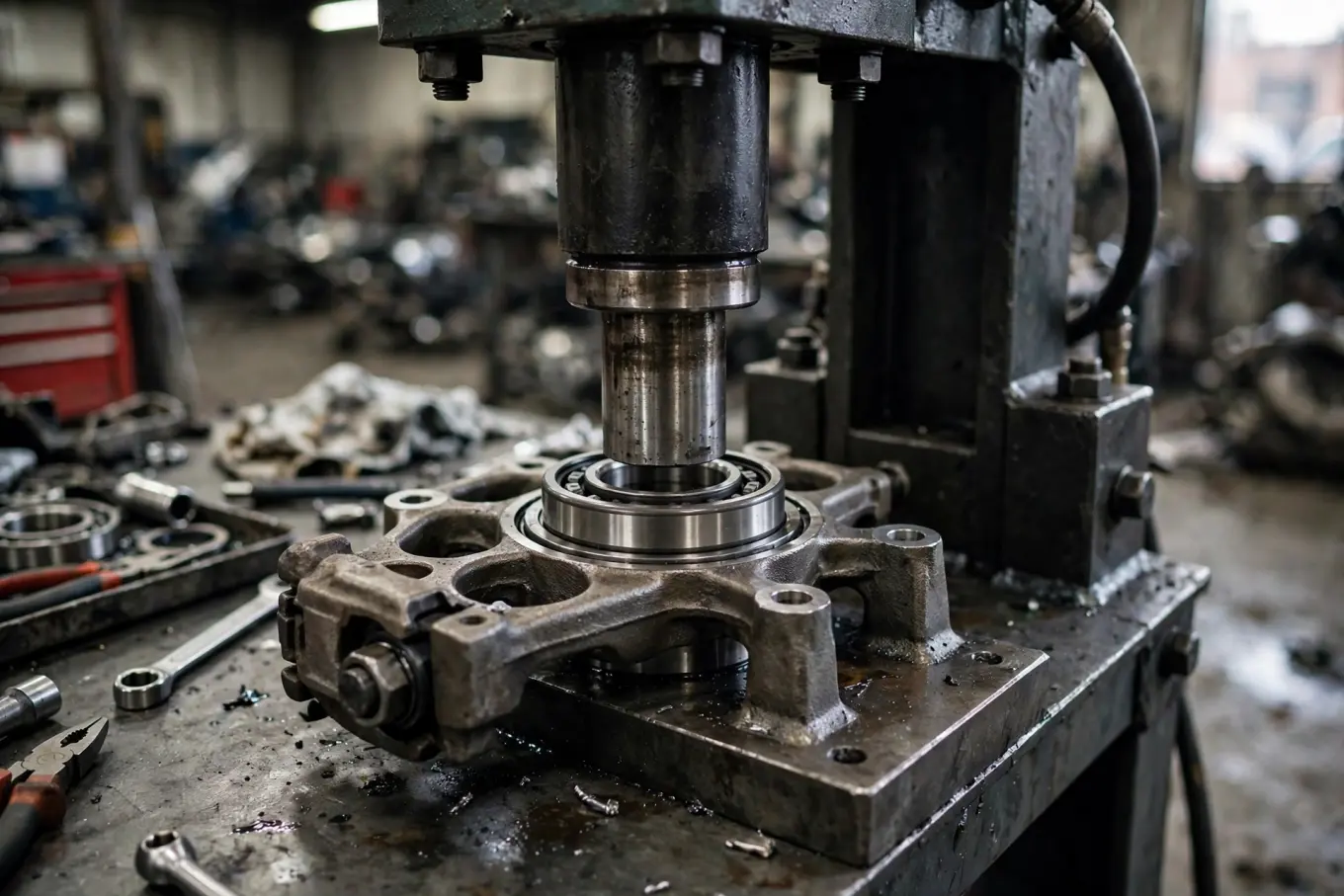
Pressed-in bearing: Harder (requires press)
Hub Assembly Replacement (Modern Cars)
Difficulty: 5/10 Time: 1-2 hours per wheel
Tools needed:
- Jack and jack stands
- Impact wrench or breaker bar
- Torque wrench
- Socket set
- Possibly pickle fork (for ball joint)
General process:
- Loosen lug nuts (car on ground)
- Lift and support car safely
- Remove wheel
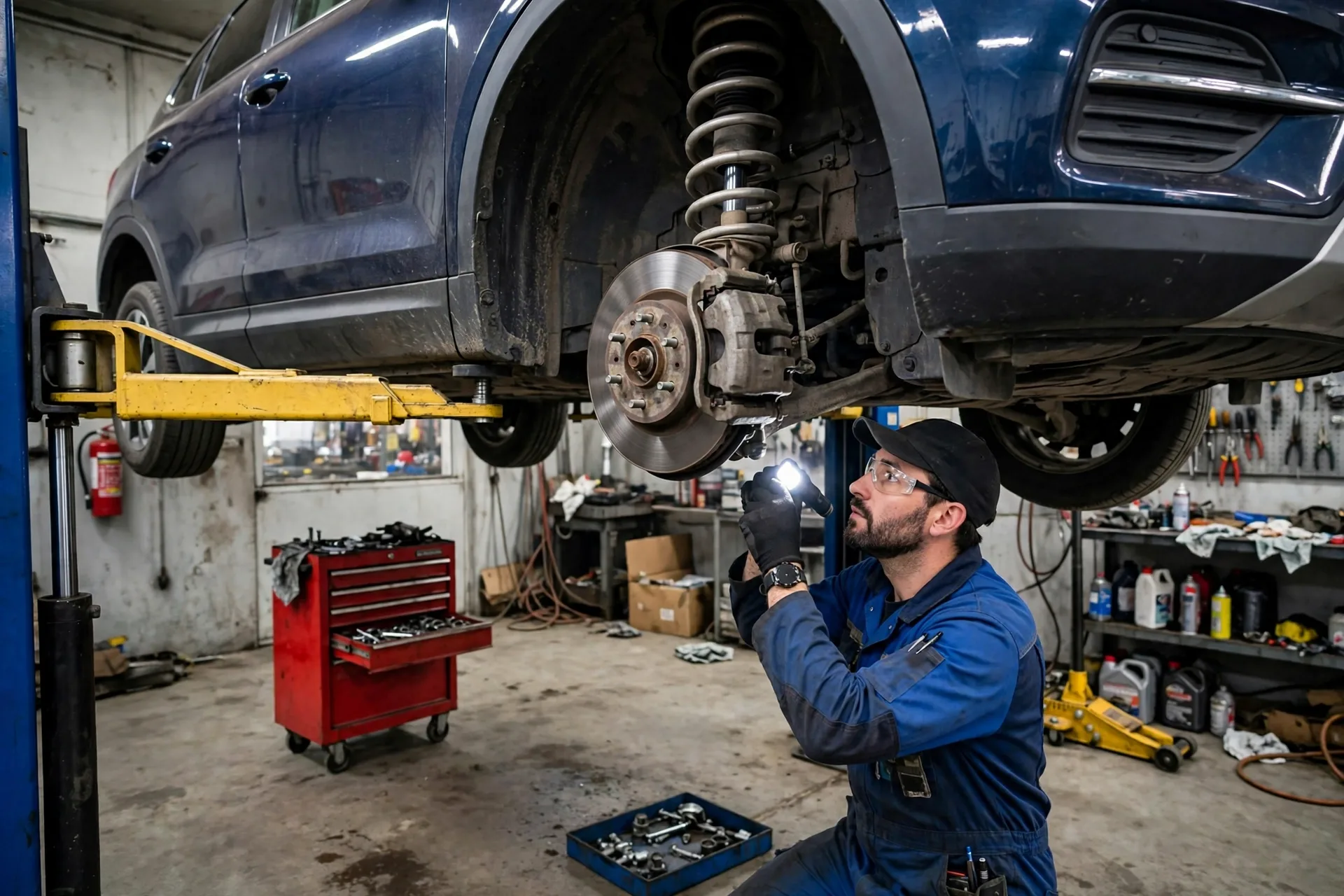
- Remove brake caliper (hang with wire, don't let it hang on hose)
- Remove brake rotor
- Disconnect ABS sensor (if applicable)
- Remove axle nut (usually needs impact wrench)
- Disconnect tie rod or other steering/suspension components
- Remove hub mounting bolts (usually 3-4 bolts from behind)
- Remove hub assembly
- Install new hub
- Torque bolts to spec (critical)
- Reconnect everything
- Torque axle nut (very high torque, 150-250+ ft-lbs)
- Reinstall wheel
- Torque lug nuts
- Test drive
Critical points:
- Axle nut requires high torque (use torque wrench)
- Don't damage ABS sensor
- Hub bolts must be torqued properly
- Some cars require special tool to press axle out
Pressed Bearing Replacement (Older Cars)
Difficulty: 8/10
Requires:
- Bearing press (shop tool)
- Bearing driver set
- Special tools
Process:
- Remove hub assembly (see above)
- Press out old bearing
- Press in new bearing
- Install new seal
- Reinstall hub
Most people don't have a press - this usually requires shop
Serviceable Bearing Repack (Trucks/Older Cars)
Difficulty: 4/10 Time: 1 hour
Process:
- Remove wheel
- Remove dust cap
- Remove cotter pin and axle nut
- Remove outer bearing
- Pull hub/rotor off
- Remove seal and inner bearing
- Clean bearings in solvent
- Inspect bearing races for damage
- Pack bearings with grease
- Install inner bearing and new seal
- Reinstall hub
- Install outer bearing
- Adjust bearing preload (critical)
- Install new cotter pin
- Reinstall dust cap
Adjustment is critical - too tight overheats bearing, too loose creates play
Related guide: 2020-2024 Subaru Outback - Front Wheel Bearing Replacement — the complete hub assembly swap procedure with torque specs.
Cost Breakdown
Hub Assembly Replacement:
Parts:
- Hub assembly: $80-250 per wheel
- Axle nut: $5
- ABS sensor (if damaged): $50-150
Labor (per wheel):
- DIY: 1-2 hours (free labor)
- Shop: 1-2 hours ($100-200)
Total per wheel:
- DIY: $85-255
- Shop: $200-450
Pressed Bearing:
Parts:
- Bearing: $30-100
- Seal: $10-20
- Possibly hub: $50-150
Labor:
- Shop only: 2-3 hours ($200-300)
Total per wheel: $250-500
Most shops recommend replacing both sides even if only one is bad (matching wear)
How Long Can You Drive on a Bad Bearing?
Short answer: Don't.
Reality: People drive on bad bearings for months because:
- It's expensive
- Not immediately catastrophic
- Just a noise at first
Progression:
- Week 1: Faint humming
- Month 1: Louder, noticeable
- Month 3: Very loud, grinding
- Month 6: Extreme play, dangerous
- Failure: Wheel separates, catastrophic crash
Dangers of driving on bad bearing:
- Wheel can seize (locked wheel = loss of control)
- Wheel can separate from car
- ABS/traction control stops working
- Wheel alignment changes (tire wear, handling)
- Brake performance affected
- Damage to hub, spindle (more expensive repair)
My advice:
- If just starting to hum: get it fixed within 2-4 weeks
- If grinding: get it fixed this week
- If lots of play: don't drive, tow it
Don't be penny-wise and pound-foolish. $300 bearing job beats $5,000+ from crash.
Related guide: Ford Focus - Wheel Bearing Replacement — what the repair actually involves when you decide it cannot wait any longer.
Common Mistakes
Confusing Wheel Bearing with Tire Noise
Tire noise can sound similar:
- Worn tires
- Uneven tire wear
- Aggressive tread patterns
How to tell:
- Tire noise changes on different road surfaces
- Bearing noise is constant regardless of surface
- Rotate tires - if noise moves with tire, it's tire
Not Torquing Axle Nut Properly
Axle nut is critical:
- Requires 150-250+ ft-lbs usually
- Too loose: bearing fails quickly
- Too tight: bearing binds
Use torque wrench - don't guess
Damaging ABS Sensor
ABS sensor is fragile:
- Easy to break during removal
- Now you need sensor too ($100+)
Be careful when removing
Not Replacing Both Sides
If one bearing failed:
- Other side has same wear
- Will probably fail soon
- Labor to replace both at once is only slightly more
Replace both unless car is low-mileage
Reusing Old Axle Nut
Axle nut should be replaced:
- It's a lock nut
- Designed for one-time use
- Costs $5
Don't reuse old nut
Preventing Wheel Bearing Failure
How to extend bearing life:
- Avoid potholes and curbs - impacts damage bearings
- Don't overload vehicle - excess weight stresses bearings
- Avoid deep water - can contaminate sealed bearings
- Service serviceable bearings - repack every 30-50k miles
- Replace in pairs - matching wear
- Use quality parts - cheap bearings fail fast
Quality matters:
- OEM bearings: Best, expensive
- Name brand (Timken, SKF, Moog): Good, mid-price
- Cheap Asian bearings: Fail quickly, not worth savings
I've seen cheap bearings fail in 20,000 miles. Use quality parts.
Related guide: 2015-2022 Ram ProMaster City — Tire Pressure & Rotation DIY Guide — regular rotation keeps tire wear even so it does not mask or mimic bearing noise.
Other Causes of Similar Noises
Before replacing wheel bearing, make sure it's actually the bearing:
Tire noise:
- Uneven wear, feathering
- Aggressive tread
- Rotate tires to test
CV joint:
- Clicking when turning (not humming)
- Usually during turns only
Differential:
- Noise from rear (RWD/AWD)
- Changes with acceleration/deceleration
Transmission:
- Whining that changes with speed
- Usually pitch changes with gears
Exhaust:
- Resonance at certain speeds
- More of a drone than hum
Use the turn test - bearing noise changes when turning. Most other noises don't.
The Bottom Line
Wheel bearing failure is serious and progressive:
Symptoms:
- Humming/growling that increases with speed
- Changes when turning
- Wheel play when jacked up
- ABS light on modern cars
Diagnosis:
- Turn test (noise louder when turning opposite direction)
- Jack and spin test
- Check for play
Cost:
- $200-450 per wheel at shop
- $85-255 DIY (hub assembly type)
Difficulty:
- Hub assembly: Moderate (5/10)
- Pressed bearing: Difficult (8/10)
- Serviceable: Easy-moderate (4/10)
Urgency:
- Just humming: Fix within month
- Grinding: Fix this week
- Excessive play: Tow to shop
Don't ignore wheel bearing noise. It only gets worse, and failure can be catastrophic.
Questions? Drop them below. I've replaced hundreds of wheel bearings.
- Ray Delgado, ASE Master Technician
Last reviewed: October 2026.