Quick answer: Jump Start on a 2015–2020 Ford F-150 is rated Easy and takes about 15–25 minutes. You'll need 3 tools for this job. This guide walks you through the full job step by step, including the mistakes to avoid.
Step-by-Step Instructions
Follow these steps carefully
1
Position both vehicles safely
Park the donor vehicle close to the F-150 so the cables reach both batteries, but don't let the vehicles touch. Switch off the ignition and all electrical equipment on both vehicles, apply the parking brakes, and make sure the F-150's transmission is in Park.
2
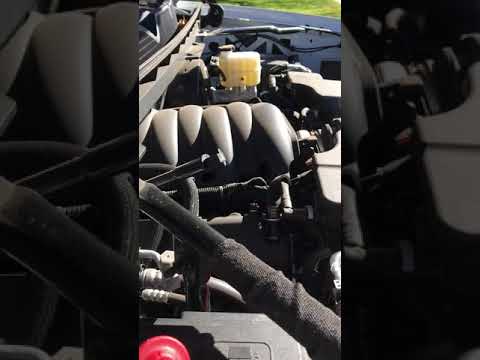
Find the F-150's battery and ground point
Open the F-150's hood and locate the 12-volt battery. Ford explicitly warns not to use the hood latch as the negative connection point, because current through the latch can burn its springs and leave the hood unable to operate correctly.
3
Connect red to the F-150's positive terminal
Seat the clamp firmly on bare metal so it can't slip off when the engine vibrates. Keep the cable's free end and the black cable separated and clear of any metal while you make the remaining connections.
4
Connect the donor battery's terminals
Connect the other end of the red cable to the positive (+) terminal of the donor vehicle's booster battery, then connect the black cable to the negative (−) terminal of the donor battery. Double-check that red is on plus and black is on minus at the donor end. Do not let the clamps of one cable touch the clamps of the other at any point — a spark near a battery can cause severe injury from explosion or acid burns.
5
Ground the black cable on the F-150's engine
Again: never the hood latch. A small spark when the clamp bites is normal, and grounding on the engine keeps that spark safely away from hydrogen gas around the battery.
6
Rev the donor, then start the F-150
Start the donor vehicle and rev the engine moderately, holding 2,000–3,000 rpm as shown on the tachometer. Then try starting the F-150. If it cranks slowly, stop and let the donor keep charging a few more minutes — and never crank for more than 30 seconds at a time; wait two minutes between attempts so the starter can cool. If the starter spins but the engine won't catch, or a security light flashes, check that the key is recognized (try the spare) before assuming the jump failed — the issue may be the immobilizer rather than the battery.
🔧 Mechanic's note — Tom Becker
From my bay, Starter spins but nothing catches? Check the dash for a flashing security light before you blame the battery. A key the truck doesn't recognize will crank forever and never fire.
7
Stabilize, disconnect, and troubleshoot
Then disconnect in exact reverse order: black from the F-150's engine ground, black from the donor battery, red from the donor battery, and finally red from the F-150's positive terminal. Let the truck idle several more minutes, then drive 20–30 minutes so the battery recharges.
All Done!
Test your repair before closing everything up. If something doesn't work right, double-check your steps.
⚠️ Common Mistakes to Avoid
- • Using the hood latch as the negative connection point — Ford's manual specifically warns against this because the latch springs can burn and the hood may stop operating correctly.
- • Clamping the final black cable near the fuel injection system instead of a plain exposed metal part of the engine away from it.
- • Skipping the three-minute run time with both engines on before disconnecting — Ford's procedure calls for it to stabilize the charge.
- • Cranking the starter for more than 30 seconds at a time; the manual says to wait two minutes between tries so the starter can cool.