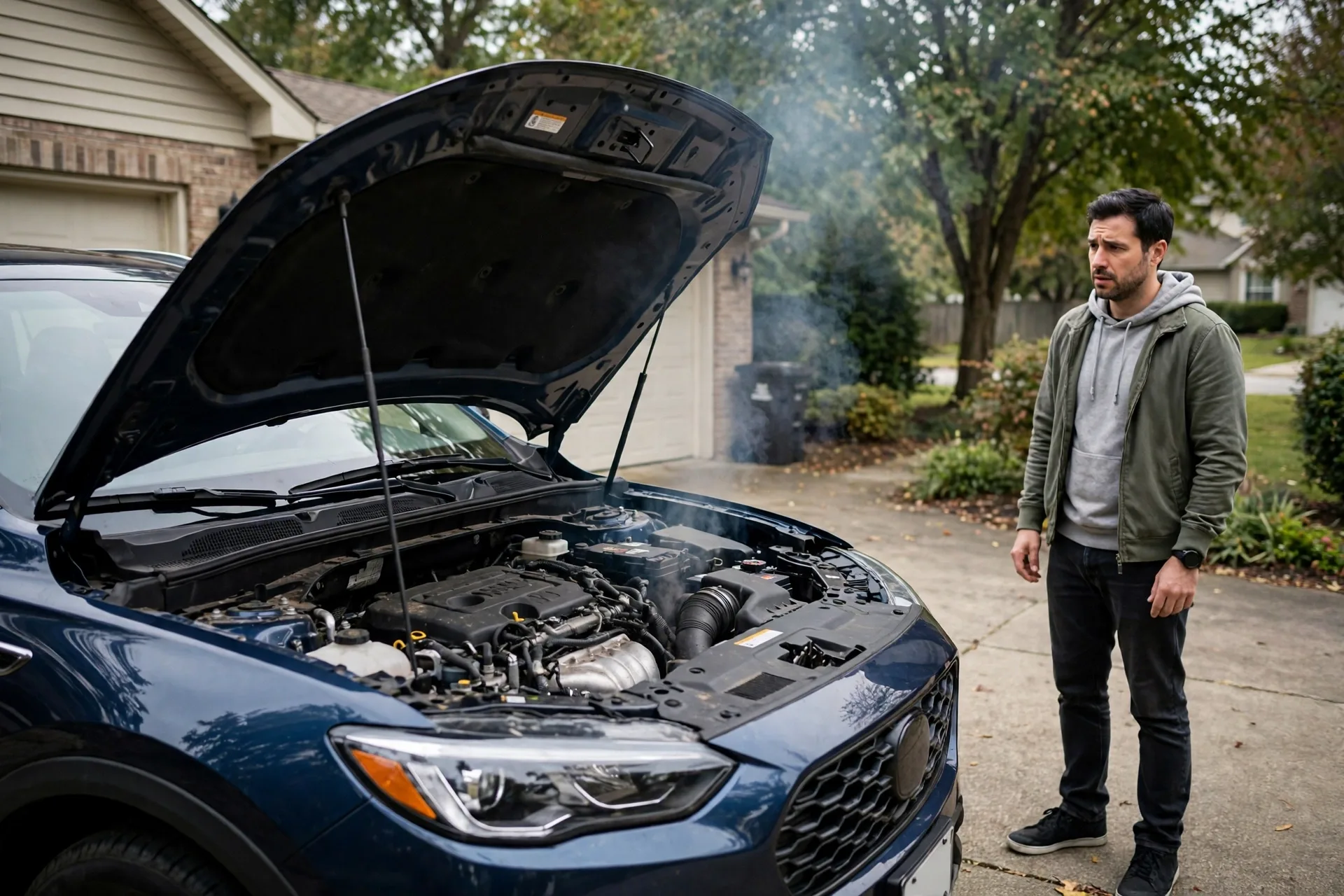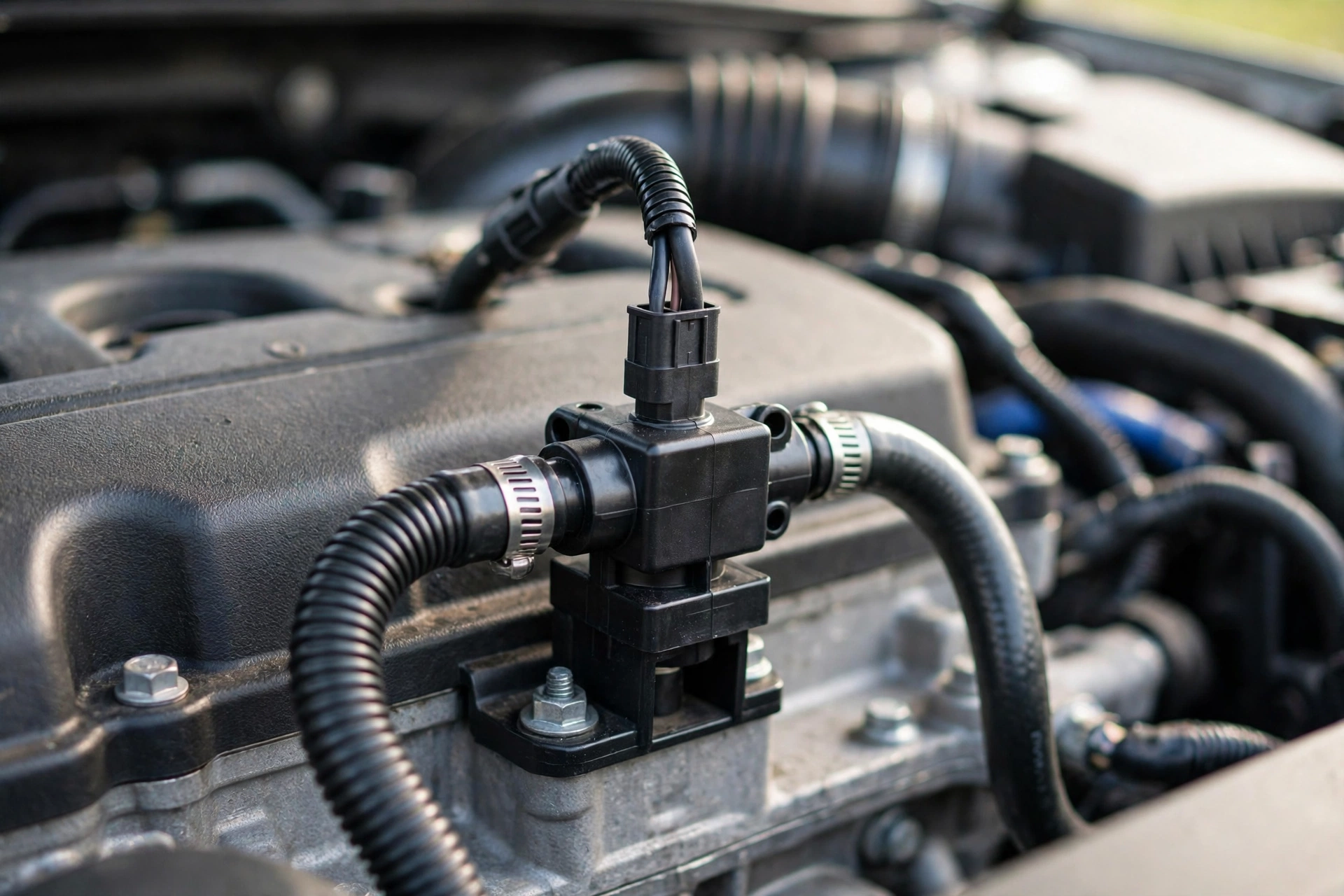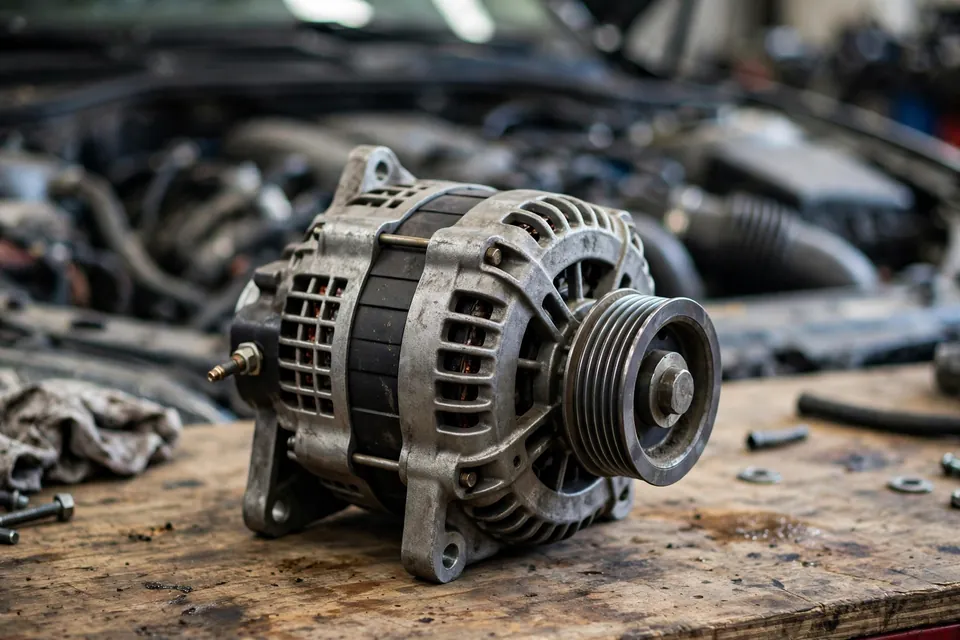
The Part That Powers Everything (And Gets Blamed for Everything)
Your battery might start the car, but your alternator keeps it running. It powers everything electrical while you drive and recharges the battery.
When an alternator starts failing, weird things happen. Lights dim. Electronics act strange. Eventually, your car dies on the highway.
Here's the thing: alternator problems get misdiagnosed far too often. I've seen people spend $400-600 on a new alternator when the real problem was a loose belt or corroded connection.
Let me teach you how to actually diagnose this properly.
What the Alternator Actually Does
Simple version:
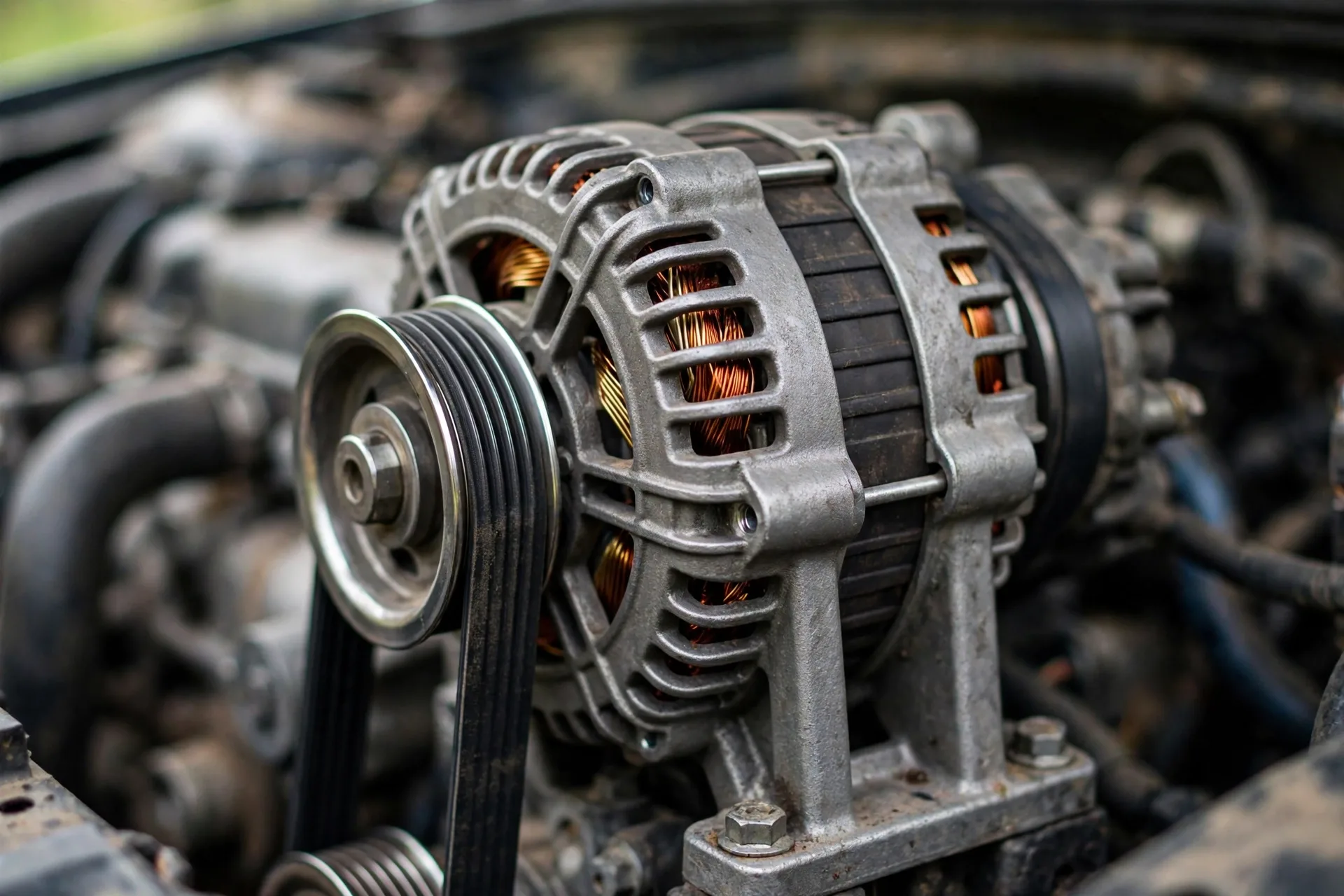
Your engine spins the alternator with a belt. The alternator converts mechanical energy into electrical energy (specifically, alternating current converted to direct current).
That electricity:
- Powers all electrical systems (lights, radio, computer, fuel pump, everything)
- Recharges the battery
- Regulates voltage to prevent overcharging
Without a working alternator:
- Car runs only on battery power
- Battery drains in 30-60 minutes
- Car dies completely
- You're calling a tow truck
Symptoms of a Failing Alternator
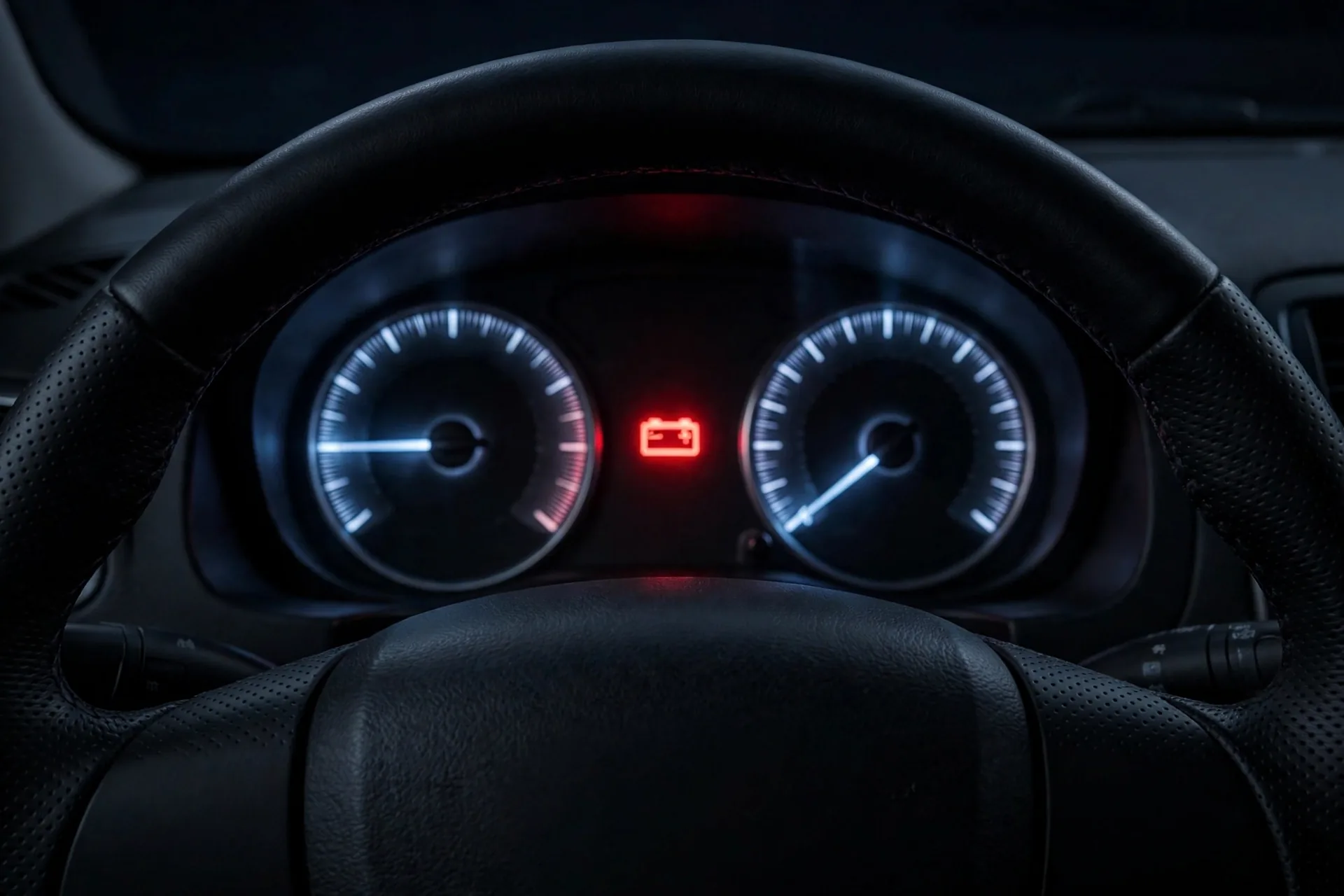
1. Battery/Charging Light On Dashboard
That little battery icon isn't just a battery light - it's a charging system warning.
If it's on while driving, your alternator isn't charging.
Common causes:
- Alternator failing
- Broken/loose serpentine belt
- Corroded connections
- Faulty voltage regulator
What to do: Get it tested ASAP. You're running on battery only.
2. Dim or Flickering Lights
Headlights dimming when you hit the brakes or turn on AC?
Why this happens: Alternator can't keep up with electrical demand. It's weakening.
Progressive failure:
- Early: lights slightly dimmer at idle
- Then: lights dim noticeably with accessories on
- Later: lights flickering
- Eventually: dead car
3. Electrical Issues
When alternator voltage drops:
- Radio cuts out or resets
- Power windows move slowly
- Dashboard lights flicker
- Gauges act weird
- Computer systems malfunction
Modern cars have SO many electronics. Weak alternator causes random electrical gremlins.
4. Strange Noises
Alternator making noise?
Grinding/whining: Bearing failure inside alternator
Squealing: Serpentine belt slipping (might be alternator, might just be belt)
Clicking: Internal component failure
If you hear these: Alternator is failing or belt needs attention
5. Smell
Burning rubber smell: Belt slipping on alternator pulley (potentially seized alternator bearing)
Electrical burning smell: Alternator overheating, wiring burning, voltage regulator failing
If you smell either: Stop driving, get it checked
6. Dead Battery (Repeatedly)
Battery keeps dying even after charging or jumping?
Possible causes:
- Alternator not charging (most likely)
- Battery is bad
- Parasitic drain
How to tell which: Test the alternator (I'll show you how)
7. Car Dies While Driving
Engine shuts off on the highway, loses power steering and brakes (scary!).
What happened: Battery finally drained completely because alternator wasn't charging.
Safety note: If this happens, you have power-assisted steering and brakes until battery dies completely, then you lose both. GET TO SHOULDER SAFELY.
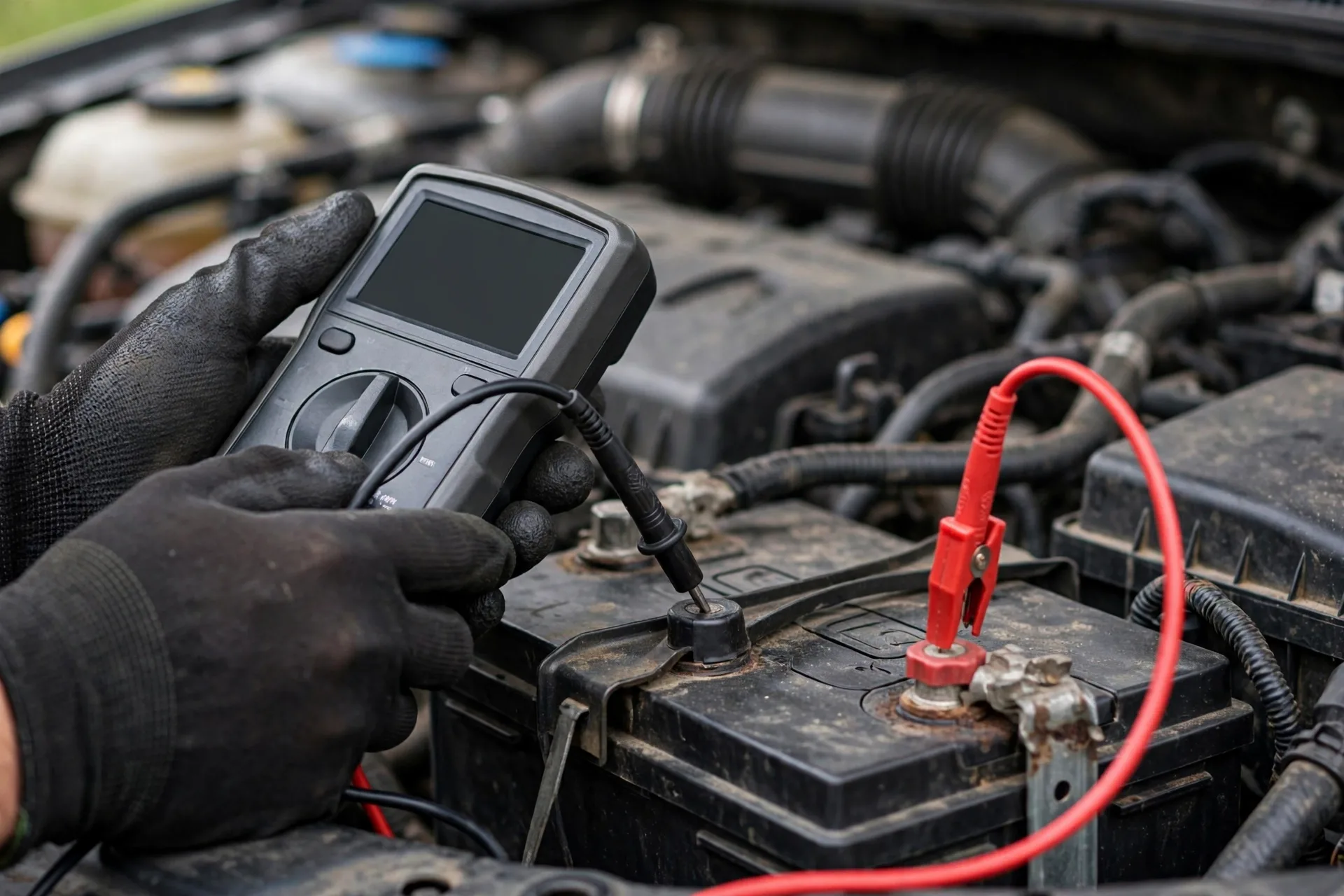
How to Test Your Alternator (DIY)
Don't guess. Test it. Here's how:
Test 1: Multimeter Voltage Test
You need: $15 multimeter from any hardware store
Process:
-
Check battery voltage with engine OFF
- Set multimeter to 20V DC
- Touch red probe to positive (+) battery terminal
- Touch black probe to negative (-) terminal
- Should read 12.4-12.7V
- If lower, battery might be discharged
-
Check charging voltage with engine RUNNING
- Start engine
- Measure at battery again
- Should read 13.7-14.7V
- This is alternator output
What the readings mean:
13.7-14.7V while running: Alternator is charging ✓
12.5-13.5V while running: Alternator is weak, failing soon
12V or less while running: Alternator is NOT charging (bad)
Over 15V while running: Voltage regulator failing (overcharging - bad for electronics)
Test 2: Load Test
With engine running at 13.7-14.7V:
- Turn on headlights
- Turn on AC full blast
- Turn on blower motor high
- Turn on rear defrost
- Check voltage again
Should drop slightly but stay above 13.2V
If it drops below 13V: Alternator can't handle load, it's failing
Test 3: Visual Inspection
Before assuming alternator is bad, check:
Serpentine belt:
- Is it there? (yes, I've seen missing belts)
- Cracked or worn?
- Tensioned properly?
- Glazed or shiny?
Battery terminals:
- Tight connection?
- Corrosion buildup?
- Cables in good condition?
Alternator connections:
- Main power wire tight?
- Plug connector secure?
- Wires damaged?
Ground connections:
- Engine ground to body tight?
- No corrosion?
I've fixed "bad alternators" by cleaning battery terminals or tightening a ground wire. Check the cheap/easy stuff first.
Test 4: Warning Light Test
Turn key to ON position (don't start engine).
Battery/charging light should:
- Turn ON with key on, engine off
- Turn OFF once engine starts
If light never comes on: Bulb burnt out or circuit issue
If light stays on with engine running: Alternator not charging
What Actually Fails Inside an Alternator
Alternators fail in different ways:
Diode Failure
What they do: Convert AC to DC
When they fail:
- Partial charging (some voltage but not full)
- AC ripple in system (damages electronics)
- Charging light may flicker
Fix: Replace or rebuild alternator
Voltage Regulator Failure
What it does: Maintains steady 13.7-14.7V output
When it fails:
- Overcharging (15V+) - boils battery, damages electronics
- Undercharging (12V-13V) - doesn't fully charge battery
Modern cars: Regulator often computer-controlled, can fail electronically
Fix: Some alternators allow regulator replacement, most need full alternator
Bearing Failure
Symptoms:
- Grinding or whining noise
- Alternator hot to touch
- Eventually seizes completely
Cause: Normal wear, contamination, or belt tension issues
Fix: Rebuild or replace alternator
Stator/Rotor Failure
What they do: Create magnetic field to generate electricity
When they fail:
- No charging at all
- Or intermittent charging
Cause: Heat damage, age, contamination
Fix: Rebuild or replace alternator
Slip Ring/Brush Wear
What they do: Deliver current to spinning rotor
When worn:
- Intermittent charging
- Charging only at higher RPM
- Eventually no charging
Fix: Rebuild alternator (brushes are cheap part)
Rebuild vs. Replace
Rebuilding:
- Replace worn components (bearings, brushes, voltage regulator)
- Keep existing housing
- Cost: $100-200 usually
- 1-2 day turnaround typically
Pros: Cheaper, environmentally friendly
Cons: Other parts could fail soon, less warranty
Replacing:
- New or remanufactured alternator
- Everything is new/rebuilt
- Cost: $150-400+ for reman, $300-800 for new OEM
- Instant swap
Pros: Better warranty, everything fresh, less likely to fail again soon
Cons: More expensive
My take:
- If alternator is over 10 years old or 150k+ miles: replace
- If it's relatively new and just one component failed: rebuild might be okay
- Check warranty on rebuilt units (a solid warranty matters — lifetime is best)
DIY Alternator Replacement
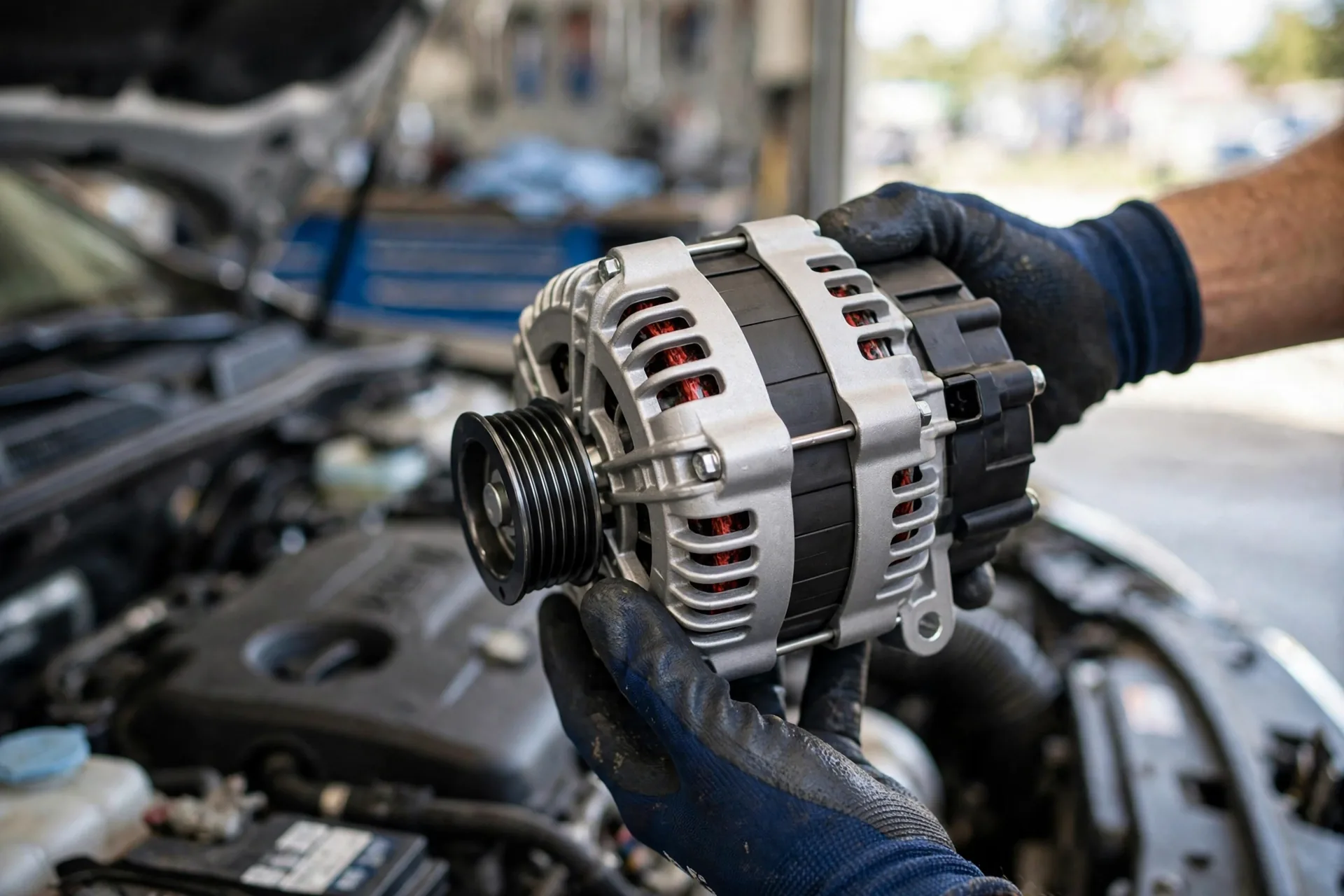
Difficulty: 4/10 to 8/10 (depends on car)
Time: 1-3 hours
Some cars are easy: 4-cylinder with alternator on top, easy belt access
Some cars are nightmares: V6/V8 with alternator buried, need to remove other components to access it
General process:
- Disconnect battery (negative terminal)
- Remove serpentine belt
- Disconnect alternator wiring (photo first)
- Remove mounting bolts (usually 2-3)
- Remove old alternator
- Install new alternator
- Reinstall mounting bolts (torque to spec)
- Reconnect wiring
- Install belt
- Reconnect battery
- Start and test voltage
Special considerations:
Some alternators are programmed to the car (newer BMWs, some Audis, etc.). You can't just swap it - needs to be coded to the car. Dealer or shop with proper scan tool required.
Core charge: Most alternators have $25-75 core charge. Return old alternator to get money back.
Related guide: 2017-2021 Acura MDX - Alternator Replacement — Full replacement walkthrough with photos on a 2017-2021 Acura MDX.
Common Misdiagnoses
These look like alternator problems but aren't:
Bad Battery
Weak battery causes dim lights, starting issues, electrical problems.
How to tell: Test battery separately. If battery tests bad and alternator voltage is good (13.7-14.7V), it's the battery.
Corroded Connections
Corrosion on battery terminals or alternator connections creates resistance.
Symptoms: Exactly like failing alternator
Fix: Clean connections with baking soda and wire brush ($0 fix)
Loose Belt
Slipping belt can't spin alternator properly.
Symptoms: Squealing noise, charging light intermittent, low charging voltage
Fix: Adjust or replace belt ($30-80)
Bad Ground Connection
Poor ground prevents proper current flow.
Symptoms: Intermittent electrical issues, low voltage
Fix: Clean and tighten ground connections ($0)
Parasitic Draw
Something draining battery when car is off.
Symptoms: Battery dead in morning, seems like alternator not charging
Fix: Find and fix the draw (could be aftermarket alarm, trunk light stuck on, etc.)
Test: Disconnect battery overnight. If battery stays charged, you have parasitic draw, not alternator problem.
Related guide: 2006-2011 Honda Civic - Battery Replacement — Most 'alternator failures' turn out to be a worn-out battery — here is the battery replacement guide.
Preventing Alternator Failure
Ways to extend alternator life:
-
Keep battery terminals clean - corrosion creates resistance, makes alternator work harder
-
Replace serpentine belt on schedule - worn belt slips, alternator doesn't spin properly
-
Don't run tons of aftermarket accessories - giant stereo amp, off-road lights, etc. overwork alternator
-
Fix electrical problems promptly - shorts and bad connections damage alternator
-
Keep engine bay relatively clean - road salt and grime contaminate alternator
-
Don't deep cycle the battery - running battery dead repeatedly makes alternator work harder to recharge
Typical alternator lifespan: 80,000-150,000 miles in normal conditions
Related guide: 1990-1996 Chevrolet Lumina APV — Serpentine Belt Replacement — A glazed or slipping belt starves the alternator — keep the belt that drives it in shape.
When You're Stranded
Alternator dies on the road, car loses power - what do you do?
Immediate actions:
-
Turn off all electrical accessories
- AC off
- Radio off
- Lights to minimal (daytime: off, nighttime: parking lights only if safe)
- This extends battery life
-
Head to nearest safe place
- Shop if close
- Auto parts store
- Gas station
- Home if possible
-
Don't shut off engine if you can help it - you might not restart
How far can you drive on battery alone?
- Older car (minimal electronics): 30-60 minutes
- Modern car (tons of electronics): 15-30 minutes
- Running lights and AC: 10-20 minutes
Warning signs battery is dying:
- Headlights dimming rapidly
- Engine starting to run rough (fuel pump losing power)
- Radio cuts out
- Gauges flickering
When power steering and brakes fail:
- Steering becomes VERY heavy (you can still steer, just much harder)
- Brakes work but require much more force (pump multiple times)
- Don't panic - you can still stop safely
The Shop Diagnosis
Good shops will:
- Test battery first (separate from alternator)
- Test alternator output
- Test under load
- Inspect belt and connections
- Show you test results
- Give you honest recommendation
Red flags:
- "Your alternator is bad" without testing
- Refusing to show you test results
- Claiming you need $1000+ alternator (most are $200-400)
- Pushing for immediate replacement on borderline voltage
- Not checking belt, connections, or battery first
Good signs:
- Show you test results
- Check battery separately
- Inspect belt and connections
- Offer repair vs. replace options
- Warranty on work
Cost Breakdown
Parts:
- Remanufactured alternator: $100-300
- New alternator: $200-600
- OEM alternator: $300-1000+
- Serpentine belt (while you're there): $20-50
Labor:
- Easy car: 0.5-1 hour ($50-100)
- Average car: 1-2 hours ($100-200)
- Difficult car: 2-4 hours ($200-400)
Total typical cost: $200-500 for most cars
High-performance or European: Can be $600-1200+
The Bottom Line
Alternator failure is common but predictable. Watch for warning signs:
- Dim lights
- Battery warning light
- Electrical issues
- Strange noises
- Repeatedly dead battery
Test before replacing:
- Voltage test is free (if you own multimeter)
- Auto parts stores test for free
- Don't assume it's the alternator
Check simple stuff first:
- Battery condition
- Belt condition
- Clean connections
- Tight wiring
When it does fail:
- Don't cheap out on replacement (you don't want to do this job twice)
- Get warranty
- Consider replacing belt at same time
- Test immediately after installation
Prevention:
- Maintain battery
- Replace belt on schedule
- Keep connections clean
- Address electrical problems promptly
Alternator replacement isn't fun, but it's not the end of the world. Most shops can do it same-day.
Questions? Drop them below. I've diagnosed thousands of charging system problems.
- Tom Becker, Senior Technician
Last reviewed: October 2026.