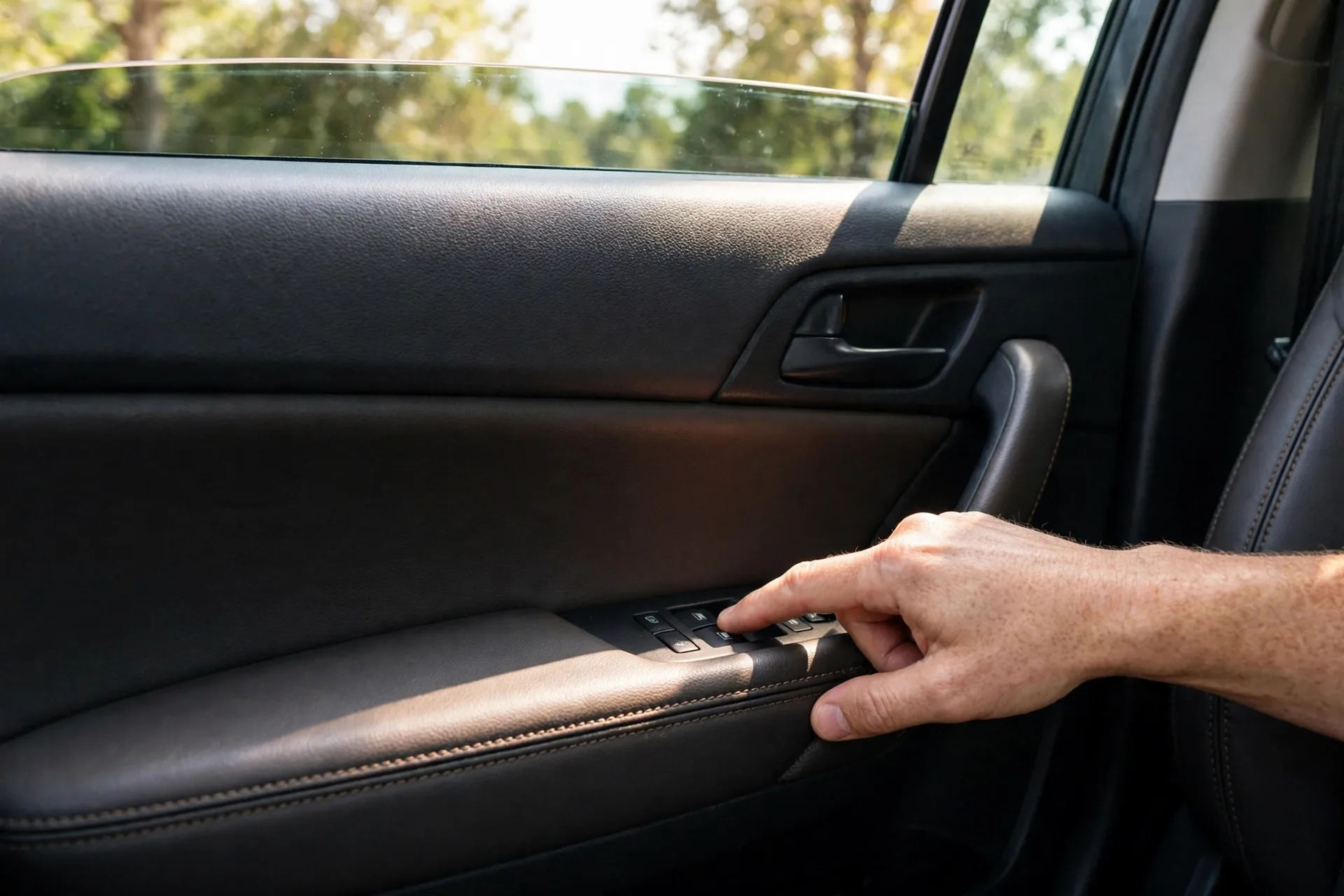
Power Window Not Working: Diagnosis Guide
A power window that refuses to move is almost always one of four things: a blown fuse, a bad switch, a worn out motor, or a broken regulator. Start with the cheap and easy checks first, because plenty of windows get condemned as dead motors when the real culprit was a fuse or a lockout button. Work through the steps below in order and you will narrow it to the right part before you spend money or pull a door panel.
What Usually Goes Wrong
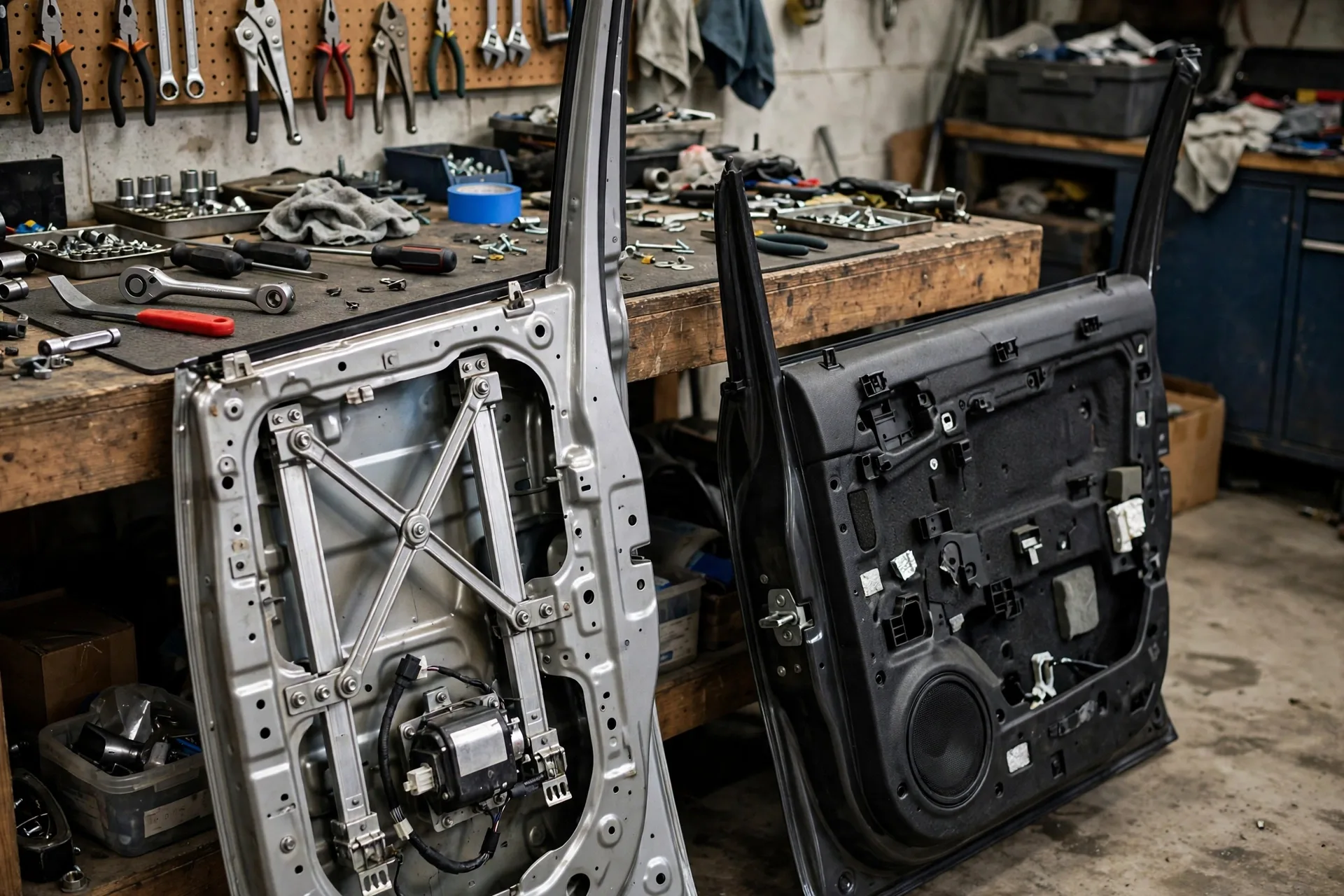
A power window system is simple. A switch sends power to a motor, the motor drives a regulator, and the regulator moves the glass up and down on its tracks. When any link in that chain breaks, the window stops, but the symptom tells you a lot about which link failed.
A window that is dead silent when you press the switch points toward an electrical problem: fuse, switch, or wiring. A window that makes noise but does not move, or moves crooked, tilted, or in jerks, points toward a mechanical problem: the regulator or the glass coming off its track. A window that works from the driver master switch but not from its own door switch points at that door switch. A window that works sometimes, usually on warm days or after you slam the door, points at a dying motor with worn brushes inside.
Other suspects are less common but worth knowing. The wiring that runs through the rubber boot between the door and the body flexes every time the door opens, and after years of that it can break inside the insulation where you cannot see it. The window lockout button on the driver door can get bumped by accident and kill the passenger windows, which looks exactly like a failure. And on older cars, a regulator cable can fray or snap, which drops the glass into the door with a clunk.
Diagnose It in Order
Do these in order. Stop as soon as you find the fault, because every step after that is wasted work.
- Check the lockout button and try every switch. Press the window lockout button on the driver door once to make sure it is off, then try the window from its own door switch and from the driver master switch. If one switch works and the other does not, the dead switch is your problem.
- Check the other windows. If no window on the car works, you are looking at a shared fuse, a shared feed, or the master switch, not four dead motors at once. If only one window is dead, the fault is almost certainly at that door.
- Listen while you press the switch. Silence means no power is reaching the motor or the motor is completely dead. A click, hum, or grinding noise means power is getting through and the trouble is mechanical, usually the regulator.
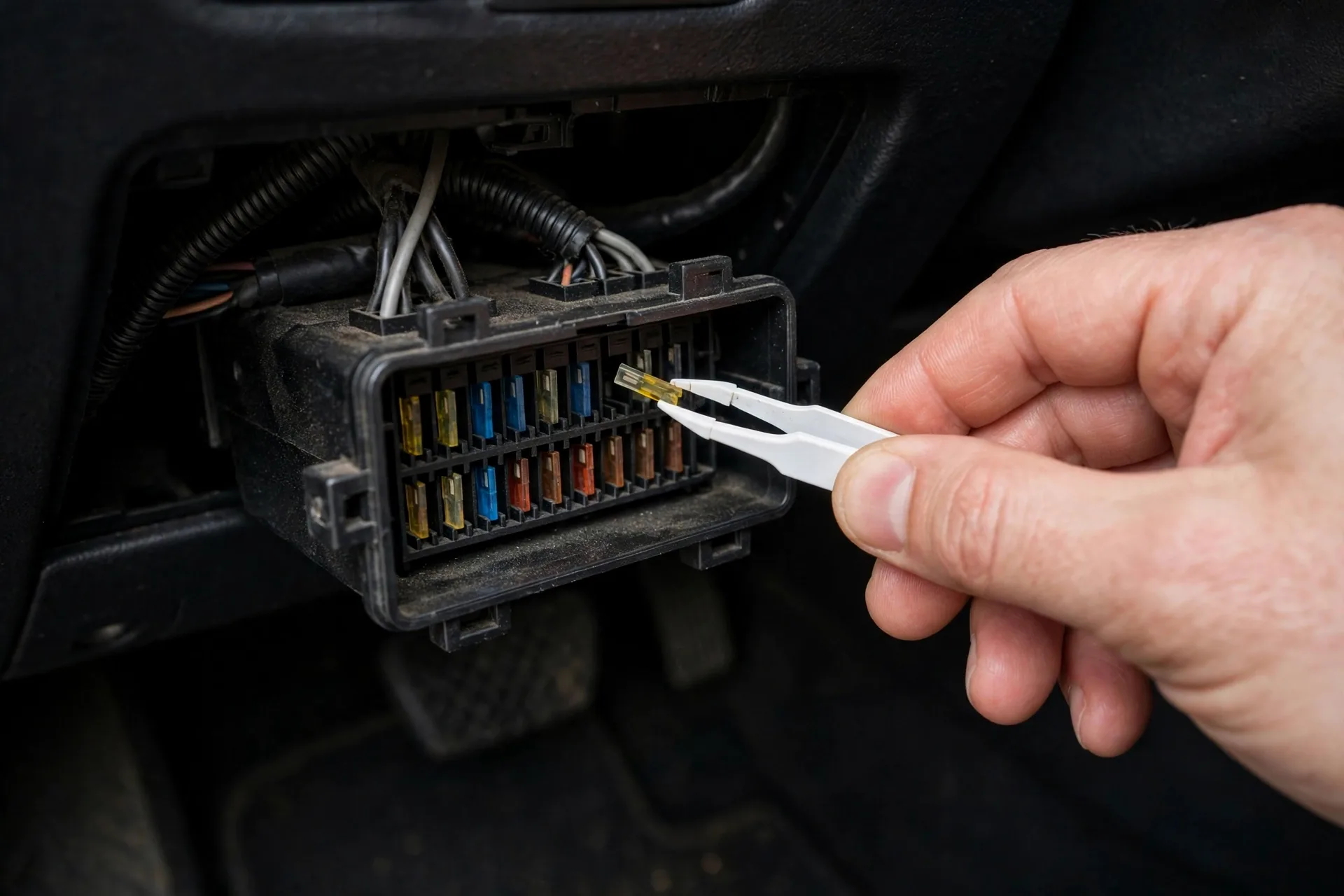
- Check the fuse. Find the window fuse in your owner's manual, pull it, and look at the metal strip inside. A broken strip means a blown fuse, so replace it with the same type and rating shown in the manual. If the new fuse blows right away, there is a short somewhere, and that is a shop job unless you are comfortable tracing wiring. Our guide to Blown Fuse: How to Check and Replace It walks through the fuse check in detail.
- Try the door thump test. With the ignition on, hold the window switch in the up or down position and give the middle of the door panel a firm thump with the heel of your hand. If the window jerks to life, the motor brushes are worn out. This is a diagnosis, not a repair: the motor will fail again soon, so plan the replacement.
- Inspect the door jamb wiring boot. Peel back the rubber boot between the door and the body and look for cracked insulation or broken wires. This is the most common wiring failure point, and a broken wire here explains a window that works only when the door is half open.
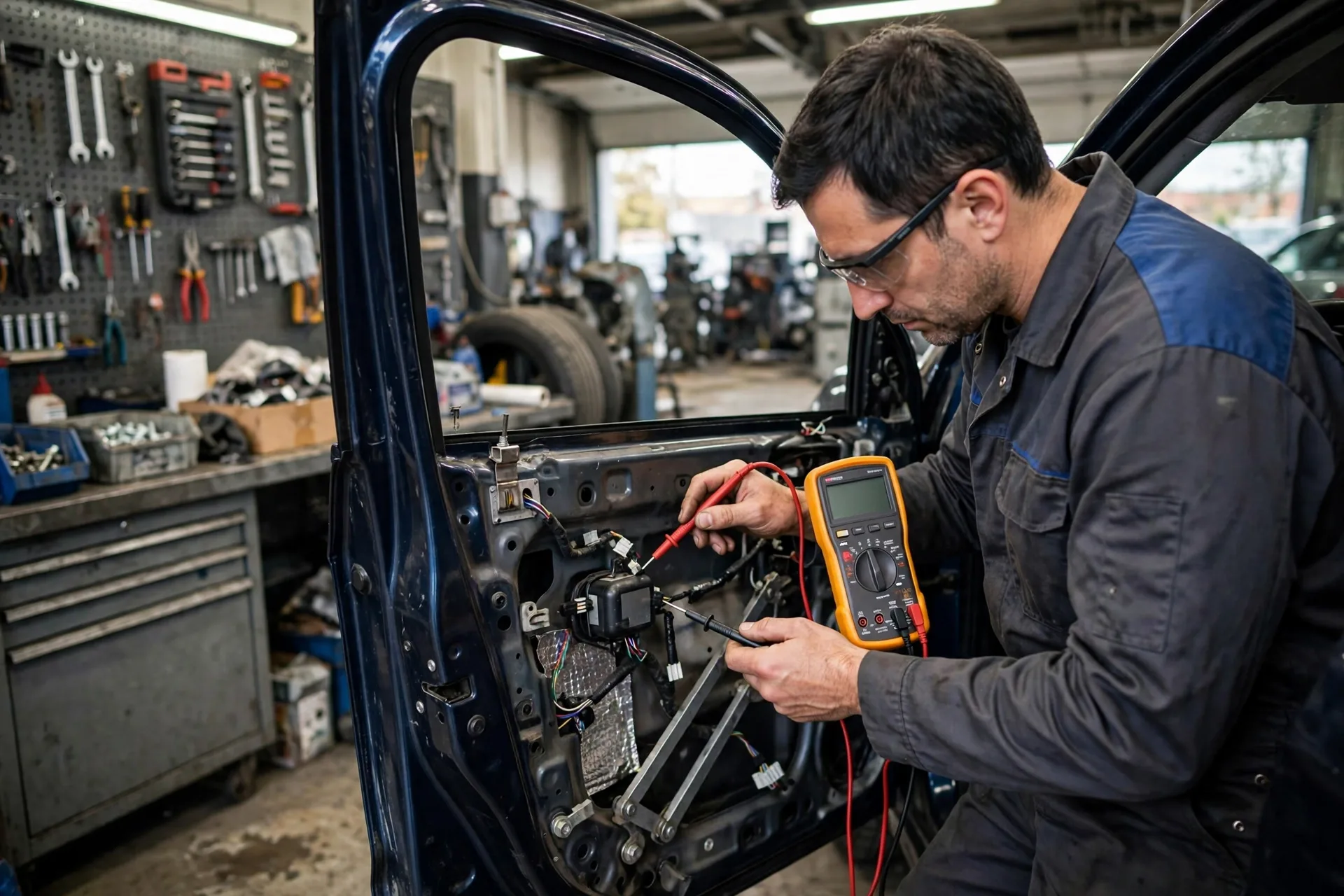
- Test power at the motor. If you have a test light or multimeter and you are comfortable removing a door panel, unplug the motor connector and check for power there while someone presses the switch. Power present and a dead motor means the motor is bad. No power means the fault is upstream: switch, wiring, or fuse feed. Check your owner's manual for the panel removal steps for your car, because clip locations vary.
One more pattern is worth flagging. If several electrical things misbehave at once, dim lights, slow windows, and odd warning lights together, the problem may be upstream of the window circuit entirely, such as a weak battery or a poor ground. Our post on Car Battery Keeps Dying Overnight: Find the Parasitic Drain covers how to think about that kind of fault.
What the Fix Usually Costs
No verified price data is published for this repair, so here is the honest cost picture in tiers instead of made up numbers.
A fuse is a cheap part, pocket change, and a ten minute job. A switch is a cheap to moderate part and usually a straightforward swap once the panel or switch bezel is out. A regulator or a motor is a mid range part, and the labor is the bigger share of a shop bill, because the door panel has to come off, the glass has to be secured, and the regulator has to be riveted or bolted back in. Regulators and motors are often sold as one assembly, which costs more in parts but saves labor compared with replacing them separately.
Dealers charge the most, mostly in labor rate, and they will fit factory parts. A good independent shop does this job every week and is usually the best value for a regulator or motor. The DIY savings are real here: if you do a regulator yourself, you skip the labor charge entirely and pay only for the part, but budget a full afternoon the first time, because door clips break, glass alignment is fiddly, and you will want a second pair of hands to hold the glass.
The one cost trap is guessing. Replacing a motor when the fault was a switch wastes the most expensive part and all the labor, then you still have to buy the switch. That is why the diagnosis steps above matter: a fuse check and a switch swap test cost almost nothing and rule out the cheap causes before you commit to the big part.
DIY or Shop?
Fuse, switch, and lockout checks are easy DIY for anyone. Regulator and motor replacement is solid intermediate DIY: no special tools beyond basic hand tools and trim tools, but you are working inside a door with sharp metal edges and a heavy piece of glass, so tape the glass up securely before you unbolt anything. Skip DIY and book a shop if the new fuse blows immediately, if the wiring inside the door jamb is broken, or if the window is stuck down and rain is coming, because a shop can secure it the same day.
My take: most people should diagnose it themselves using the steps above, then decide. If it is a fuse or a switch, fix it in the driveway. If it is a regulator or motor and you have a free afternoon and patience, do it yourself and pocket the labor. If the car is your daily driver and the window is stuck down, pay the shop and get it closed today.
If you want a model specific walkthrough for the repair itself, these EZCarFix guides cover the same job step by step: 2006-2010 Volkswagen Jetta - Window Regulator Replacement, 2008-2013 Toyota Highlander: Power Window Motor Replacement, and 2019-2024 BMW 5 Series: Replace Window Regulator.
FAQ
Why does my window go down but not up?
That pattern usually means the switch contact for one direction has failed, or the motor is weak in one direction. Try the window from both the master switch and the door switch. If it works from one switch and not the other, replace the dead switch.
Why did my window fall into the door?
The regulator cable snapped or the glass came off its track clips. Do not keep pressing the switch, because the motor will keep running against nothing. Tape the glass up if you can reach it, and plan a regulator replacement.
Can a dead battery cause a power window to stop working?
A weak battery can make windows move slowly, but a single dead window with everything else working is not a battery problem. Check the fuse and switch for that door first.
Is it safe to drive with a window stuck down?
It is legal in most places, but it is a security and weather risk, and rain can soak the door electronics and make the repair bigger. Get it closed or covered as soon as you can, and avoid car washes and heavy rain until it is fixed.
Safety: Informational DIY. EZ Car Fix is not a shop or dealer.