Burning Smell From Your Car: What Each Smell Means
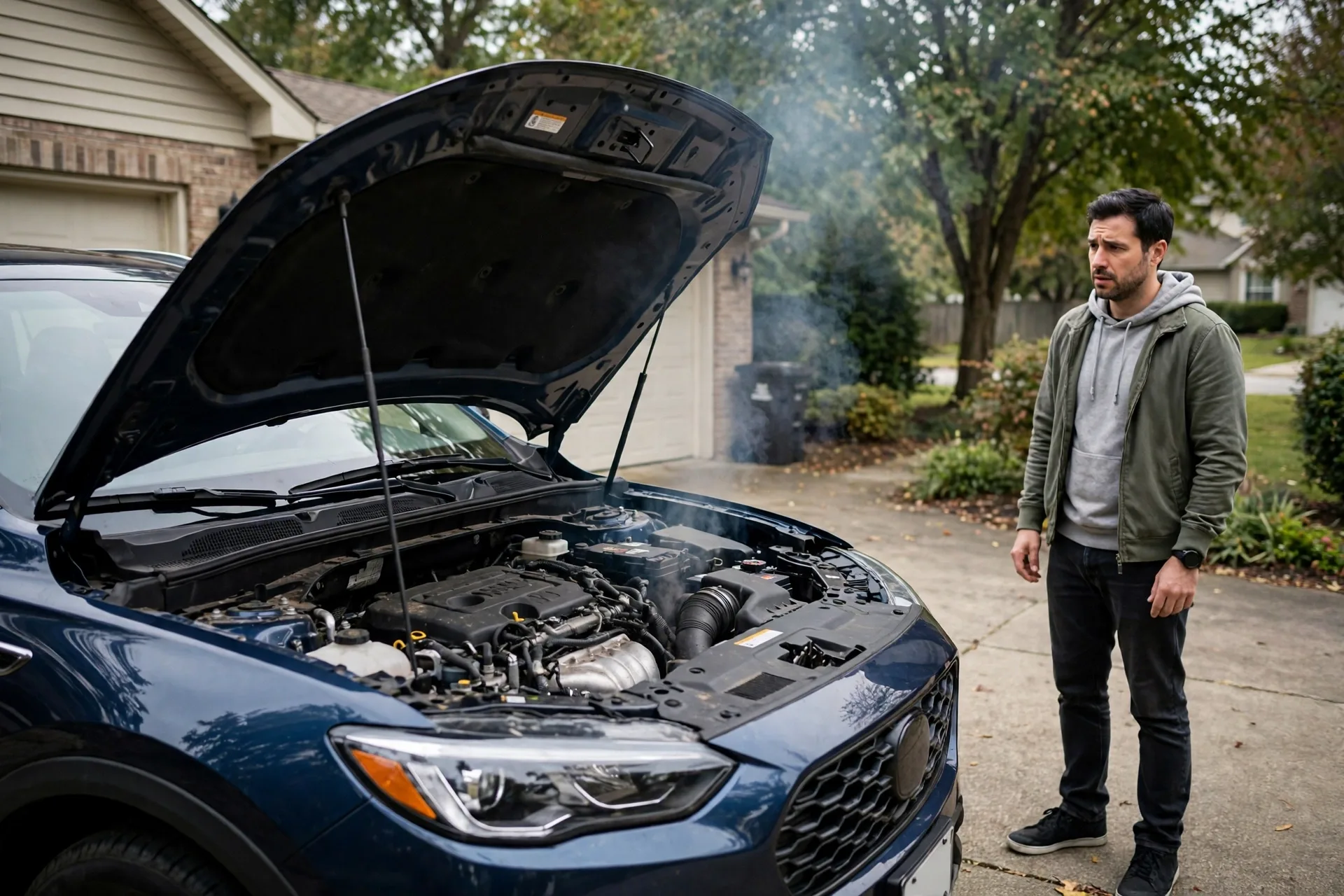
A burning smell from your car is almost always something hot that should not be hot, or fluid landing where it does not belong. Usually the cause is one of a short list: leaking oil cooking on the exhaust, dragging brakes, coolant escaping as steam, a slipping clutch, or wiring getting too hot. Your nose can narrow it down fast.
Do not ignore a burning smell and hope it goes away. Some causes are a nuisance, like a plastic bag melted on the exhaust. Others are a fire risk or a sign of imminent part failure. Most checks below need nothing more than your eyes, your nose, and a flashlight.
What each burning smell usually means
Each fluid and material has its own signature, so start with the character of the smell.
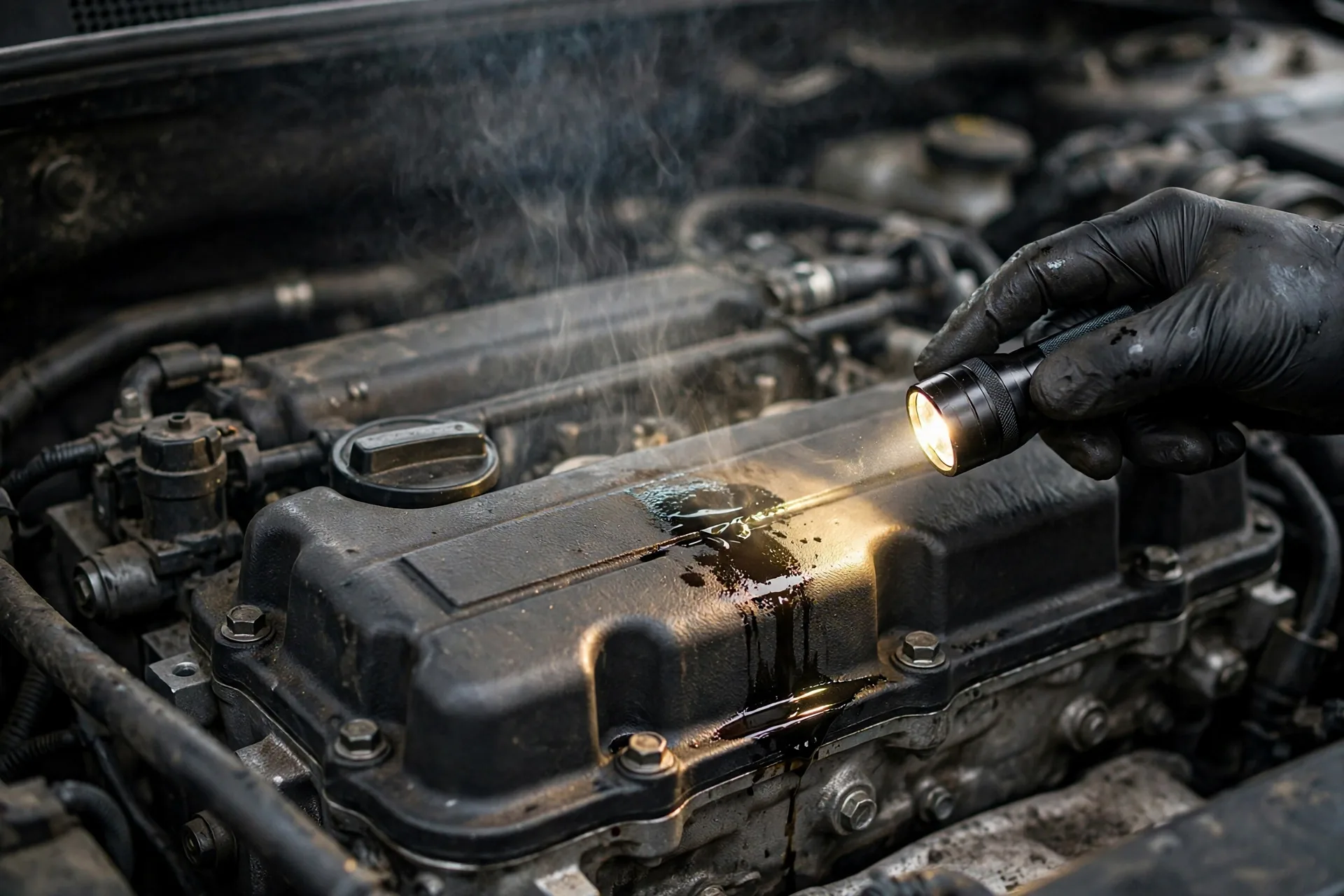
Burning oil smells acrid and greasy, like an uncleaned frying kitchen. It usually means engine oil leaking onto a hot surface, most often the exhaust manifold or a heat shield. Common leak points are valve cover gaskets, oil filter housings, and drain plugs. The smell often gets stronger after you park, when the engine is hot and the car sits still. Check the dipstick: a level dropping between changes plus a burning oil smell means a real leak, even with no puddle, since a slow leak can burn off first.
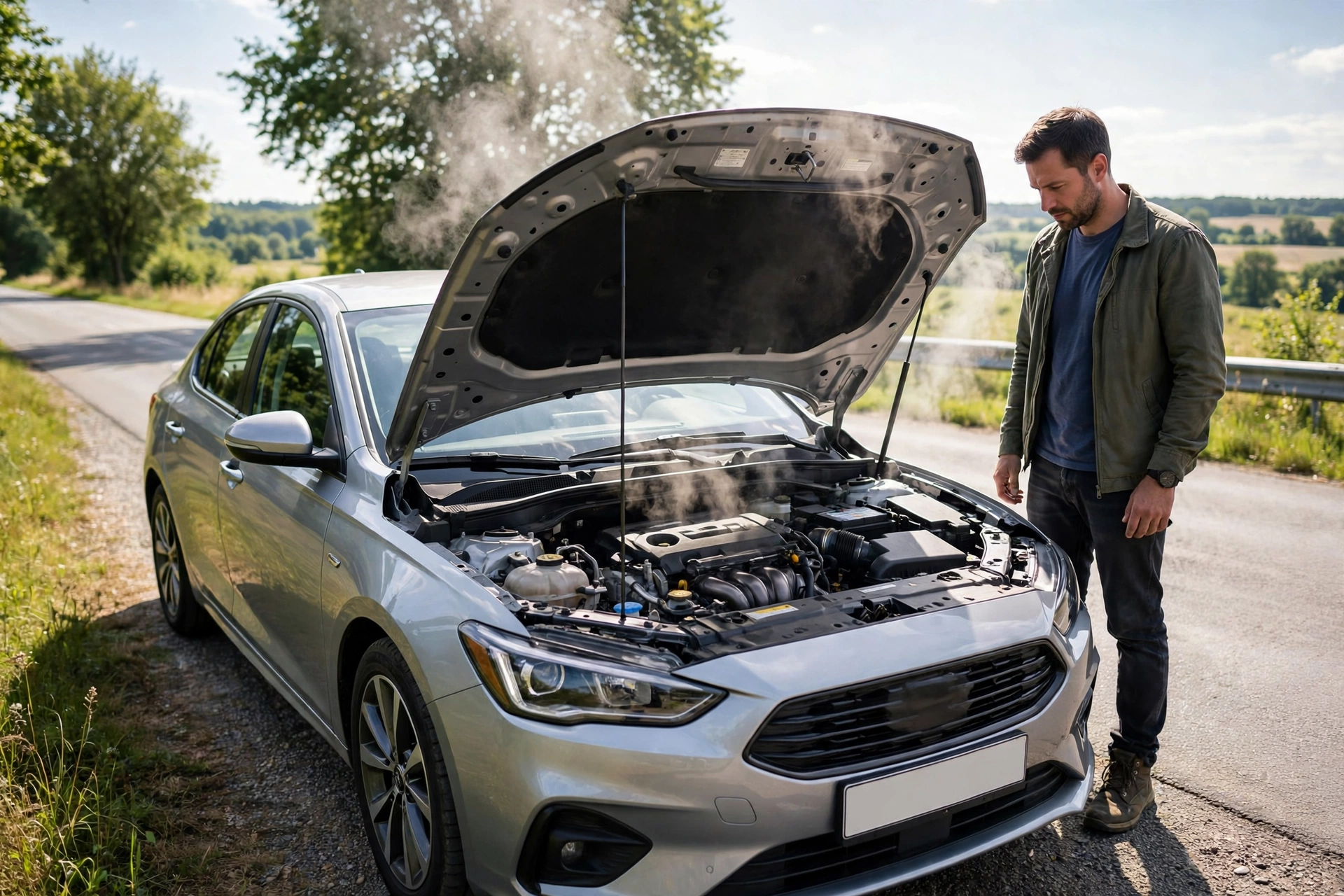
Sweet, almost syrupy steam is coolant, with a distinct smell that is hard to mistake, usually alongside a temperature gauge climbing higher than normal. A split hose, a weeping water pump, or a radiator leak can spray coolant onto hot parts, where it steams off, often leaving a sticky residue or pale crust around hose clamps. If you smell sweet steam with a rising gauge, stop and let the engine cool. Driving on can turn a hose job into a much bigger repair.
Burning rubber smells like a tire shop on a hot day. It can come from a slipping drive belt, a hose touching a hot surface, or debris stuck against the exhaust. Belts usually squeal alongside the smell, and one that keeps slipping will eventually snap.
A sharp, chemical, almost fishy smell points to electrical trouble: melting wire insulation, an overheating connector, or a failing blower motor. Take electrical smells most seriously. With burning plastic or wiring, especially alongside flickering lights, a dead accessory, or dash smoke, switch off accessories, pull over somewhere safe, and switch off. Wiring faults can smolder out of sight.
A slipping clutch smells like burning paper mixed with a harsh, dusty tang, usually after hard launches, towing, or riding the clutch pedal in traffic. Drivers notice the engine revs climb without matching speed. One bad hill start is not a crisis. A clutch smell on every drive means the clutch is wearing out and needs a shop.
Finally, the smell may not be your car at all. A plastic bag on the exhaust, road tar, or another vehicle's brakes in traffic can drift through your vents. Once only, with nothing wrong under the hood, an outside source is likely. Every drive means it is yours.
When the smell comes from the wheels
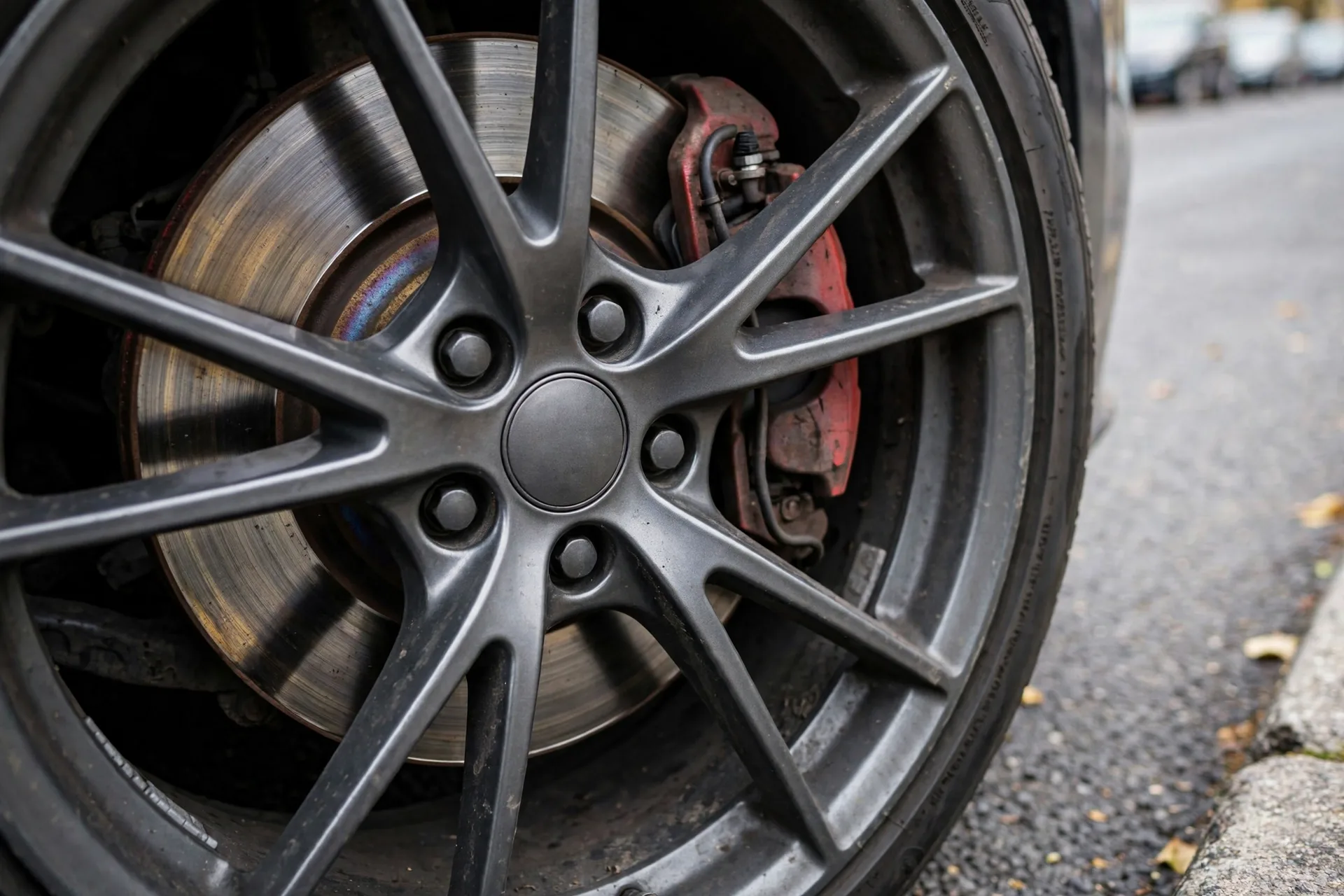
A smell strongest at one wheel, rather than under the hood, almost always means brake trouble. A sticking caliper keeps a pad pressed against the disc until it smells harsh and metallic. A partly engaged parking brake does the same to the rear wheels.
Here is how to tell. After a drive where you noticed the smell, carefully hold your hand near each wheel without touching it. A dragging brake makes one wheel noticeably hotter than the others, and the car may pull to one side. New pads can smell briefly as they bed in, but a smell lasting days, or one hot wheel, is a brake that needs inspection.
Dragging brakes wear pads and discs fast, hurt fuel economy, and can overheat enough to damage the caliper and wheel bearing. This is a fix it soon job. If a wheel is too hot to hold your hand near, let it cool and have the car towed or driven gently to a shop, avoiding hard braking on the way.
For what a brake job involves, see the 2013-2022 Acura ILX - Brake Pad Replacement guide. Parts vary by model, so check your owner's manual first.
How to track down the source
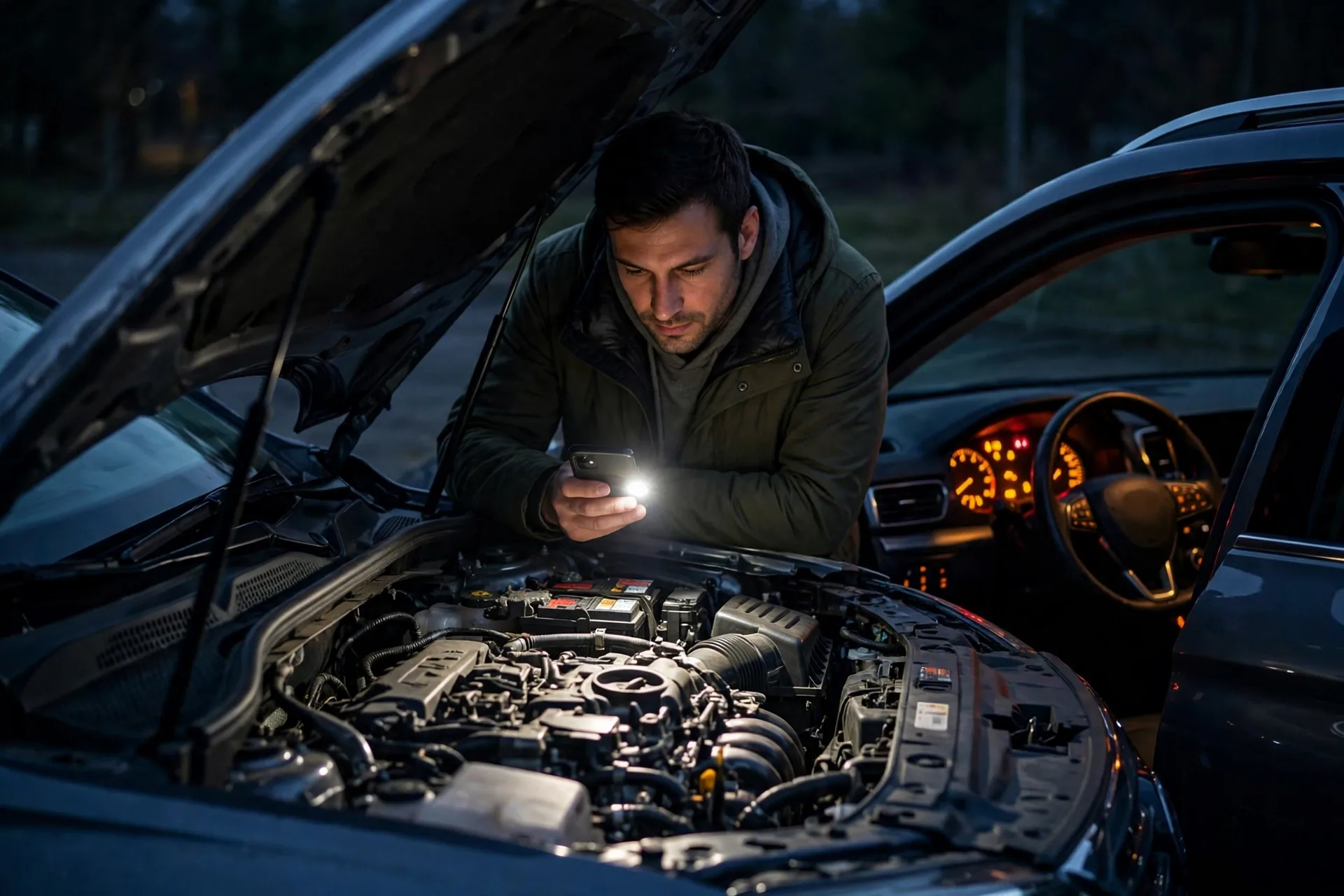
Work through these steps in order. All are visual or smell based, and none require opening a hot cooling system or touching hot parts.
- Note when the smell appears: only at startup, only after a long drive, only with the heater on, or all the time. Heater only smells point to the blower motor or vent debris. Smells building during a drive point to brakes, clutch, or a leak that grows with heat.
- Park somewhere safe and level, switch off, and wait a few minutes. Pop the hood and look for smoke, wet spots, or dark staining on the engine and heat shields. Follow your nose: the strongest point is usually close to the source.
- Check the fluids you can check safely: engine oil on the dipstick, coolant in the overflow reservoir, brake fluid in its reservoir. A falling level backs up what your nose told you. Never open a hot radiator or reservoir cap. Wait until the engine is fully cool.
- Look under the car with a flashlight for drips, and check the ground where you park. Fresh oil is amber to dark brown, coolant is usually green, pink, or orange and slippery, and transmission fluid is reddish. See also What Is Leaking From My Car? Identify by Color and Smell.
- Check the wheels. Compare the temperature near each wheel, look for heavy brake dust on one wheel only, and check whether the parking brake is fully released.
- Check the belts and hoses you can see. A belt that is glazed, cracked, or sitting crooked on a pulley is a suspect. A hose resting against a hot manifold will show a melted or shiny spot.
- Inside the car, check whether the smell comes through the vents with the heater or air conditioning on, and whether any accessory stopped working. A dead blower motor or flickering light with an electrical smell means the car stays off until inspected.
If this list gives no clear source and the smell keeps returning, get a shop inspection. Intermittent smells are hard to chase, and a lift and trained eye will find a weeping seal or rubbing hose faster than guessing with parts.
What it usually costs to fix
There is no single price here because the smell is a symptom, not a repair. The fix depends entirely on the cause, and the spread is wide.
At the cheap end are simple causes: exhaust debris removed, a belt adjusted or replaced, or a hose rerouted away from a hot surface. Cheap parts, short labor.
In the middle sit common leak and brake repairs. A valve cover gasket or hose replacement is a moderate job, mostly labor, with a modest part. A caliper or a set of pads and discs is a bigger parts bill but still routine. A coolant flush often follows a hose repair, and the 2018-2024 Chevrolet Equinox - Coolant Flush guide shows what that service involves.
At the big ticket end are clutch replacement, major engine seal work, and anything following overheating. A clutch is mostly labor because the transmission has to come out. Engine work after overheating is what stopping early avoids, which is why the sweet coolant smell deserves immediate attention.
Dealers generally charge more than independent shops, widest on labor heavy clutch and seal work. An independent inspection fee is money well spent if it saves replacing parts on a guess. Get the diagnosis in writing, with the faulty part named, before approving the repair.
DIY or shop: the verdict
Some causes are fair DIY work. Finding the source with the steps above is something every driver should do. Removing exhaust debris, replacing a worn belt, or changing pads on a car you know well are reasonable home jobs with the right tools and a safe place to work.
Other causes belong in a shop: anything electrical, a slipping clutch, an overheated dragging caliper, and any leak you cannot positively identify. Guessing wastes money and leaves risk in place: an oil leak keeps dripping onto a hot exhaust, and a brake problem keeps cooking a wheel.
My take: treat the smell as the car's complaint, and answer it the same day. Identify it with the steps above, fix the easy causes yourself, and hand the rest to a shop with a clear description of what you smelled and when. Drivers who act on the first whiff almost always pay less than drivers who wait for smoke.
If overheating is part of your picture, read Why Is My Car Overheating? Causes and What to Do Now before driving again. For engine oil work, the 2013-2022 Acura ILX - Engine Oil and Filter Change guide is a good reference.
FAQ
Is it safe to drive with a burning smell?
It depends. A one time whiff of outside debris is fine. An electrical smell, a sweet coolant smell with a rising gauge, or any smoke means pull over and stop. When in doubt, stop. A tow is cheaper than an engine or a fire.
Why does my car smell like burning after an oil change?
A little spilled oil on the exhaust burns off over the next short drive or two, then stops. If it lasts longer, or oil is visibly leaking, the service may have left a loose filter, drain plug, or damaged seal, and the car should go back to that shop.
Can new brakes smell like burning?
Yes, for a short while. New pads need bedding in, and a mild smell on the first drives is normal. A strong smell lasting days, or one wheel much hotter than the rest, is not bedding in and needs a check.
Why does the burning smell only appear with the heater on?
Heater only smells usually come from the ventilation system: a failing blower motor, debris in the heater box, or a small heater core coolant leak. A heater core leak often fogs the windshield from inside, and that one needs a shop.
A burning smell is your car's early warning system. Learn the signatures here, check the car the day you notice the smell, and fix the cause while it is small.
Safety: Informational DIY. EZ Car Fix is not a shop or dealer.