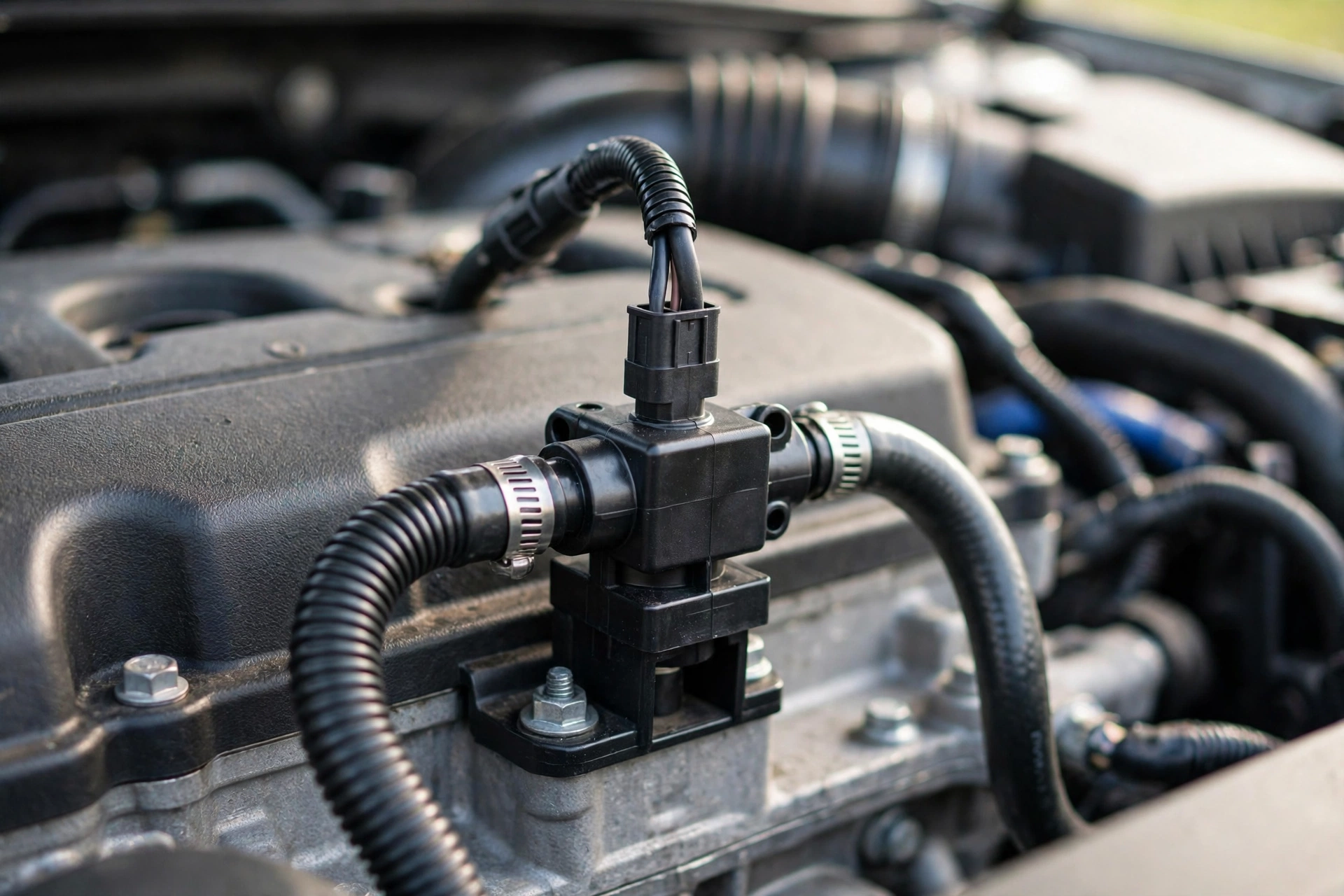
EVAP Purge Valve Symptoms and Replacement Cost
A bad EVAP purge valve is one of the cheapest check engine light fixes you will run into, and also one of the most ignored. The short answer: if your car has an EVAP code like P0441 or P0446, idles rough, or is hard to start right after you fill the tank, the purge valve is a prime suspect. It is a small, cheap part, the job is usually straightforward, and leaving it alone can cost you a failed emissions test.
Symptoms of a Bad EVAP Purge Valve
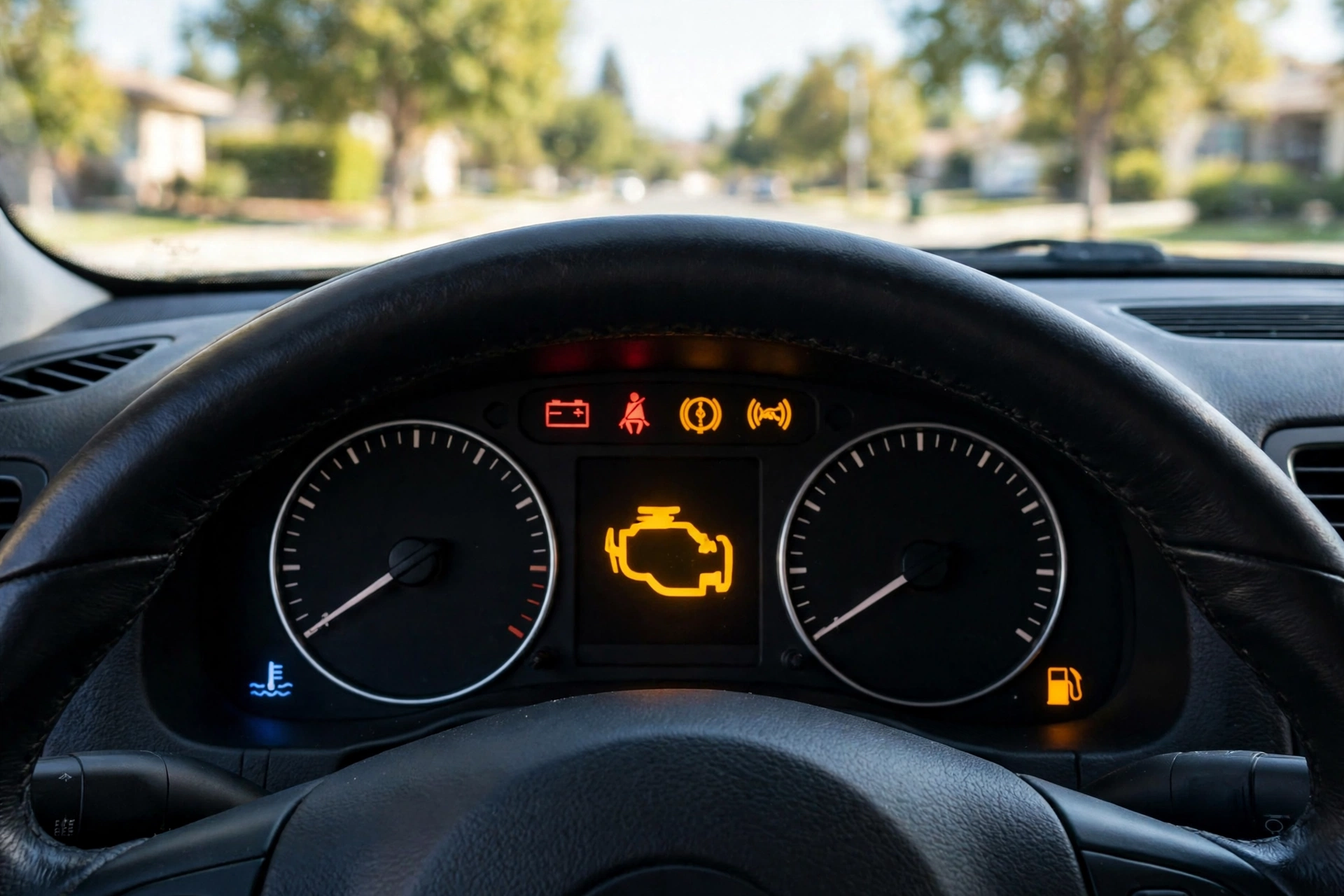
The purge valve is part of your car's evaporative emissions system, the EVAP system. It stays closed most of the time, then opens on command to let fuel vapors stored in the charcoal canister get drawn into the engine and burned instead of vented to the air. When it sticks open, sticks closed, or stops responding, the symptoms show up fast:
- Check engine light with an EVAP code. P0441 (incorrect purge flow), P0446 (vent control circuit problem), and leak codes like P0442, P0455, and P0456 all point at the EVAP system. A purge valve is one of the first parts to check, but it is not the only possible cause, so do not skip the diagnosis steps below.
- Rough idle or stalling. A valve stuck open lets extra fuel vapor into the engine at idle, when the engine wants a precise air and fuel mix. The result is a shaky idle, a stumble at stoplights, or an occasional stall.
- Hard starting right after fueling. This is the classic purge valve tell. You fill the tank, turn the key, and the engine cranks longer than normal or fires up rough. Refueling floods the canister area with vapor, and a stuck open valve dumps too much of it into the engine at exactly the wrong moment.
- Fuel smell around the car. A failing EVAP system can let vapor escape instead of routing it through the engine. If you smell gas with no visible leak, take it seriously and get it checked promptly.
- Failed emissions test. Any stored EVAP code is an automatic fail in states with emissions testing, and clearing the code right before the test just leaves the system showing as not ready.
- Slightly worse fuel economy. A purge valve problem alone rarely tanks your mileage, but a car running rough at idle and throwing codes is not running at its best.
One important note: a bad purge valve will not usually leave you stranded. Most cars with this problem still drive fine at highway speed. That is exactly why people ignore it for months.
Check the Gas Cap First
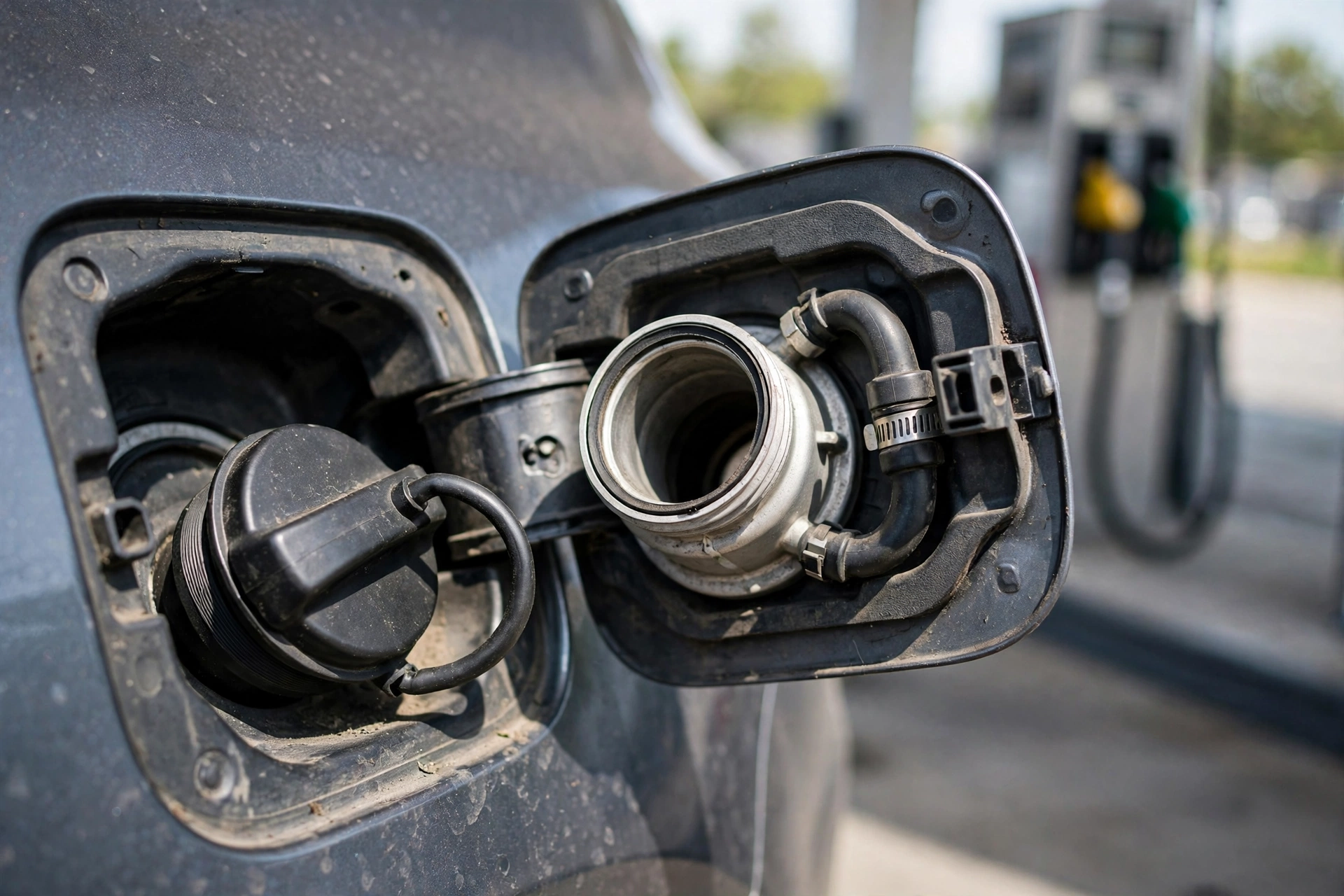
Before you buy any part, check the gas cap. A loose, cracked, or missing gas cap sets the same family of EVAP codes as a bad purge valve, and it is the cheapest fix in all of car repair. This step takes two minutes and saves a lot of people a needless parts purchase.
Take the cap off and look at the rubber seal. If it is cracked, flattened, or missing chunks, replace the cap. If the seal looks fine, put the cap back on, tighten it until it clicks several times, then drive normally for a few days. EVAP codes do not always clear instantly, because the computer only runs its EVAP self test under certain conditions, often after an overnight sit and a drive. If the light goes out and stays out, you found your problem. If the same code comes back, move on to a real diagnosis instead of just clearing the code and hoping.
How to Diagnose a Bad Purge Valve
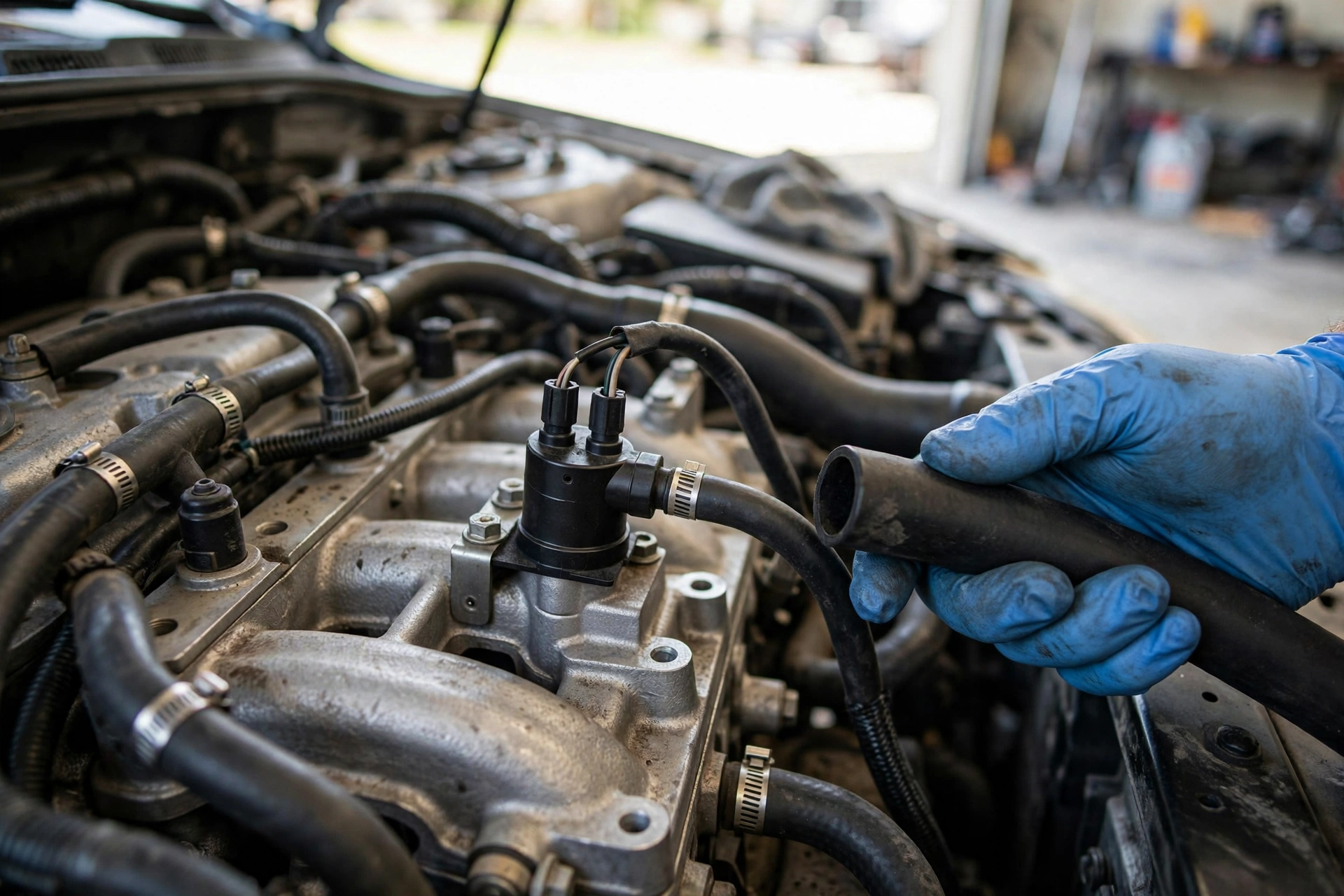
You do not need a shop full of tools to narrow this down, but you do need to test rather than guess. Throwing a purge valve at every EVAP code is how people end up replacing three parts and still staring at the same light.
- Scan the codes and write them down. Use your own scanner or a free scan at a parts store. Record every code, including pending codes, before you clear anything. Clearing first wipes the freeze frame data that shows the conditions when the code set.
- Check the gas cap, as above. If you have not done this yet, do it now. It is step one for a reason.
- Inspect the hoses and connector. Find the purge valve, usually mounted on or near the engine, close to the intake, with a vacuum hose on each side and an electrical connector. Check your owner's manual or a repair guide for your exact car if you cannot spot it. Look for cracked, collapsed, or disconnected hoses and a loose or corroded connector. A cracked hose causes the same codes as a bad valve.
- Check for vacuum at idle. With the engine idling and warmed up, carefully disconnect the hose on the engine side of the valve. On most cars the valve should be closed at idle, so you should feel little or no vacuum at that hose. Strong vacuum at idle points to a valve stuck open. If you are not comfortable working around a running engine, skip this step and let a shop do it.
- Listen for the click. With the engine running, many purge valves make a faint clicking or ticking sound as the computer cycles them. No sound at all does not prove the valve is dead, since some are quiet and some only cycle under specific conditions, but a valve that never clicks combined with a purge flow code is a strong clue.
- Get a smoke test if the code persists. If the valve tests fine but a leak code keeps coming back, the leak is somewhere else, a hose, the canister, or the filler neck. A shop smoke test pressurizes the system with visible vapor and finds leaks that eyes and hands cannot. This is the step that stops the guessing.
If you have a purge flow code, a valve stuck open on the vacuum test, and no hose damage, you have a solid case for replacement. If you have multiple unrelated codes or the valve tests fine, do not force the diagnosis. Get the smoke test before spending money.
Replacement Cost: Shop vs DIY
This topic has no researched shop price range to quote, so here is the honest qualitative version: the purge valve itself is a cheap part on most cars. The total bill depends almost entirely on where the valve lives on your car and who does the work.
On cars where the valve sits out in the open on top of the engine, this is a short job: the part is inexpensive, access is easy, and most of what you would pay a shop is a modest amount of labor plus a diagnostic fee if they did the testing. On cars where the valve is buried under covers, behind the intake, or underneath the car near the canister, the same cheap part comes with a bigger labor bill, because the shop is charging for access time, not for the valve.
Dealers cost more than independent shops for the same job, as a rule. An independent shop is usually the better value here, especially if you walk in with the code already scanned and the diagnosis already narrowed down. Do it yourself on an accessible car and you save the labor entirely and pay only for the part, which is why this is a popular first DIY repair.
One warning: do not buy the cheapest no name valve you can find online and expect it to last. EVAP parts live in heat, vibration, and fuel vapor, so a quality replacement from a known brand or the dealer parts counter is worth it on a part you do not want to replace twice.
DIY or Shop? The Verdict
Do it yourself if the valve is accessible, you have the code scanned, and the basic tests point at the valve. It is a beginner friendly job on many cars: disconnect the connector, release the hoses, swap the valve, reconnect everything, clear the code, and drive through a few normal trips to confirm the light stays off. Check your owner's manual for the exact location and any model specific steps before you start.
Take it to a shop if the valve is hard to reach, if leak codes persist after the valve tests fine, or if you do not have a scanner. A smoke test is cheap insurance against replacing parts on a guess, and a good independent shop will find an EVAP leak faster than a driveway diagnosis ever will.
My take: this is a fix it now, not a fix it someday, repair. It is cheap, it is usually easy, and it stands between you and a passed emissions test. Ignore it and you get months of a glowing dashboard light, rough idle, and hard starts after every fill up. Fix it and the car just goes back to being boring, which is exactly what you want.
FAQ
Can I drive with a bad purge valve? In most cases, yes, for a short time. The car will usually still run and drive normally at speed. But do not treat that as permission to ignore it for months. You risk a failed emissions test, rough idle, stalling, and hard starts.
Will a bad purge valve fail an emissions test? Yes. Any stored EVAP code is a fail in states with emissions testing, and clearing the code just before the test leaves the system showing as not ready, which also fails. Fix the problem, drive normally for a few days so the monitors can complete, then test.
Why is my car hard to start only after getting gas? Refueling fills the vapor system, and a purge valve stuck open dumps that extra vapor into the engine right when you try to start it. The engine gets too much fuel vapor and too little air for a clean start. If this symptom lines up with an EVAP code, the purge valve is the first part to test.
Is it the gas cap or the purge valve? Start with the gas cap, always. It is free to check and cheap to replace, and it causes the same codes. If a good cap and a few days of driving do not clear the code, or if the vacuum test shows the valve stuck open, then the valve is your answer.
For the full check engine light walkthrough, see 2023-2026 Acura Integra — Check Engine Light / OBD2 Diagnosis and 2019-2024 Cadillac XT4 — Check Engine Light / OBD2 Diagnosis, and for the broader picture, read Check Engine Light: What It Actually Means and What You Should Do and Fuel System Maintenance: Injectors, Filters, and Why Your Car Needs Clean Fuel.
Safety: Informational DIY. EZ Car Fix is not a shop or dealer.