Bad Timing Chain Symptoms: Rattle, Misfire, Metal in Oil
A bad timing chain gives you three classic warnings: a rattle on cold start, a misfire that won't go away, and metal flakes in your oil. If you have all three, stop driving it. A chain that jumps time or snaps can destroy an interference engine in seconds. The answer is simple: confirm the chain is the problem, then fix it before it decides to fix itself.
The symptoms that actually matter

1. Rattle on cold start, from the front of the engine
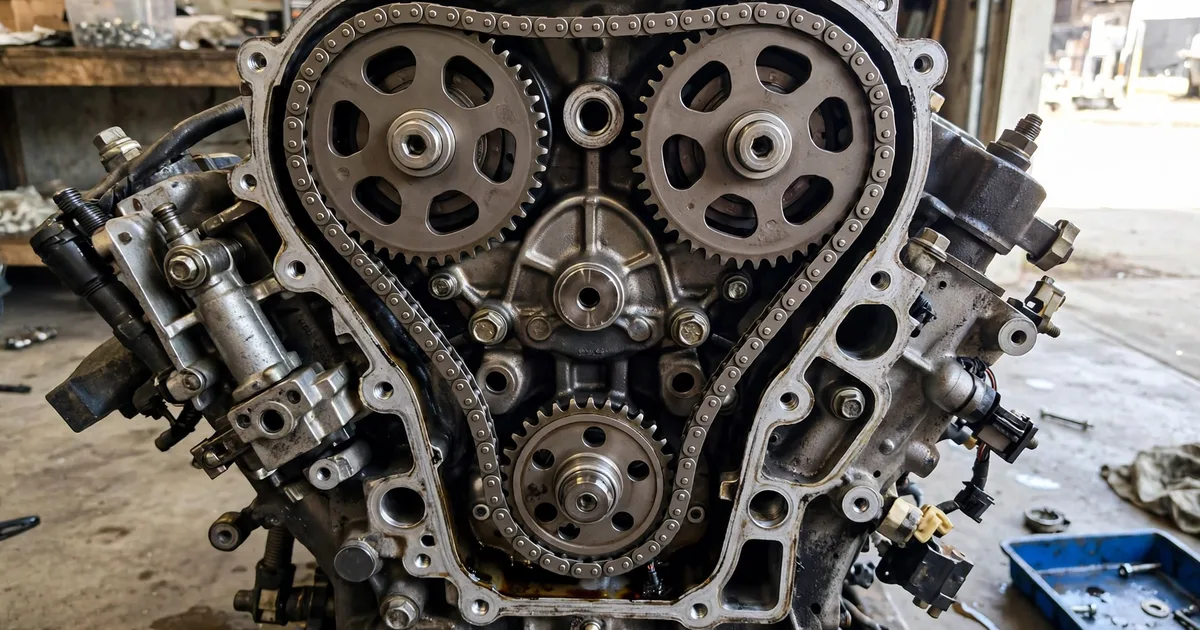
This is the number one symptom. You start the car cold and hear a brief metallic rattling or chattering from the front of the engine that lasts 2 to 3 seconds, then fades as oil pressure builds. That sound is a loose chain slapping around because the tensioner has not pumped up yet, or because the tensioner is worn out and can't hold pressure anymore.
The catch: low oil does the exact same thing. Chain tensioners run on oil pressure, so the first thing to check is your dipstick. Top up the oil and if the rattle disappears, you dodged a bullet. If the oil is full and the rattle keeps showing up every cold morning, the chain, tensioner, or guides are wearing out.
2. A misfire that doesn't respond to the usual fixes
A stretched chain lets the camshaft timing drift. The computer tries to compensate, and when it can't, you get rough idle, stumbling under load, and a flashing or steady check engine light. If you've already done plugs and coils and the misfire is still there (our P0300 Random Misfire Diagnosis walks through that rabbit hole), a loose chain belongs on the suspect list.
3. Metal flakes or glitter in the oil
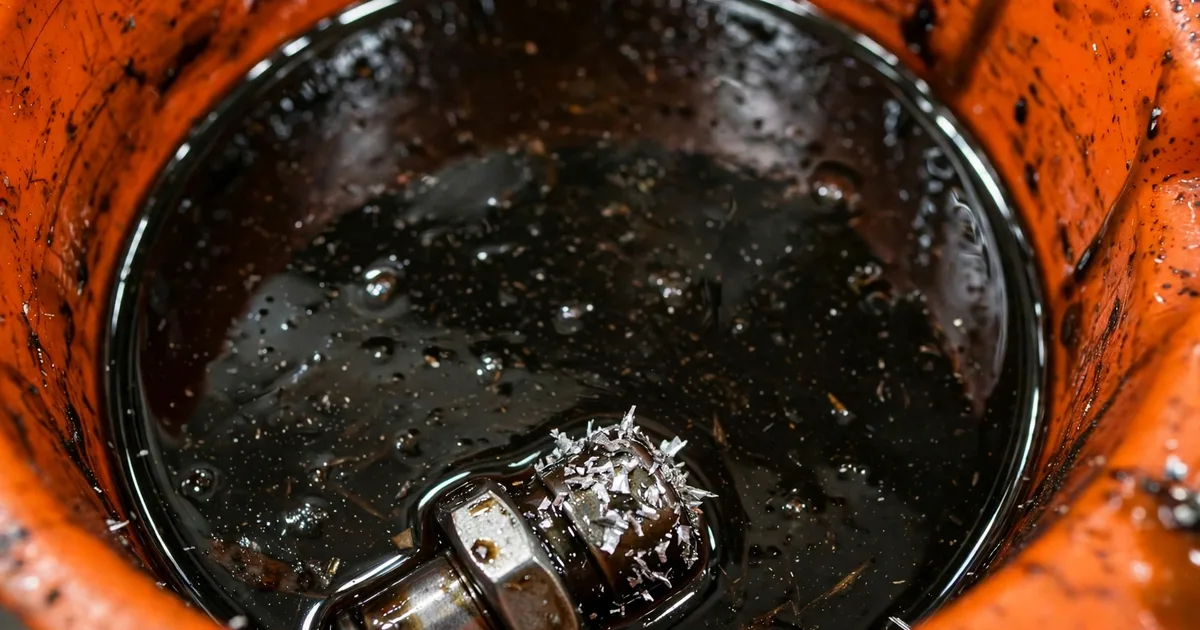
A worn chain and guides shed metal. You might see fine glitter in the oil on the dipstick, or the magnetic drain plug comes out looking like it has a fuzzy silver beard. This is the most serious symptom because it means the chain system is actively eating itself, and that debris is circulating through the engine.
4. Check engine light with cam and crank correlation codes
Codes like P0016 or P0017 mean the computer sees the camshaft and crankshaft out of sync. Those codes point directly at timing. Combined with the rattle, it is about as close to a diagnosis as you get without opening the engine.
5. Won't start, or runs terribly all of a sudden
If the chain jumps a tooth, the engine runs horribly or won't start at all. If it snaps, the engine dies instantly and will not restart. On an interference engine, valves and pistons collide when timing is lost, which turns a big-ticket repair into an engine replacement.
How to diagnose it before it gets worse
You don't need to tear the engine apart to get a confident diagnosis. Work through these in order:
-
Check the oil first. Level and condition. Low or black sludgy oil causes chain rattle on its own, and neglected oil changes are the number one killer of chain systems. Fresh oil to the full mark costs almost nothing and rules out the cheapest cause. Not sure where you stand on oil changes? Read Oil Change: Stop Paying $70 For a 30-Minute Job.
-
Listen on a cold start. Have someone else start the car while you stand at the open hood. The rattle comes from the front timing cover, not the top (valvetrain tick) or the sides (exhaust leak). Two to three seconds of rattle that fades as the engine warms up is the classic chain signature.
-
Scan for codes. Pull codes with an OBD2 scanner. P0016, P0017, or camshaft position codes plus a rattle is a near-confirmed timing chain diagnosis. A P0300 with no clear ignition cause backs it up.
-
Look at the oil. Pull the dipstick and check for glitter or metallic sheen. Better yet, at your next oil change, look at the drain plug. A magnetic plug with a heavy coating of fine metal is a strong signal the chain and guides are grinding themselves down.
-
Check for known issues on your engine. Some engines are famous for chain problems, and if yours is one of them and your symptoms match, don't waste money chasing other causes. For two of the most common, see the 2015-2020 Ford F-150 2.7L EcoBoost - Timing Chain Replacement guide and the 2010-2017 Chevrolet Equinox 2.4L - Timing Chain Replacement guide.
What a timing chain job costs
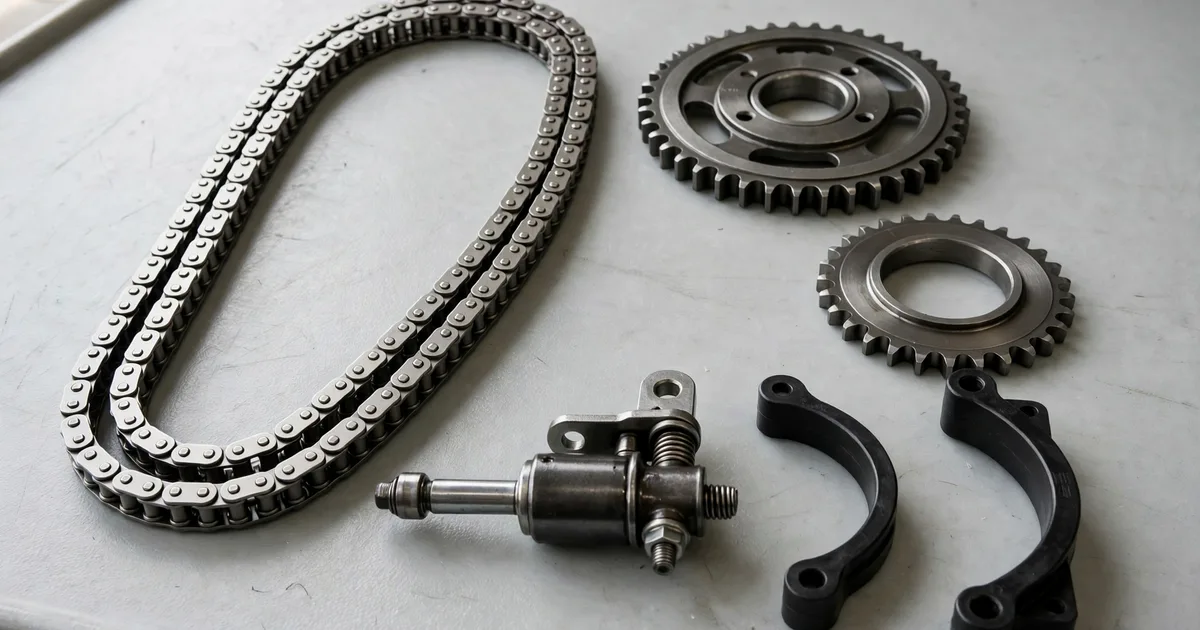
Timing chain replacement is a big-ticket job, and the money is almost entirely labor. The chain kit itself (chain, sprockets, tensioner, guides) is a cheap part next to the labor bill: the mechanic has to pull the front of the engine apart, sometimes removing the oil pan, motor mounts, or accessories just to reach the timing cover.
An independent shop will usually be noticeably cheaper than a dealer for this job, and this is one repair where shopping around pays off because labor times vary so much by engine. A transverse four-cylinder can be a long day; a longitudinal V6 or V8 with the engine crammed against the firewall can be two. If the engine has to come out, the labor climbs steeply.
The DIY math is tempting: the kit costs a fraction of the shop bill, so your savings are basically the entire labor charge. But this is one of the hardest DIY jobs that exists on a modern car. You are setting camshaft timing against the crankshaft with zero margin for error, and on an interference engine one tooth off means bent valves.
DIY vs shop: the verdict
Unless you have already done deep engine work (head gaskets, timing belts) and own the tools to lock camshafts in position, this is a shop job. The parts are cheap, the knowledge is the hard part. Get quotes from two or three independent shops. If your engine is an interference design and the chain is rattling badly, treat it as urgent: a snapped chain turns a big-ticket repair into a new engine.
FAQ
Can I drive with a timing chain rattle? Short trips to a shop, maybe, but every cold start is a gamble. The rattle means the chain is loose, and a loose chain can jump time without warning. The longer you wait, the worse the odds. Get it diagnosed this week, not this month.
How long do timing chains last? They are designed to last the life of the engine, which is why most owner's manuals have no replacement interval. In practice, poor oil maintenance kills them early. Regular oil changes are the entire prevention program.
Will a bad timing chain trigger the check engine light? Usually, yes. The computer watches camshaft and crankshaft position, and when the chain stretches enough to throw off the correlation, it sets codes like P0016 or P0017. But a chain can rattle for a while before the codes show up, so don't wait for the light.
How do I know if I have a timing chain or a timing belt? Check your owner's manual first, since guessing is how people buy the wrong parts. Belt engines usually have a plastic timing cover; chain engines typically have a metal timing cover sealed to the block. Our Timing Belt vs. Timing Chain: When to Replace and What Happens If You Don't post breaks down the difference in detail.
The take: a timing chain doesn't fail suddenly without warning. It rattles, it misfires, and it leaves metal in the oil, usually in that order. Listen to it early and you pay for a repair. Ignore it and you pay for an engine. If the diagnosis points at the chain, see exactly what the job involves in the 2008-2017 Buick Enclave - Timing Chain Replacement guide.
Safety: Informational DIY. EZ Car Fix is not a shop or dealer.