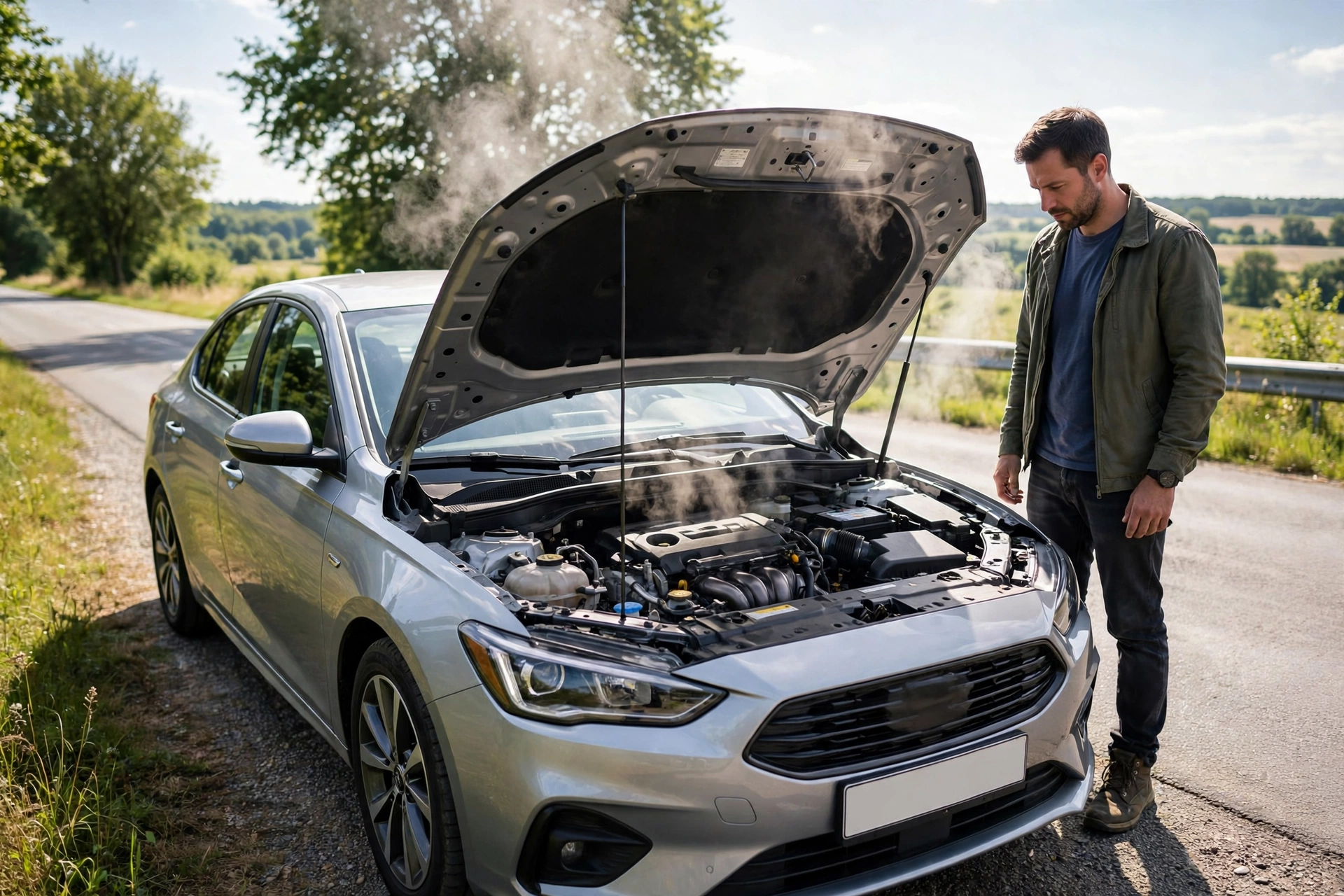
Why Is My Car Overheating? Causes and What to Do Now
If your temperature gauge is climbing into the red, pull over as soon as you can do it safely and shut the engine off. That is the whole answer in one sentence, and it is the one move that saves engines. The most common causes are a coolant leak, a thermostat stuck closed, a failing water pump, a cooling fan that quit, or a radiator that cannot shed heat anymore. Every one of them is fixable. Almost none of them get cheaper if you keep driving.
An overheating engine is not like a low tire you can nurse to the next exit. Heat warps metal and cooks gaskets, turning a cheap part into a big ticket engine job. So stop first, diagnose second, fix third.
What Overheating Looks Like
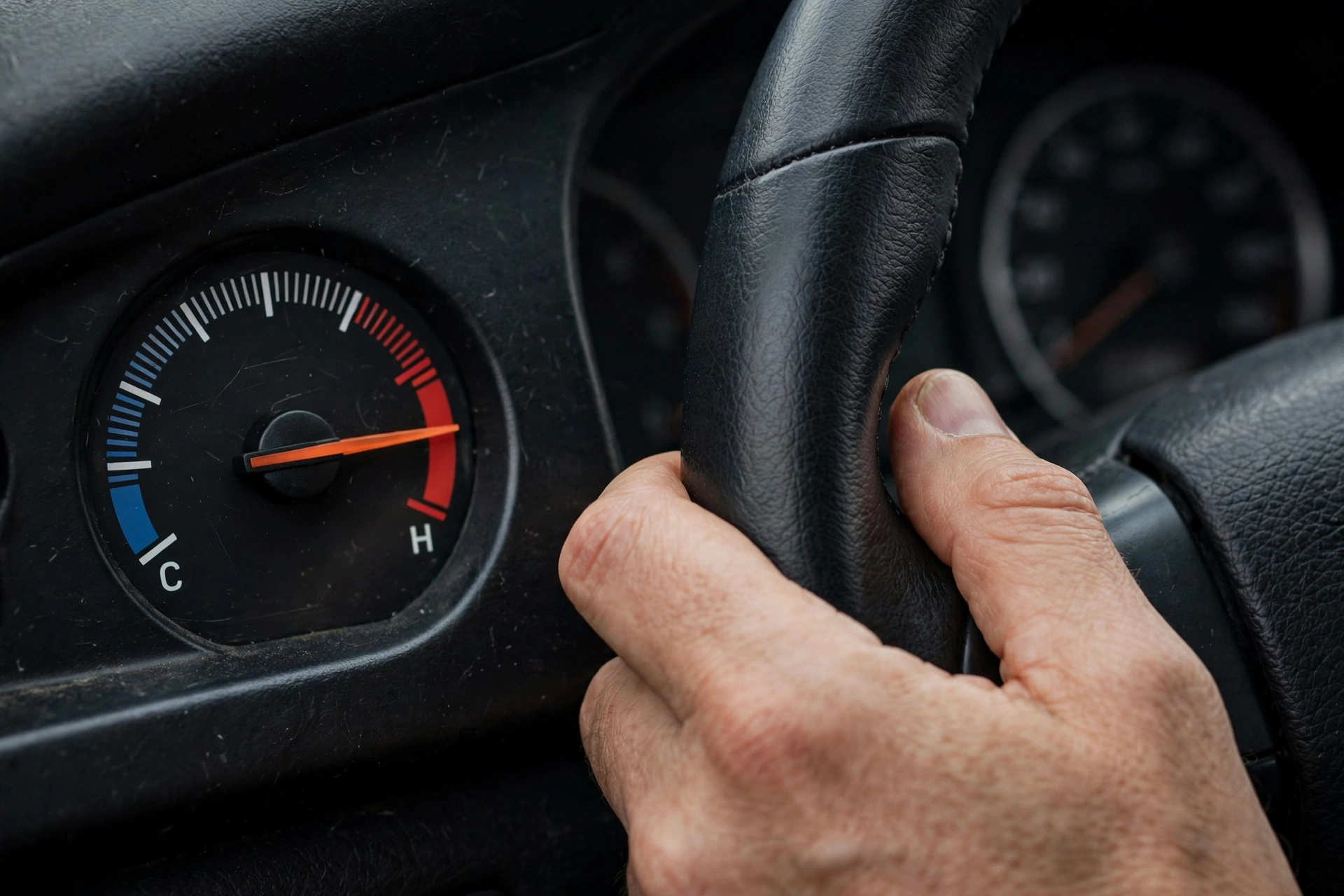
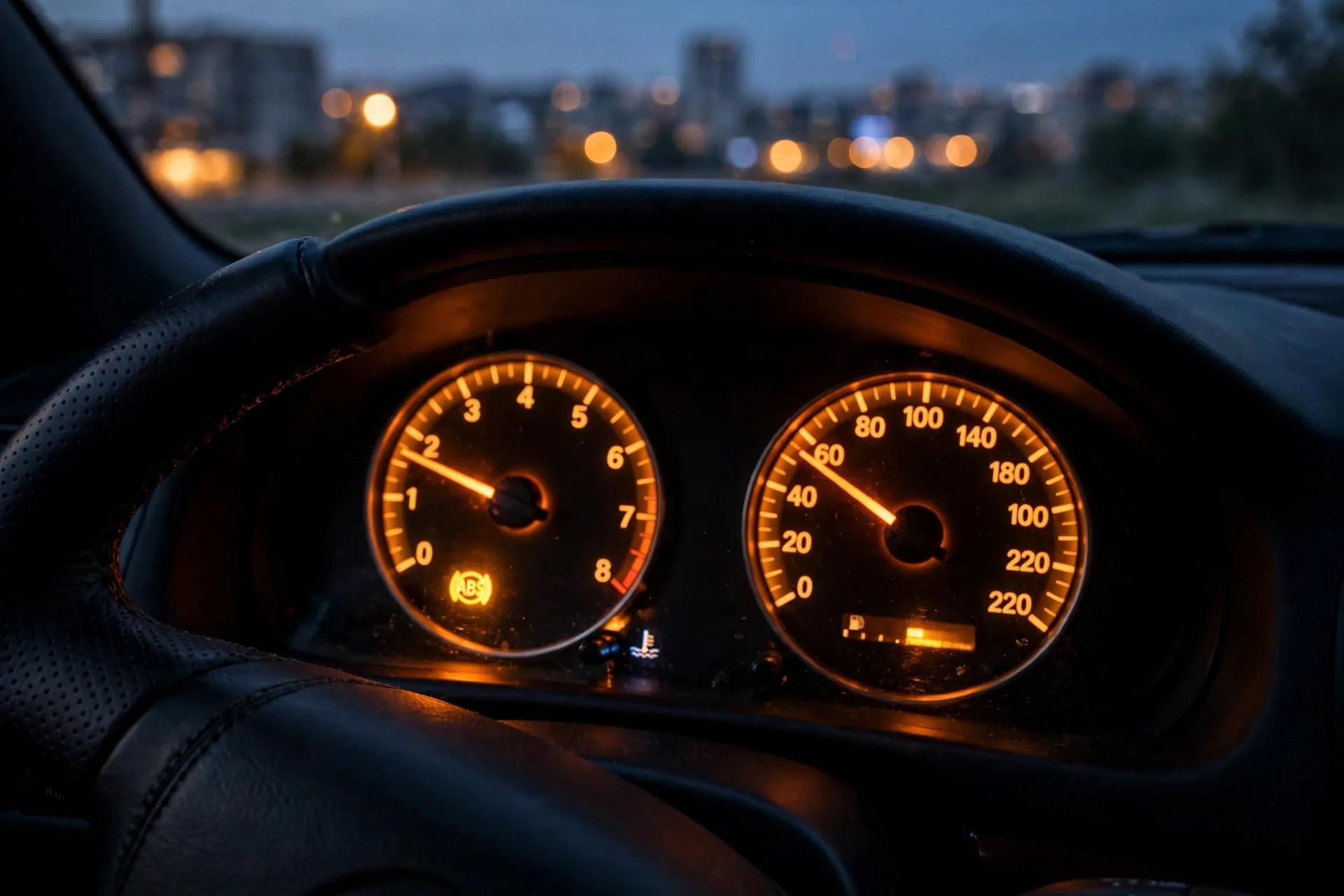
Overheating does not always announce itself with steam. Sometimes the only sign is a gauge needle sitting higher than usual. Watch for these:
- The temperature gauge climbs past its normal middle position and keeps going
- A temperature warning light comes on, or a message appears on the dash
- Steam or a sweet smell comes from under the hood
- The heater suddenly blows cold air while the engine is hot
- The engine loses power, pings, or feels sluggish
- Coolant bubbles in the reservoir, or you find a puddle under the car
A gauge that keeps climbing is not going to fix itself. Treat a rising needle as a countdown, not a suggestion.
The Most Common Causes
Seven culprits cover nearly every overheating complaint a shop sees. Work through them in this order, from most common to most serious.
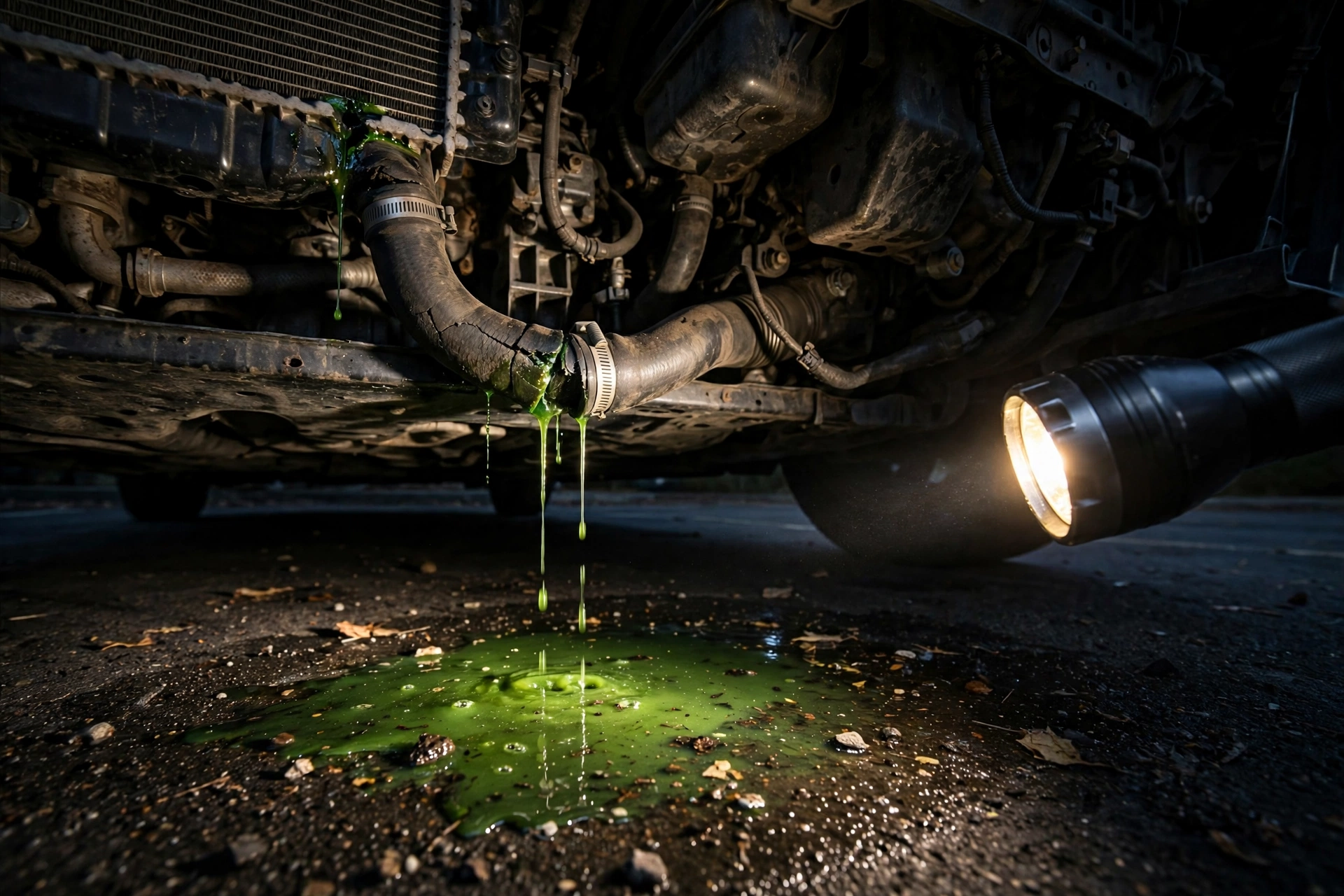
1. A coolant leak. Hoses crack with age, radiators corrode, water pumps weep, and clamps loosen. Any leak drops the coolant level, and low coolant means the system cannot carry heat away from the engine. Look for colored puddles under the car and a reservoir level that keeps dropping.
2. A thermostat stuck closed. The thermostat is a valve that opens to let coolant flow to the radiator once the engine warms up. If it sticks closed, coolant stays trapped in the engine and temperature climbs fast, often within a few minutes of starting. If it sticks open, the opposite happens: the engine runs too cool and the heater goes weak. If your car matches one of the common examples, a full walkthrough like 2011-2015 Chevrolet Cruze - Thermostat Replacement shows what the job actually involves.
3. A failing water pump. The pump circulates coolant through the engine and radiator. When its bearings wear out or its impeller fails, flow drops and temperature climbs, sometimes with a whining noise or a leak at the front of the engine. Our writeup on 2009-2016 Audi A4 - Water Pump Replacement is a good example of a pump job where the housing itself is the problem.
4. A cooling fan that is not running. At highway speed, air through the grille does most of the cooling. In traffic, the electric fan does it. If the fan never kicks on, the car overheats in stop and go traffic but behaves fine on the open road.
5. A clogged or blocked radiator. Radiators shed heat through thin fins, and those fins clog with bugs, leaves, road grime, and internal corrosion. A blocked radiator shows up as overheating at highway speed or under load.
6. A bad radiator cap or air trapped in the system. The cap holds the system under pressure, which raises the boiling point of the coolant. A weak cap lets coolant boil sooner and pushes it into the overflow. Air pockets do similar damage, since air does not carry heat. Air gets in after a repair, after a leak, or when the system is filled carelessly.
7. A blown head gasket. This is the serious one. The head gasket seals the engine block to the cylinder head, and when it fails, combustion gas pushes into the cooling system, coolant leaks into the cylinders, or both. Signs include constant bubbling in the reservoir, white exhaust smoke, and milky oil. This is a shop job, full stop.
What to Do Right Now
If the gauge is in the red while you are driving, do this in order:
- Turn the air conditioning off. It adds heat and load the engine does not need right now.
- Turn the heater on full blast, fan on high. The heater core is a small second radiator, and it can buy you a little time to reach a safe stopping place. It is not a fix.
- Pull over somewhere safe and flat, away from traffic. Shut the engine off.
- Do not open the radiator cap or the reservoir cap while the engine is hot. A pressurized cooling system can spray scalding coolant, and burns from this are no joke. Wait until the engine is cool to the touch.
- Once it is cool, check the reservoir level against its markings, and look under the car and hood for puddles, split hoses, or a belt that came off.
- If the level is low, there is no big visible leak, and you have the correct coolant for your car, top it up to the mark. Check your owner's manual for the right coolant type, because mixing incompatible coolants causes its own problems.
- If it overheats again within minutes, if there is heavy steam, or if you see a large leak, stop driving and call a tow.
Never open a hot cooling system to "let the steam out." Let it cool, then look.
How to Narrow It Down
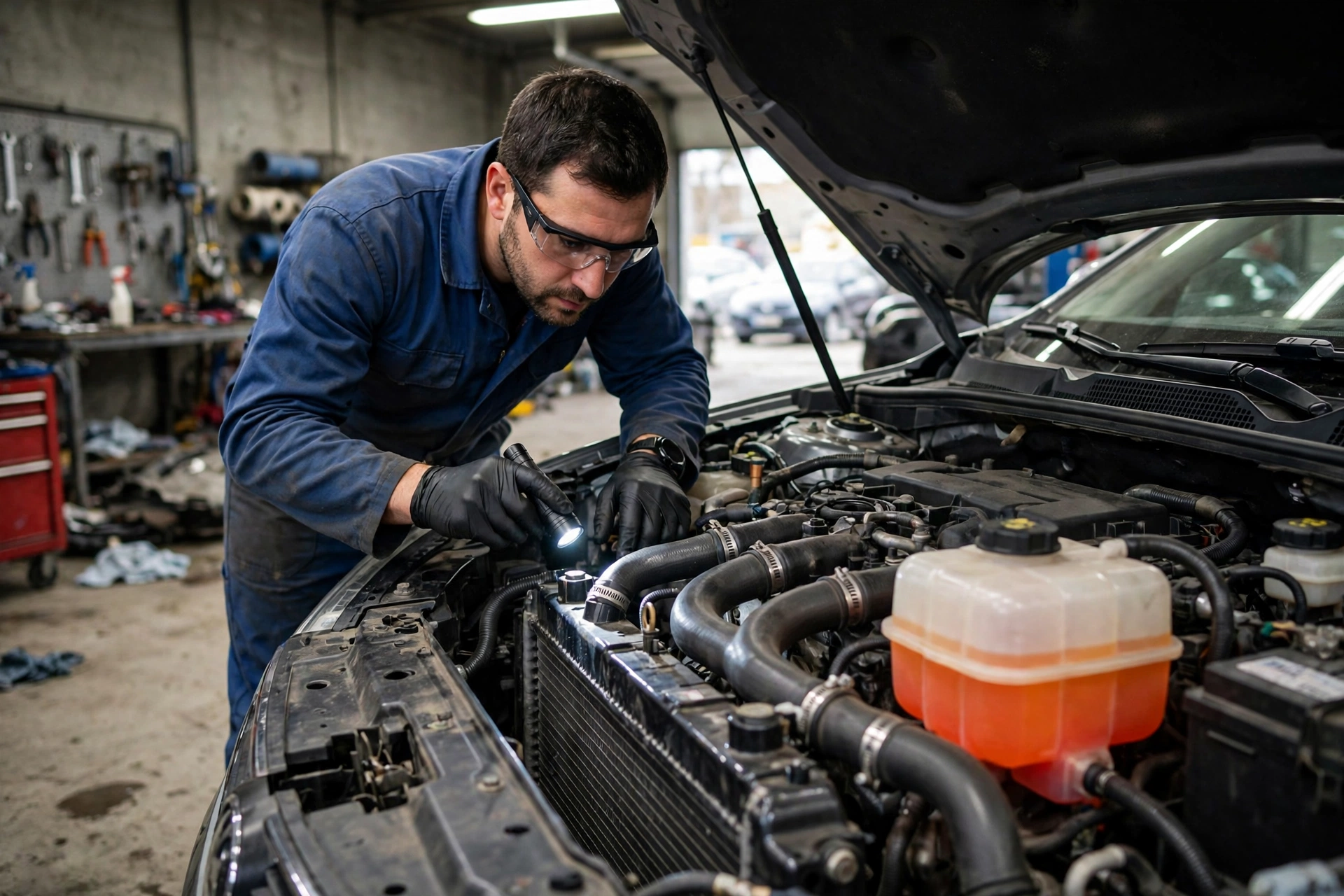
The pattern of the overheating tells you more than any single symptom. Match what your car does to the list below:
- Overheats only in traffic, fine on the highway: suspect the cooling fan first. At speed, airflow does the fan's job for it.
- Overheats on the highway or under load, fine around town: suspect radiator flow, a thermostat that is not opening fully, or a water pump that cannot keep up.
- Heater blows cold while the engine overheats: suspect low coolant, trapped air, or a stuck thermostat. The heater core is usually the first place to lose flow.
- Coolant level keeps dropping with no puddle: suspect an internal leak, a cap that is venting, or coolant burning in the engine. Check the oil filler cap and dipstick for a milky look, and watch the exhaust for steady white smoke.
- Reservoir bubbles constantly with the cap off and the engine running: suspect a head gasket letting combustion gas into the cooling system. This one goes to a shop.
- Overheating started right after a repair: suspect trapped air or a hose that was not reconnected properly. Bleeding the system correctly matters more than most people think.
Two quick checks anyone can do once the engine is cold: squeeze the upper radiator hose and look for cracks, swelling, or soft spots, and watch whether the cooling fan spins up when the air conditioning is turned on.
What an Overheating Repair Costs
This topic has no researched price data behind it, so here is the honest version in tiers instead of numbers. A hose, a radiator cap, or a thermostat is a cheap part, and the bill depends mostly on how hard it is to reach on your car. A water pump or a radiator is a mid range job: a bigger part and real labor, and on some cars the pump sits behind the timing cover, which pushes labor up. A cooling fan motor sits in the same middle band. A head gasket is a big ticket job on any car, with many hours of labor, and it is the repair that makes people ask whether the car is worth fixing at all.
Dealer shops usually charge the most for the same job, independent shops usually land lower, and doing it yourself saves the labor but only saves money if the diagnosis is right. Guessing at a water pump when the real problem is a split hose is how DIY turns expensive. If you are weighing a pump job, Bad Water Pump Symptoms and Replacement Cost walks through the signs first.
DIY or Shop?
My verdict is split, and it depends on what you found. Top up coolant, replace a visibly split hose, swap a radiator cap, and check the fan: all fair DIY if you are comfortable under the hood and the engine is cold. Thermostat and water pump jobs are DIY only if you have the tools, the time, and a guide for your exact car. Head gaskets, repeat overheating with no clear cause, and any car that overheats again right after a repair: shop, no debate.
Do not drive a car that is actively overheating because the shop is only a few miles away. A few miles at full temperature can turn a repair into a replacement.
FAQ
Can I drive a short distance while my car is overheating? No. A short drive at full temperature can warp a cylinder head or blow a gasket. Pull over, let it cool, and tow it if it overheats again.
Can I put plain water in the radiator in an emergency? In a genuine emergency, clean water beats an empty system, but it is not a substitute for coolant. Top up with the correct coolant as soon as you can, and fix the fault that dropped the level. Check your owner's manual for the right type.
Why does my heater blow cold when the engine is overheating? Because the heater core is not getting hot coolant. Low coolant, trapped air, or a thermostat stuck closed can all starve the heater core while the engine itself cooks. Cold heat plus a hot gauge is a classic low coolant sign.
Why does my car only overheat in traffic? Because in traffic there is no airflow through the radiator, so the cooling fan has to do all the work. If the fan is dead, the car overheats standing still and cools down again once you are moving. Check the fan before you blame anything else.
Overheating is the problem where doing nothing costs the most. Stop early, find the pattern, fix the actual cause. If a thermostat is on your suspect list, start with the step by step walkthrough in 2011-2015 Chevrolet Cruze - Thermostat Replacement to see what that job looks like on a real car.
Safety: Informational DIY. EZ Car Fix is not a shop or dealer.