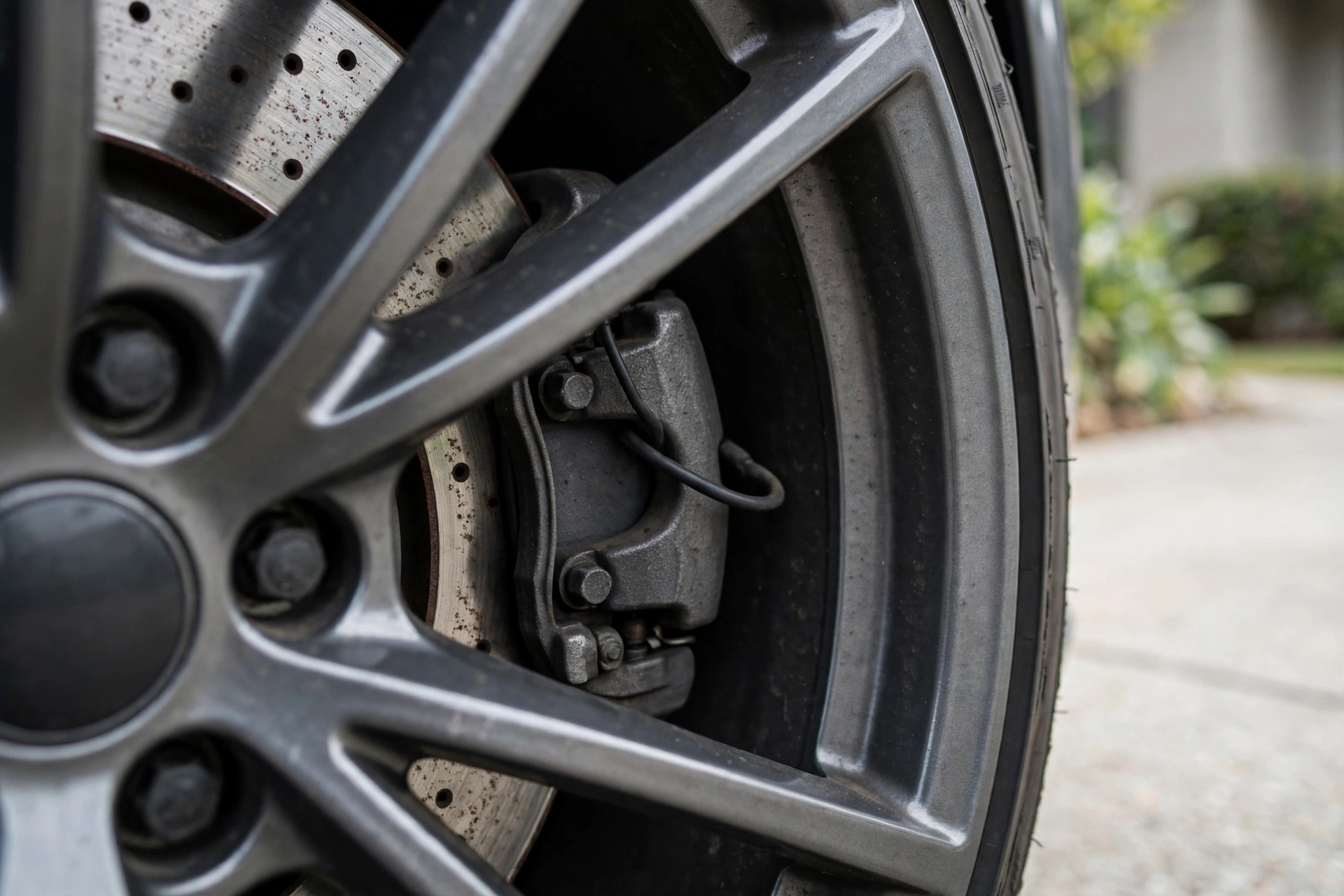
Car Shakes When Braking: Warped Rotors or Something Else?
Your car drives smooth, you touch the brake pedal, and the whole car starts shaking. The steering wheel shudders in your hands, the pedal pulses under your foot, and it all stops the moment you let off the brakes. Most of the time, that shake is the front brake rotors, but not always. A sticking caliper, worn suspension, a loose wheel, or a bad wheel bearing can feel almost identical, and guessing wrong means paying for parts you did not need. Here is how to tell them apart before you spend anything.
What the Shake Is Telling You
The first clue is when the shake happens. A shake that shows up only while you are braking, and disappears the instant you release the pedal, points at the brake system. A shake that is there while you are cruising, with your foot nowhere near the pedal, points somewhere else entirely, usually tires, wheels, or alignment.
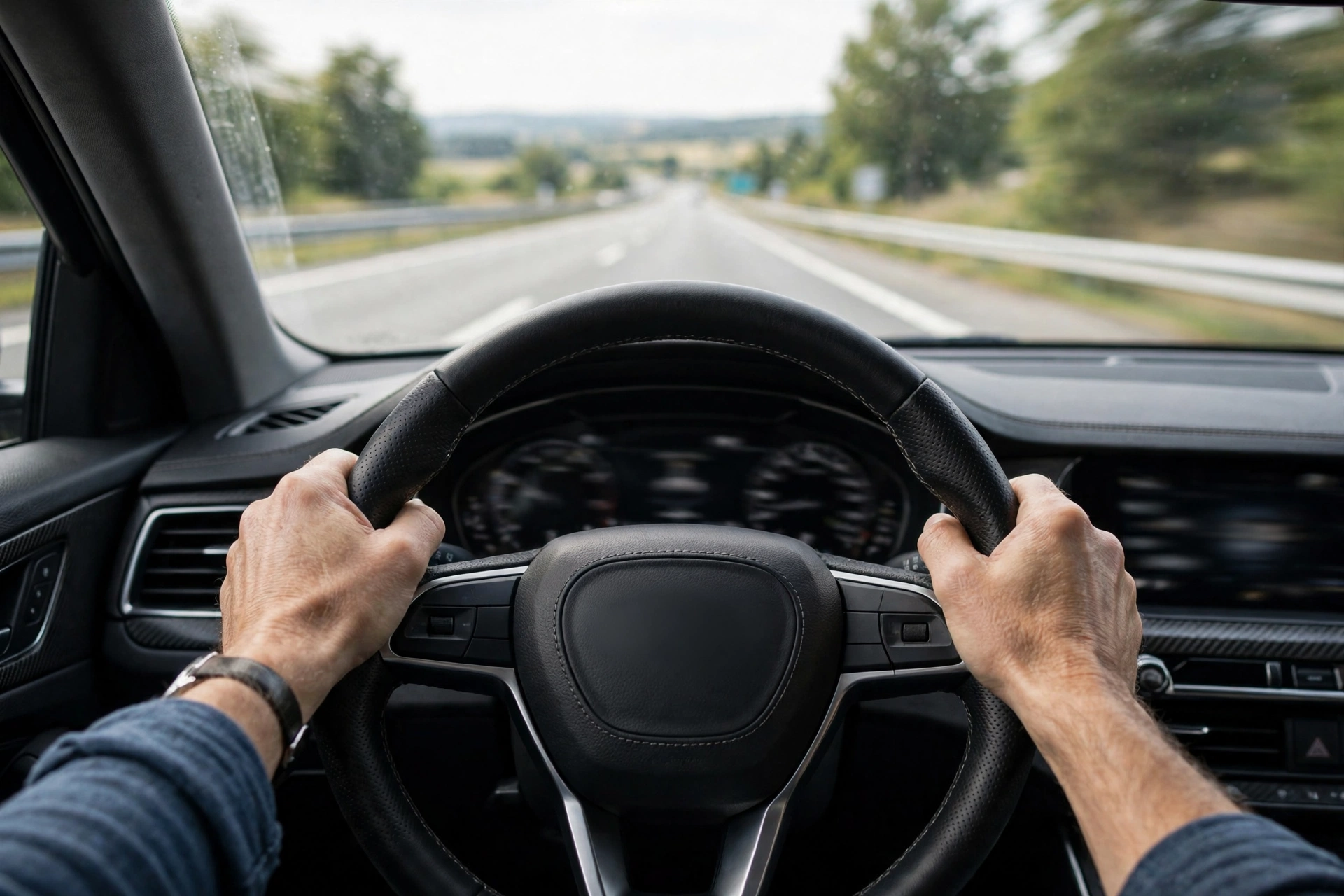
The second clue is where you feel it. A shake in the steering wheel usually means the front brakes, because your front brakes do 60 to 70 percent of the stopping work, so they wear first and show problems first. A shake you feel mostly in your seat or in the brake pedal often means the rear brakes.
The third clue is speed. Rotor problems show up most clearly at highway speed, on a steady brake application from 60 mph down to 40. At parking lot speed, the same rotors may feel fine. If the shake is violent at low speed too, or if it comes with grinding, pulling to one side, or a burning smell, get it looked at sooner rather than later.
The Usual Suspect: Warped or Uneven Rotors
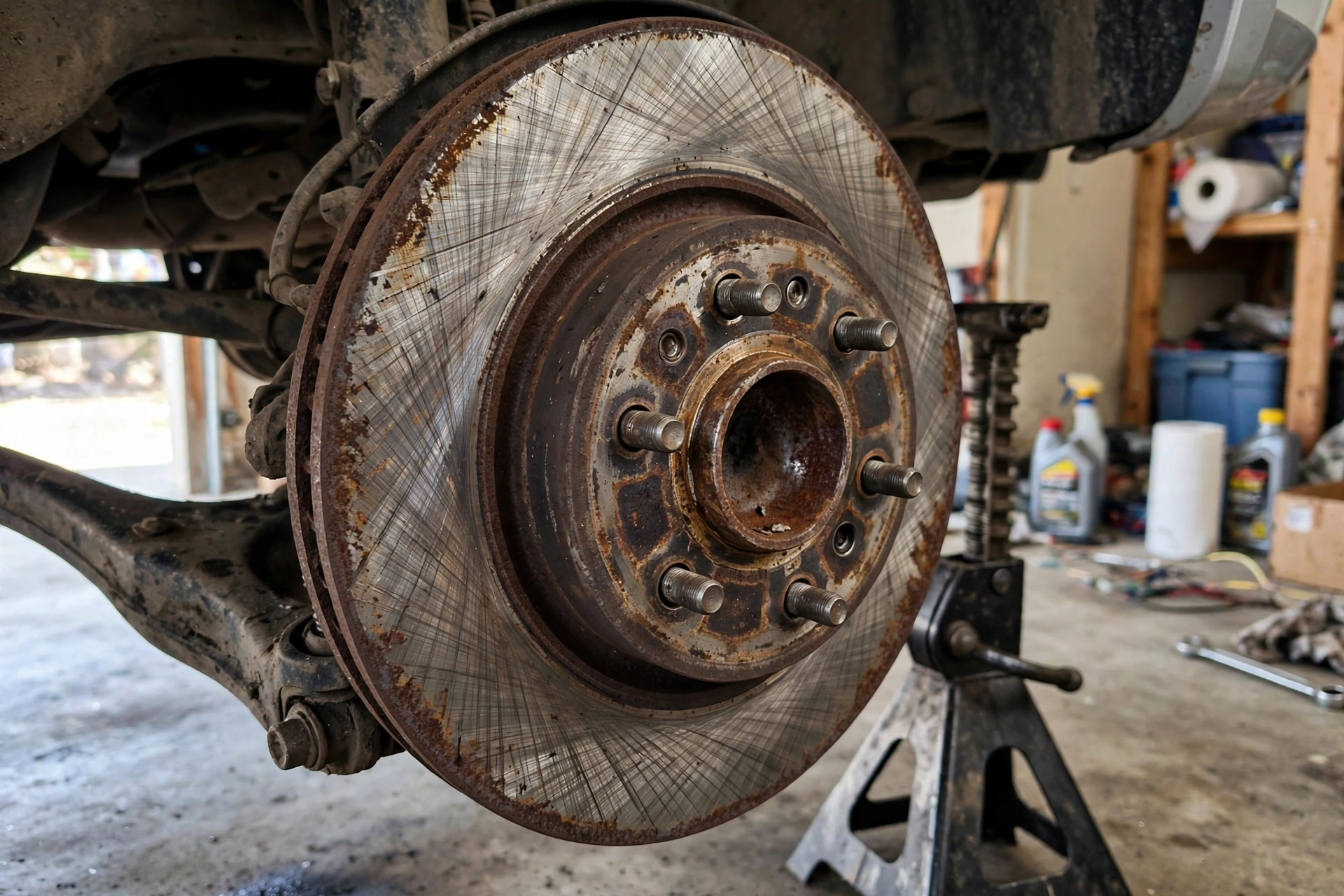
When people say warped rotors, what they usually mean is a rotor surface that is no longer even. True warping, where the metal disc itself bends, does happen after severe overheating, but the more common cause is uneven thickness or uneven pad deposits on the rotor face. Either way the effect is the same. As the rotor spins, the pads grab harder on the thick spots and lighter on the thin spots, and that pulsing travels straight up through the pedal and the steering wheel.
Heat is what gets rotors into this state. Repeated hard braking, long downhill stretches, and stop and go traffic all cook the rotors, and once a rotor has been overheated, it never quite comes back. Worn pads make it worse. When the friction material runs out, the metal backing plate grinds into the rotor and chews grooves into it in short order. Rust does the rest on cars that sit for days in wet or salty weather, pitting the surface so the pads wear unevenly from then on.
The fix for uneven rotors is replacement, not wishful thinking. Resurfacing machines a thin layer off the face to make it smooth again, but it only works when the rotor has enough thickness left and is not cracked or badly warped, and it leaves you with a thinner rotor that warps sooner next time. For most cars, new rotors are a moderate cost part, and most of a shop brake bill is labor, so the gap between resurfacing and replacing is often smaller than people expect. Replace rotors in pairs on the same axle, with fresh pads at the same time. New pads on ruined rotors just ruin the fresh pads.
If you want the full picture on rotor condition and replacement, read Brake Rotor Replacement: Signs It's Time and DIY. For model-specific steps with photos, see the 2016-2025 Chevrolet Malibu Brake Rotor Replacement guide.
Other Causes That Feel the Same
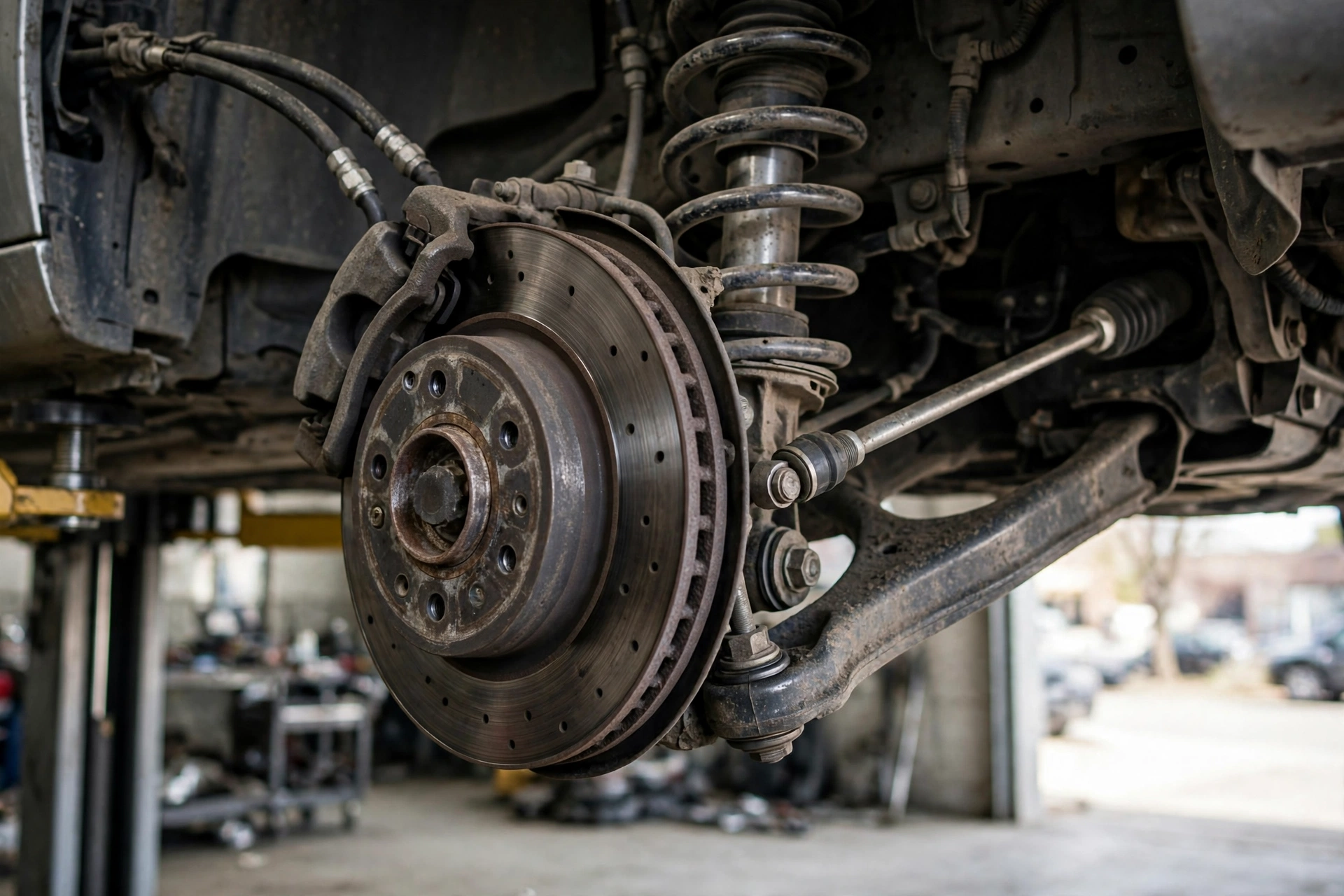
Rotors are the most common cause, but they are not the only one, and this is where people waste money. Each of these can produce a shake under braking that feels a lot like warped rotors.
A sticking caliper or seized slide pins. When a caliper sticks, one pad drags against the rotor all the time. That corner overheats, the rotor warps from the heat, and the car may pull to one side when you brake. The giveaway is heat. After a drive, one wheel will feel much hotter than the others, and you may smell hot brakes. A sticking caliper is a bigger job than pads and rotors, and it is one to leave to a shop unless you are confident with brake hydraulics.
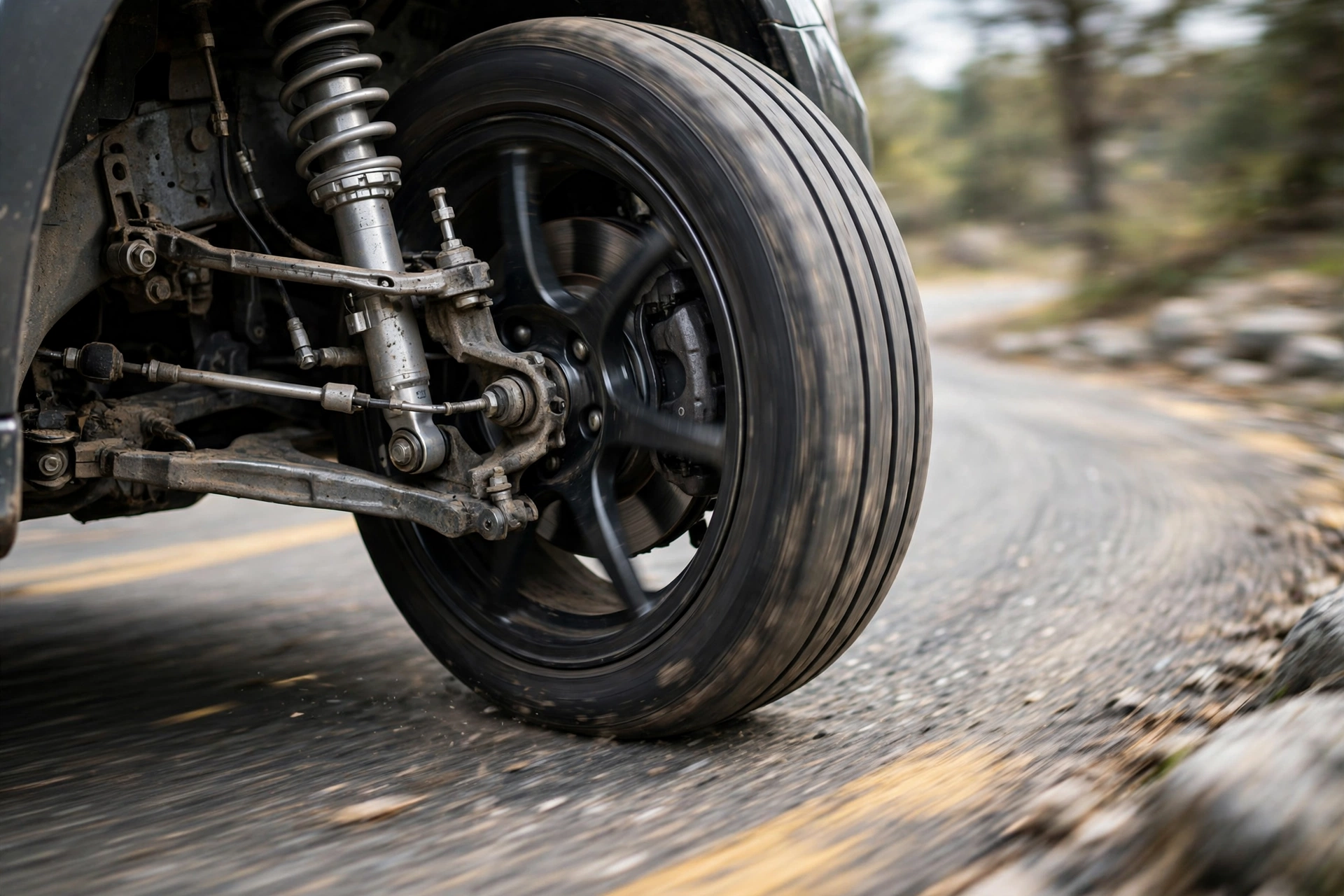
Worn suspension parts. Control arm bushings, tie rod ends, and ball joints hold the wheel steady while you brake. When the bushings wear out, the wheel can shift slightly under braking load, and that movement reads as a shake. Worn suspension usually also shows up as clunking over bumps, vague steering, or uneven tire wear. If your tires are wearing in a strange pattern, suspect the suspension before the rotors.
Loose lug nuts or a dirty hub face. Lug nuts that were not tightened properly, or a rotor mounted on a rusty hub face, will let the rotor sit crooked, and a crooked rotor pulses exactly like a warped one. If the shake began the day after someone touched your wheels, check the lug nuts first. Torque them to the spec in your owner's manual, never a guessed number.
Tire problems. A tire with a separated belt, a flat spot from sitting, or a balance weight that fell off can shake the car, and braking can make it feel worse because the load shifts forward onto the front tires. The tell is that a tire shake is usually there at speed even without braking. If the shake changes with speed but not with the brake pedal, look at the tires.
A bad wheel bearing. A worn bearing lets the wheel wobble slightly, and under braking that wobble turns into a shake, often with a humming or growling noise that changes when you steer left or right. A bearing that is far gone will also make the wheel feel loose when you grab it at the top and bottom and try to rock it. Bearings are a moderate cost part with real labor behind them, and a failed bearing is a safety issue, not a noise complaint. If you suspect a bearing, read How Long Can You Drive on a Bad Wheel Bearing? and do not put the repair off.
ABS pulsing. Under hard braking, especially on a slippery road, the anti-lock system pulses the brakes on purpose, and you feel it in the pedal. That is normal. Rotor pulsing happens during ordinary, gentle braking too.
How to Narrow It Down
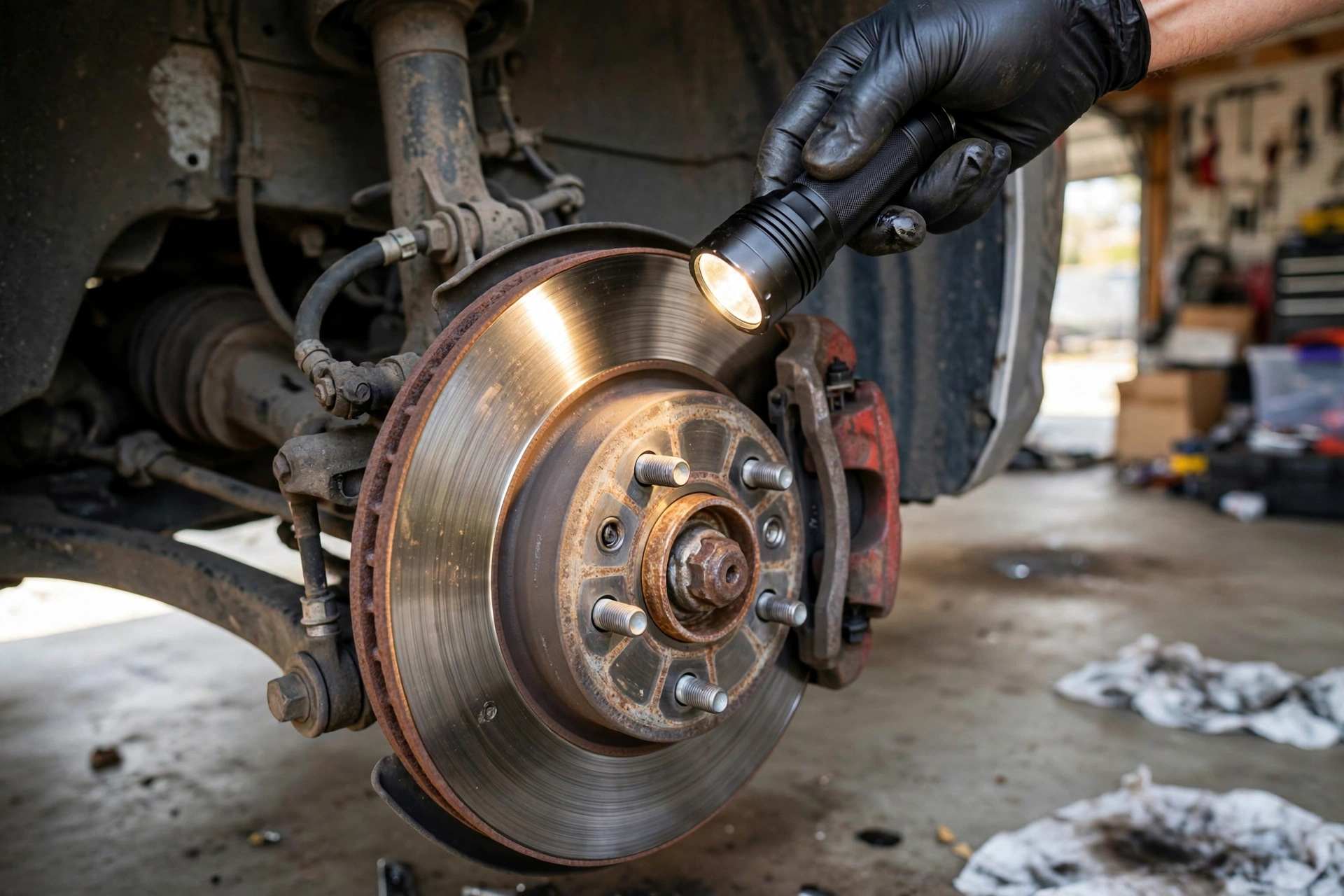
You can sort most of these out in your driveway with no special tools. Work on cool brakes only. A rotor right after driving is hot enough to burn you.
- Note exactly when it shakes. Only while braking, or also while cruising? Only at highway speed, or at low speed too? Write it down. A shop will ask, and a clear answer saves diagnostic time.
- Note where you feel it. Steering wheel points to the front, seat and pedal point to the rear. Pulling to one side points to a sticking caliper or uneven wear on one corner.
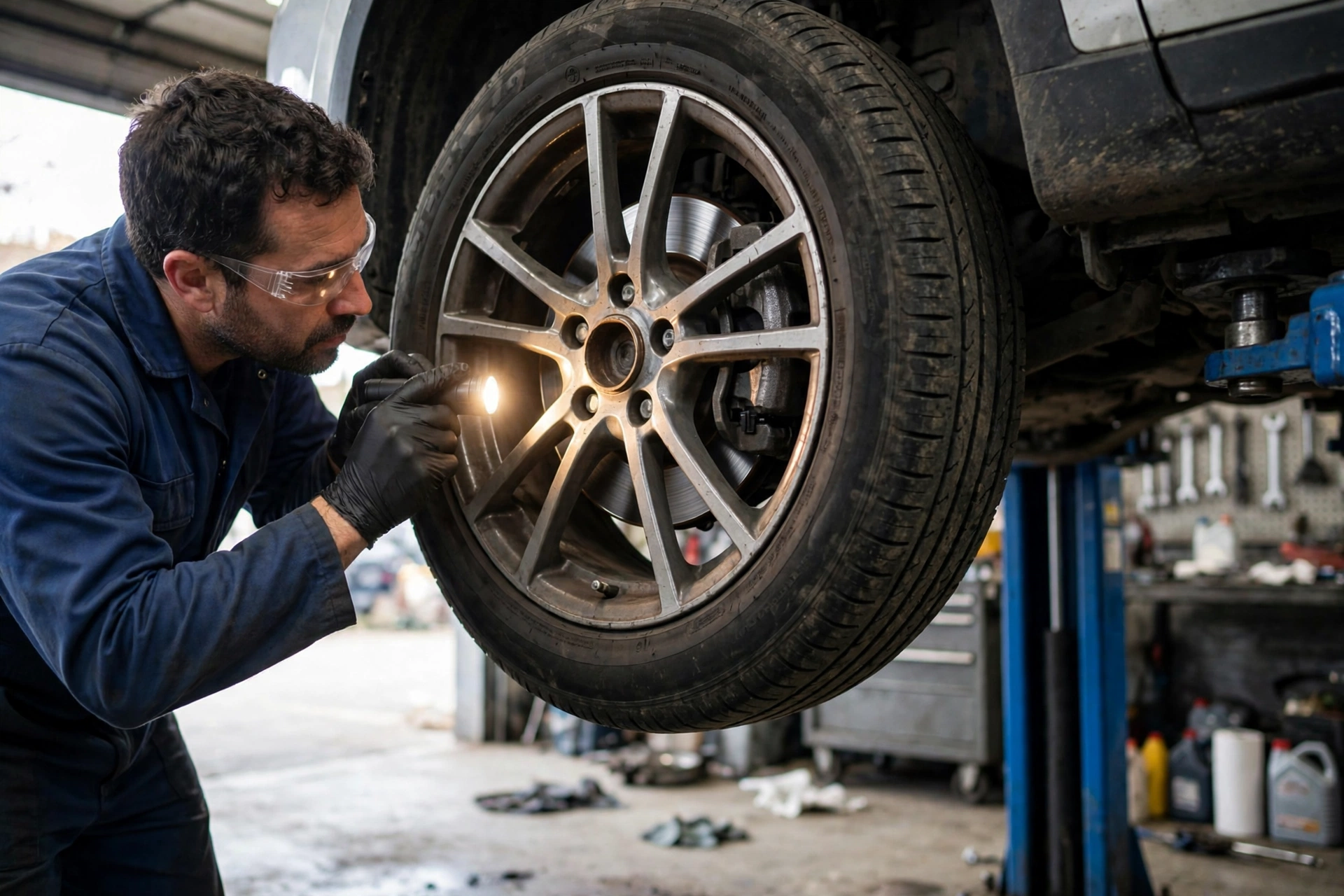
- Look through the wheel spokes with a flashlight. Deep grooves, heavy scoring, cracks, or blue heat discoloration on the rotor face all mean the rotor is done. A raised rusty lip around the outer edge means real wear.
- Check the lug nuts. If the shake started after a tire or brake job, make sure the lugs are tight to the spec in your owner's manual. While you are there, look for a wheel that feels hot after a drive, which points to a dragging caliper.
- Do the wheel rock test. Jack up one corner safely on a jack stand, grab the tire at the top and bottom, and try to rock it. Play in that direction points to a wheel bearing or a ball joint. Play side to side points to a tie rod end. Any play at all means something is worn and needs a closer look.
- Listen on a slow drive with the windows down. A rhythmic scraping that speeds up with the car points to the brakes. A humming that changes pitch when you steer left or right points to a bearing. A clunk over bumps points to suspension.
- If everything looks fine but the shake is still there, a shop can measure the rotor with a dial indicator. That reading, called runout, tells you in one number whether the rotor is the problem, and it is the step that separates a guess from a diagnosis. Check your owner's manual for the spec, and never accept a guessed number.
What It Costs to Fix
There is no single price for a brake shake, because the cause decides the bill. Pads and rotors are the cheap end of brake work, a moderate cost part where most of a shop bill is labor, and doing the job yourself saves most of that labor. A sticking caliper costs more, because the part itself is pricier and the job involves the hydraulic system. Suspension bushings and tie rod ends sit in the middle, and a wheel bearing is a moderate part with real labor behind it, since the hub often has to come apart.
The expensive mistake is not the repair, it is the wrong repair. Replacing rotors when the real problem is a sticking caliper buys you a few weeks before the new rotors warp the same way. That is why the driveway checks above matter. Ten minutes of looking saves you from paying twice.
DIY vs Shop Verdict
A pad and rotor job is one of the most approachable brake repairs for a home mechanic. If you can safely jack up your car, remove a wheel, and unbolt a caliper, you can do it, and the savings are real because most of the shop price is labor. For the pad side of the job, the 2013-2022 Acura ILX Brake Pad Replacement guide shows the full process with photos, and the steps are nearly identical on most cars. Clean the hub face before the new rotor goes on, because rust or dirt trapped between the hub and the rotor will make the new rotor run crooked and pulse like a warped one. Do not let the caliper hang by its brake hose, do not touch the new rotor face with greasy hands, and follow the pad manufacturer's bed-in procedure after the job.
A sticking caliper, a wheel bearing, or worn suspension is a different call. Those jobs need more tools, more judgment, and more tolerance for stuck parts, and a mistake on brakes is not a learning experience you want. If the shake comes with grinding, pulling, a burning smell, or a wheel that feels loose, get it to a shop and do not take a long trip on it first. Brakes are safety equipment, not the place to learn by trial and error.
FAQ
Can I keep driving if my car shakes when braking? For a short trip to get it fixed, yes, if braking still works and the car stops straight. Do not take a long trip on it, and do not ignore it. A shake that is getting worse means the rotor surface is getting more uneven, and it chews up pads while it does it.
Is it always warped rotors? No, and that assumption is how people waste money. Rotors are the most common cause, but a sticking caliper, worn suspension bushings, a bad wheel bearing, loose lug nuts, or a tire problem can all feel the same. Run through the checks above before you order parts.
Why does it only shake at highway speed? Rotor thickness variation shows up most clearly at speed, because the rotor is spinning fast and the pads are hitting the high spots many times a second. At parking lot speed the same rotor may feel fine. A shake that is violent at low speed too usually means something is further gone, or the cause is not the rotors at all.
Will new brake pads fix the shake? Only if the rotors are smooth, thick enough, and free of grooves and cracks. New pads on uneven rotors wear unevenly, stop poorly, and make noise. When in doubt, replace pads and rotors together, in pairs on the same axle.
Brakes do not ask for much. They ask you to notice the shake early, figure out which part is actually causing it, and fix that part instead of the one you guessed. Do that, and the next stop feels the way it should: quiet, straight, and uneventful. Start with the Brake Rotor Replacement: Signs It's Time and DIY post to see what worn rotors look like before you order parts.
Safety: Informational DIY. EZ Car Fix is not a shop or dealer.