Steering Wheel Vibration at Highway Speed
A steering wheel that shakes at highway speed is almost always a tire or wheel problem, and most of the time it is tire balance. If the shake starts around 50 mph, gets worse as you speed up, and fades when you slow down, start with a balance check before you spend money on anything else. The fix is usually quick, and it is the cheapest item on the list of suspects.
That said, balance is not the only cause. Alignment, a bent wheel, a worn suspension part, a bad wheel bearing, and warped brake rotors can all put a shake in the wheel. The trick is reading when the shake shows up and what else comes with it, because each cause has its own signature.
The Speed Test: When It Shakes Matters Most
Pay attention to exactly when the vibration starts and stops. That one detail narrows the list more than any other test.
A shake that appears around 50 to 70 mph and gets stronger with speed points at the tires and wheels. A shake that only shows up when you press the brake pedal points at the rotors. A shake that is there at low speed too points at a tire problem like a slipped belt or a flat spot. And a shake that comes with a humming or grinding noise that changes when you steer left or right points at a wheel bearing.
Write down the speed where it starts, whether braking changes it, and whether the whole car shakes or just the wheel. A shop will ask exactly these questions.
Tire Balance: The Usual Suspect
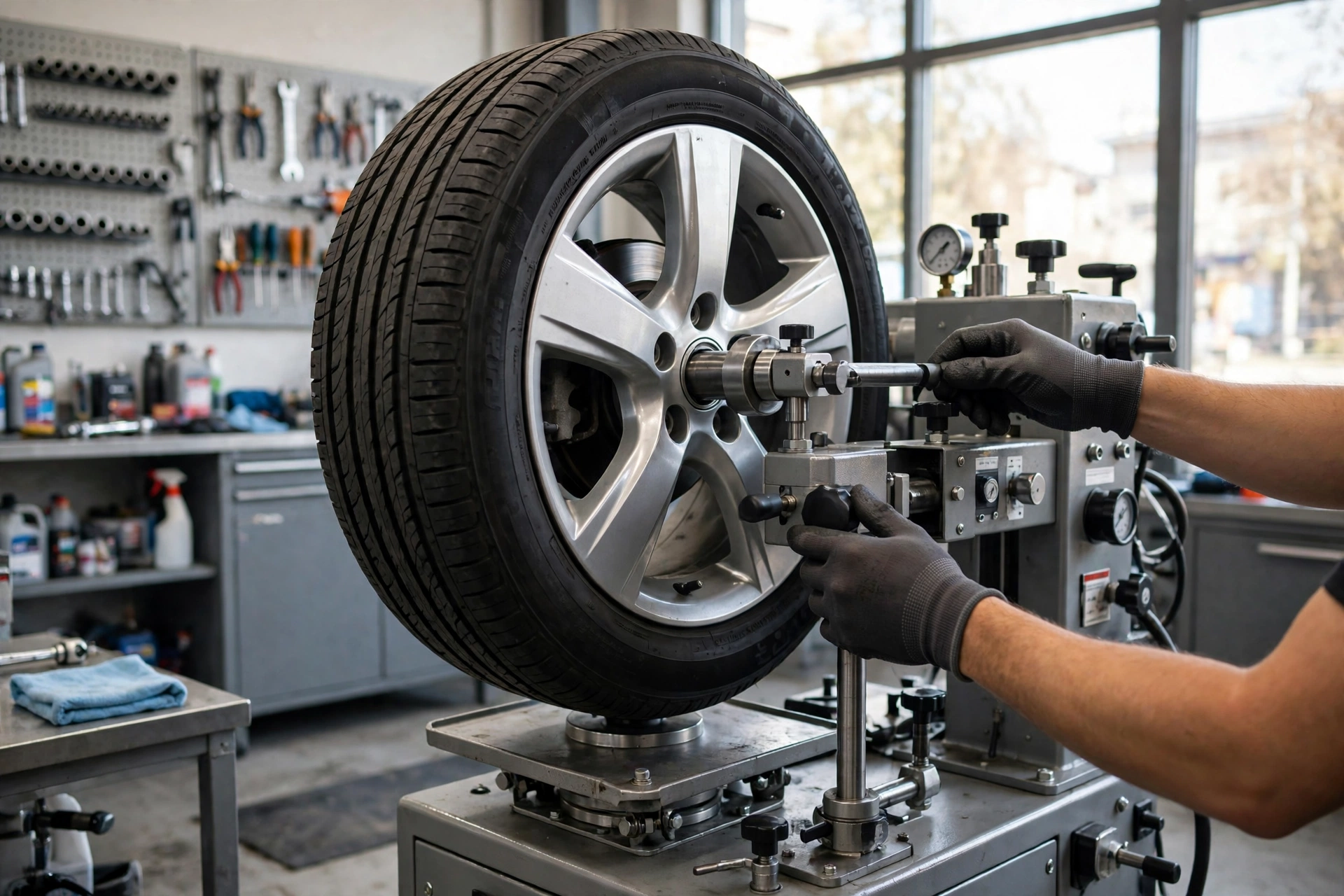
Tires are never perfectly even in weight, and small differences turn into a shake once the wheel spins fast enough. A wheel that is out of balance wobbles on its axis, and at highway speed that wobble travels straight up the steering column into your hands. New tires can be out of balance too, and a balance weight can fall off after hitting a pothole or a curb, so a shake that appears suddenly after a rough road is a strong clue.
Balance is also the fix to try first because it is fast and cheap. A shop spins each wheel on a balancer, finds the heavy spot, and clips or sticks a small weight on the opposite side. The whole job takes well under an hour for all four wheels.
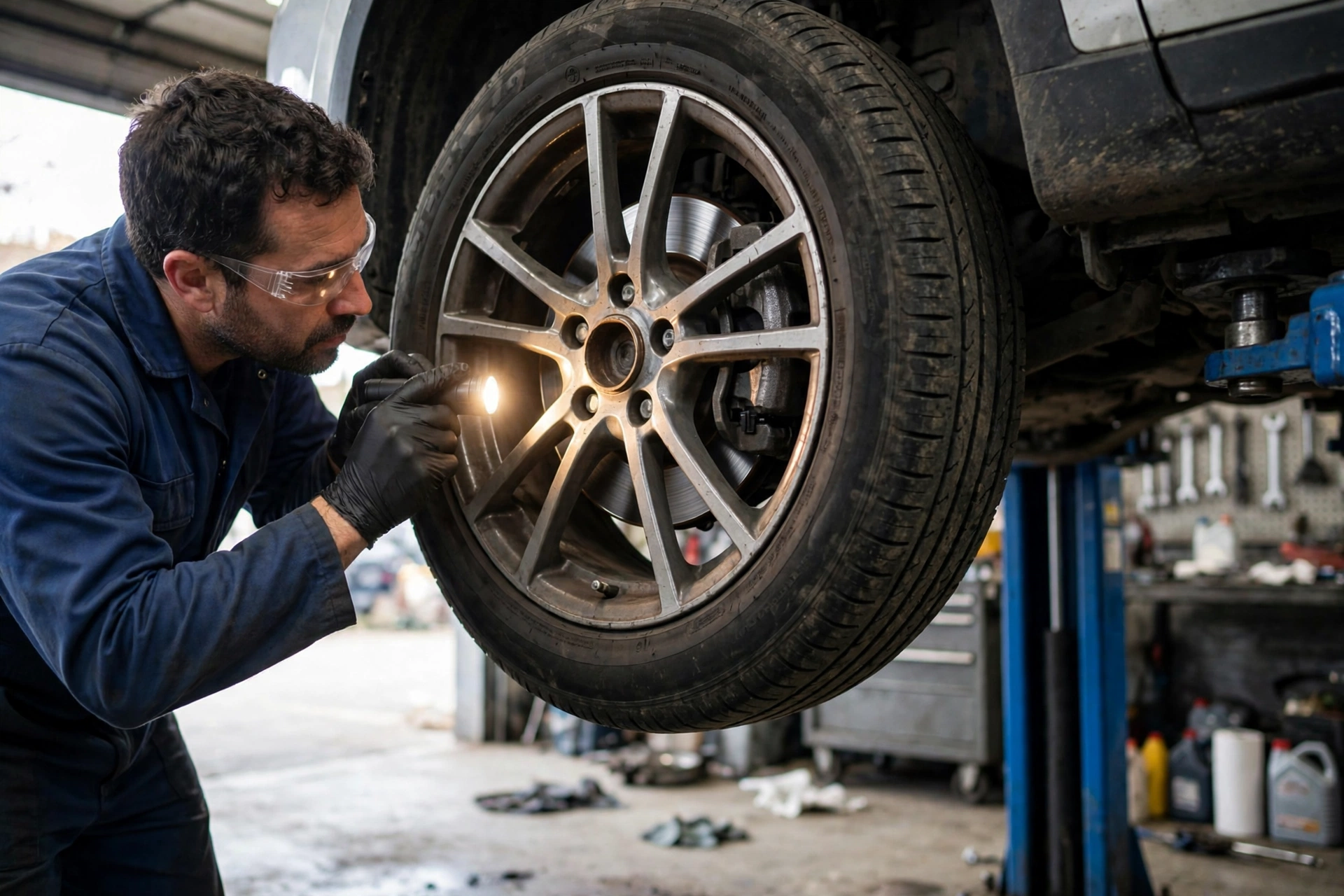
Check the tires themselves while you are at it. Look for uneven wear, a bulge in the sidewall, or a flat spot from sitting too long. A tire with a slipped internal belt will vibrate no matter how well it is balanced, and no amount of balancing fixes a bent rim either.
For the routine side of tire care, our guide to Tire Rotation and Maintenance: The Simple Job That Doubles Tire Life covers rotation intervals and what to look for during a tire inspection.
Alignment and Worn Suspension Parts
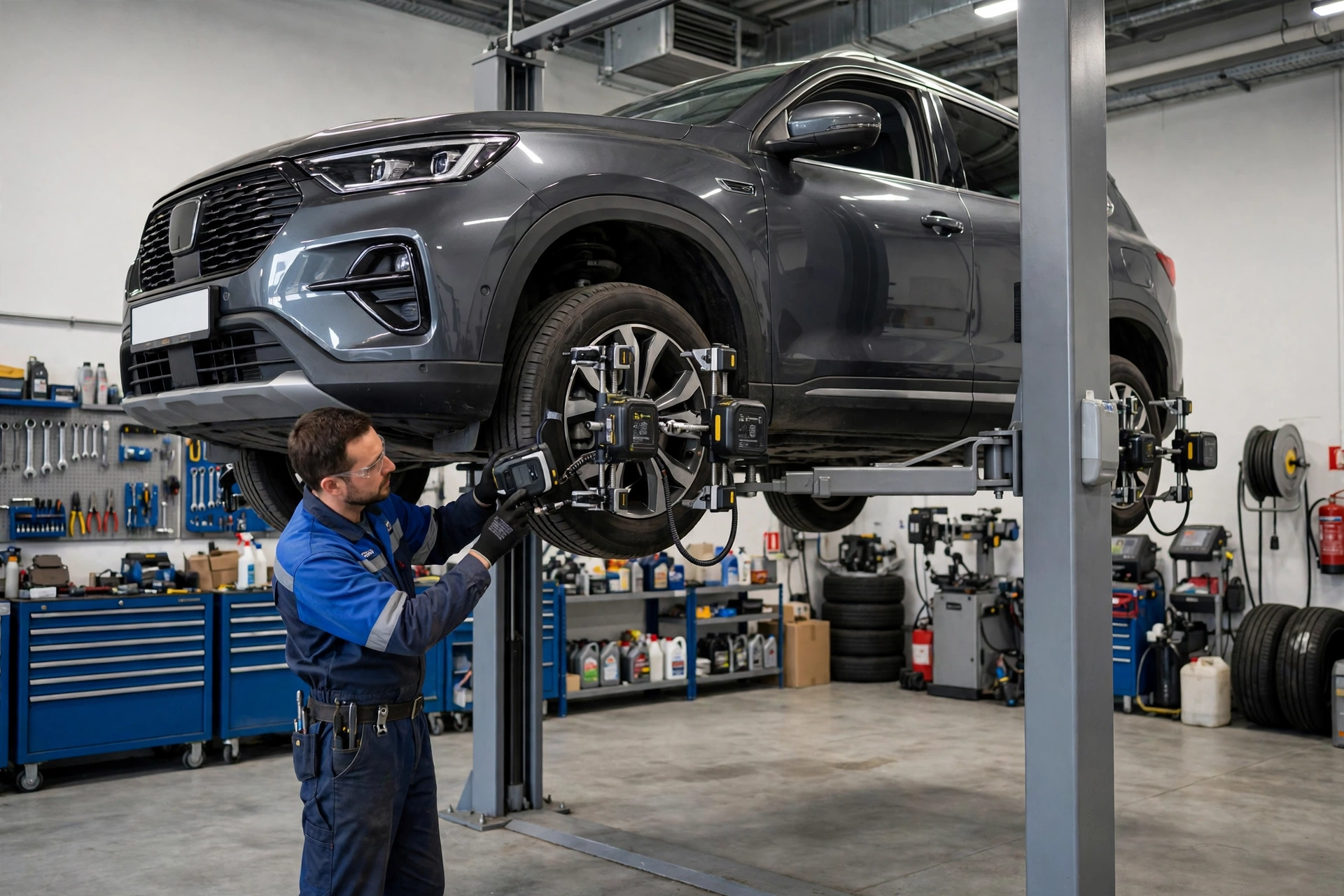
Bad alignment rarely causes a shake all by itself, but it causes the uneven tire wear that does. A car that pulls to one side, a steering wheel that sits off center when you drive straight, and tires worn more on one edge than the other are the classic signs. If your shake came on gradually and the tires look worn unevenly, alignment belongs on the list.
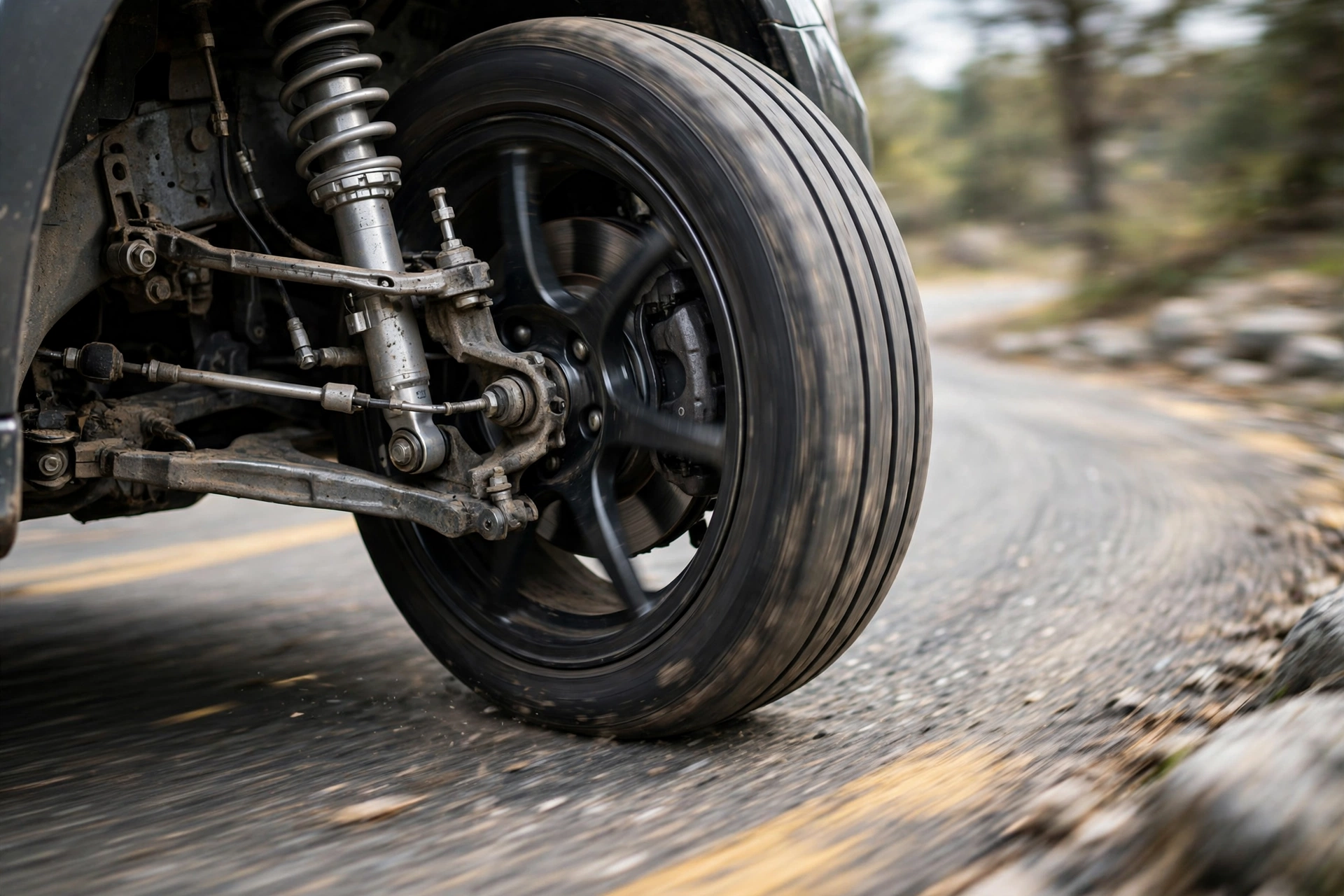
Worn suspension parts make the problem worse. Ball joints, tie rod ends, and control arm bushings hold the wheel steady, and when they wear out the wheel gets a little loose. That looseness lets a small imbalance turn into a big shake, and it can also show up as clunking over bumps or vague steering.
Do not ignore a suspension shake. A worn tie rod end or ball joint is not just an annoyance, it is a part that holds your wheel on, and a failure at highway speed is as bad as it sounds.
Our guide to Suspension Problems: How to Diagnose Shocks, Struts, and Worn Components walks through the checks for each of these parts.
Warped Rotors and Bad Wheel Bearings
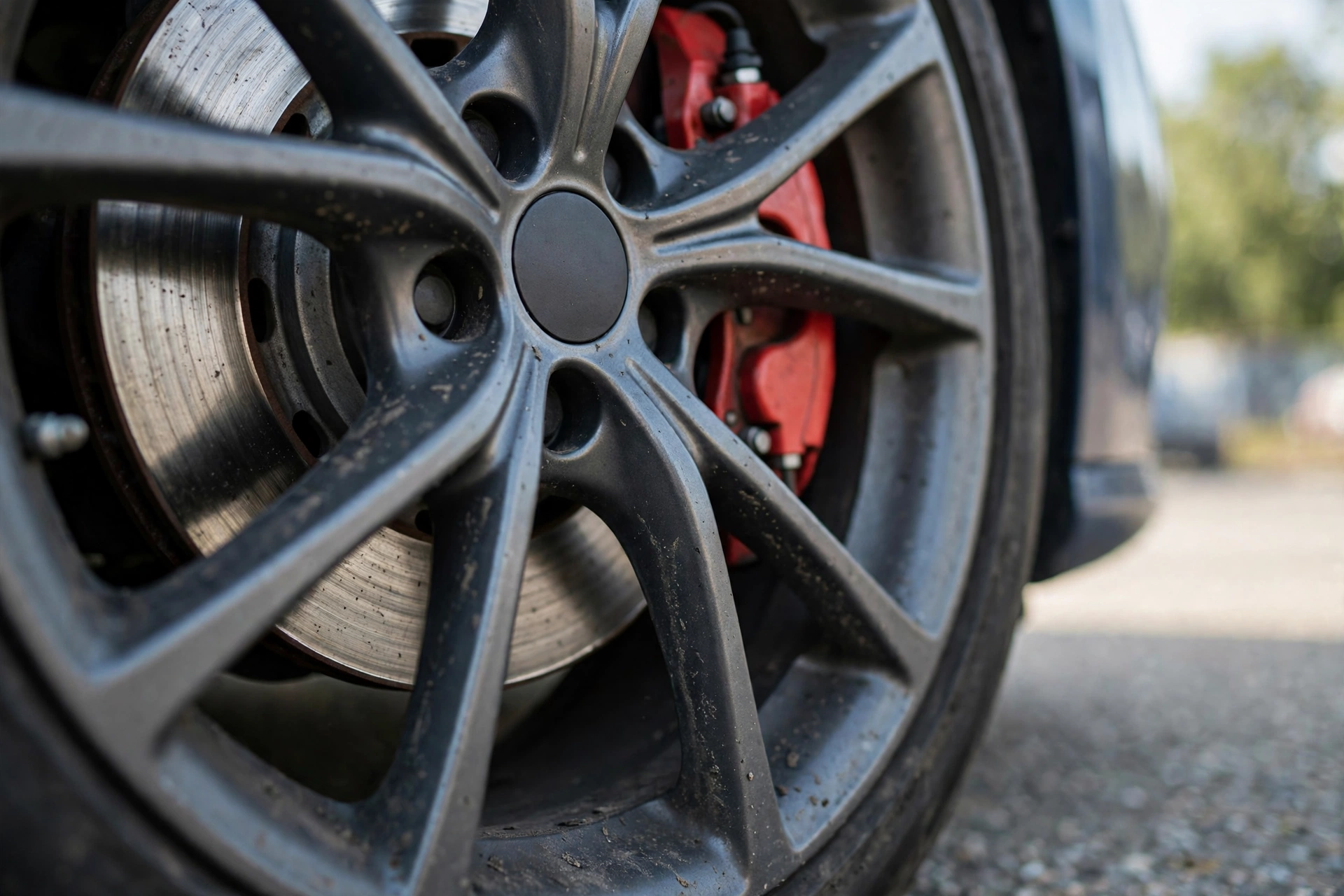
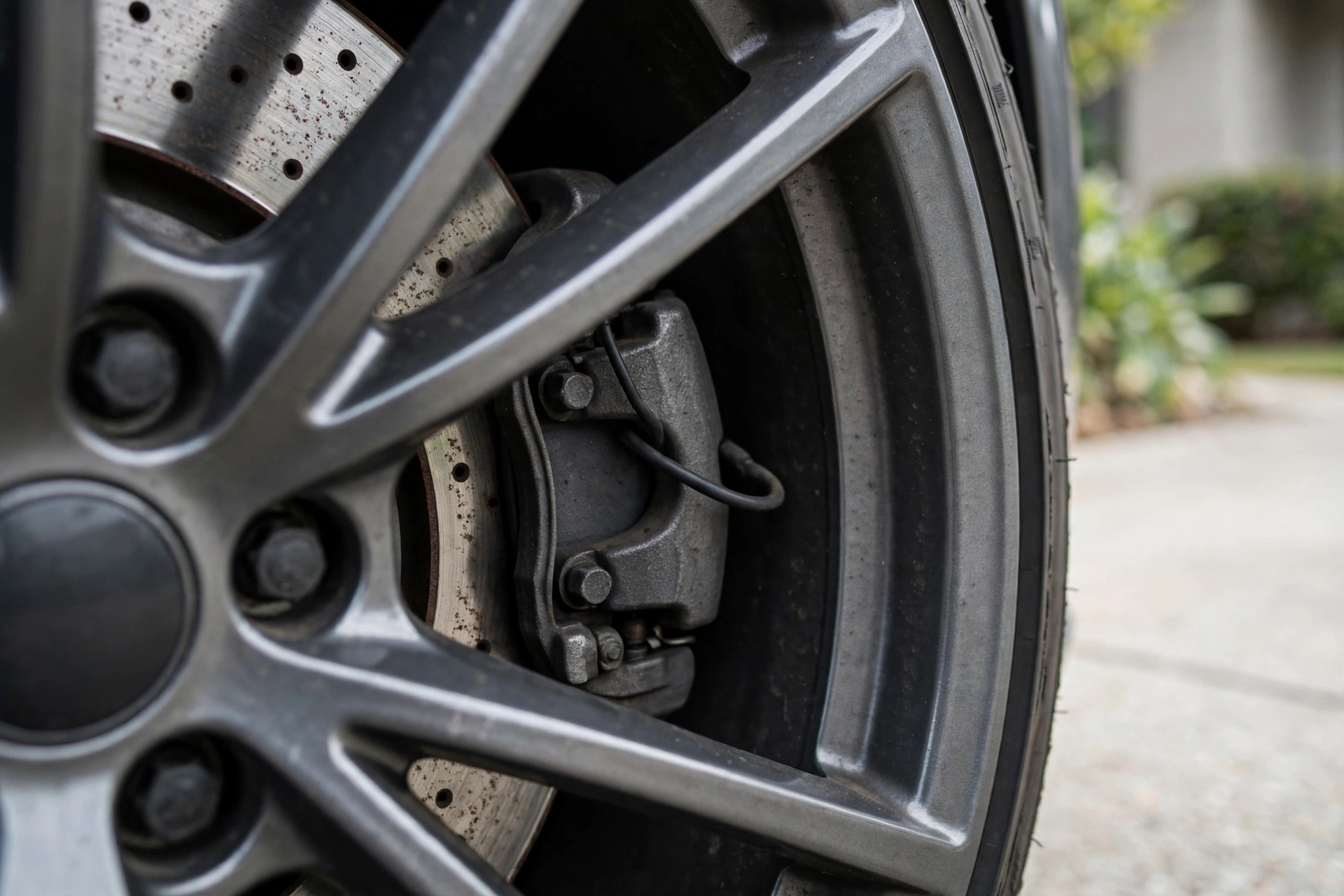
If the wheel only shakes when you brake, the rotors are the prime suspect. A rotor that has worn unevenly or warped from heat grabs the pads in pulses as it turns, and you feel that pulsing in the pedal and the wheel. Light braking at highway speed makes it most obvious.
A bad wheel bearing is the other cause that comes with noise. The classic sign is a hum or growl that gets louder with speed and changes pitch when you steer one way or the other. A worn bearing can also let the wheel wobble slightly, which adds a shake on top of the noise. Bearings do not get better on their own, and a failing bearing can overheat and seize, so a growing hum is a repair, not a wait and see.
How to Diagnose It Yourself
You can narrow this down in your driveway and on one short test drive before you book anything. Work through these steps in order.
- Check tire pressure first. Use the pressure listed on the door jamb sticker, not the number molded on the tire sidewall. A tire that is far off pressure can shake and wear unevenly, and this check costs nothing.
- Look at all four tires. Check for bulges, cracks, nails, uneven wear, and missing balance weights on the rims. Run your hand lightly over the tread and feel for flat spots or high spots.
- Swap the front tires to the rear. If the shake moves from the steering wheel to the seat, the problem is in one of those two tires or wheels. Check your owner's manual first, because some cars use different tire sizes front and rear.
- Test drive with attention. Note the exact speed where the shake starts, whether it is worse under braking, and whether steering left or right changes any noise. Drive a smooth road so bumps do not muddy the result.
- Check for play. With the car safely parked, grab each front tire at the top and bottom and try to rock it. Any clunk or movement means a worn bearing or suspension part, and that car needs a shop, not a balance.
- Get the balance checked. If the tires look fine and nothing is loose, a balance and a spin check on a balancer is the next step. A good shop will also spot a bent rim or a tire with a slipped belt while the wheel is on the machine.
If the shake only happens when braking, skip straight to the brake check. Balancing will not fix a rotor problem, and paying for a balance first just delays the real repair.
What It Costs to Fix
There is no researched price range for this repair in this post, so here is the honest ranking instead of guessed numbers. A wheel balance is the cheapest fix on the list. An alignment costs more than a balance but less than any parts replacement. Brake rotors and wheel bearings are parts jobs, so they cost more, and the price climbs if the pads or hub come along for the ride. Suspension parts like tie rods and ball joints sit in the same parts-job range, and a shop will usually quote them after an inspection, not over the phone.
Call two independent shops for quotes once you know which repair you need, and get the diagnosis in writing before you approve parts.
DIY vs Shop Verdict
Some of this is driveway work and some of it is not. Checking tire pressure, inspecting tires, and swapping wheels front to rear are easy DIY jobs. A wheel balance needs a balancer, so it is a shop job, but it is a quick and cheap one. An alignment needs a rack and a trained operator, so it is a shop job too.
Brake rotors and wheel bearings are DIY possible for a confident home mechanic with the right tools, but a bearing that is pressed into the hub is not a first timer job. Check your owner's manual for the torque specs for your car, and never guess them.
Our take: diagnose it yourself, then let a shop do the balance and alignment. You will walk in knowing what the problem probably is, and that is the best protection against paying for the wrong fix.
FAQ
Why does my steering wheel only shake at highway speed?
Because the cause spins with the wheels, and the shake only becomes strong enough to feel once the wheels turn fast enough. Tire imbalance is the most common reason, and it usually shows up between 50 and 70 mph.
Can unbalanced tires damage my car?
Yes, over time. The constant vibration wears suspension parts and bearings faster than normal, and uneven tires wear out sooner. It is a cheap fix, so there is no good reason to live with it.
Is a shaking steering wheel dangerous?
It can be. A simple balance problem is not an emergency, but a worn ball joint, tie rod, or wheel bearing is, because those parts hold the wheel on. If the shake came on suddenly, is getting worse fast, or comes with clunking or grinding, slow down and get it inspected before your next highway drive.
Why does my car shake only when I brake?
That is a brake problem, not a balance problem. Warped or unevenly worn rotors pulse against the pads as they turn, and you feel it in the wheel and the pedal. See our guide on Car Shakes When Braking: Warped Rotors or Something Else? for the full breakdown.
A steering wheel shake at highway speed is your car telling you something is out of round, out of balance, or worn loose, and the speed where it shows up tells you where to look. Start with the tires, check the balance, and work outward from there. Most of the time it is a balance job and an afternoon fix, but if the shake comes with noise, clunking, or pulling, treat it as a safety item and get the front end inspected before your next long drive. For more on the two most common culprits, read Brake Rotor Replacement: Signs It's Time and DIY and How Long Can You Drive on a Bad Wheel Bearing?
For a deeper look at the tire side of this problem, see our 2013-2022 Acura ILX Tire Pressure and Rotation guide, and for the brake side, the 2016-2025 Chevrolet Malibu Brake Rotor Replacement guide.
Safety: Informational DIY. EZ Car Fix is not a shop or dealer.