Car Shakes at Idle: Causes and Fixes
Your car shakes at idle but smooths out once you drive off. That pattern narrows the problem down fast. At idle the engine is turning slowly, around 600 to 1,000 RPM on most cars, so any weak cylinder, bad mount, or air leak shows up as a shake you can feel through the seat and steering wheel. Once the revs climb, the engine has enough momentum to mask the same fault.
The short answer: a rough idle is usually a misfire, a worn engine mount, or a vacuum leak. All three are common, all three are diagnosable in your driveway, and only one of them is expensive. Work through them in order and you will find the cause without throwing parts at the car.
The Most Common Causes
A shake at idle comes from one of two things: the engine is not running smoothly, or the engine is running fine and the vibration is reaching you through broken mounts. Telling them apart is the first step.
If the tachometer needle wobbles or dips when the shake hits, the engine itself is stumbling. If the needle holds steady and the whole car just trembles, suspect the mounts. That one observation splits the diagnosis in half.
Worn Engine Mounts

Engine mounts are rubber and metal brackets that hold the engine to the frame and soak up vibration. The rubber cracks and sags with age and heat, and once it collapses the engine sits metal on metal. The engine still runs perfectly, but every pulse of the idle reaches the cabin.
Mounts are the classic cause of a shake that appears at idle and disappears the moment you touch the gas. The engine torques against the mounts under load, which can temporarily seat a collapsed mount and quiet the shake. Put the car in drive with your foot on the brake and the shake gets worse, because the engine is loaded and pushing against the bad mount.
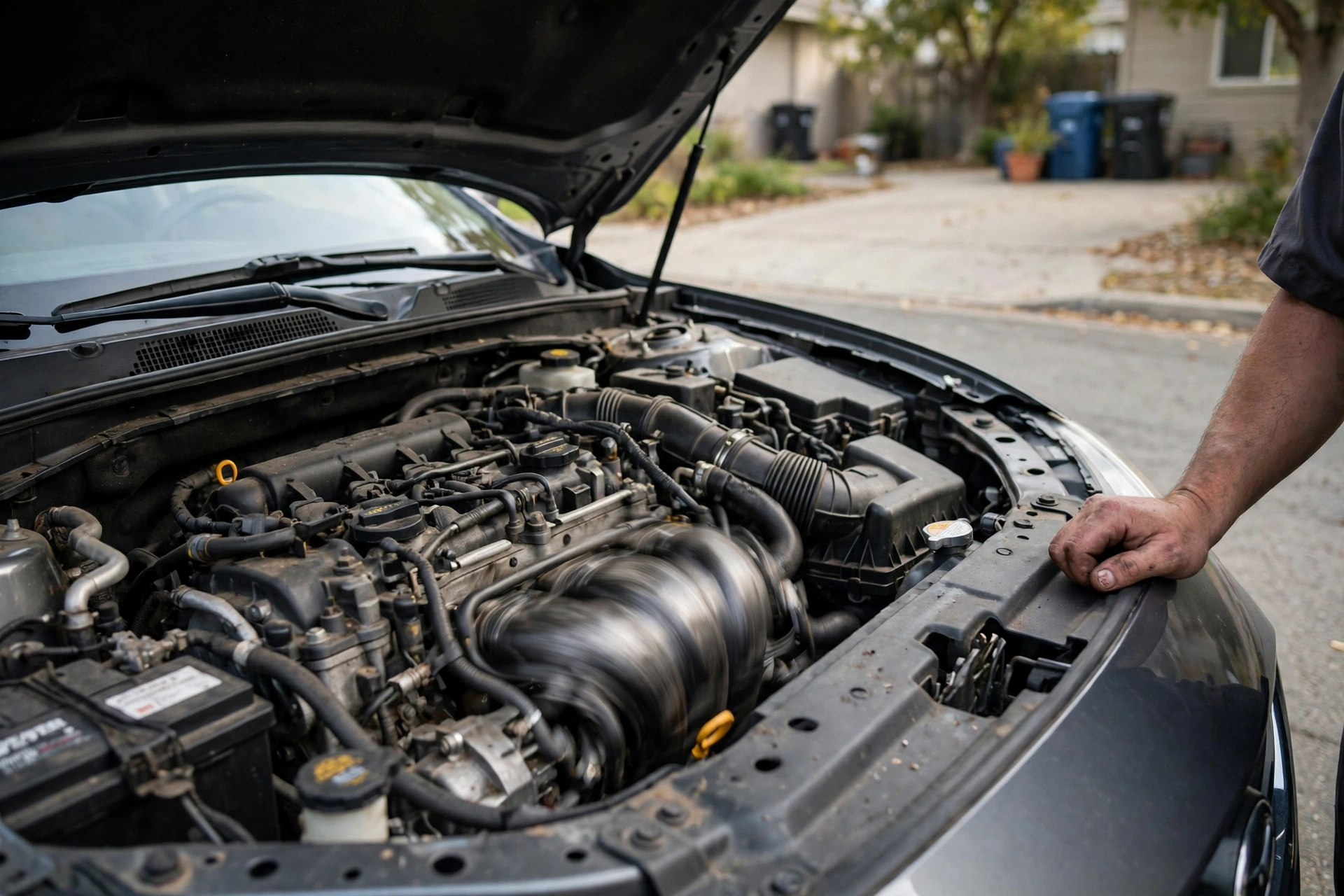
Pop the hood, have someone shift from park to drive while you watch the engine. If it lurches forward more than an inch or so, a mount is done. A visual check helps too: look for cracked rubber or fluid leaking from a hydraulic mount.
Mount replacement is a mostly labor job. The parts are modest, the work is getting the engine supported and the old mount out. This is a solid shop job for most people, and you can read our full walkthrough in Engine Mounts: Why Your Car Shakes, Clunks, and Vibrates More Than It Should. For a model-specific look at the job, see the 2012-2014 Mercedes-Benz C-Class - Engine Mount Replacement guide.
Engine Misfire: Bad Plugs, Coils, or Injectors
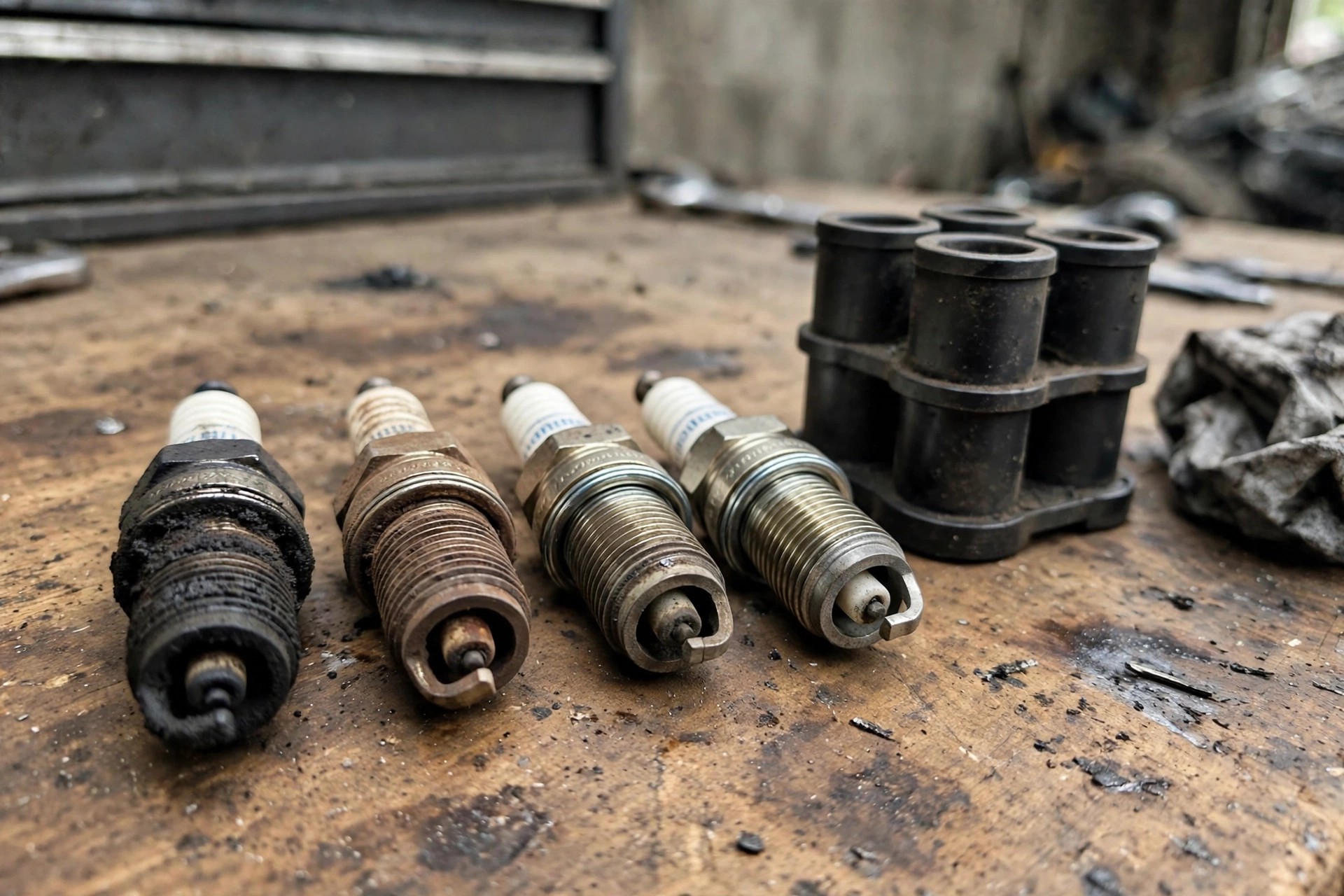
A misfire means one cylinder is not firing properly. At highway speed you might barely notice it. At idle, a dead cylinder is a big deal: the engine loses a quarter of its power on a four-cylinder, and the shake is obvious.
Worn spark plugs are the usual suspect. Plugs wear slowly, so the rough idle creeps in over months and you adapt to it until it gets bad. Ignition coils fail the same way, often on one cylinder only. A failing coil usually sets a check engine light and a misfire code, while worn plugs may not trigger a code at all.
Listen for a rhythmic stumble rather than a constant tremble. A misfire shakes in a pattern, a beat you can almost count, while a mount shake is steady. If the check engine light is flashing, stop driving and get it checked now: a flashing light means raw fuel is reaching the catalytic converter, and that can kill an expensive part fast.
Plugs are the cheapest fix on this list and the best first move if they are due. Our Spark Plug Replacement Guide covers when to change them, and the 2001-2003 Acura CL - Spark Plug Replacement guide shows the job step by step. If the misfire follows a coil swap from one cylinder to another, the coil is bad, and our P0300 Random Misfire Diagnosis post walks through that test.
Vacuum Leaks and Dirty Throttle Body
A vacuum leak lets unmetered air into the engine, which leans out the fuel mixture. At idle the engine has very little air going through it, so even a small leak is a large percentage of the total. The idle hunts up and down, the engine may surge and dip, and the shake comes and goes.
Common leak points are cracked vacuum hoses, a split intake boot, a bad PCV valve, or a leaking intake manifold gasket. Rubber hoses get brittle with heat and age, and a hose you can barely see can be split on the underside. Listen for a faint hissing sound around the intake with the engine running, and check the hoses by hand. A hose that feels stiff and cracks when you squeeze it is done.
A dirty throttle body causes the same hunting idle for a different reason. Carbon builds up around the throttle plate and chokes off the small amount of air the engine needs at idle. The fix is cleaning, not parts. Check your owner's manual before spraying anything near the throttle body, because some designs need a relearn procedure after cleaning.
Low Compression and Other Causes
If the misfire, mounts, and vacuum checks all come back clean, the problem goes deeper. Low compression in one cylinder, from a burnt valve or worn rings, will shake at idle and never fully go away at speed. A compression test is the way to find it, and it is a shop job for most people because the numbers need interpreting against the engine's condition.
Other less common causes include a failing idle air control valve on older cars or a dirty fuel injector that dribbles instead of spraying. A fuel injector problem usually shows up as a single-cylinder misfire code, which points you back to the misfire section above.
How to Diagnose a Rough Idle

Work the problem in order, cheapest test first:
- Scan for codes. A free scan at an auto parts store or a cheap OBD2 reader will tell you if a cylinder is misfiring and which one. No code does not mean no problem, but a code saves you a lot of guessing.
- Watch the tachometer. A steady needle with a steady shake points at mounts. A wobbling needle points at the engine itself.
- Check the mounts. Have someone shift into drive with the brake held while you watch the engine move under the hood. Big lurch means a bad mount.
- Inspect the plugs. Pull one or two and look at them. Heavy carbon, oil fouling, or a worn gap tells you the ignition system needs attention. Compare what you see against the plug guide linked above.
- Look for vacuum leaks. Check hoses by hand, listen for hissing, and look at the intake boot for cracks.
- Clean the throttle body. If the idle hunts and the throttle plate is black with carbon, clean it and see if the idle settles.
Most rough idles are found in the first three steps. If you get through all six without an answer, a compression test is the next move, and that is where a shop earns its money.
What Does It Cost to Fix?
There is no single price for a rough idle because the cause decides the bill, and the spread is wide.
Spark plugs are the cheap end of the scale: a cheap part and an easy job on most four-cylinder engines, more labor on V6 engines where the rear plugs hide under the intake. A vacuum hose is a cheap part too. A throttle body cleaning is mostly labor, and it is a fair DIY job if you are comfortable under the hood.
Engine mounts sit in the middle: a mostly labor job, with the bill growing if several mounts are bad or the engine has to come partly out to reach one. A single coil is a moderate part and a quick swap on most cars.
DIY or Shop?
Plugs, a vacuum hose, and a throttle body cleaning are fair DIY jobs with basic hand tools. Coil swaps are easy on most cars too. Mounts are doable for a confident DIYer with a jack and an engine support, but the engine has to be held safely while a mount is out, so if that sentence makes you nervous, pay a shop.
Anything that needs a compression test or an injector replacement goes to a shop unless you already own the tools and know the procedure. And if the check engine light is flashing, do not keep driving it to see if it gets better. It will not.
FAQ
Can I drive with a car that shakes at idle? Usually yes, for a short time, if the check engine light is steady and the car drives normally otherwise. If the light is flashing, the car stalls, or the shake is getting worse by the day, get it checked before your next long drive.
Why does my car only shake at idle and not while driving? At idle the engine turns slowly, so a weak cylinder, a small air leak, or a collapsed mount has a big effect. At speed the engine has momentum and higher airflow, which masks the same fault.
Will new spark plugs fix a rough idle? If worn plugs are the cause, yes, and they are the cheapest fix to try first. If the shake stays after new plugs, the problem is elsewhere, usually a coil, a vacuum leak, or a mount.
How do I know if it is the mounts or a misfire? Watch the tachometer. A steady needle with a steady shake means mounts. A needle that wobbles or dips with the shake means the engine is misfiring. A scan for codes settles it fast.
The Take
A shake at idle is the engine telling you something is off, and the cause is almost always one of three things: a misfire, a vacuum leak, or a worn mount. Scan for codes, watch the tachometer, and check the mounts before you buy a single part. The fix is usually cheaper than the worry, but only if you diagnose first and guess second. If the light is flashing or the shake is getting worse, get it looked at now, because the cheap fixes do not stay cheap when a misfire cooks the converter. For the full mount walkthrough, start with our Engine Mounts guide.
Safety: Informational DIY. EZ Car Fix is not a shop or dealer.