How Long Can You Drive on a Bad Wheel Bearing?
There is no safe number of miles for a bad wheel bearing, and anyone who gives you one is guessing. The honest answer is this: drive it only as far as the nearest shop, slowly, on surface streets, and tow it if the wheel grinds, wobbles, or has play. A wheel bearing holds your wheel onto the car while it spins thousands of times a minute. When it fails completely it can seize, and in the worst case the wheel can separate. That is the whole story. Everything else is judging how close you are to that point.
Most wheel bearings last 85,000 miles or more, and many go far beyond that. When one starts to fail, it gives you weeks of warning noise first. The mistake is treating that noise as an annoyance to live with instead of a countdown.
How You Know the Bearing Is Bad
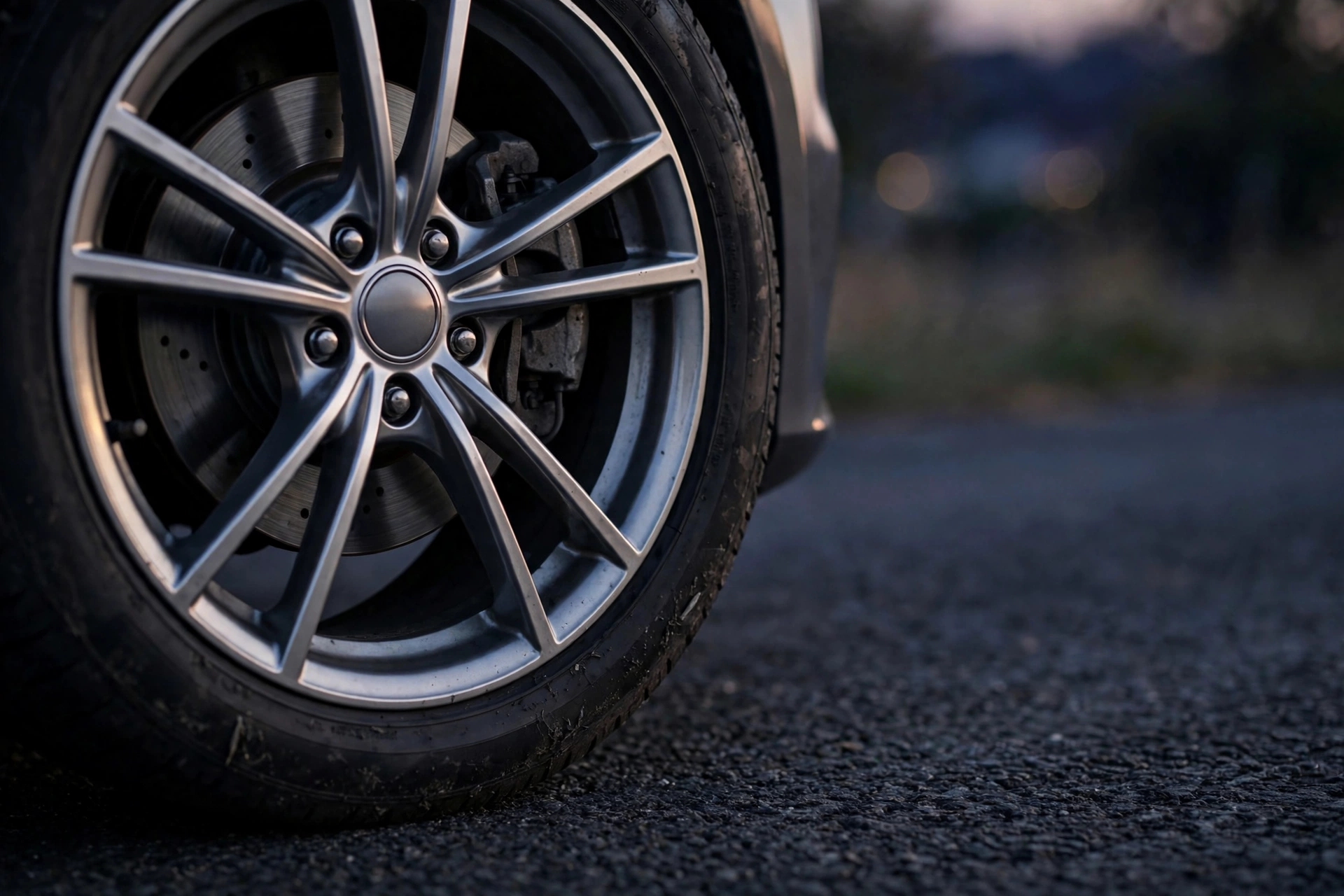
A failing wheel bearing has a signature sound, and once you know it you will never confuse it with anything else.
A humming or growling noise that grows with speed. This is the classic first sign. It starts faint, around highway speed, and gets louder as you go faster. It sounds like a distant airplane or a loud tire, and it does not go away when you change road surfaces. Tire noise changes with the pavement. Bearing noise does not.
The noise changes when you turn. Turn left and the noise gets louder, or turn right and it fades. That happens because turning shifts weight from one side of the car to the other, loading one bearing and unloading the other. A noise that follows your steering is a bearing until proven otherwise.
Grinding, clicking, or snapping from the wheel. Humming means the bearing is wearing. Grinding means metal is running on metal, and the bearing is close to done. Clicking or snapping on turns can also point at a CV joint, so do not guess from sound alone, but a grind from one wheel is a park-it-now symptom.
Vibration in the steering wheel or the floor. As the bearing wears, the wheel no longer spins true, and you feel it through the steering wheel at speed, or as a shudder through the floor on that side of the car. Vibration plus noise from the same corner is a bearing until proven otherwise.
The ABS light comes on. On many cars the wheel speed sensor reads through the bearing hub, so a failing bearing can throw off the signal and light the ABS warning. An ABS light plus a humming wheel is a strong pair of clues. See our suspension diagnosis guide if you are sorting out which corner the problem is on.
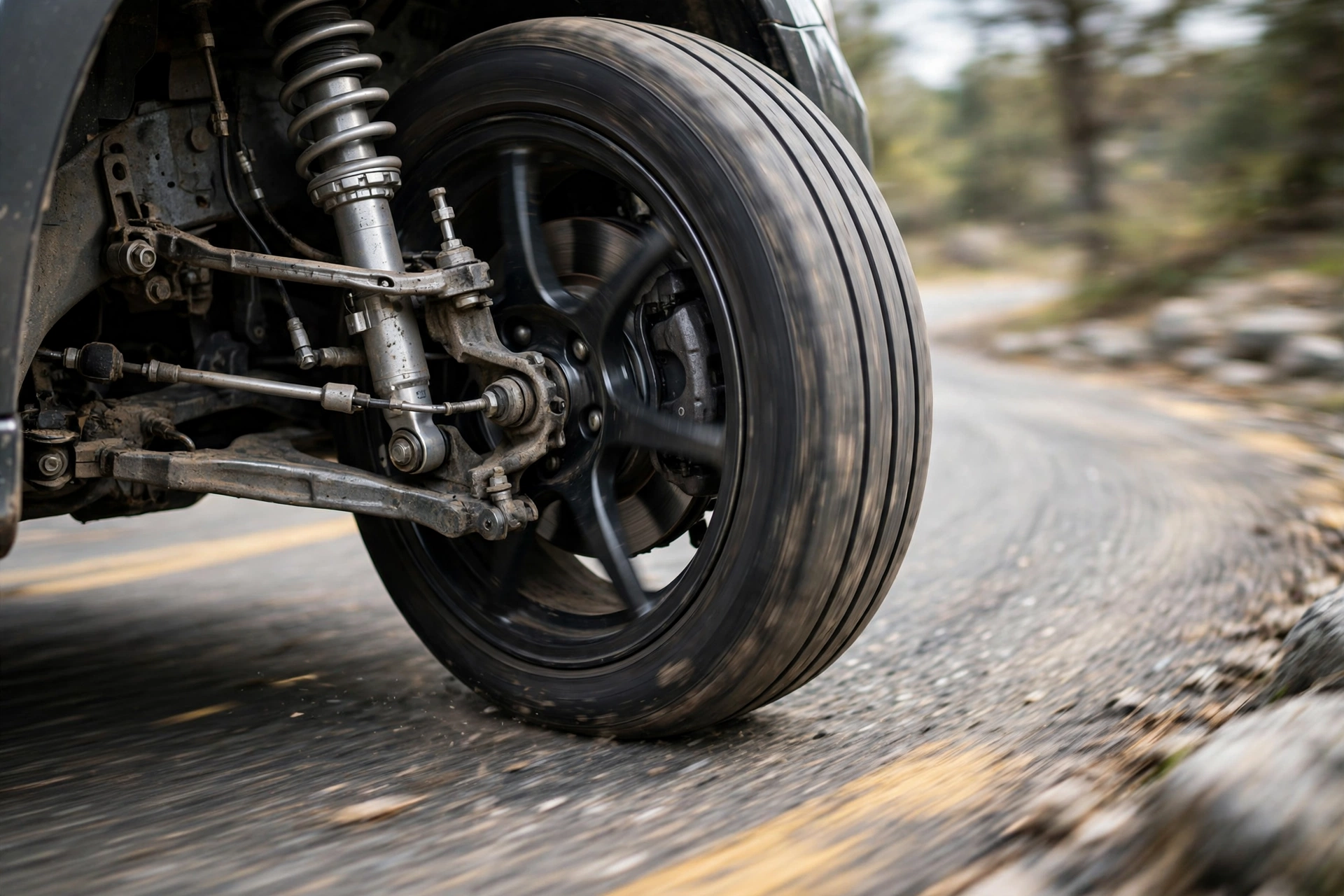
Uneven tire wear and a loose feeling wheel. A worn bearing lets the wheel tilt slightly, which scrubs the tire unevenly and makes the car feel vague or loose in corners. If one tire is wearing oddly and the rest are fine, check that wheel first.
How Long Do You Actually Have?
Bearings fail in stages, and the stage you are in decides what you can do.
Stage one is noise only. A faint hum at highway speed, no vibration, no play in the wheel. The bearing is wearing but still holding together. You can drive it to the shop, but do not plan a road trip around it. Book the repair this week, not this month.
Stage two is noise plus vibration. The hum is loud, you feel it in the wheel or the floor, and the noise changes clearly with turns. The bearing is well worn. Drive it to the nearest shop, keep your speed down, stay off the highway, and do not load the car with passengers or cargo.
Stage three is play, grinding, or heat. The wheel moves when you rock it, the noise is a grind, or the hub is noticeably hotter than the other side after a short drive. Stop driving it. Have it towed. A bearing at this stage can seize without further warning, and a seized bearing at speed can lock the wheel or damage the hub, the spindle, and the brake parts around it.
There is no mileage number that separates these stages. Two cars with the same hum can be weeks apart in remaining life, because it depends on how much damage is already inside the sealed bearing, and you cannot see that from outside. Anyone who tells you a bad bearing is good for another 1,000 miles is guessing with your safety.
The 2-Minute Check
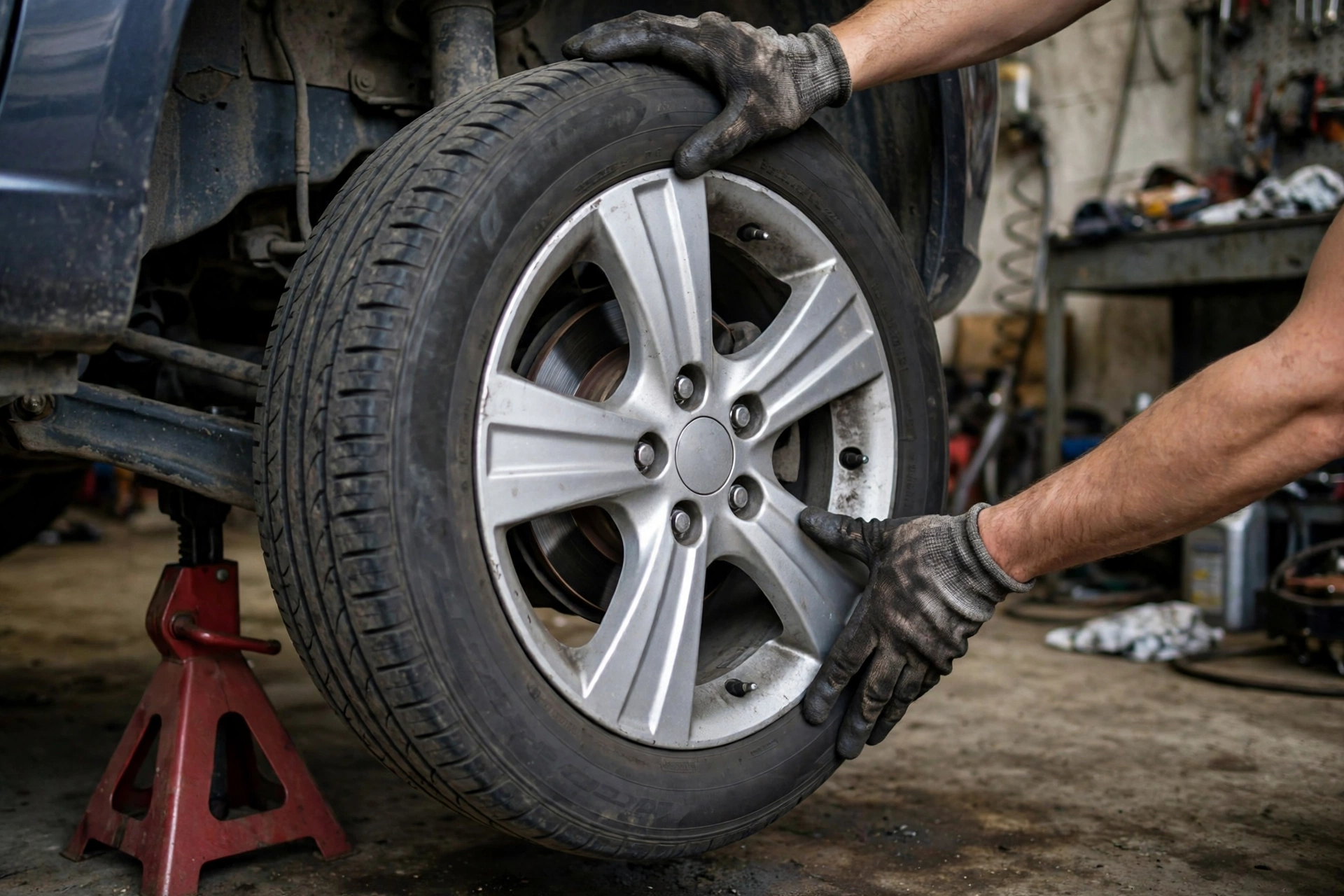
You can confirm a bad bearing in your driveway with a jack and two hands. Work on flat ground, chock the wheels that stay on the ground, and never get under a car held up by a jack alone. Use jack stands, and check your owner's manual for the correct jack points for your car.
-
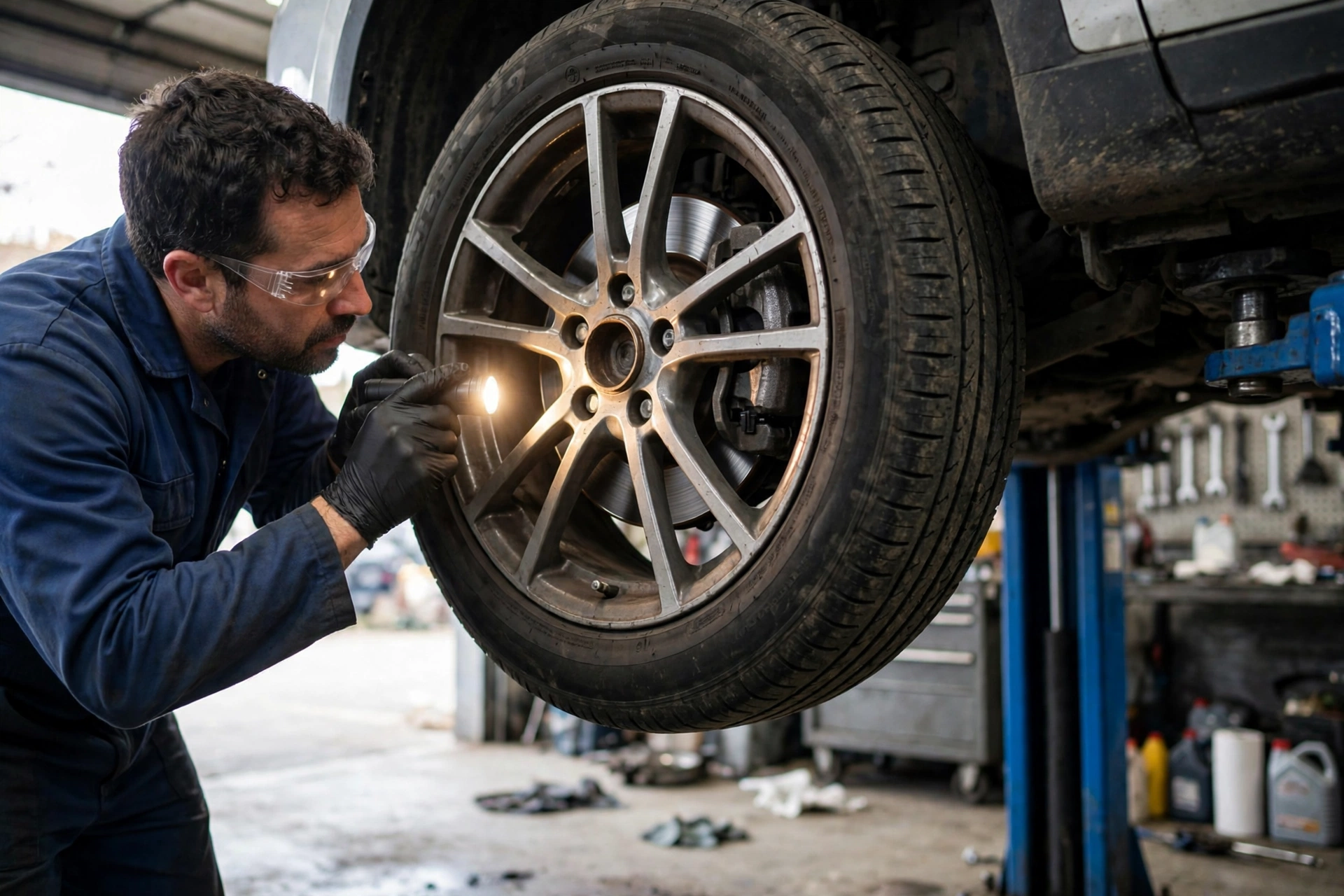
Jack up the suspect corner until the tire is off the ground, and set a jack stand. Give the car a firm shake before you reach under anything. It should not move on the stands.
-
Grab the tire at 12 and 6 o'clock and rock it in and out. Push the top in while you pull the bottom out, then reverse. Any clunk, knock, or visible movement means play in the bearing, and play means the bearing is done. A good bearing holds the wheel solid.
-
Grab it at 3 and 9 o'clock and rock it side to side. Play here usually points at tie rods, not the bearing, so this step tells you which part is loose. Bearing play shows up at 12 and 6.
-
Spin the wheel by hand and listen. A healthy wheel spins smooth and quiet. A bad bearing feels rough or gritty through your hands, and you may hear a low grinding or rumbling as it turns. Compare it to the wheel on the other side, which should spin smooth and silent.
-
Check hub heat after a drive. After a normal drive, carefully touch the center of each front wheel near the lug nuts. A failing bearing runs hot, so the bad side will feel noticeably warmer than the good side. Do not touch a hub that is too hot to hold, and never do this check right after hard braking, since hot brakes will fool the test.
If the wheel has play or the spin feels rough, the diagnosis is settled. The only question left is who replaces it.
What a Wheel Bearing Job Costs
There is no single price for this repair because the part and the labor change with the car. Most modern cars use a bolt-on hub assembly, which is a mid-range part, and the job is mostly labor at a shop. Some cars still use a press-in bearing, which is a cheaper part but needs a hydraulic press to remove and install, so the labor costs more and the job usually stays at a shop.
Front bearings often cost more in labor than rear ones, because the axle nut, brake parts, and steering knuckle are all in the way. An alignment is often needed after front bearing work, since the suspension comes apart during the job. A dealer will charge more than an independent shop for the same repair, and the difference is mostly labor rate and parts markup. An independent shop is the sensible default for this job. If you do it yourself, you save the labor only, and you need to be sure of the diagnosis first, since hub assemblies are usually not returnable once installed.
DIY or Shop?
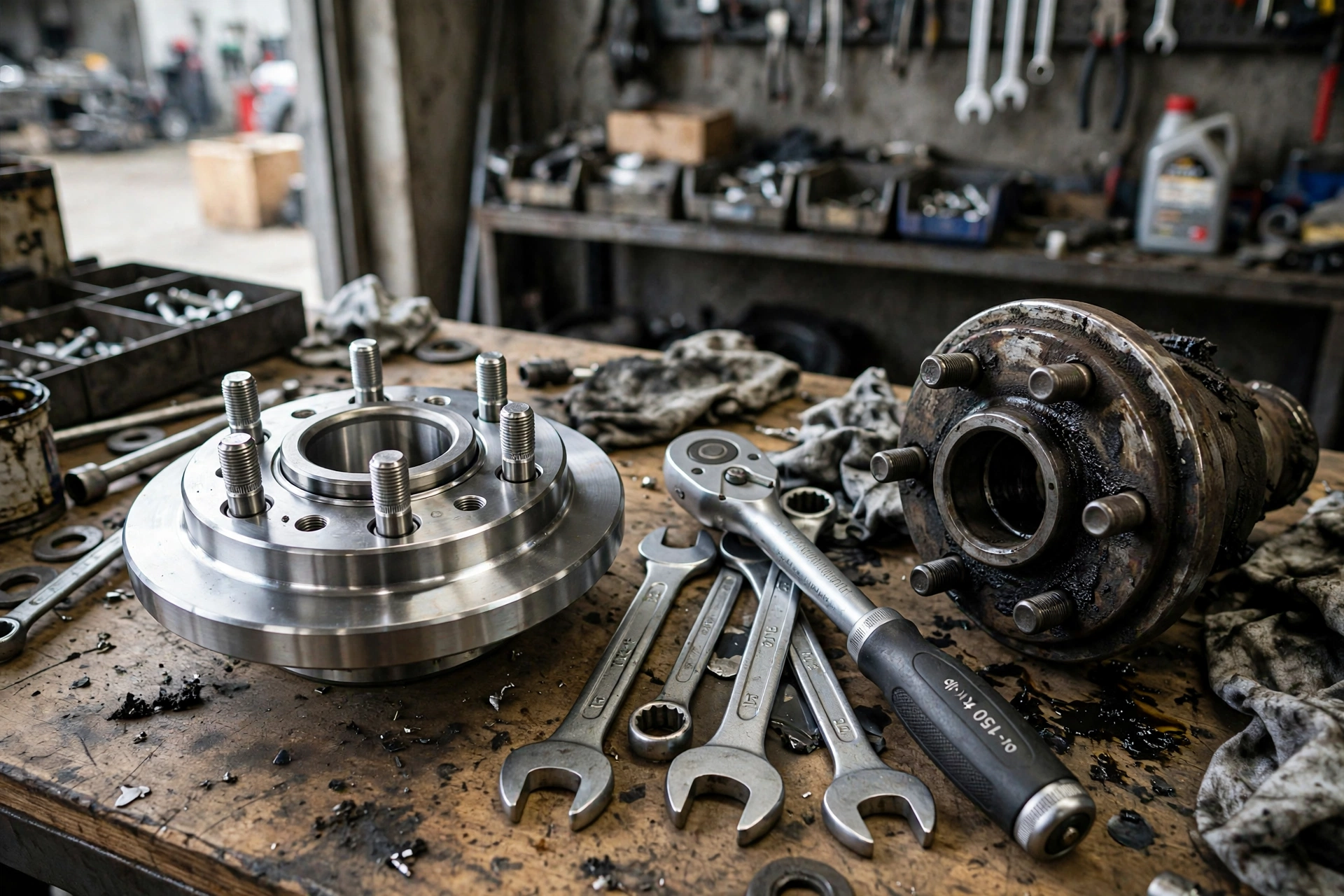
This job splits cleanly into two kinds, and the kind decides who should do it.
A bolt-on hub assembly is a fair DIY job for a patient home mechanic with hand tools, a breaker bar, and jack stands. It unbolts from the knuckle and the new one bolts in, with no press needed. The axle nut is torqued hard, so check your owner's manual or a repair manual for the torque spec for your car, and never guess it. If you want to see what the job looks like step by step, read the front wheel bearing replacement guide and the wheel bearing replacement guide.
A press-in bearing is a shop job. It needs a hydraulic press, and pressing a bearing in wrong can ruin the new part before the car moves. Our take: do the 2-minute check yourself, since that part is easy on every car, and let the bearing type decide who does the replacement. If you are unsure which kind your car has, ask the parts store before you buy anything.
FAQ
Can I drive on the highway with a bad wheel bearing? No. Highway speed is where a failing bearing builds heat fastest and fails hardest. A hum that is faint at 30 mph can become a grind at 65 mph in the same drive. Stay on surface streets, keep your speed down, and go straight to the shop.
Will a bad wheel bearing damage other parts? Yes. It scrubs the tire unevenly, wears the suspension parts around it, can confuse the ABS sensor, and if it seizes it can damage the hub, the spindle, and the brakes. Fixing it early is cheaper than fixing it plus everything it took with it. Our wheel bearing replacement guide covers the full repair.
How do I know which side is bad? Use the turn test. Turning left loads the right side bearings, and turning right loads the left side. If the noise gets louder turning left, suspect the right bearing, and the reverse. Confirm with the wiggle test on that corner before you order parts.
Is it the bearing or just loud tires? Tire noise changes with the road surface and stays roughly the same when you turn. Bearing noise grows with speed, changes when you turn, and keeps going on smooth fresh pavement. Swapping the tires front to back is a quick test: if the noise stays at the same corner, it is the bearing.
A humming wheel bearing is a countdown, not a quirk. It will not heal, it will not stay the same, and it only gets more expensive the longer you wait. Get it checked this week, and if the wheel has play or the noise is a grind, do not drive it at all.
Safety: Informational DIY. EZ Car Fix is not a shop or dealer.