Grinding Noise When Turning: CV, Brakes, or Bearing?
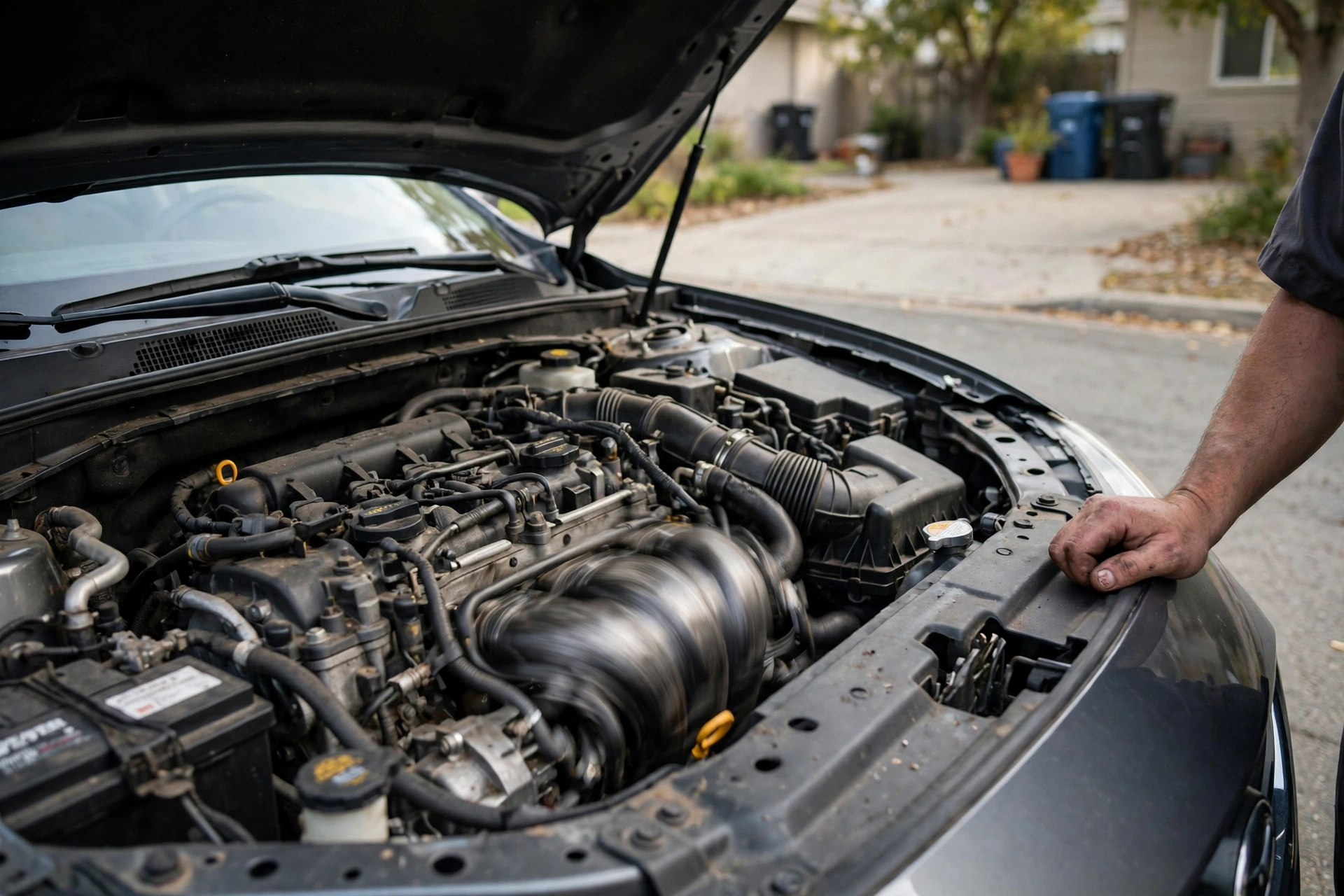
A grinding noise when you turn usually points to one of three parts: a worn CV joint, a failing wheel bearing, or brakes that have worn down to metal. The fix and the urgency are completely different for each one, so the first job is figuring out which part is making the noise. The sound itself gives it away if you know what to listen for, and you can narrow it down to one suspect in about 15 minutes with a jack and a flashlight.
The Three Suspects, and What Each One Sounds Like
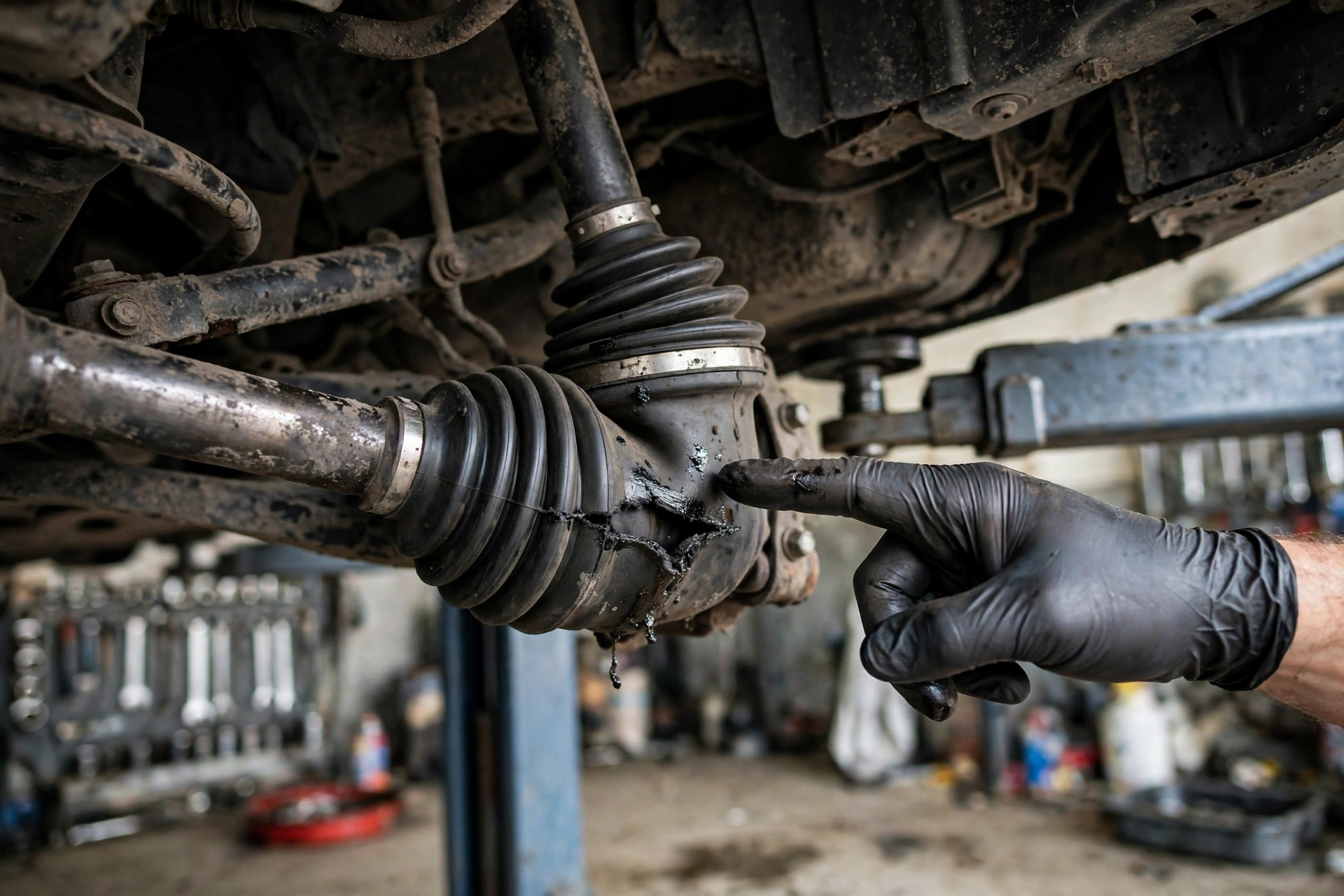
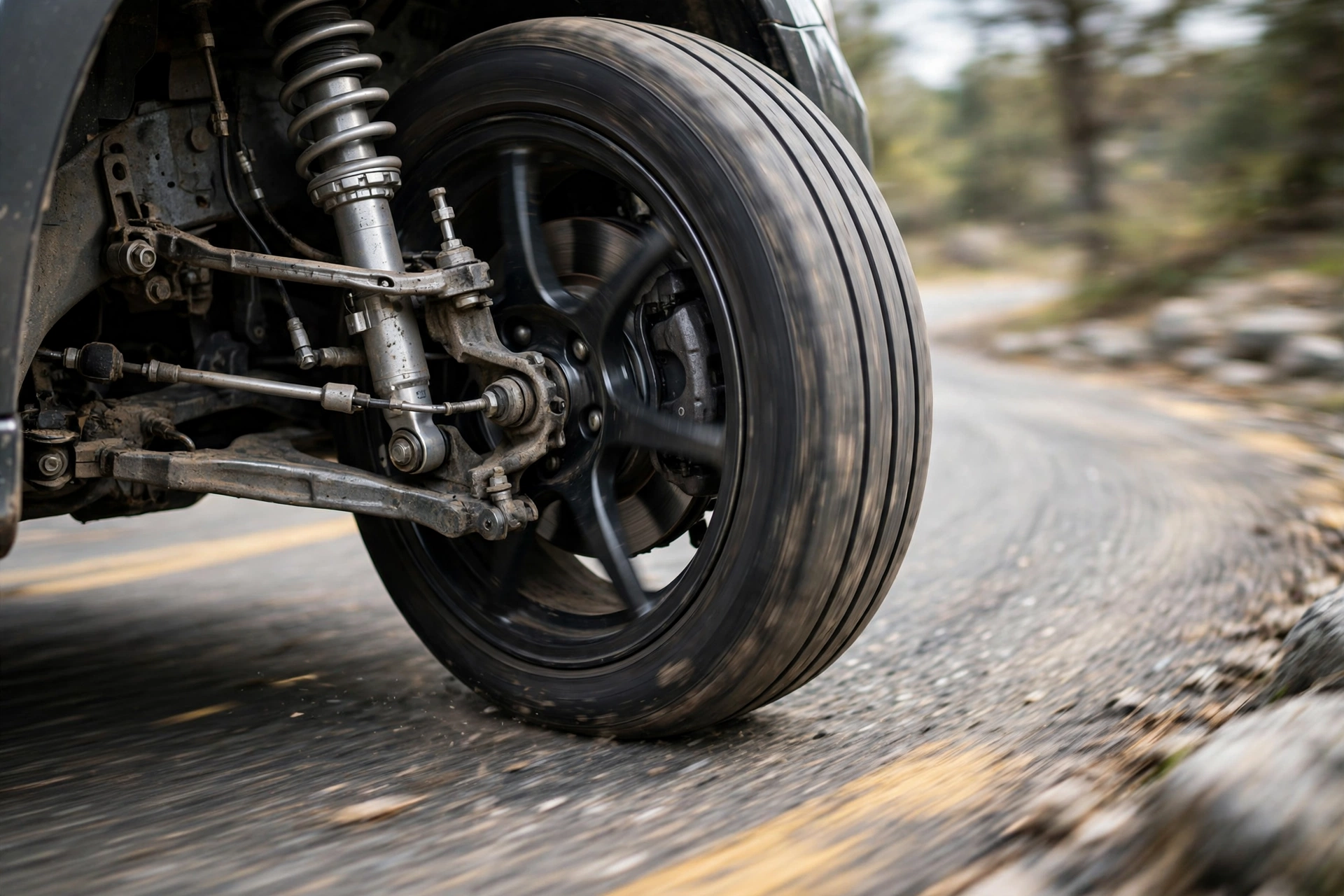
A grinding noise while turning is almost never the power steering pump or the tires, even though both get blamed for it constantly. It is a part at the wheel that only complains when the wheel is loaded at an angle, and each suspect has a distinct voice.
The CV joint. The constant velocity joint lets your front wheels turn and steer at the same time. When the rubber boot around it tears, grease escapes, dirt gets in, and the joint wears out. A dying CV joint usually clicks or pops on sharp turns, louder the harder you turn the wheel, and rhythmic at full lock in a parking lot, one click per wheel rotation. A CV joint that has gone from clicking to grinding is in bad shape. That is the joint running dry, metal on metal, and it can snap without much more warning. For the full picture on this part, see CV Axles and Joints: That Clicking Noise When Turning Means Expensive Repair Soon.
The wheel bearing. The bearing is what your wheel spins on. When it wears out, it grinds or hums, and the noise changes with road speed, not engine speed. The classic sign is that the noise gets louder when you turn one way and quieter when you turn the other, because turning shifts the car's weight onto one side and loads that bearing harder. A bad bearing often starts as a faint hum at highway speed and turns into a grind over a few weeks. Our deep dive on this part is Wheel Bearings: The Humming Noise That Gets Louder Until Your Wheel Falls Off.
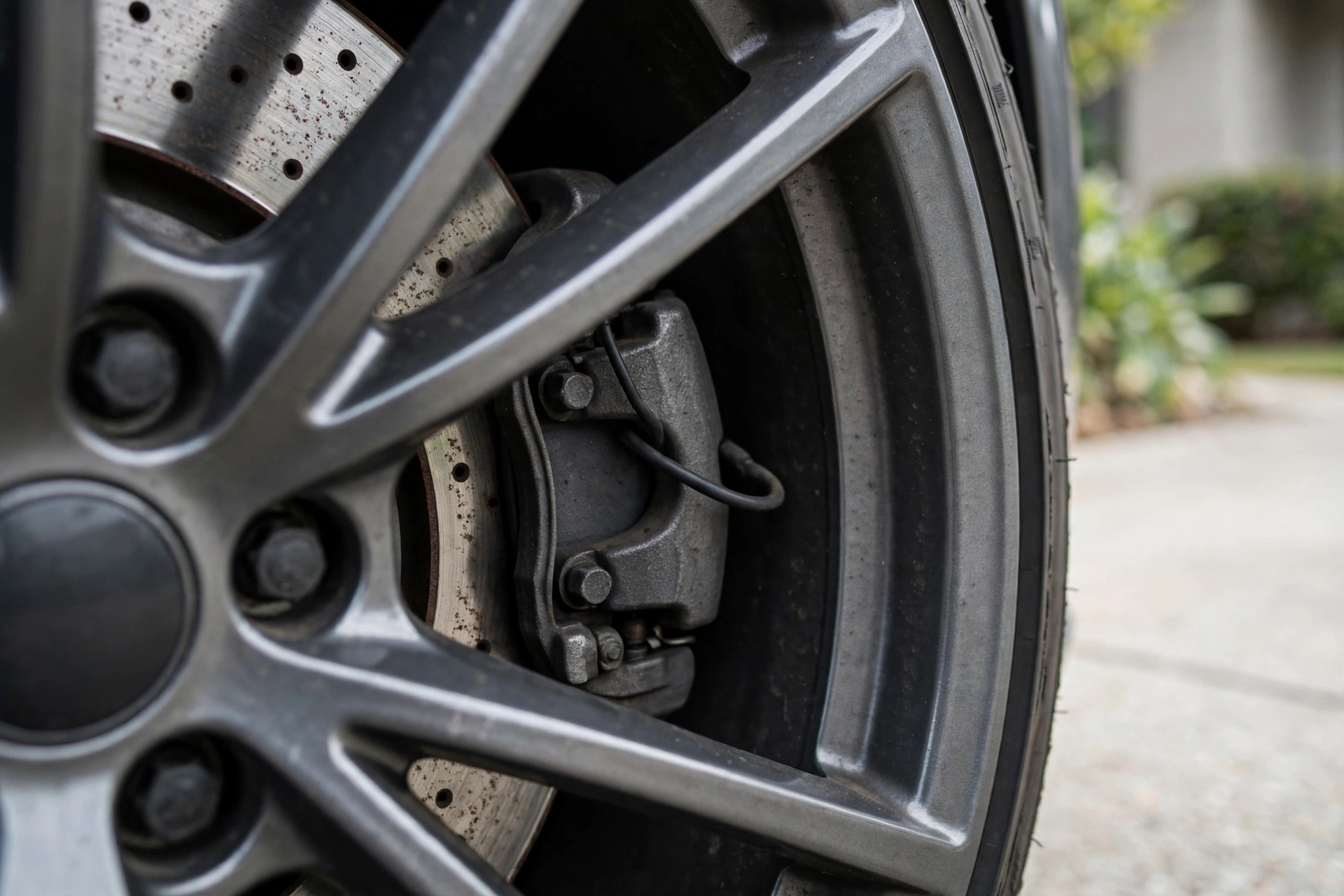
The brakes. Brake pads have a metal wear indicator that squeals when the pads get thin, and once the pad material is gone, the metal backing plate grinds directly on the rotor. That grinding is loudest when you brake while turning, because the turn loads the outside wheel. A bent dust shield behind the rotor can also rub and grind, usually only at full steering lock, and a stuck caliper can keep one pad dragging on the rotor all the time. Brake grinding is the most urgent of the three, because every mile on metal pads chews up the rotor and lengthens your stopping distance.
How to Tell Which One It Is
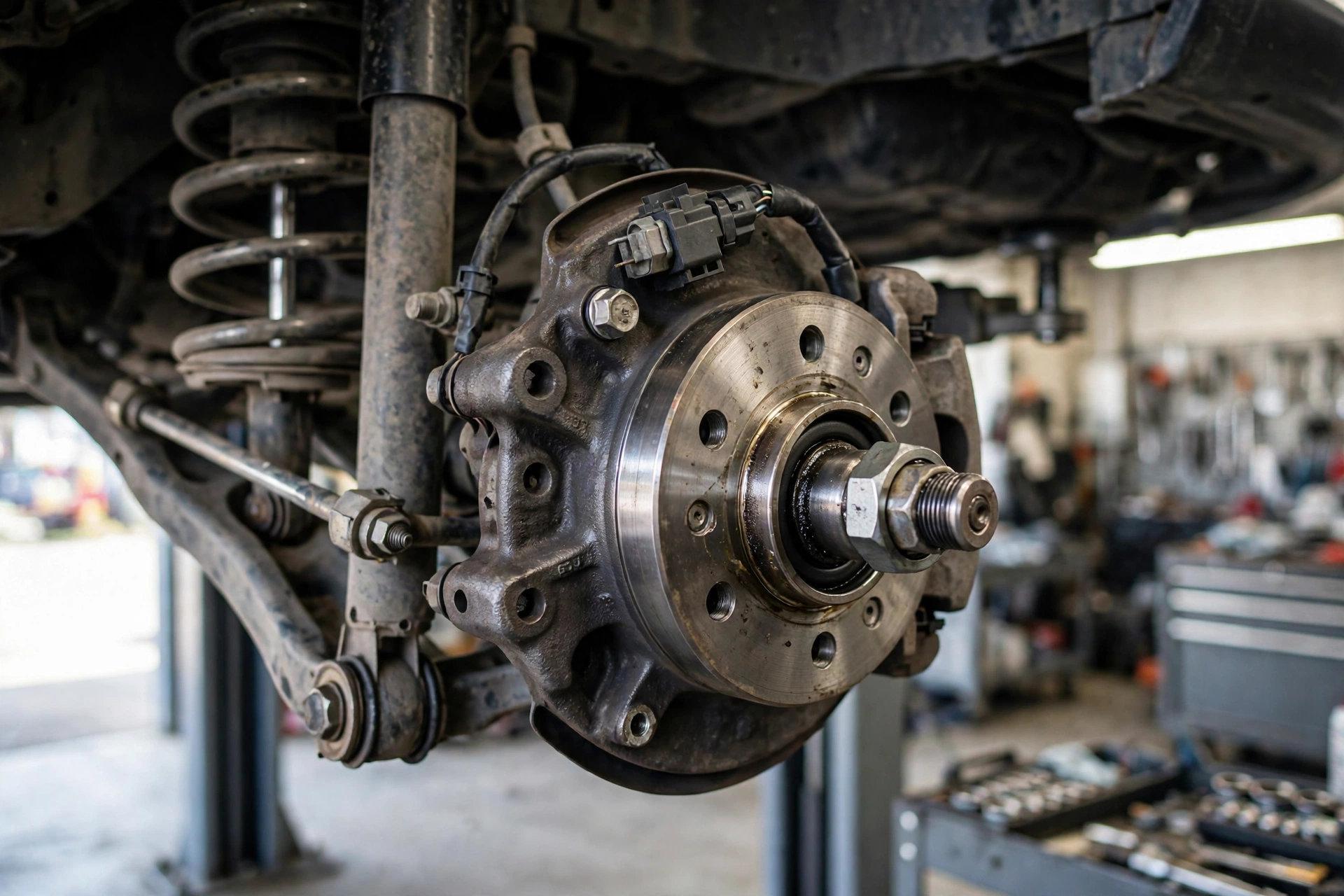
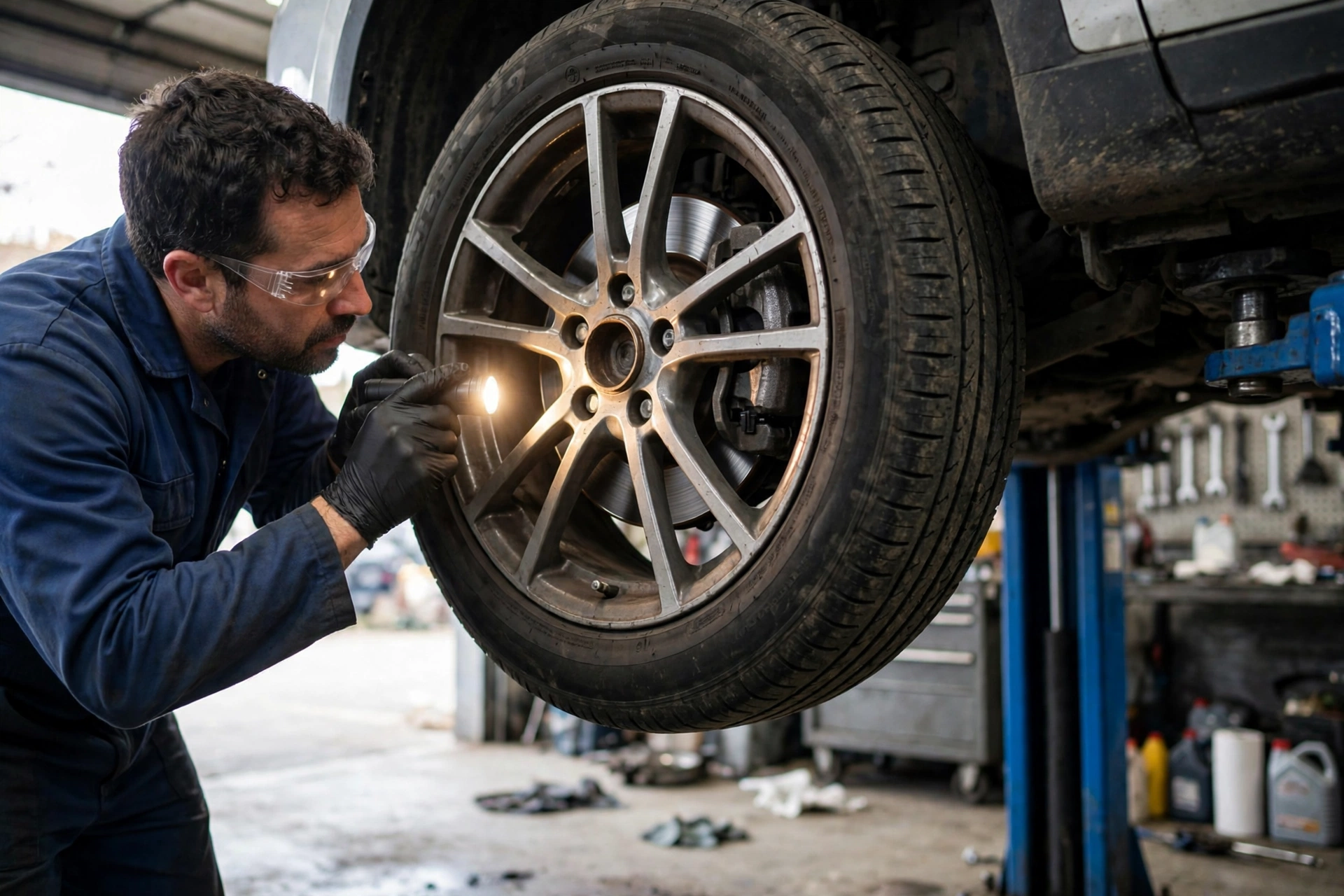
Work through these in order. Each test rules something out.1. Note exactly when the noise happens. Only while turning, and silent in a straight line, points to the CV joint or the bearing. Only while braking points to the brakes. Only at full steering lock, at parking lot speed, points to the CV joint or a rubbing dust shield. 2. Do the full-lock parking lot test. Find an empty lot, roll the windows down, and drive slow circles with the wheel turned all the way to one side, then the other. Rhythmic clicking that matches wheel speed is a CV joint. A steady grind that stays constant through the whole circle is more likely a bearing. 3. Do the load-shift test. On an empty straight road at about 30 mph, weave gently left and right. A bearing noise gets louder when you load the noisy side and quieter when you unload it. If the grind gets louder turning left, the right bearing is carrying the load, so suspect the right side. 4. Jack it up and spin the wheel by hand. With the car safely on a jack stand, spin each front wheel. A bad bearing often feels rough or gritty through the spin, and you may hear the grind up close. Grab the tire at 12 and 6 o'clock and rock it. Play in that direction is a worn bearing or a loose ball joint. 5. Look at the parts. Turn the wheel to full lock and shine a flashlight behind it. A torn CV boot throws dark grease all over the inside of the wheel, and you can often see the split in the rubber. Look at the brake pads through the wheel spokes. If the pad looks paper thin or you can see bare metal, the brakes are your answer. Deep grooves in the rotor face mean the pads have been grinding on it for a while. 6. Try braking in a straight line. If the grinding shows up every time you touch the brake pedal, even driving straight, the problem is in the brakes.
If two tests point at the same part, trust that answer.
What It Costs to Fix
The three suspects sit in very different price bands.
Brakes are the cheapest fix of the three. Pads are a cheap part, and a pad and rotor job is mostly labor. If the rotors are only lightly scored, a shop may be able to save them. The expensive version of a brake job is the one you put off, because grinding pads destroy rotors fast, and a stuck caliper can take a rotor with it. If the rotor is the suspect, see Brake Rotor Replacement: Signs It's Time and DIY.
A wheel bearing is a mid-range repair. The part itself is not exotic, but the labor is real, because the old bearing has to be pressed out of the hub and the new one pressed in. Some cars use a bolt-on hub assembly, which is a much faster job. It is a bigger-ticket job than brakes, and it is not one to delay. A bearing that is grinding has already lost its grease and its smooth surface, and a failed bearing can seize or let the wheel wobble loose.
A CV axle is also a mid-range repair, and it is often the best value of the three, because shops usually replace the whole axle. A full axle with new joints and new boots solves the problem in one visit. Replacing just a torn boot is cheaper if the joint is still healthy, but once the joint is grinding, the boot-only fix is off the table, because the damage inside is already done. Every one of these gets more expensive the longer you drive on it, so a torn boot caught early is a small job and a grinding joint is a bigger one, just as a thin brake pad is cheap and a grinding pad is a rotor and caliper job.
DIY or Take It to a Shop
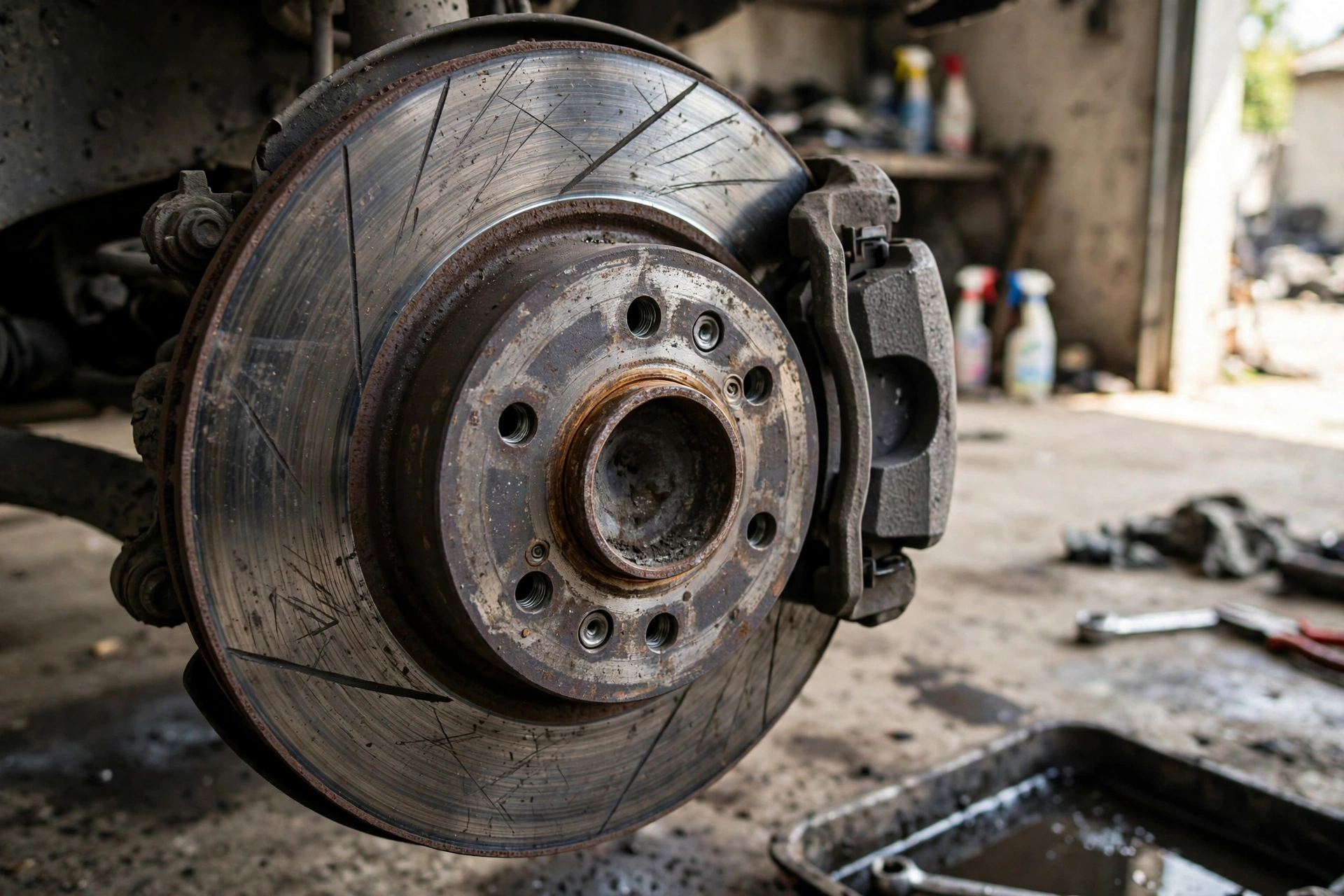
Brakes are the most DIY-friendly of the three if you have done them before and you own a jack, jack stands, and a basic socket set. First-timers should have an experienced friend on hand, because it is a job with a lot of room for error if you rush it.
A CV axle is a moderate DIY job on many cars and a miserable one on others. It usually means removing the axle nut, separating the ball joint, and pulling the axle out of the transmission, and it can involve a lot of stuck bolts and spilled transmission fluid. If you have done suspension work before, it is doable in an afternoon.
A wheel bearing is the least DIY-friendly of the three, because a pressed-in bearing needs a shop press or a special puller set. Bolt-on hub assemblies are a different story and are very doable at home. Check which style your car uses before you decide, because that one detail is the difference between a Saturday morning job and a shop visit.
Brakes and bolt-on hubs are fair DIY jobs, pressed bearings and CV axles are worth a quote first, and any grinding noise that is getting worse by the day should go to a shop this week, not next month.
FAQ
Can I keep driving with a grinding noise when turning? For a short trip at low speed, usually yes. Brake grinding means your stopping distance is already worse, and a CV joint or bearing can fail suddenly, so get it diagnosed within days, not weeks.
Is a grinding noise when turning always a CV joint? No, and that is the most common misdiagnosis in this area. CV joints usually click, not grind, until they are very far gone. A steady grind that changes with steering load is more often a wheel bearing, and grinding that only happens while braking is the brakes.
Why does the noise only happen when I turn left? Because turning loads one side of the car more than the other. A bad bearing on the side carrying the load gets louder, and a bad CV joint on the outside of the turn works at a sharper angle. The direction tells you which side to inspect first.
How do I know if my wheel bearing is dangerous? Play in the wheel when you rock it at 12 and 6 o'clock, a grinding sound at low speed, or a hum that has gotten louder over a few weeks are all signs the bearing is on its way out. A bearing with noticeable play is a safety issue, so get it checked right away.
The Bottom Line
My take is that a grinding noise when turning is a triage problem, not a guessing game. The full-lock parking lot test and the load-shift test will name the culprit in most cases, and a flashlight behind the wheel will confirm it. Brake grinding goes first because it affects stopping distance, a grinding CV joint goes next because it can snap, and a grinding bearing goes right behind it because it only ever gets worse. Diagnose it this week.
If your tests point at the CV joint, the walkthrough in 2011–2013 Subaru Forester - CV Axle Replacement shows exactly what the job looks like, and EZ Car Fix has more than 4,000 repair guides covering the same jobs across other makes and models. If the bearing is the culprit, start with 2021-2024 Cadillac Escalade - Front Wheel Bearing Replacement, and if it is the brakes, 2016-2025 Chevrolet Malibu - Brake Rotor Replacement covers the rotor side of the job.
Safety: Informational DIY. EZ Car Fix is not a shop or dealer.