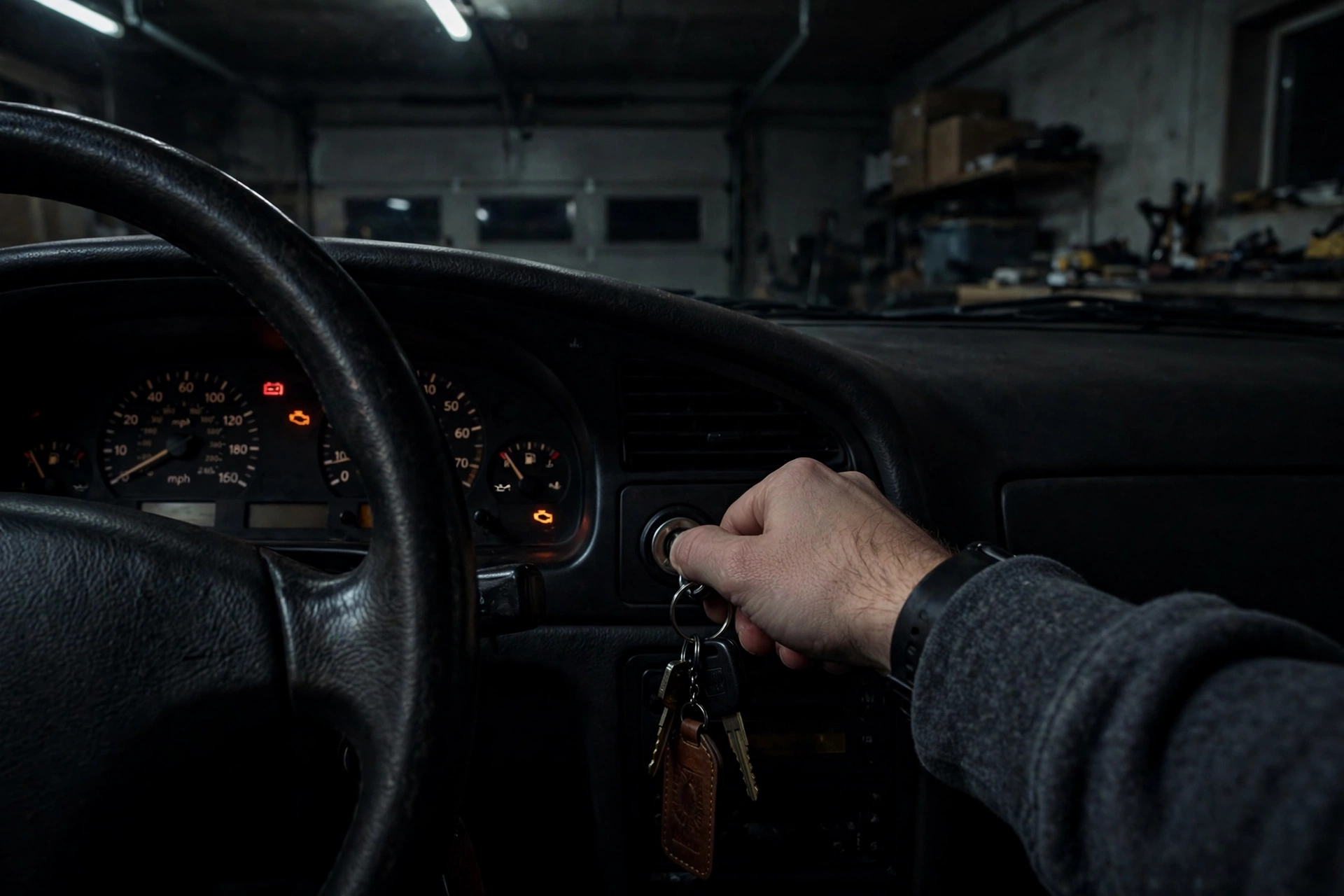
Car Won't Start and Just Clicks: What the Clicking Means
Rapid-fire clicking when you turn the key almost always means a weak battery. One single loud click, then silence, usually means the starter. That one distinction tells you where to look, and you can confirm it in about a minute with no tools.
The clicking sound is the starter solenoid trying to engage and failing. The pattern of the clicks tells you why it is failing. Rapid clicking means the battery is too weak to hold the solenoid shut, so it flutters on and off. A single click means the solenoid fired once but the starter motor never spun. Learn which one you are hearing and the rest of the diagnosis is easy.
Rapid Clicking: Weak Battery or Bad Connection
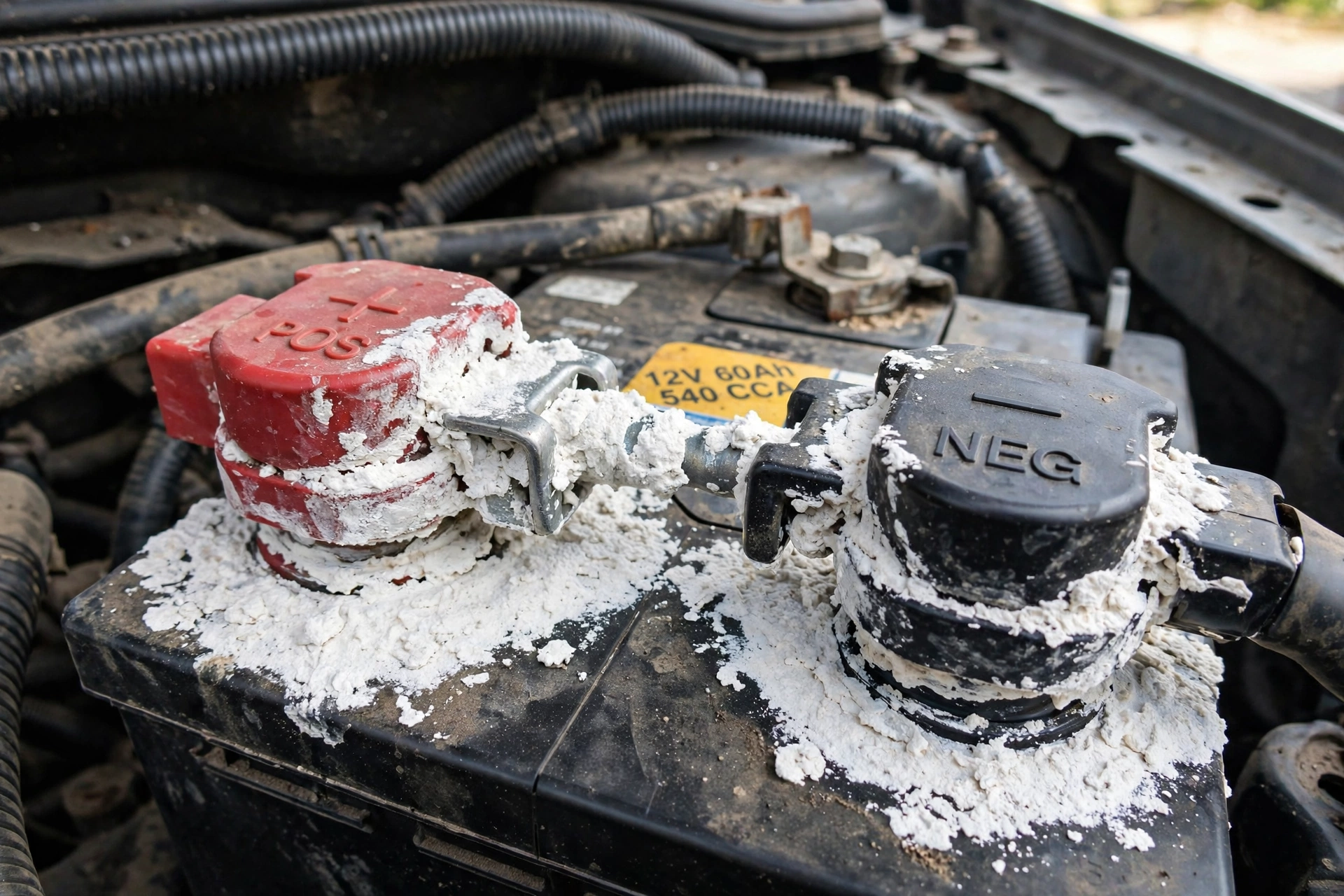
That machine-gun clicking, click-click-click-click, is the sound of a battery that is too discharged to crank the engine. The starter draws the most current of any electrical component in the car, hundreds of amps, and when the battery cannot deliver it, voltage collapses the moment the solenoid closes. The solenoid drops out, voltage recovers a little, the solenoid closes again, and the cycle repeats until you let go of the key.
A weak battery is the most common cause, but it is not the only one. Corroded or loose battery terminals do the exact same thing. The corrosion creates resistance, the starter starves for current, and the solenoid flutters. So do bad cable connections at the starter or the ground strap. Always check the cheap and obvious stuff first.
Signs that point to rapid-clicking battery trouble:
- Interior lights and dash dim or die when you try to crank.
- The car cranked slower and slower over the last few days before the clicking started.
- The radio lost its presets or the clock reset, which means battery voltage went fully flat at some point.
- The battery is five years old or more. At that age, one hard cold snap can finish it.
A healthy battery sits around 12.6 volts with the car off. Anything far under 12 volts at rest means the battery is discharged or done. If you do not own a multimeter, that is fine, the tests below do not need one.
Single Loud Click: Starter or Solenoid Problem
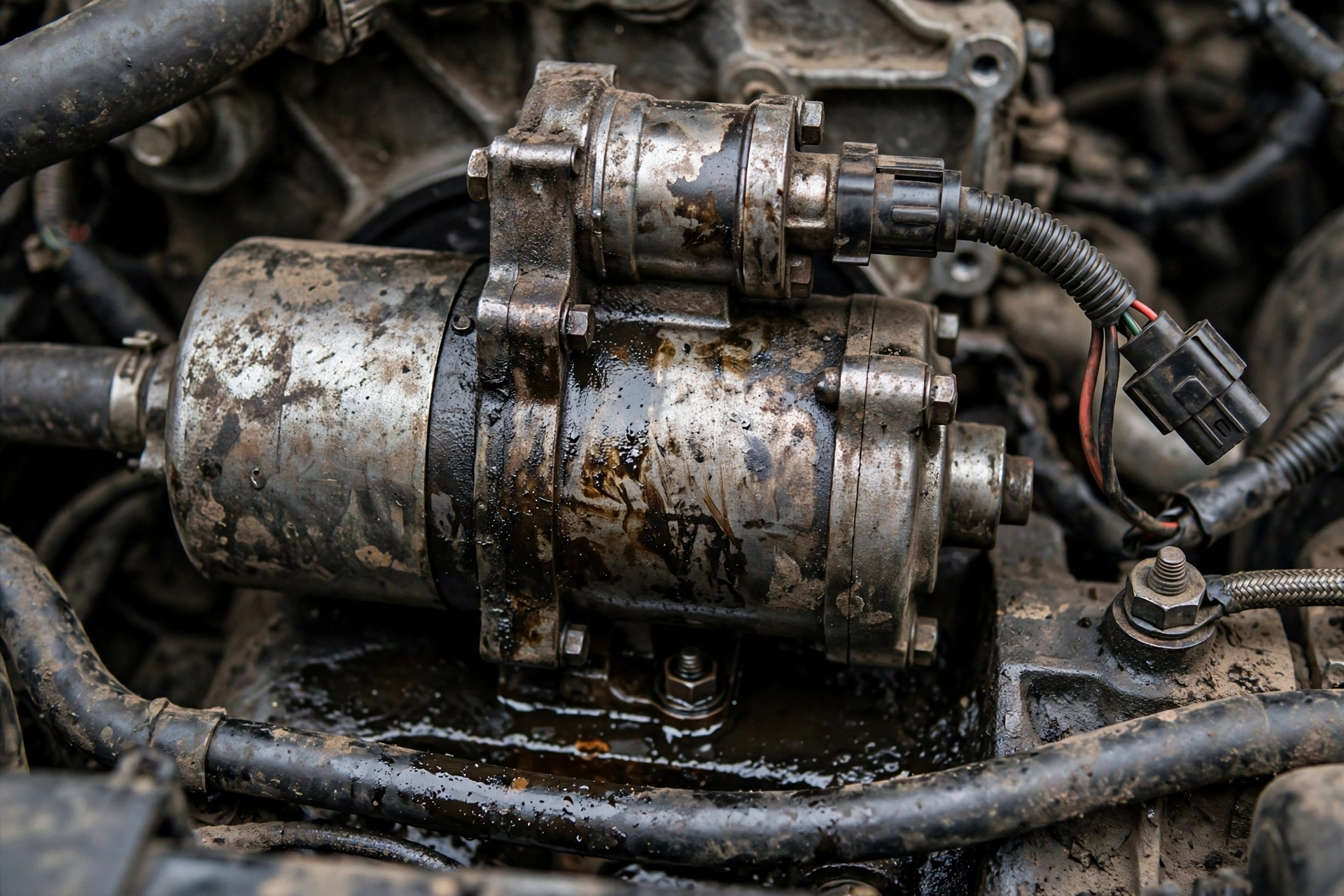
One solid clunk and then nothing is a different problem. Here the solenoid got enough power to fire, the gear probably kicked out to the flywheel, but the starter motor never spun. That points at the starter itself: worn brushes, a bad solenoid contact, or a seized motor.
There is one trap. A battery with one failed cell can sometimes deliver enough punch for a single solenoid engagement but not enough to spin the motor. So do not skip the battery checks just because you heard a single click. Confirm the battery is good before you condemn the starter.
Signs that point to a single-click starter problem:
- Headlights and dash stay bright while you hear the click. The battery has juice, the starter is not using it.
- It started fine yesterday with no slow cranking warning. Starters often die suddenly, batteries usually fade.
- Tapping the starter body lightly with a wrench while someone holds the key in the start position gets the engine turning. That is a dead giveaway of worn starter brushes. It is a diagnostic trick, not a repair. If the tap works, the starter is on borrowed time.
- The single click comes with a burning smell or smoke. Stop immediately and get it towed, something is shorting.
Diagnose It in 60 Seconds: 5 Steps
Do these in order. Most clicking cars are figured out by step three.
-
Watch the lights. Turn on the headlights, then turn the key and watch. If the headlights go very dim or die while it clicks, the battery is weak or its connections are bad. If the lights stay bright through a single click, suspect the starter.
-
Check the terminals. Pop the hood and look at the battery posts. White, green, or crusty blue buildup is corrosion. If a cable wiggles on the post by hand, it is too loose. Clean the posts and terminals with a wire brush and tighten them down. This free fix solves a surprising number of clicking cars.
-
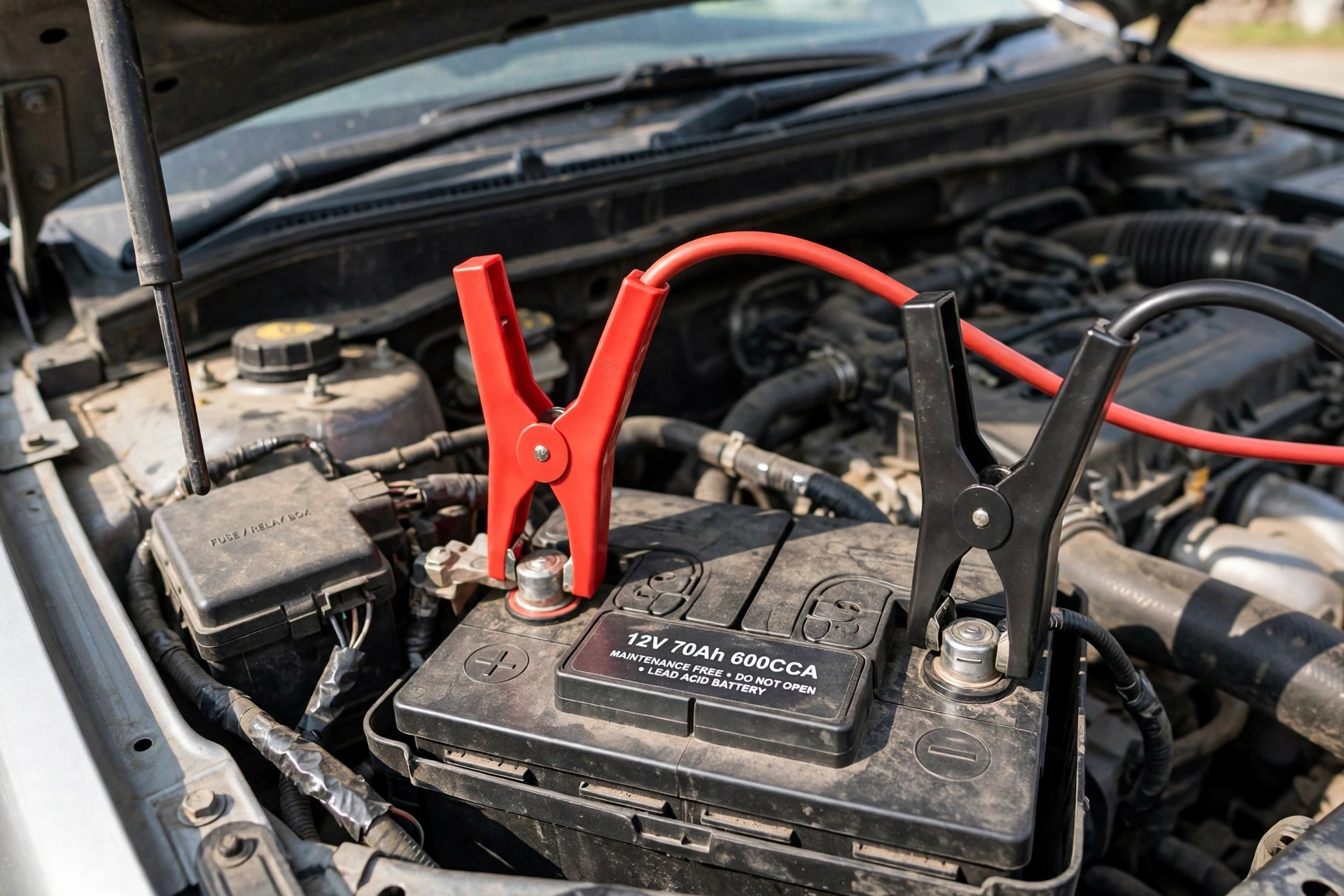
Jump start it. Hook up jumper cables correctly, red to positive, black to a ground point, and let the good car run for a few minutes before you try. If your car starts right up, the problem is the battery or the charging system. If it still clicks exactly the same with a known-good power source, the starter or its wiring is the problem. Full walkthrough: How to Jump Start a Car Safely (Step-by-Step DIY).
-
Listen one more time. Count the clicks. Rapid fluttering means low voltage. One heavy clunk means the starter got its signal and failed to act on it. Trust your ears, they are right more often than people think.
-
Get a load test. If the battery is more than four or five years old and the car clicked even once, drive to a parts store and ask for a free battery load test. A battery can show decent voltage at rest and still collapse under the load of cranking. The test takes two minutes and settles it.
What It Costs to Fix
This is one of the cheaper no-start problems you can have, at least on the battery side. Cleaning corrosion costs nothing but a brush and ten minutes. A replacement battery is a moderate part and a quick install on most cars, the terminals are right there and the job needs basic hand tools. See the walkthrough here: 2023-2026 Acura Integra Battery Replacement.
A starter replacement costs more. The part itself is pricier, and the labor is what swings the total. On some cars the starter sits right on top and the job is straightforward. On others it is buried under the intake manifold or wedged against the firewall, and the labor reflects that. Dealers charge the most, independent shops come in lower, and DIY saves the labor entirely if the starter is reachable. Never pay for a starter until the battery and connections are proven good, because a bad battery has sent more good starters to the scrap bin than anything else.
DIY vs Shop: My Verdict
Do the battery side yourself, every time. Checking terminals, cleaning corrosion, and jump starting are free skills that take minutes and solve most clicking cars. Replacing a battery is beginner-friendly on almost every car.
The starter is where you decide honestly about your tools and patience. If the starter is visible and reachable, it is usually a couple of bolts and an electrical connector, and a DIY replacement is very doable. If the book says the intake manifold or a subframe has to come off to reach it, pay the shop. There is no shame in that call.
My take: start with the free checks, always. The single most common mistake with a clicking car is paying a shop to diagnose a dead battery. Thirty seconds with the headlights and a look at the terminals would have told you for free. For the deeper dive on testing the starter itself, read Starter Problems: How to Tell If It's Your Starter, Battery, or Something Else. And if the diagnosis points at the starter, the full replacement walkthrough is here: 2017-2021 Acura MDX - Starter.
FAQ
Why does my car click but not turn over? Rapid clicking means the battery is too weak to crank the engine or the terminals are corroded. A single click means the starter solenoid fired but the starter motor did not spin. The light test above tells you which one in seconds.
Will jump starting fix a clicking car? If the battery is the problem, yes, at least temporarily. A successful jump start that gets the car running points at the battery or the charging system. If it still clicks the same way with good jumper cables on a strong battery, the starter or its wiring is the problem.
Can a bad alternator cause the clicking? Indirectly. A failing alternator stops charging the battery as you drive, so the battery dies overnight and the car clicks the next morning. But the clicking itself is a battery or starter symptom. If a new battery dies again within days, the alternator is the next suspect.
My car clicks once and the lights stay bright. What now? That is the classic dead starter pattern. Confirm the battery is charged and the terminals are clean, then suspect the starter. The tap test, tapping the starter body lightly while someone holds the key in start, can confirm worn brushes if the engine suddenly cranks. Plan on a replacement, not a repair.
Safety: Informational DIY. EZ Car Fix is not a shop or dealer.