How Much Does a Starter Replacement Cost in 2026?
A starter replacement at an independent shop costs $350 to $900 in 2026, and most drivers land near the middle at about $625. That is the whole answer for a typical car. The number moves up or down based on where the starter sits in your engine bay and whether the shop fits a new or remanufactured unit. If the quote in your hand is inside that range, it is probably fair. If it is far outside it, ask what is driving the price before you approve anything.
What a starter does, and how it fails
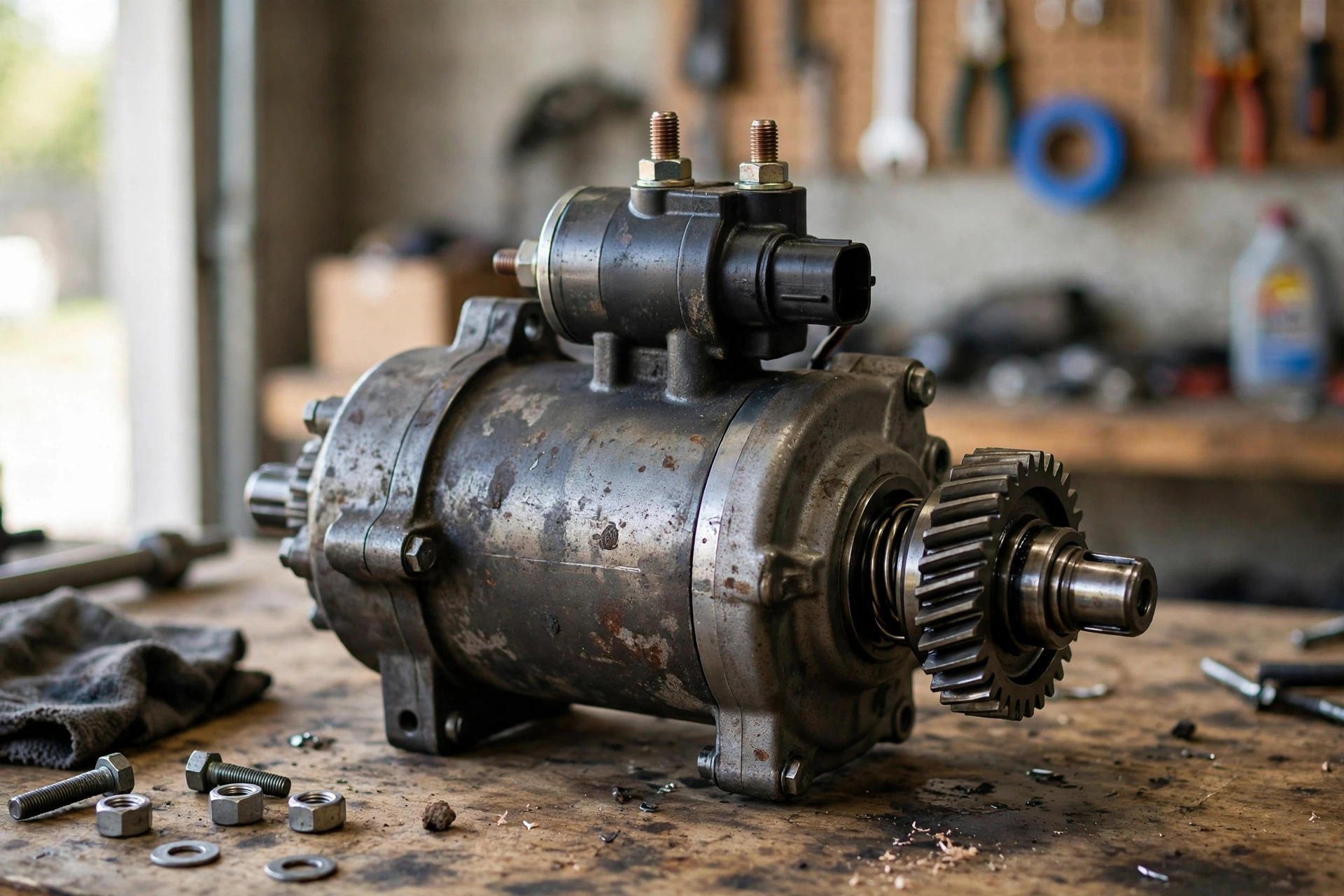
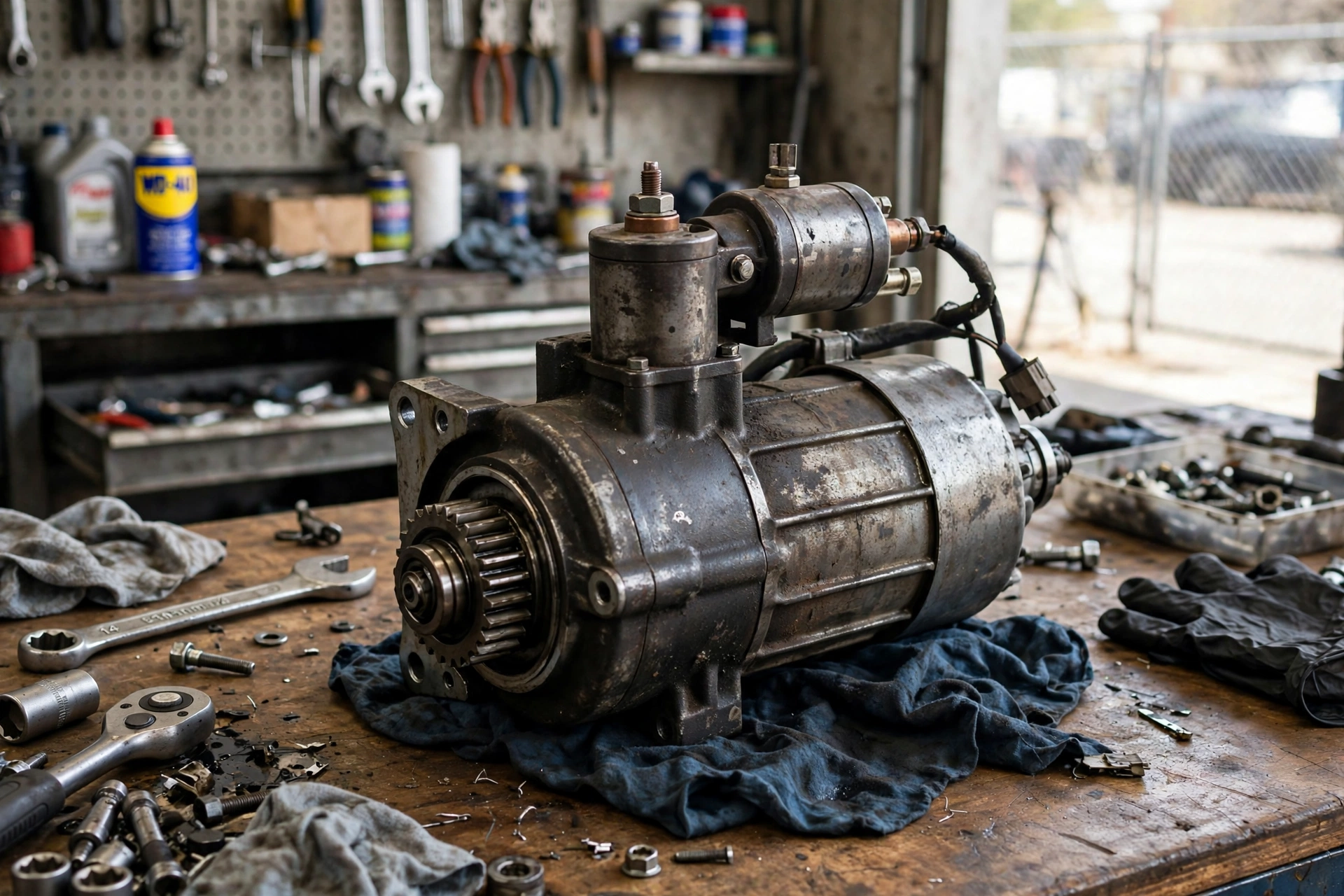
The starter is a small electric motor with one job: spin the engine fast enough to start. Turn the key or push the button, the starter engages a gear with the flywheel, the engine cranks, and once it catches, the starter disengages and goes quiet. It only works for a few seconds at a time, but it draws more current than almost anything else in the car, which is why its failure modes are so loud and obvious.
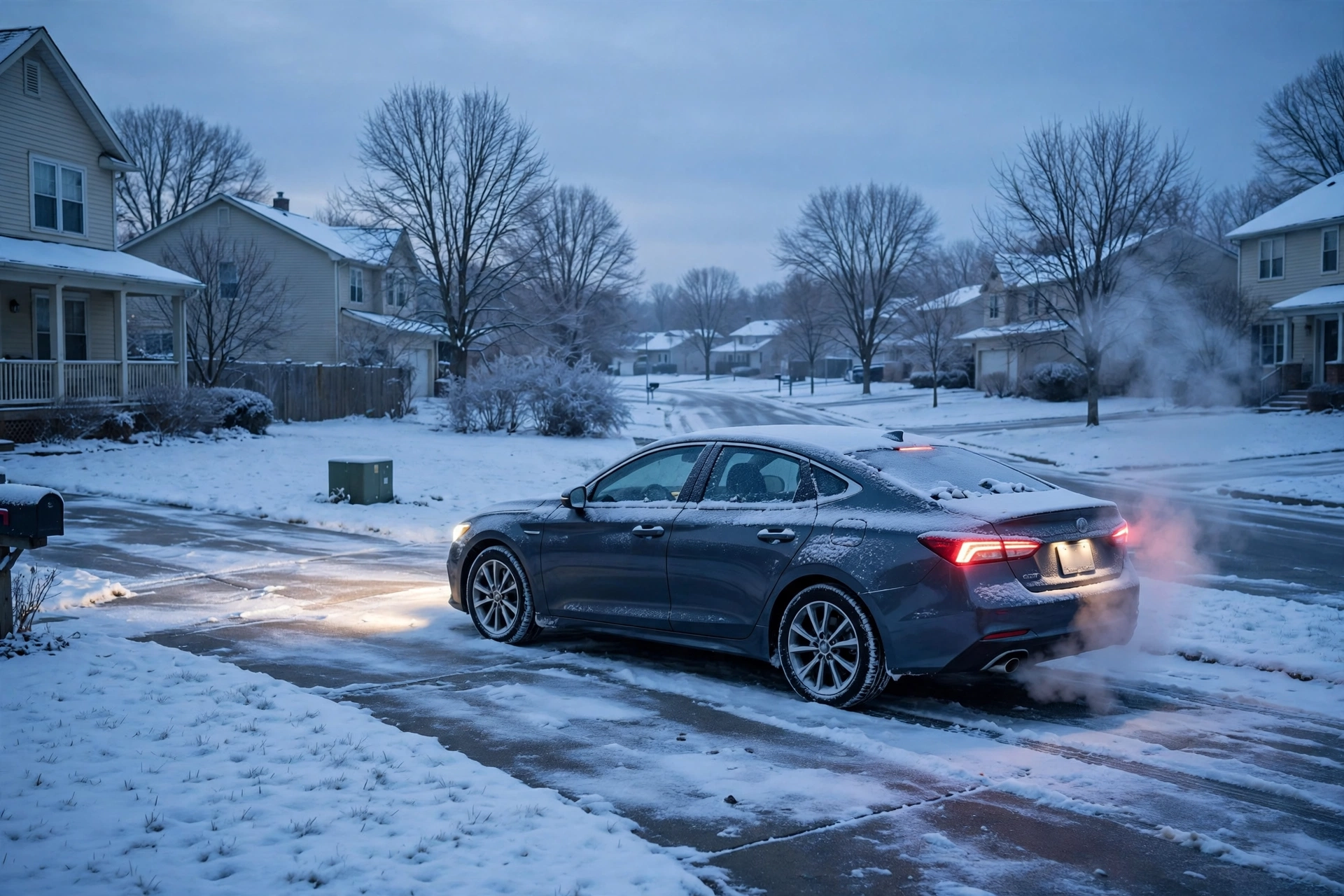
Starters rarely die without warning. The most common symptom is a single loud click when you turn the key, then nothing. A rapid clicking sound usually points at the battery instead, not the starter. A starter that spins freely without engaging, a grinding noise on crank, or a car that starts fine cold and refuses once the engine is hot are all classic starter symptoms. So is the no-start that fixes itself after a few tries, then comes back a week later and strands you in a parking lot. Intermittent failure is the pattern. If your car has failed to start once and then behaved perfectly for a month, do not trust it. The starter is telling you it is on the way out.
Age and heat kill starters. The motor lives bolted to the engine, it cooks every time you drive, and the internal brushes and solenoid wear down a little with every start. Cars that do a lot of short trips, with many starts per day, wear starters faster than highway cars. Oil leaks dripping onto the starter shorten its life too, which is why a starter that dies young is worth a look at the valve cover gasket above it.
How to tell it is the starter before you pay for one
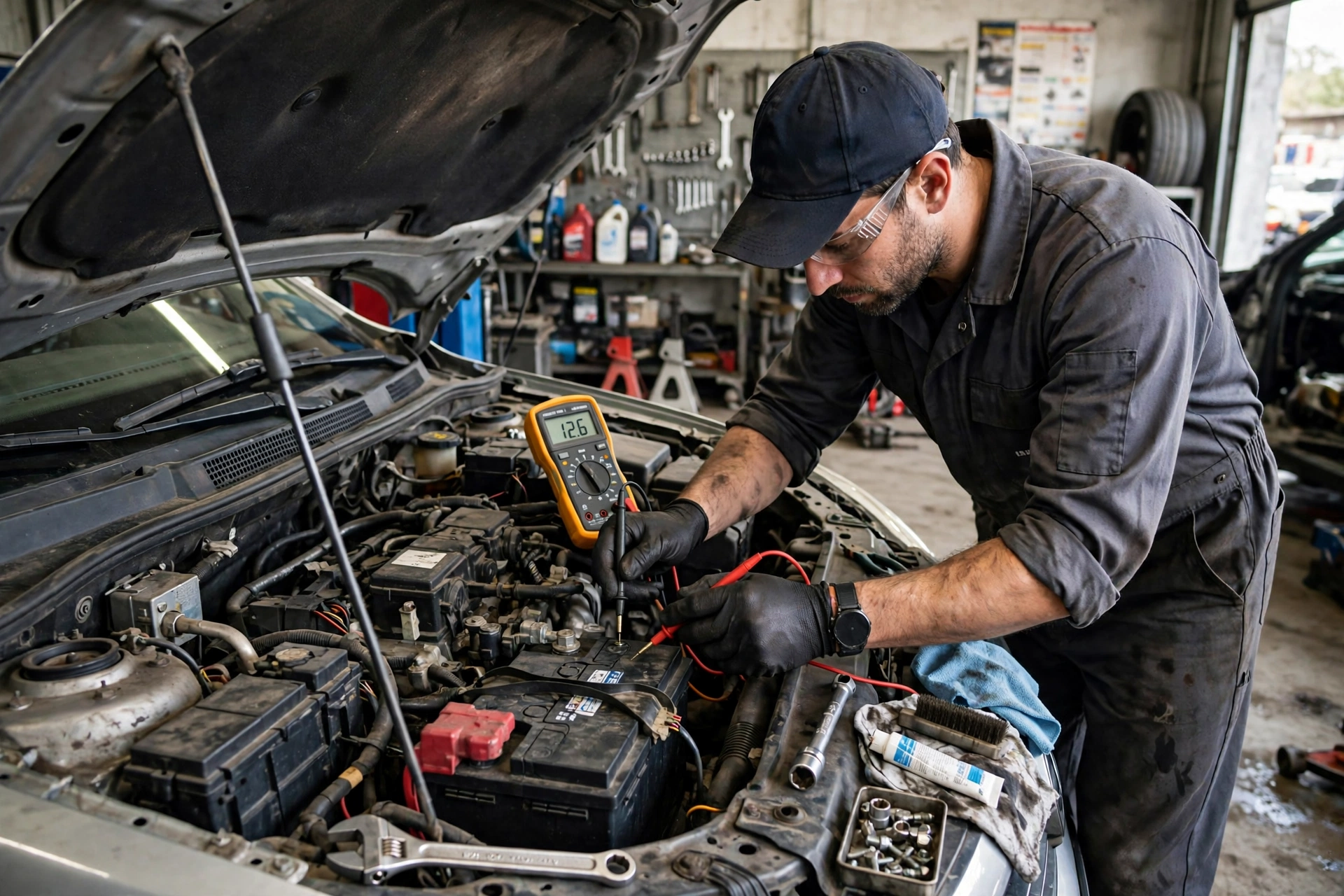
A starter is one of the more commonly misdiagnosed parts on a car, and a wrong guess costs real money. Work through these checks in order before you approve a replacement.
- Check the battery first. A weak battery causes most no-start complaints. If the dash lights dim heavily when you turn the key, or you hear fast clicking, test the battery and clean the terminals before you blame the starter. A jump start that fixes the problem points at the battery or charging system, not the starter.
- Listen to the click. One solid click and then silence, with bright dash lights, is the classic dead starter or bad solenoid. No click at all can be the ignition switch, the neutral safety switch, or a blown fuse. Try starting in neutral instead of park, which tests the safety switch for free.
- Check the connections. Corroded or loose battery cables starve the starter of current and mimic a dead starter exactly. Wiggle the cables, look for green or white crust on the terminals, and make sure the ground strap to the engine block is tight.
- Tap test, with caution. A light tap on the starter body with a hammer handle sometimes frees a stuck solenoid and gets one more start out of it. This is a diagnostic trick and a way to get home, not a repair. If tapping it makes the car start, the starter is done and needs replacing.
- Test for power at the starter. With a multimeter, check for voltage at the starter's main cable and at the small signal wire while someone turns the key. Power at the signal wire and no crank means the starter itself is bad. No power at the signal wire means the problem is upstream, in the switch, relay, or wiring.
If you are not sure after these steps, pay for a diagnosis rather than guessing. A shop that tests the starter before replacing it is doing its job. A shop that quotes a starter on a guess is not. Our full walkthrough of the symptoms is in Starter Problems: How to Tell If It's Your Starter, Battery, or Something Else, and if a jump start got you going, read How to Jump Start a Car Safely (Step-by-Step DIY) before you drive off.
What a starter replacement costs in 2026
Independent shops charge $350 to $900 for a starter replacement, with $625 as the middle of the range. The spread between the low end and the high end is $550, and almost all of that gap comes down to two things: how hard the starter is to reach, and what part goes in.
Access is the big one. On some cars the starter sits right on top, two bolts and two wires, and the job is quick. On others it hides under the intake manifold, behind the exhaust, or low on the back of the engine where the mechanic works blind. The part price does not change much between those cars. The labor does, and on a buried starter it can be most of the bill. That is why two cars with the same starter part can get quotes hundreds of dollars apart, and both quotes can be honest.
The part itself matters too. A remanufactured starter costs less than a new one, and most independent shops will offer you the choice. A reman unit from a reputable rebuilder is a reasonable way to save money, and it usually carries a warranty. A new OEM starter costs the most and makes sense on a car you plan to keep for years. Ask the shop which one the quote uses, because a cheap quote built on a no-name part and a premium quote built on an OEM part are not the same job.
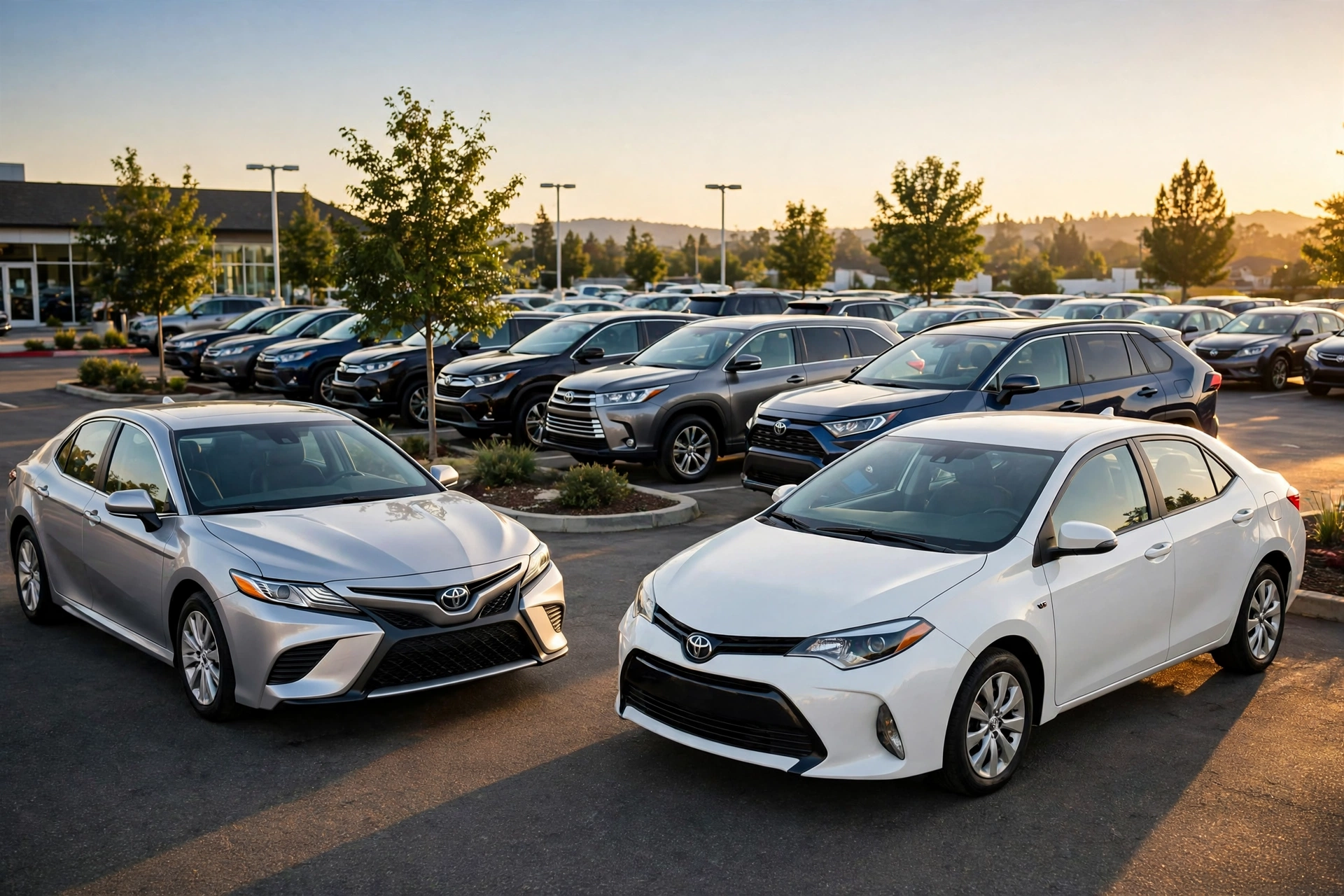
Dealers charge more than independent shops for the same replacement. The gap comes from higher labor rates and OEM-only parts, and on some cars the dealer is the only shop with the part in stock that day. For a starter, though, the independent shop is almost always the better value. There is nothing about a starter replacement that needs dealer-only tools or software on most cars, and any competent independent shop does this job weekly.
Watch for the upsell. A starter replacement does not need a new battery, new cables, or a charging system service unless testing shows a problem. If the quote bundles extras, ask which test result justifies each one. And get the old part back or at least ask to see it. A reputable shop has no problem showing you the failed starter.
DIY vs shop: the verdict
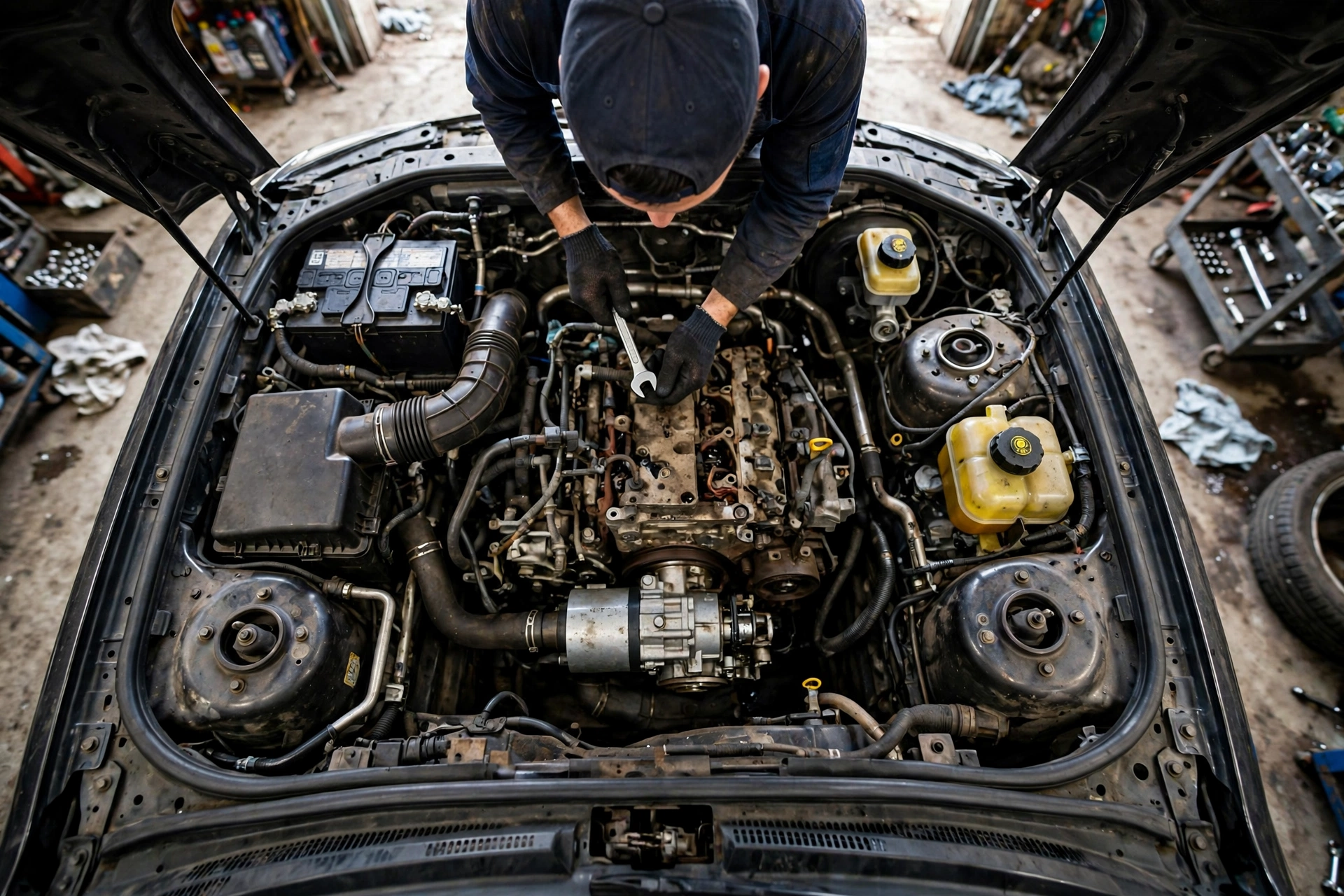
Replacing a starter yourself saves the entire labor portion of the bill, which makes it one of the better DIY jobs for the money, but only if you can reach the starter without a fight. The job itself is simple in concept: disconnect the battery, unbolt the old starter, swap the wires onto the new one, bolt it back in. On a car where the starter is accessible from above, it is a Saturday morning job with basic hand tools.
Do not DIY it if the starter is buried. On cars where the intake manifold or exhaust has to come off first, the job turns into a long afternoon of removing parts you do not want to disturb, and a mistake costs more than the labor you saved. If you have to ask where the starter is, look it up for your exact car first. Our step-by-step for one common truck is the 2015-2020 Ford F-150 - Starter guide, and the 2017-2021 Acura MDX - Starter guide covers the same job on a popular SUV.
Two safety rules are non-negotiable. Disconnect the negative battery terminal before you touch the starter, because the main cable to the starter is always live. And never work under a car held up by a jack alone, use jack stands. If either of those makes you nervous, pay the shop. A $625 bill beats a hospital visit every time.
FAQ
How long does a starter replacement take? It depends on access. A shop can swap an easy starter in well under a day, and most cars are back on the road the same day. A buried starter takes longer because of the parts that have to come off first. Ask the shop for a time estimate with the quote.
Can I drive with a bad starter? Not reliably. A failing starter may work ten times in a row and then refuse without warning. Every start is a gamble, and the one that fails will be in the worst possible place. Get it fixed before it strands you.
Is a remanufactured starter worth it? Usually yes. A quality remanufactured starter costs less than new and carries a warranty, and the failure rate is low. The risk is a cheap no-name unit, so ask the shop which brand they fit and what the warranty covers.
Does a bad starter drain the battery? A failed starter can draw heavy current and leave the battery flat after repeated start attempts, but it does not usually drain a parked car overnight. If your battery keeps dying while the car sits, the problem is more likely a parasitic drain than the starter.
The takeaway
A starter replacement costs $350 to $900 at an independent shop in 2026, with about $625 as the typical bill. That range is wide because the job is wide: easy starters are cheap, buried starters are not, and the part you choose moves the price too. Diagnose it properly first, because a battery, a relay, or a corroded cable can fake a dead starter and cost a fraction of the fix. And if you do need a starter, the independent shop is the right call for most cars, while an accessible starter is one of the best DIY saves in car repair. Start with the diagnosis steps in our Starter Problems: How to Tell If It's Your Starter, Battery, or Something Else guide, and only pay for a starter once the tests point at it.
Safety: Informational DIY. EZ Car Fix is not a shop or dealer.