Most Reliable Used Cars: What 20 Years of Repair Data Says
Buy a Toyota or a Lexus. That is the short answer, and two decades of owner surveys keep giving the same one. If you want the lowest odds of expensive surprises from a used car, start your search with a Toyota or Lexus, check Honda and Mazda next, and judge every individual car on its maintenance history before you judge it on its badge.
What 20 Years of Repair Data Actually Says

Consumer Reports analyzed more than 380,000 vehicles spanning model years 2000 through 2025 to build its used-car reliability scores. Lexus leads at 77 out of 100. Toyota follows at 73. Mazda scores 58 and Honda scores 57. Acura and BMW tie at 53, while Buick and Nissan sit at 51. The gap between the top two and everyone else is the story: Lexus and Toyota are not slightly ahead, they are in a different tier.
J.D. Power tells the same story from a different angle. Its 2026 Vehicle Dependability Study surveyed 33,268 owners of 2023 model-year vehicles and counted problems per 100 vehicles. The industry average was 204. Lexus finished first at 151 problems per 100 vehicles, its fourth straight year on top. Buick led mass-market brands at 160. Toyota scored 185, comfortably better than average, and Toyota Motor Corporation collected eight model-level dependability awards, more than any other automaker.
The Most Reliable Used Cars to Shortlist
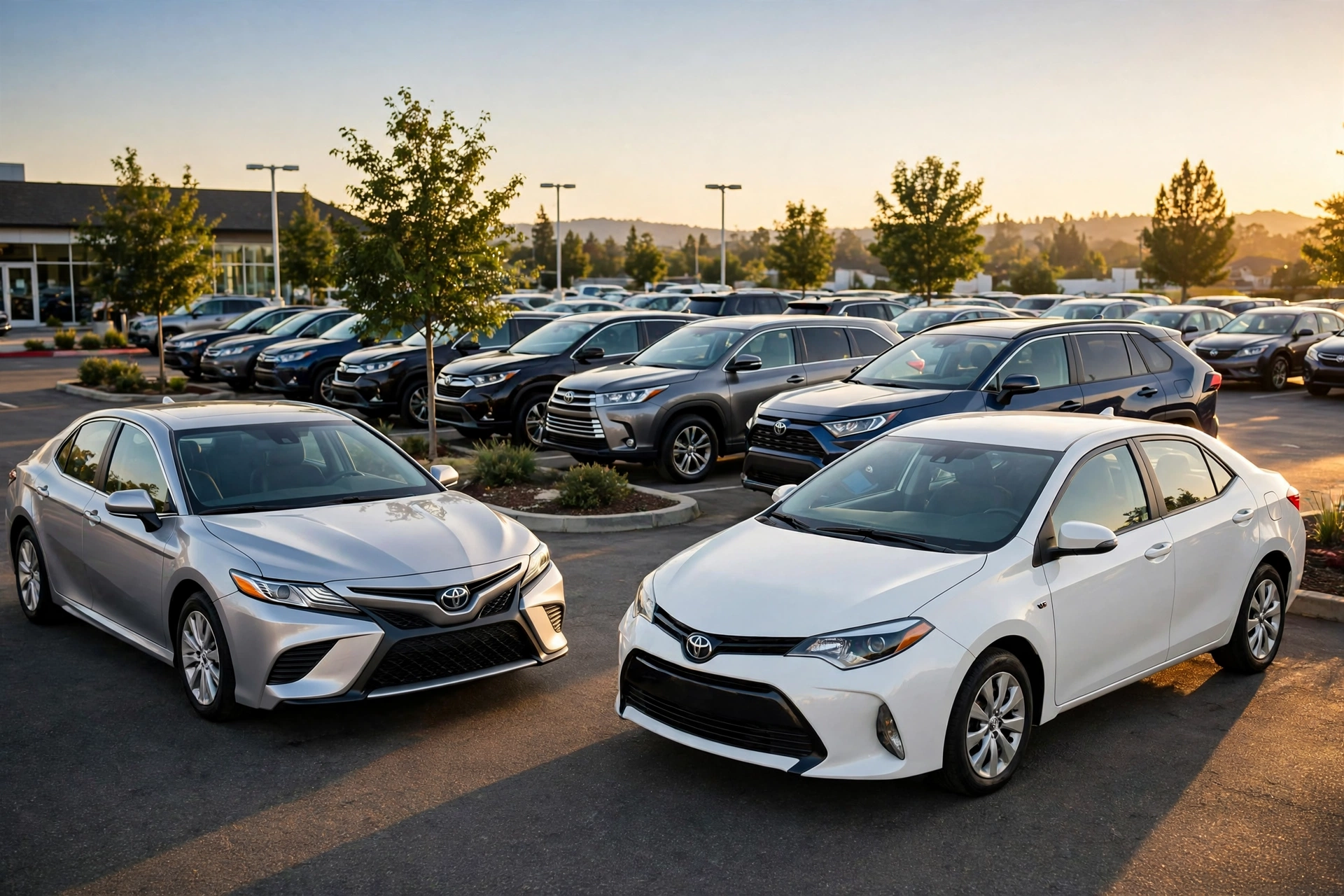
The models worth your attention are the ones that show up well in more than one study. The Toyota Corolla, Camry, Tacoma, 4Runner, and Sienna all won J.D. Power dependability awards, and the same models rank among the most likely to reach 250,000 miles in long-term ownership data. The Lexus IS took the most dependable model title outright.
Here is a practical shortlist, by what you need the car to do:
Best cheap daily driver: Toyota Corolla. It won the compact car category in the J.D. Power 2026 dependability study. Parts are cheap and every shop knows the car. A Corolla with a full service history is the lowest-risk used car you can buy.
Best family sedan: Toyota Camry. The Camry pairs the same proven running gear with more room, and the hybrid version adds real fuel savings on top of a hybrid system that has been in production for decades.
Best used SUV: Toyota 4Runner or RAV4. The 4Runner is the long-haul pick, built on truck underpinnings and famous for high-mileage survival. The RAV4 is the sensible pick, cheaper to run and easier to park. Both hold their value, which stings at purchase and pays you back at resale.
Best used truck: Toyota Tacoma. The Tacoma keeps winning dependability awards while holding resale value better than nearly any other truck. A high-mileage Tacoma with records beats a low-mileage rival without them.
Best used luxury car: Lexus IS or ES. Lexus tops both studies, and a used Lexus gives you Toyota running gear with a quieter cabin. The ES is the comfort pick, the IS is the sharper one.
Honda and Mazda belong on the shortlist too. Honda scores 57 in the Consumer Reports used-car rankings, and the Civic and Accord have the same reputation for high-mileage survival as the Corolla and Camry. Mazda scores 58, ahead of Honda, and the Mazda3 and CX-5 are strong picks if you want a car that is also pleasant to drive. Subaru scores well on newer models, with the Forester standing out for standard all-wheel drive.
The Brands at the Bottom, and Why It Matters Less Than You Think
The same studies name the other end of the list. In the J.D. Power 2026 study, Volkswagen finished last at 301 problems per 100 vehicles, with Volvo, Land Rover, Jeep, and Audi rounding out the bottom five. Consumer Reports places Jeep, Ram, and Rivian at the bottom of its reliability rankings.
None of that means every Jeep or Volkswagen is a bad used car. Averages describe fleets, not individual cars. A well-maintained example of a below-average brand beats a neglected example of a top brand almost every time. What the bottom of the list tells you is where the odds are worse and where you should inspect harder, budget more for repairs, and walk away faster when the service history has gaps.
How to Check Any Used Car Before You Buy
A reliability ranking tells you which cars age well on average. It tells you nothing about the specific car a seller is showing you. That is what the inspection is for, and skipping it is how people buy a reliable model with an unreliable past.
- Pull the history report first. Run the VIN through a vehicle history report before you fall in love with the car. Look for accidents, title brands, odometer inconsistencies, and rental or fleet use. If the seller will not share the VIN, walk away.
- Read the service records. A thick folder of receipts beats a low odometer reading. Regular oil changes, transmission service, and coolant service on schedule matter more than mileage alone. No records at all is a red flag, not a blank slate.
- Cold-start the engine. Ask to see the car start from cold. Listen for rattles, ticking, or smoke that fades after warm-up. A warm engine hides startup problems, and a seller who insists the car is already warm is telling you something.
- Check the fluids yourself. Pull the oil dipstick. The oil should sit between the marks and should not look milky, which can mean coolant is getting into the oil. Check the coolant level and look for leaks under the car. Burnt-smelling transmission fluid on dipstick-equipped cars is a walk-away sign.
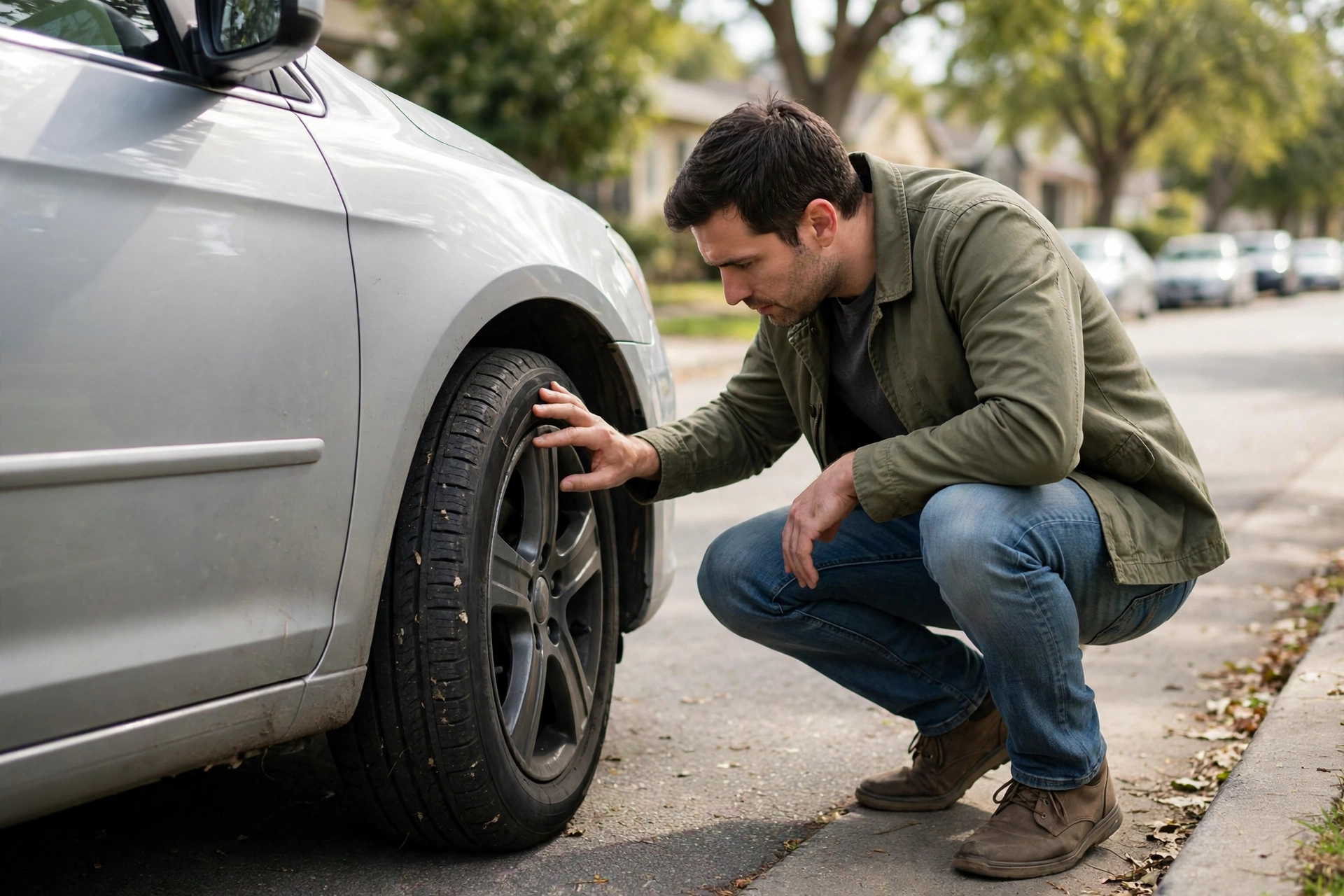
- Inspect the tires and brakes. Uneven tire wear points to alignment, suspension, or prior accident damage. Check the brake pads through the wheel if you can, and listen for grinding on the test drive. Worn brakes and tires are negotiable, but they are also money you will spend soon, so price them in. If the tires are near the end, read our Buying Tires: When, Where, and How to Choose guide before you pay for a set.
- Test everything electrical. Windows, locks, sunroof, infotainment, backup camera, blind-spot alerts, heat, and air conditioning. Infotainment modules and heater-core work can be big-ticket fixes on some cars, so find out before you sign, not after.
- Take a real test drive. Ask for 15 to 20 minutes on varied roads, city and highway. Shifts should be crisp, not flaring or shuddering. The car should track straight, brake without pulling or pulsing, and stay quiet over bumps.
- Pay for a pre-purchase inspection. This is the single best money in used-car buying. An independent mechanic puts the car on a lift and checks the engine, transmission, brakes, tires, suspension, frame, air conditioning, and electronics, plus a scan for stored trouble codes. It costs a fraction of one major repair. If the seller refuses to let you inspect the car, that refusal is your answer.
If you are checking the wear items yourself, our step-by-step guides cover the jobs a used-car inspection most often flags: 2013-2022 Acura ILX — Brake Pad Replacement, 2023-2026 Acura Integra — Battery Replacement, and 2001-2003 Acura CL — Spark Plug Replacement.
Cost: What Reliability Is Worth
Reliability is not free, but it is cheaper than the alternative. The most dependable used cars cost more upfront than their less reliable rivals, and that premium is the market charging you for fewer repair bills later. A Toyota that costs more than a comparable rival at purchase and then needs almost nothing for years is the cheaper car in the end.
The expensive mistake is buying on sticker price alone. A cheap used car with a thin service history and deferred maintenance can need a catch-up bill that wipes out the savings in the first year. Tires, brakes, a battery, and a full fluid service add up fast, and that is before anything actually breaks.
Think about total ownership cost, not purchase price. Fuel, insurance, tires, brakes, and expected repairs all count. That is also why our Most vs Least Expensive Cars to Maintain post pairs well with this one: the cheapest car to buy is rarely the cheapest car to own.
DIY vs Shop Verdict
Shopping for a used car is a DIY job, and the inspection is a shop job. Do the history report, the walk-around, the fluid checks, and the test drive yourself, because nobody cares about your money like you do. Then pay an independent mechanic for the pre-purchase inspection, because a lift, a scan tool, and a trained eye catch what a driveway check cannot.
FAQ
What is the most reliable used car brand?
Lexus and Toyota, by both major measures. Consumer Reports rates Lexus first at 77 and Toyota second at 73 in used-car reliability across more than 380,000 vehicles, and J.D. Power names Lexus the most dependable brand for a fourth straight year.
What is the most reliable used car under cheap-car money?
A Toyota Corolla with a full service history. It won its J.D. Power dependability category, parts are cheap, and every shop knows the car. A Honda Civic is the same bet from the next tier down.
How many miles is too many on a used car?
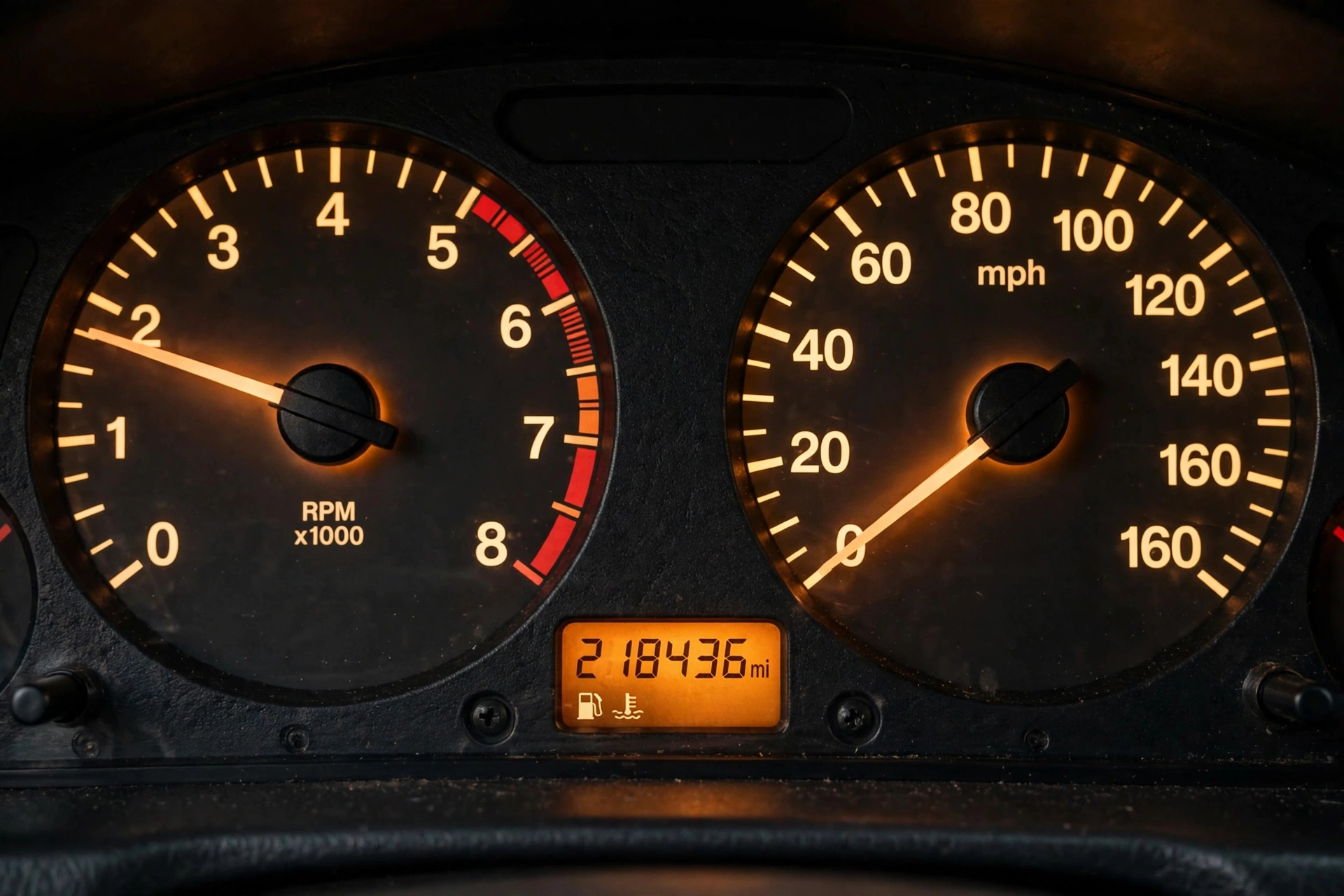
Mileage alone is the wrong question. A 200,000-mile Toyota with complete service records is a better buy than a 60,000-mile car with no records and deferred maintenance. Judge the history first, the odometer second, and always get a pre-purchase inspection on a high-mileage car.
Should I trust reliability rankings or the inspection more?
Both, in that order. Rankings narrow your search to the cars with the best odds. The inspection judges the actual car you are about to buy, and it overrules the ranking every time.
The Take
Twenty years of repair data says the same thing in 2026 that it said a decade ago: buy the Toyota, check the Honda and Mazda too, and never trust a badge more than a service history. The ranking gets you to the right lot. The history report, the cold start, and the pre-purchase inspection get you to the right car. Do all three and the odds are on your side.
Safety: Informational DIY. EZ Car Fix is not a shop or dealer.