Winter Tires vs All-Season vs All-Weather: What You Actually Need
If your winter includes real snow and ice, buy winter tires. That is the answer. All-season tires are a compromise that favors dry pavement, and all-weather tires are the middle ground for people who get light winter but not the brutal stuff. Everything below is just the detail behind that call.
What each tire type actually is
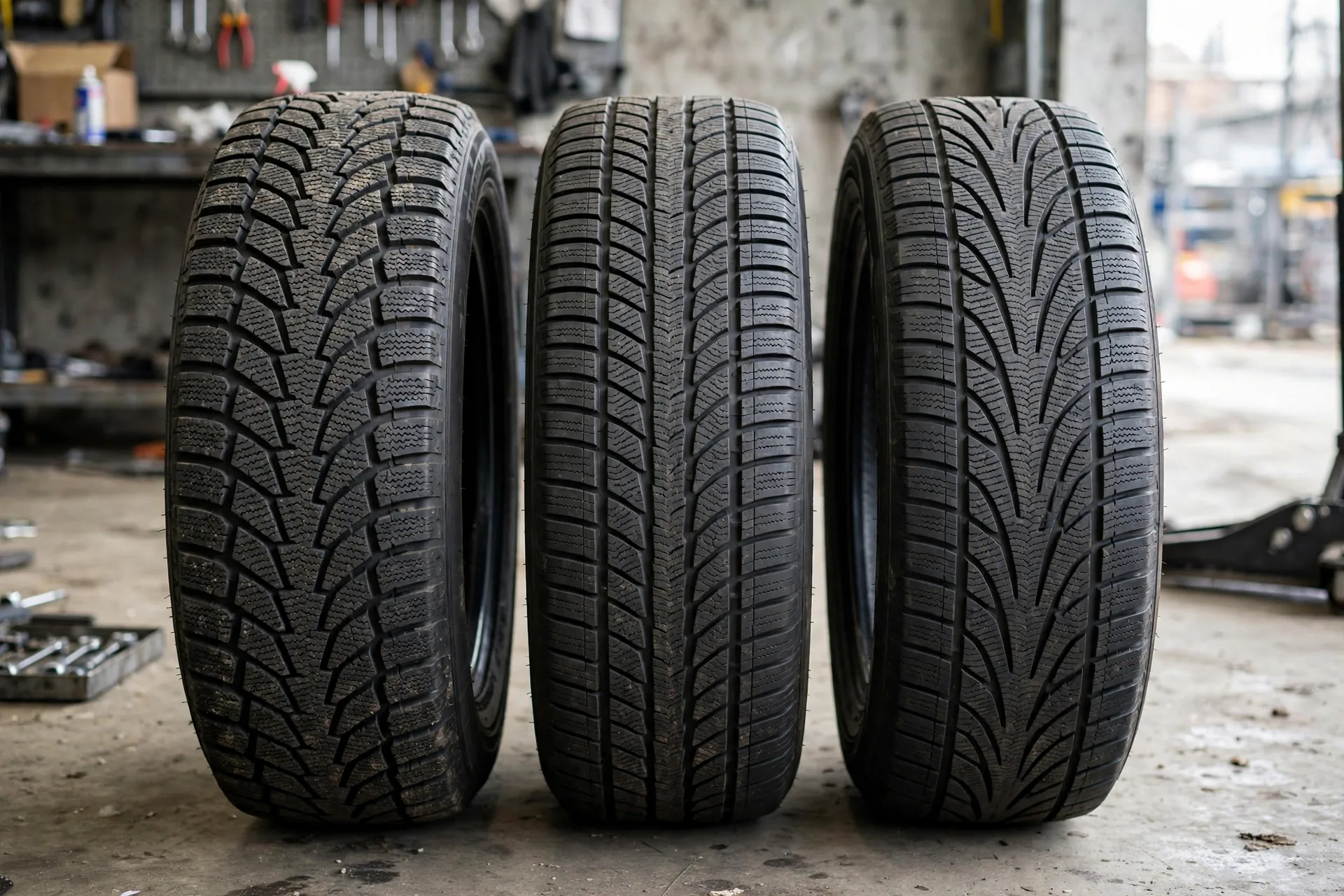 All-season tires are the default tire on most new cars. The name is marketing. They are really three-season tires: fine in rain, fine in mild cold, and mediocre the moment temperatures drop and stay down. Their rubber compound hardens as it gets cold, which means less grip on cold pavement even when the road is dry.
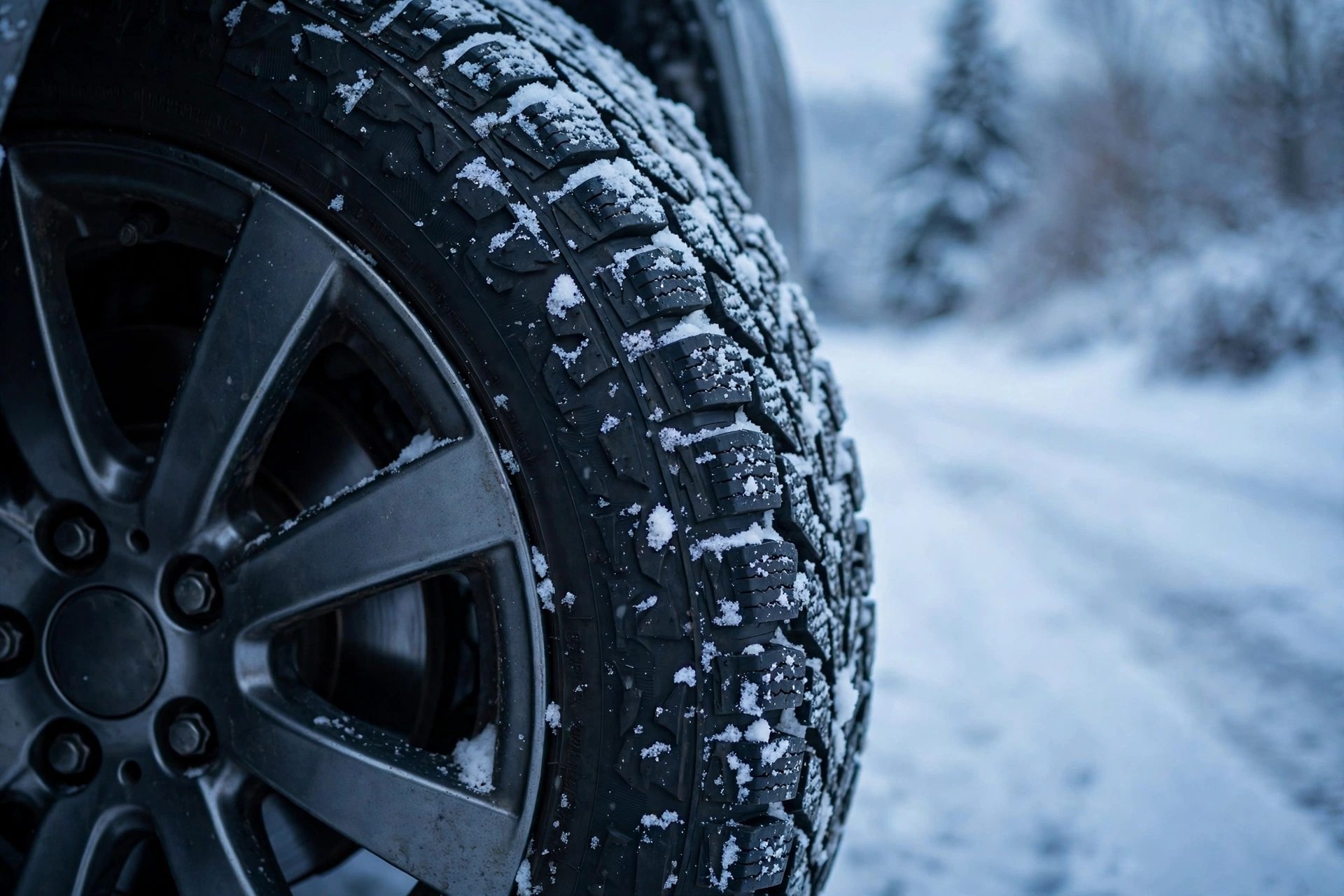
Winter tires (sometimes called snow tires) use a softer rubber compound that stays flexible in the cold, plus aggressive tread patterns and thousands of tiny slits called sipes that bite into snow and ice. They are built for one job: grip when it is cold. Below about 45°F (7°C), a winter tire outperforms an all-season tire on every surface, wet or dry, snow or not. That temperature line is the single most useful fact in this whole article.
All-weather tires carry the three-peak mountain snowflake symbol, which means they passed an actual snow traction test. They are winter-capable all-seasons: better than a regular all-season in snow, not as good as a dedicated winter tire. Think of them as the honest version of what all-season tires pretend to be.
The 45°F rule decides it
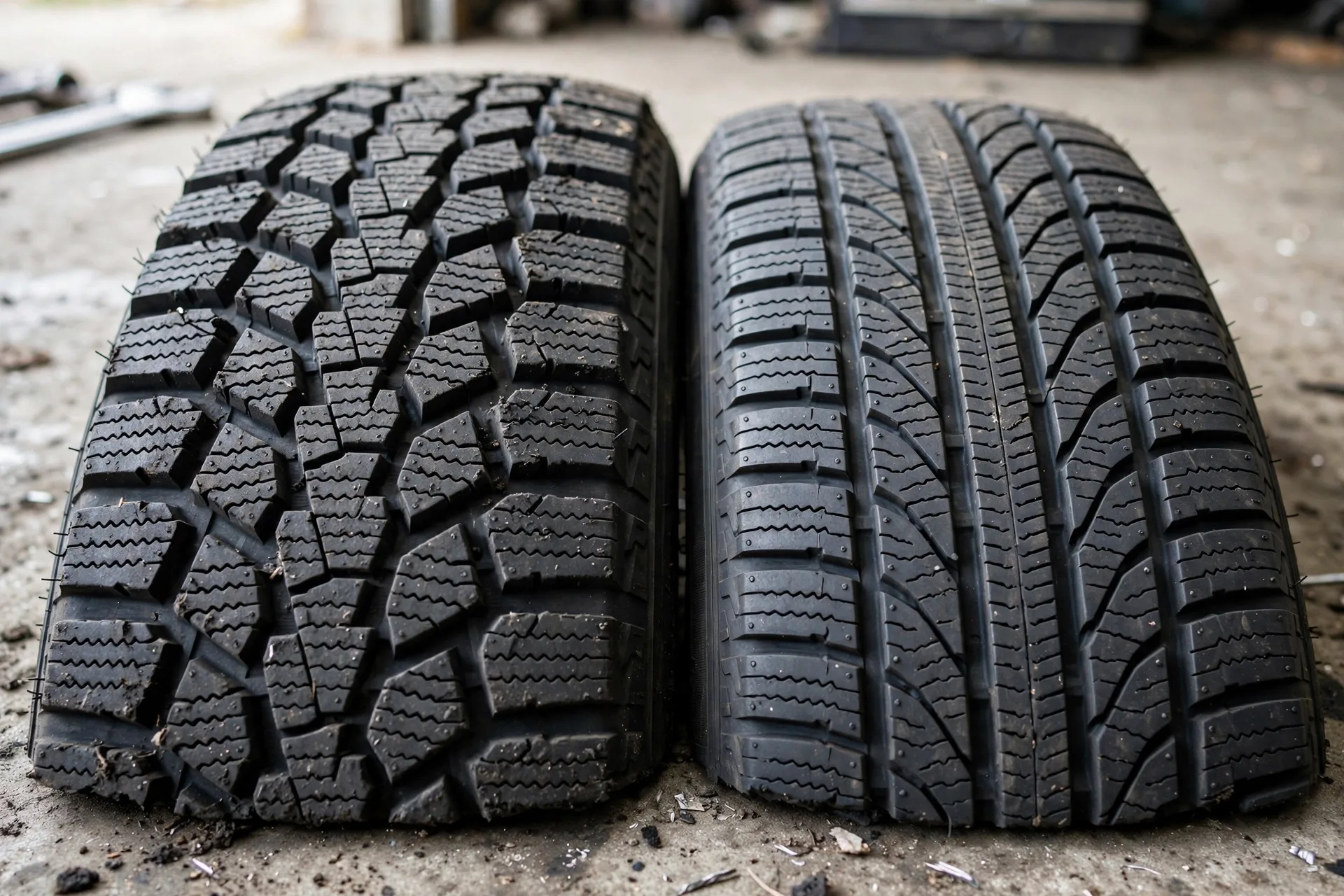 Forget the calendar. Watch the thermometer. When average daily temperatures sit below 45°F, winter tires grip better. When spring brings sustained temperatures above 45°F, swap back, because winter tires wear fast and handle sloppily on hot pavement.
In most of the northern US, that means winter tires go on sometime in October or November and come off in March or April. If your area only dips below 45°F for a few scattered weeks, all-weather tires probably cover you. If you spend months below freezing, stop debating and get the winter set.
Why it matters: stopping, not just going
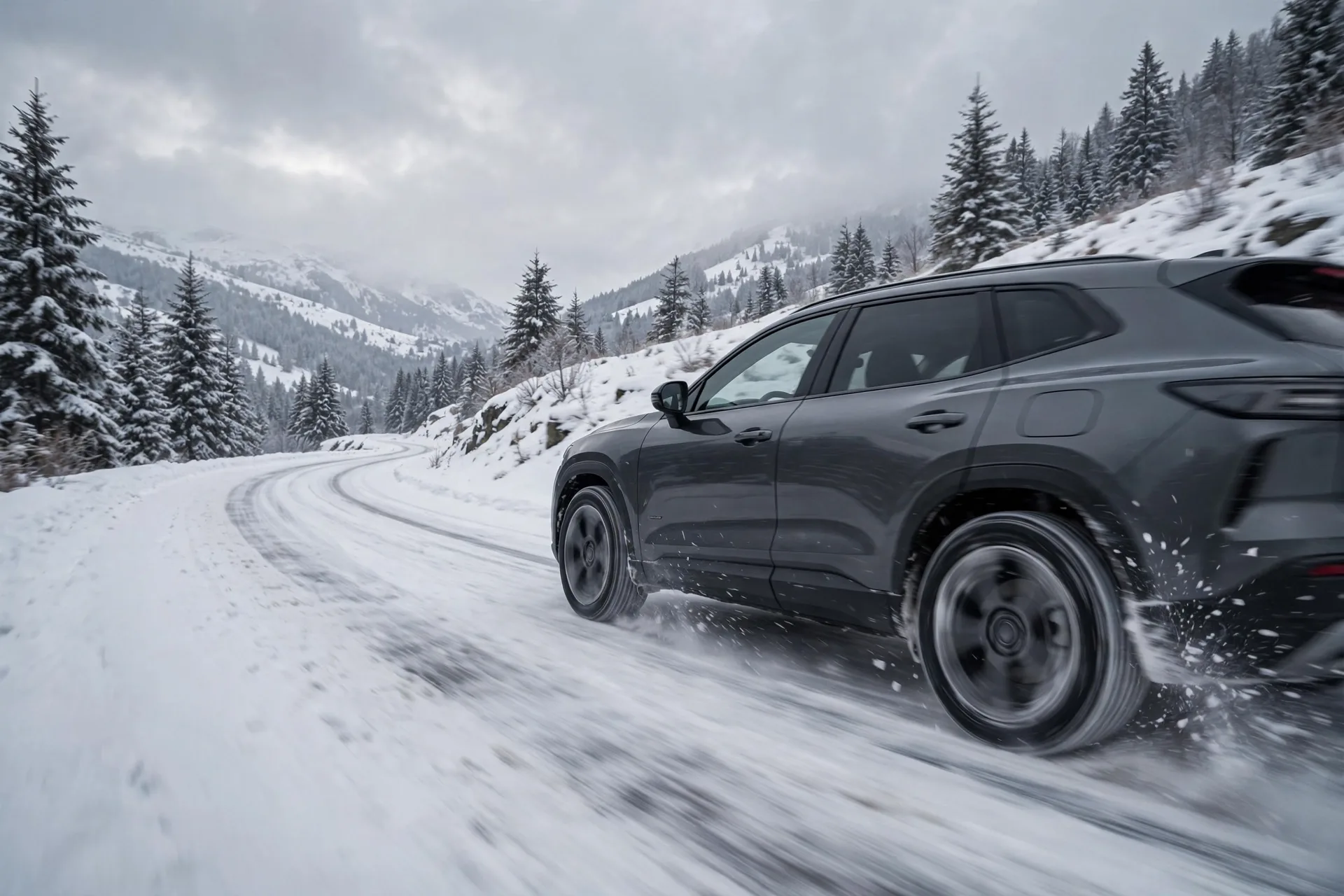 Everyone focuses on acceleration in snow. All-wheel drive helps you go. Nothing helps you stop except your tires. On cold pavement, the softer compound of a winter tire keeps the tread conforming to the road surface instead of skating across it like a hardened all-season. The difference in stopping distance on snow and ice is not subtle. It is the difference between stopping at the line and stopping in the intersection.
This is also why all-wheel drive with all-season tires is a false sense of security. AWD gets you moving. It does nothing for braking or cornering. A front-wheel-drive car on winter tires will out-brake an AWD SUV on all-seasons on a snowy road, virtually every time.
All-weather tires: who they are actually for
All-weather tires make sense in exactly one situation: you live somewhere with real but mild winter. Occasional snow, plowed roads, temperatures that hover around freezing rather than parking below zero for months. The Pacific Northwest, the mid-Atlantic, parts of the Midwest with light winters. You get the snowflake rating without owning, storing, and swapping two sets of tires.
They are not for lake-effect snow belts, mountain passes, or anywhere you regularly drive on unplowed roads. In those places they are a half measure, and half measures on ice are how fenders get bent.
One more honest note: all-weather tires wear faster than regular all-seasons and cost more. You are paying for the compromise. That is fine as long as you know it is a compromise.
Do you actually need winter tires? Run this checklist
- You get sustained sub-freezing temperatures (weeks or months, not days). Yes, get them.
- You drive on unplowed or rural roads. Yes.
- Your commute cannot wait for the plows. Yes.
- You live somewhere with occasional light snow and mild winters. All-weather tires are enough.
- Your winter is basically just cold rain. Good all-seasons are fine. Spend the money on fresh wipers instead.
- You have a second car or can stay home on snow days. Your call, but the tires are still the safer bet.
Running winter tires without the hassle
The main objection to winter tires is the twice-a-year swap. Here is how to make it painless:
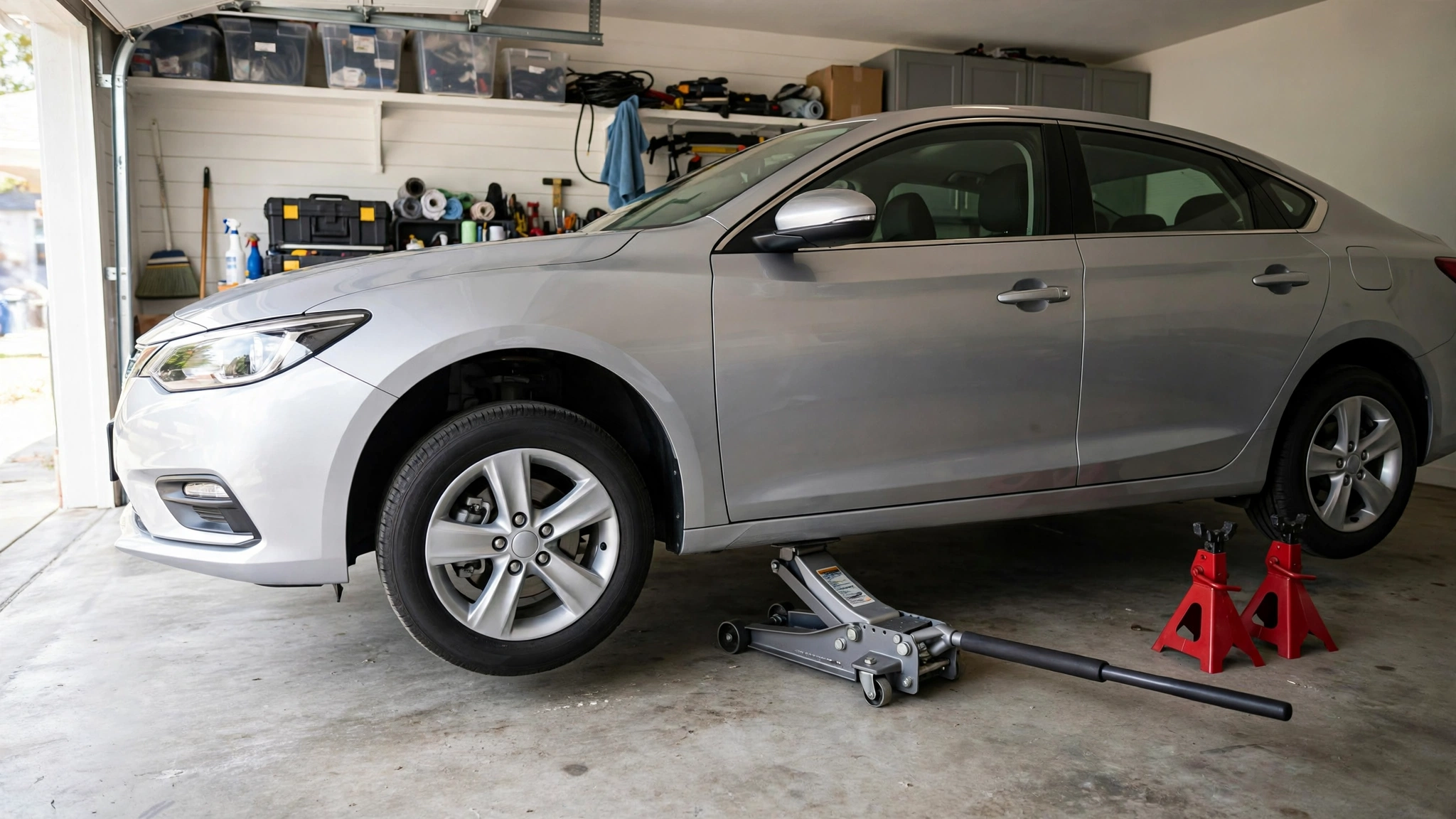
Buy a second set of wheels. Steel wheels are cheap and ugly in the best way. Having winter tires mounted on their own wheels turns the seasonal swap into a one-hour driveway job with a jack, instead of a tire shop appointment with mounting and balancing fees twice a year. The wheels pay for themselves quickly.
Store them right. Cool, dry, out of sunlight. Stack them or hang them. Sunlight and heat age rubber even when the tires aren't being driven.
Check pressures monthly in winter. Tire pressure drops as temperatures fall, roughly 1 PSI for every 10°F. An underinflated winter tire gives back a chunk of the grip you paid for. Keep a gauge in the glove box and check them cold, before driving. If your car has a tire pressure monitoring system, expect the light on the first cold snap and do not ignore it. Our tire pressure and rotation guide walks through checking and setting pressures.
Rotate them like any tire. Winter sets still wear unevenly. Rotate on the same schedule as your summers. See Tire Rotation and Maintenance: The Simple Job That Doubles Tire Life for the pattern and intervals.
Do all four. Putting winter tires only on the drive axle is worse than all-seasons all around. Mismatched grip front to rear makes the car unpredictable in corners, which is exactly when you need predictability. Four winter tires or none.
Related guide: 2015-2022 Ram ProMaster City — Tire Pressure & Rotation DIY Guide — rotation and correct pressure are part of every seasonal tire swap — here's the full procedure.
Winter prep goes beyond tires
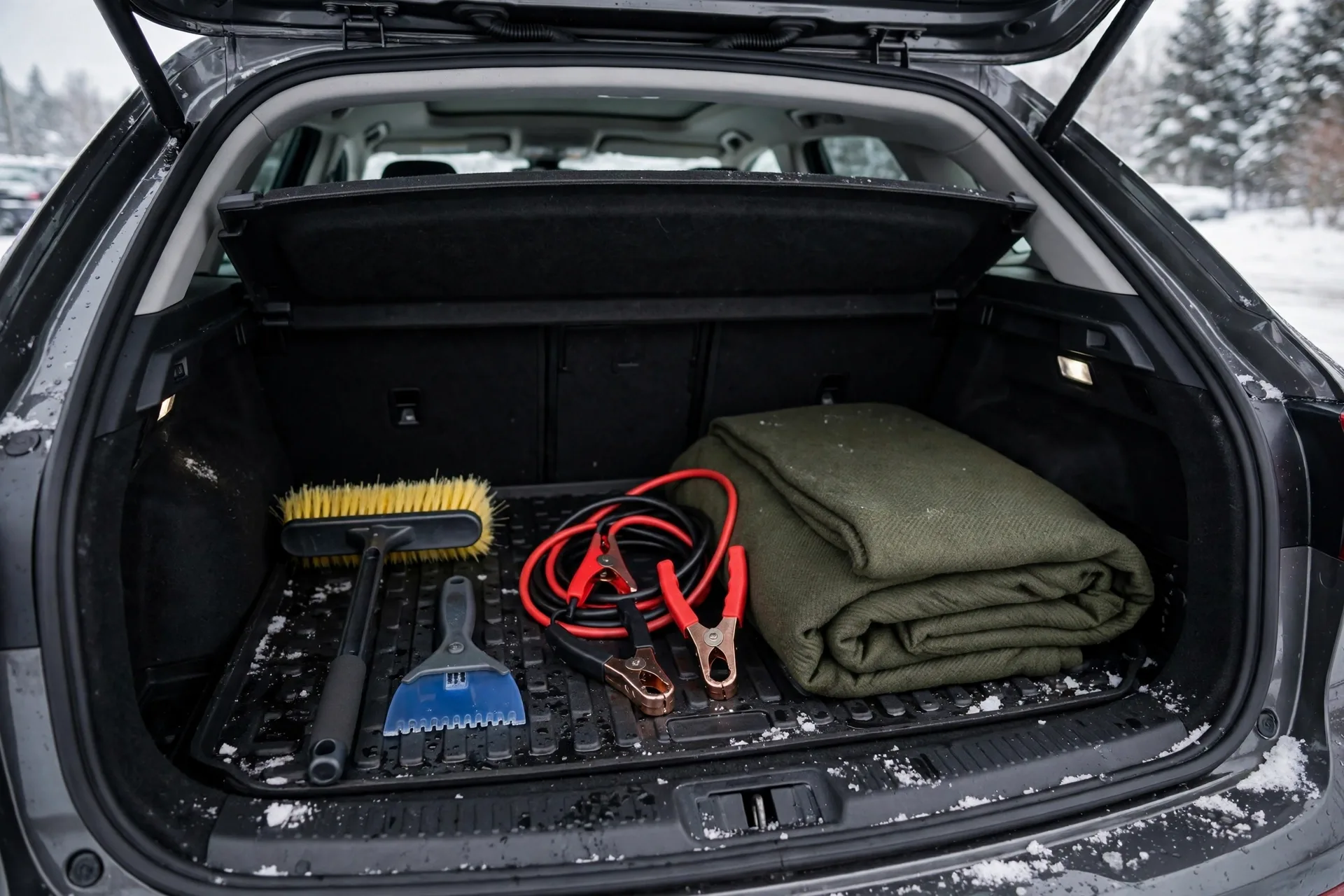 Tires are the biggest winter upgrade, but they are not the only one. Cold weather kills weak batteries, so get yours tested before the first freeze. If it is more than a few years old, read How to Change a Car Battery Safely and consider replacing it on your schedule instead of the cold's schedule. A general battery replacement walkthrough covers the actual swap if you have never done one.
Related guide: 2014-2019 Toyota Corolla - Tire Pressure Light & Rotation — cold weather drops tire pressure and trips the TPMS light — what that warning means and what to do.
FAQ
Can I use winter tires year-round?
You can, but you should not. The soft compound that grips in the cold wears rapidly in heat and handles worse on hot dry pavement. You will burn through an expensive set of tires in one summer and have less grip the whole time. Swap them.
Are all-weather tires as good as winter tires in snow?
No. They are much better than all-seasons and carry a real snow rating, but a dedicated winter tire still wins on snow and ice by a clear margin. All-weather is the 80% solution.
Do I need winter tires with all-wheel drive?
AWD helps you accelerate. It does not help you stop or turn. Winter tires help with all three. AWD plus winter tires is the best combination. AWD plus all-seasons in a snowstorm is overconfidence with extra traction off the line.
When should I put winter tires on?
When average temperatures drop below 45°F and stay there. For most northern states that is October or November. Putting them on early costs you a little tread wear. Putting them on late costs you the one storm that arrives before you are ready.
How long do winter tires last?
Tread-wise, several seasons for most drivers, since they only run part of the year. Age-wise, rubber hardens over time regardless of tread depth. If yours are pushing six or seven years old, the compound has lost much of what made them winter tires. Check the date code on the sidewall.
The take
Tire companies sell all-season tires as the do-everything answer because it is convenient, not because it is true. Rubber chemistry does not care about marketing. Below 45°F, the soft compound wins, and no drivetrain or driving skill changes that. If your winter is real, run real winter tires on all four corners, on their own set of wheels, and swap them yourself in the driveway. It is the highest-value safety upgrade you can buy for a car.
Safety: Informational DIY. EZ Car Fix is not a shop or dealer.
Last reviewed: October 2026.