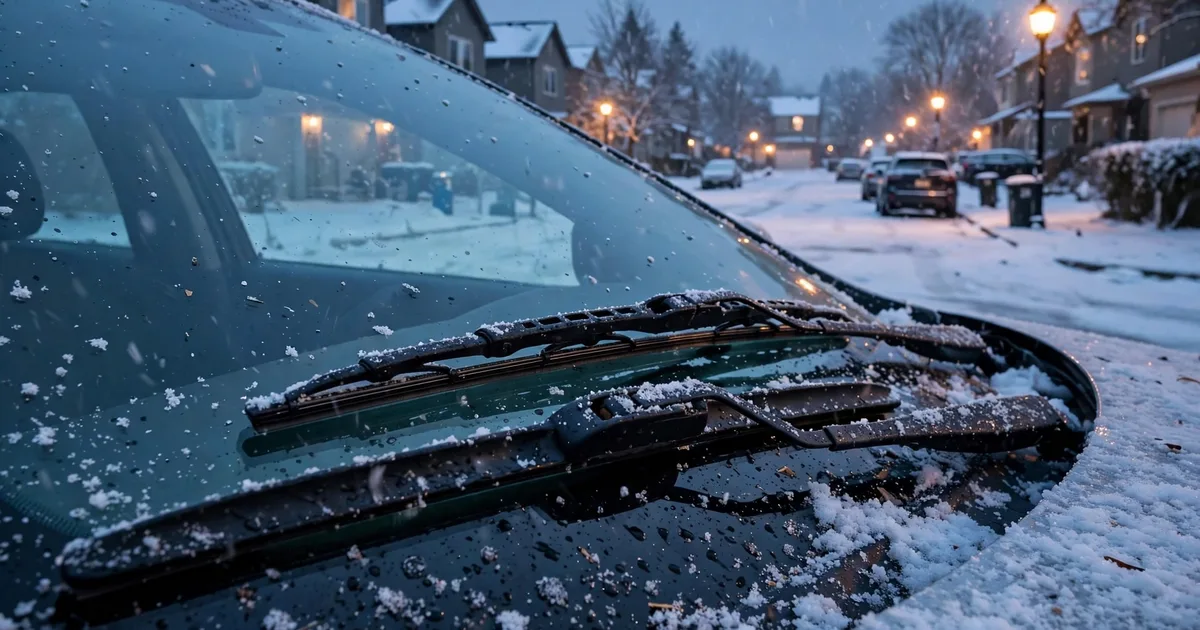
Winter Wiper Blades and Washer Fluid: The Visibility Fix
The cheapest winter safety upgrade you can buy is not tires and it is not antifreeze. It is wiper blades and washer fluid. Standard blades turn stiff and skip across the glass the first time the temperature drops, regular washer fluid freezes solid in the reservoir, and the first slushy commute of December leaves you staring through a salt-smeared windshield wondering how you ever drove like this last year.
Fix both before winter hits. Wipers generally last 6 to 12 months, so if you have not touched yours since spring, they are due. And one gallon of winter-rated washer fluid, the kind labeled to stay liquid down around -20 F, costs a few dollars at any auto parts store. Do those two things and you will see clearly through the entire season.
Why winter kills regular wiper blades
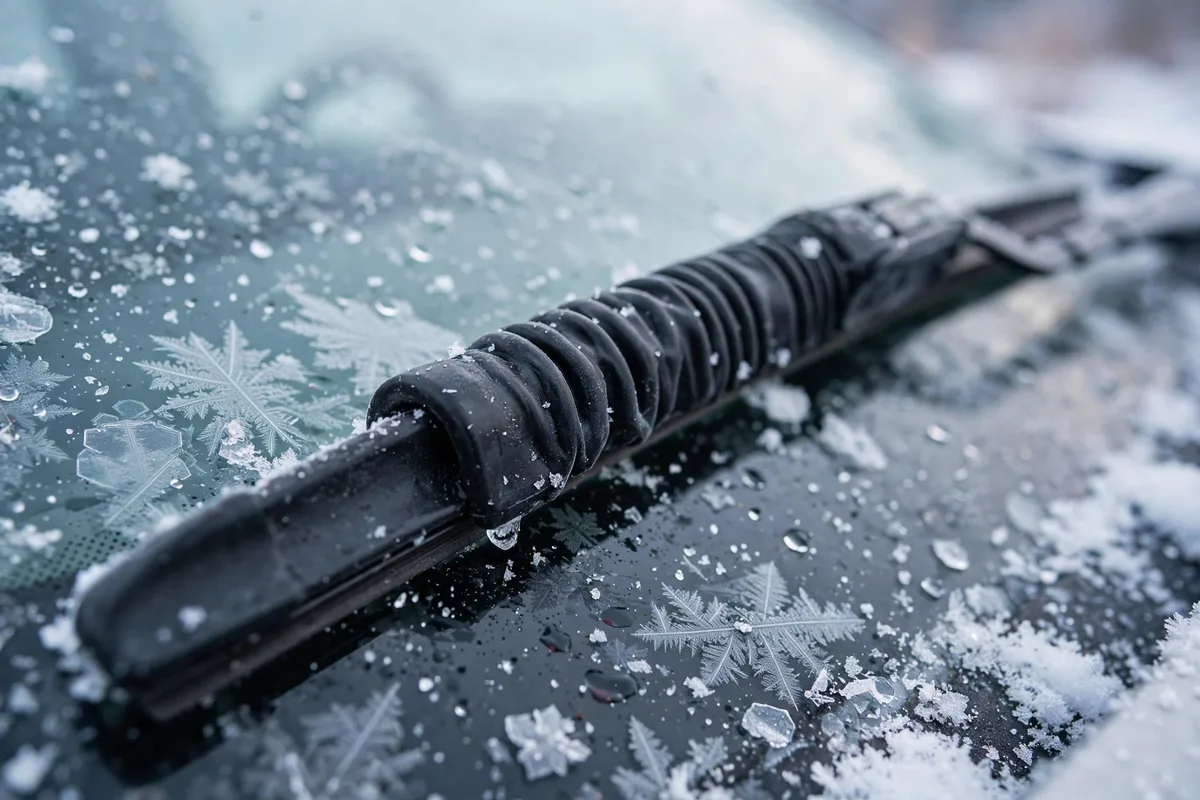
A standard wiper blade is a thin strip of rubber pulled across glass by a metal frame with a dozen little pivot points. It works great in July. In January, three things go wrong at once.
First, the rubber stiffens. Cold rubber does not flex and seal against the curved windshield the way warm rubber does, so the blade chatters and skips instead of gliding. That is the smear-and-skip combo you see every winter.
Second, ice and slush pack into the exposed metal frame. Those little pivot points seize up, which means one end of the blade presses down while the other end lifts. The result is a wide unwiped stripe right in your line of sight.
Third, the blade freezes to the windshield overnight. When you flip the wipers on without freeing them first, the rubber tears. One torn blade is now permanently useless, and plenty of people do this every single winter.
None of this is a mystery and none of it is worth tolerating. If your wipers leave streaks, leave an unwiped band, or chatter loudly, the blades are done. Do not wait for the first ice storm to find out.
Winter wiper blades: what is actually different
Winter blades solve the two problems standard blades have. The frame is enclosed in a one-piece rubber boot, so ice and slush cannot pack into the pivot points. And the rubber is a softer compound that stays flexible in cold weather instead of turning into a paint stir stick.
Here is my honest take: buy beam-style winter blades with the enclosed frame. Skip the "all-season performance" blades with exposed frames if you drive anywhere that gets real snow and ice. The enclosed design is the entire point, and it is the only blade style worth paying for in winter.
One more thing worth knowing. Winter blades are a seasonal item. That soft rubber that stays flexible at 10 degrees wears faster in summer heat. Plenty of people run winter blades year-round and do fine, but the blade life is shorter and the wiping gets noisier once it warms up. If you drive enough to notice, swap to standard blades in spring. If you would rather not think about it, just replace the winter set every fall and move on.
Sizing: check your owner's manual for the driver and passenger blade lengths. Most cars take different lengths on each side, and a blade that is an inch too long will clip the A-pillar or overlap its partner. Do not guess.
Washer fluid that will not freeze
Washer fluid is the part most people forget, and it causes the most roadside frustration. Regular summer washer fluid, and plain water especially, freezes in the reservoir, the lines, and the nozzles. Once it freezes, you get nothing when you pull the stalk. No spray, no cleaning, and no way to clear salt spray while you are doing 60 on a salted highway. That is a genuinely dangerous situation.
The fix is boring and cheap. Buy washer fluid that is explicitly labeled for winter, rated to -20 F or lower. The methanol in it keeps it liquid. Fill the reservoir full in the fall, because a full reservoir freezes later than a half-empty one, and run the washers a few times after filling so the winter fluid pushes the old summer fluid out of the lines.
Do not top off winter fluid over plain water, and do not dilute it. Diluting raises the freeze point, and a diluted bottle is just expensive summer fluid. If you are not sure what is in the reservoir right now, run it until the low-fluid light comes on and then fill with the winter stuff. And never, ever fill it with plain water. Water freezes, expands, and can crack the reservoir. That turns a five-minute job into a shop visit.
How to tell what you actually need
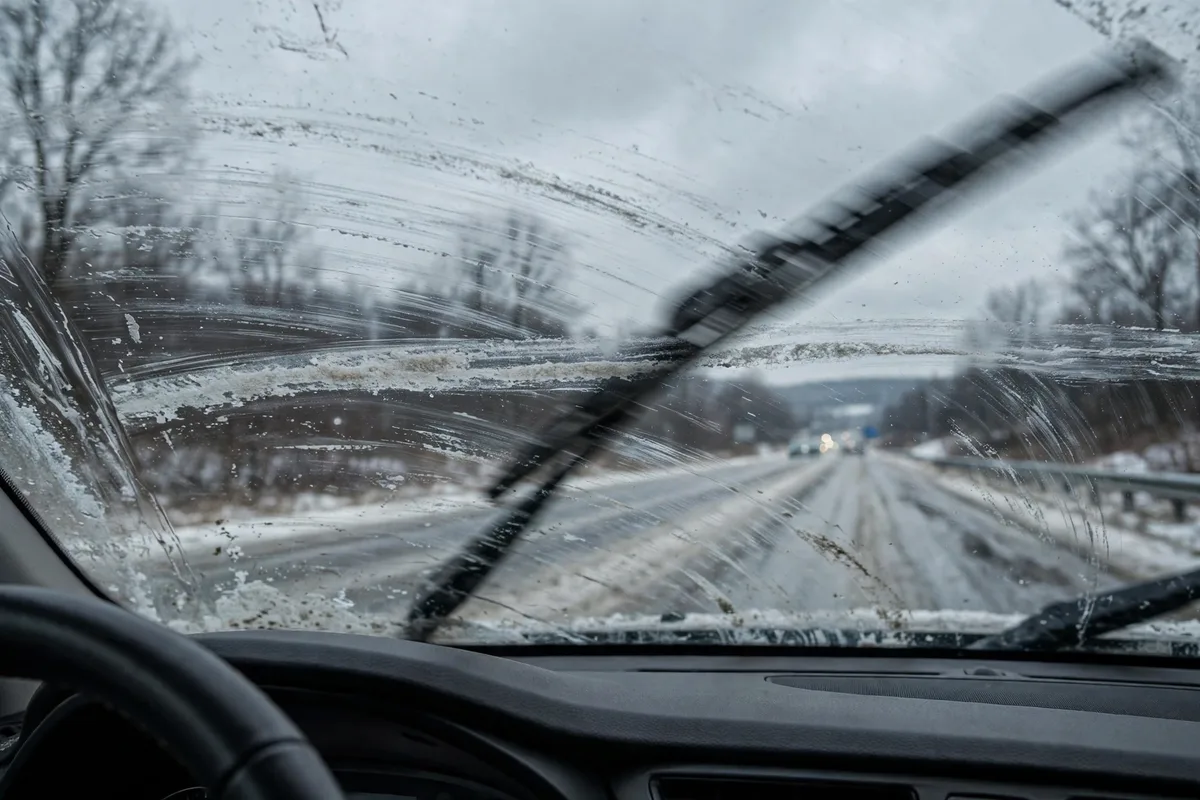
Not every winter visibility problem means buying new blades. Work through this before you spend anything.
- Look at the blades. Lift each one and flex the rubber edge with your finger. If the rubber is cracked, split, torn, or feels stiff and brittle, the blades are done. Replace them.
- Run the streak test. Spray the windshield and run the wipers. Streaks, unwiped bands, or loud chattering mean worn blades. A few stray drops that clear on the return pass are normal.
- Test the washers. With the reservoir full, hold the washer stalk for a couple of seconds. A strong fan of fluid on both sides means the system is fine. A weak dribble or nothing at all means clogged nozzles, low fluid, or frozen lines, in that order.
- Clear the nozzles. If the spray is weak, clear each nozzle with a pin or needle and try again. This fixes most weak-spray complaints without spending a dime.
- Check the blades before you park. If ice is forecast overnight, lift the blades off the windshield when you park so they cannot freeze to the glass. It takes five seconds and saves a lot of torn rubber.
DIY vs. shop: this one is not even close
Wiper blades are a cheap part and the job takes about ten minutes with no tools. It is one of the few repairs where paying a shop makes almost no sense, because the labor costs more than the blades themselves. A shop will gladly do it, and they will do it fine, but you are paying someone for a job you can do in a parking lot.
The only real decision is which blades to buy. Enclosed-frame winter blades, the right lengths for both sides, and a gallon of winter-rated washer fluid. If you want the full walkthrough with your exact car, the step-by-step wiper blade guide covers the whole swap, and we have exact make-and-model guides too, like 2017-2025 Mazda CX-5 - Wiper Blade Replacement and 2017-2023 GMC Acadia - Wiper Blade Replacement.
FAQ
Do winter wiper blades really make a difference? Yes. The enclosed frame is the difference. Standard blades seize up when ice packs into their exposed pivot points, and nothing about a standard blade fixes that. Winter blades keep the mechanism sealed, and the softer rubber seals against the glass better in the cold.
Can I use regular washer fluid in winter? You can, but you will regret it the first hard freeze. Summer fluid freezes in the reservoir and lines, which leaves you with no washer spray exactly when salt spray is at its worst. Winter-rated fluid costs about the same and does not freeze. There is no reason to run summer fluid past November.
Can I mix winter and summer washer fluid? It is better than nothing, but do not. Mixing dilutes the freeze protection, and the mix can gel up. Run the reservoir low and fill it with full-strength winter fluid instead.
Why do my wipers freeze to the windshield overnight? Because the blade sits flat against wet glass and the water between them freezes. Lift the blades off the glass when you park on nights ice is forecast. It is free and it works.
How often should I replace wiper blades? Every 6 to 12 months in normal use. If you run dedicated winter blades, replace them each fall. A blade that is leaving streaks in September will be a disaster in January.
The take
Winter visibility is a solved problem and the solution costs less than a tank of gas. Enclosed-frame winter blades, winter-rated washer fluid in a full reservoir, and five seconds to lift the blades on freezing nights. Do it once in the fall and stop thinking about it until spring.
While you are at it, winter prep is worth an afternoon. How to Test Your Antifreeze Before Winter covers the other cheap check that keeps you out of trouble, and Winter Tires vs All-Season vs All-Weather: What You Actually Need settles the tire question before the first storm.
Safety: Informational DIY. EZ Car Fix is not a shop or dealer.