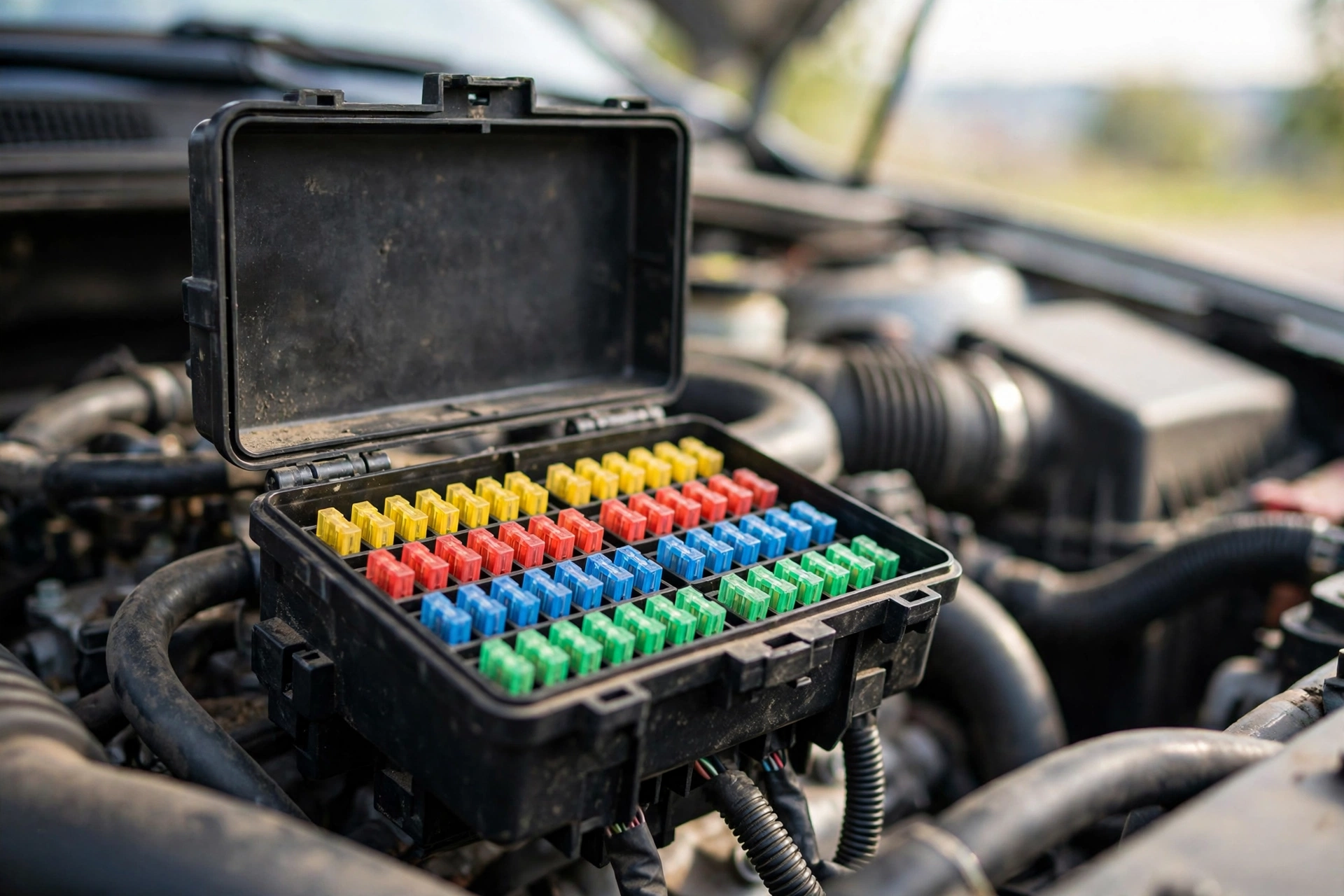
Blown Fuse: How to Check and Replace It
One outlet is dead, a headlight went dark, or the car cranks but never catches. Before you call a shop or start replacing parts, check the fuse. It is the cheapest and fastest fix in all of car repair. A blade fuse costs less than a cup of coffee, the swap takes under five minutes, and you need exactly zero mechanical experience to do it right.
Blown fuse symptoms: what a dead circuit looks like
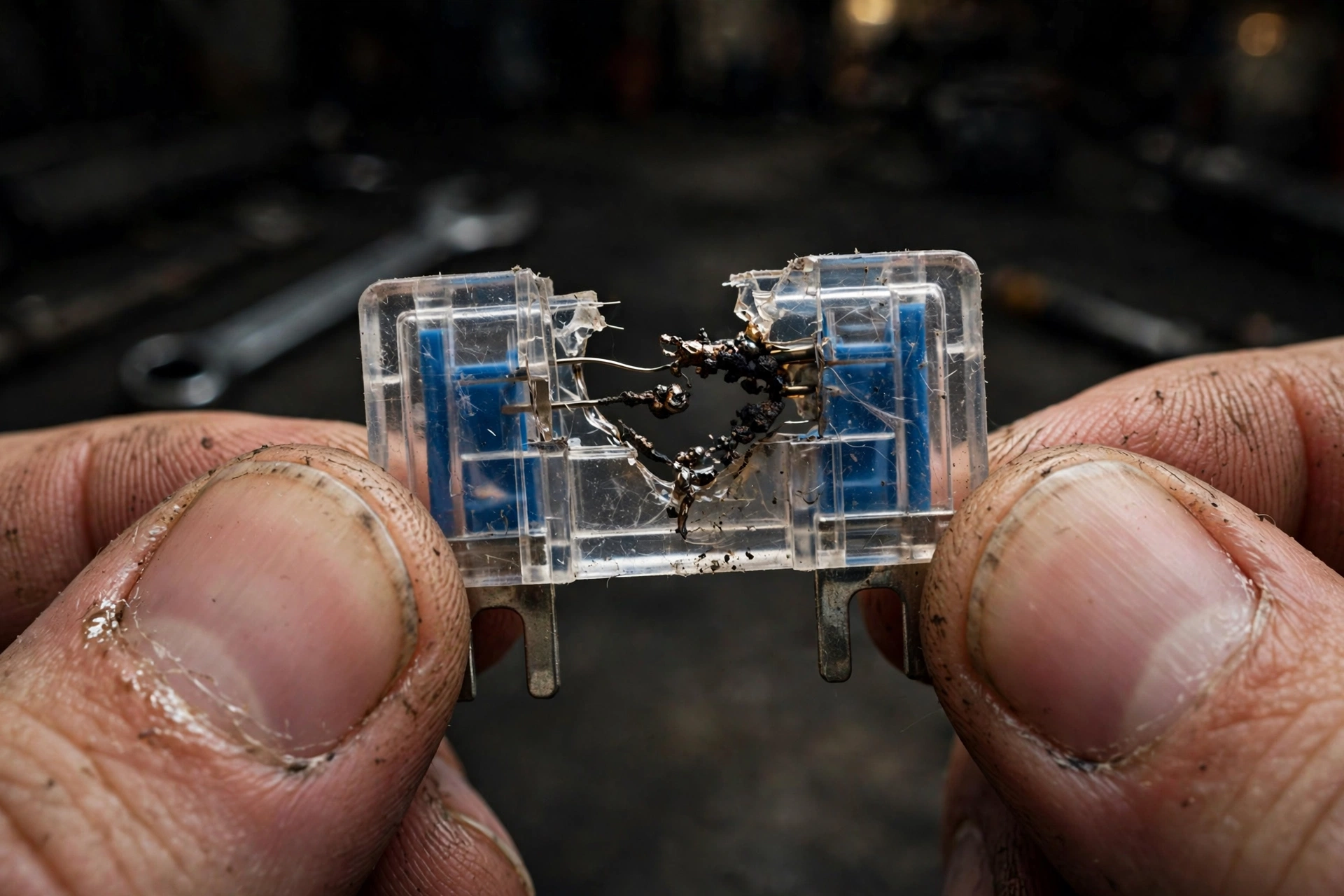
A fuse is a deliberate weak link. When current on a circuit spikes too high, the thin wire inside the fuse melts and breaks the circuit on purpose. That sacrifice protects the wiring, the switch, and the component behind it. The telltale pattern of a blown fuse is simple: one circuit is completely dead while everything else works fine.
Common blown fuse symptoms:
- The 12V outlet or cigarette lighter stops charging your phone
- One headlight, taillight, or interior light is out while the others work
- The radio or infotainment screen goes dark
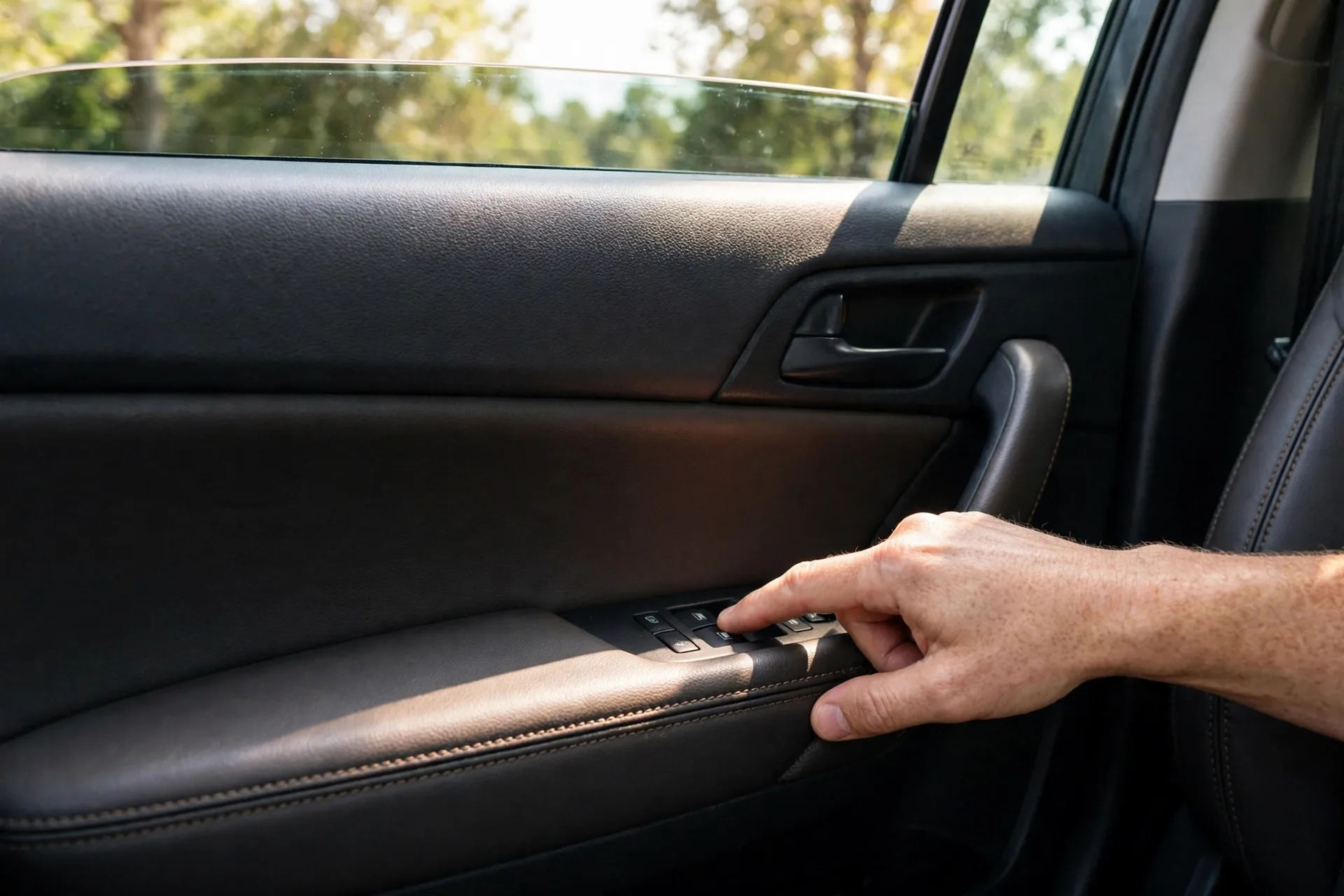
- The power windows or door locks stop responding
- The blower motor fan dies on every speed setting
- The car cranks but will not start (fuel pump or ignition circuit fuse)
If several unrelated things die at once, that points away from a fuse and toward the battery or alternator. A fuse only protects its own circuit, so a single dead circuit is your biggest clue. Our Battery Replacement: Don't Get Stranded - Complete Guide from a Real Mechanic walks through what battery failure looks like if the whole car is acting up.
A blown blade fuse usually shows a broken or melted metal strip inside the clear plastic body, sometimes with a dark burn mark. Occasionally the break is too fine to see, which is why you test instead of trusting your eyes alone.
How to check a fuse, step by step
- Turn the ignition off. Always. Pulling fuses with the key on is asking for a short you will regret.
- Find the fuse box. Most cars have two: one inside the cabin, usually under the dash on the driver side or behind a kick panel, and one under the hood near the battery. The cabin box usually holds interior circuits like outlets, the radio, and lights. The engine bay box holds fuses for starting and charging. Your owner's manual has the exact locations and a diagram, check it instead of guessing.
- Read the diagram. The fuse box lid or the manual lists each fuse position and which circuit it protects. Find the circuit that died: "PWR OUTLET", "H/LP", "FUEL PUMP", and so on.
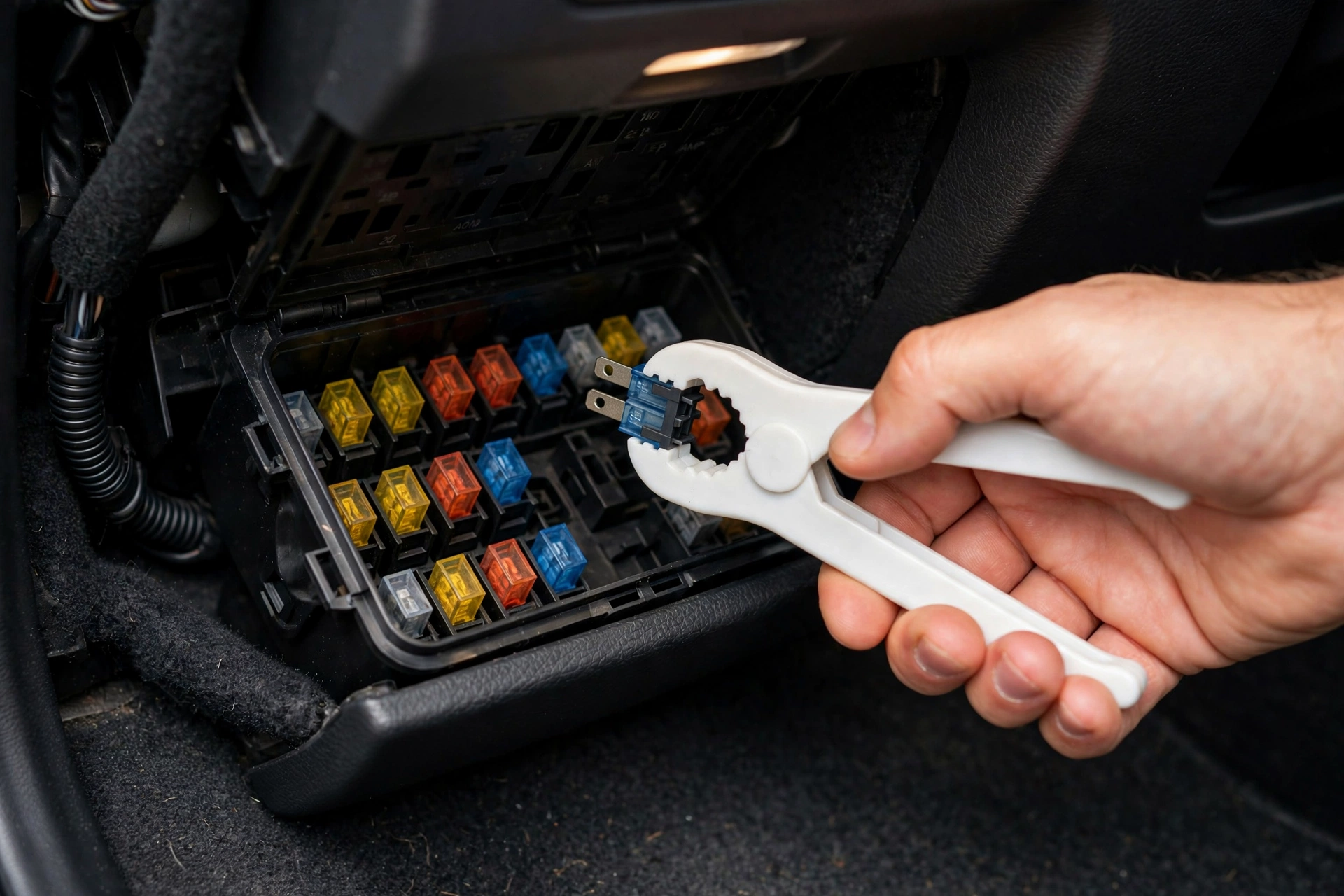
- Pull the suspect fuse. Most fuse boxes have a little plastic puller tool clipped to the lid. Slide it over the fuse and pull straight out. If yours is missing, needle-nose pliers work, but grip the plastic body, not the blades.
- Inspect it. Hold it up to light. A good fuse has one continuous metal strip connecting the two blades. A blown fuse has a gap, a melted section, or black discoloration.
- Test it if the break is not obvious. The fast way is a cheap 12V test light: ground the clip, touch each of the two little metal test points on top of the fuse while the circuit is powered. Light on one side only means the fuse is blown. A multimeter on continuity mode does the same job with the fuse removed.
- Check the right box. If the fuse in the cabin box looks fine, check the engine bay box. Some circuits have a small fuse feeding a larger one upstream.
Why fuses blow in the first place
Fuses rarely blow for no reason. Understanding the cause matters because a fresh fuse in a bad circuit just blows again:
- Too many devices on one circuit. Plugging a high-draw inverter into the 12V outlet while running a dash cam and a seat heater off the same circuit is a classic. The fuse did its job.
- A short to ground. A wire whose insulation has rubbed through against a metal bracket will pop fuses instantly. Wiggle the wiring near the dead component and look for bare copper.
- A dying component. A blower motor or fuel pump on its way out draws more current as it ages. The fuse blows repeatedly over weeks, not once.
- Water intrusion. A taillight housing full of water after a car wash or a storm will take out the fuse and sometimes the bulb with it.
- Age and corrosion. Fuses are not lifetime parts. Decades of heat cycling in the engine bay can fatigue the element or corrode the blades until the connection goes open.
If a replacement fuse blows immediately, stop replacing fuses and start looking for the short or the failing part. Every blown fuse after the first one is the car telling you there is a real problem.
How to replace a blown fuse
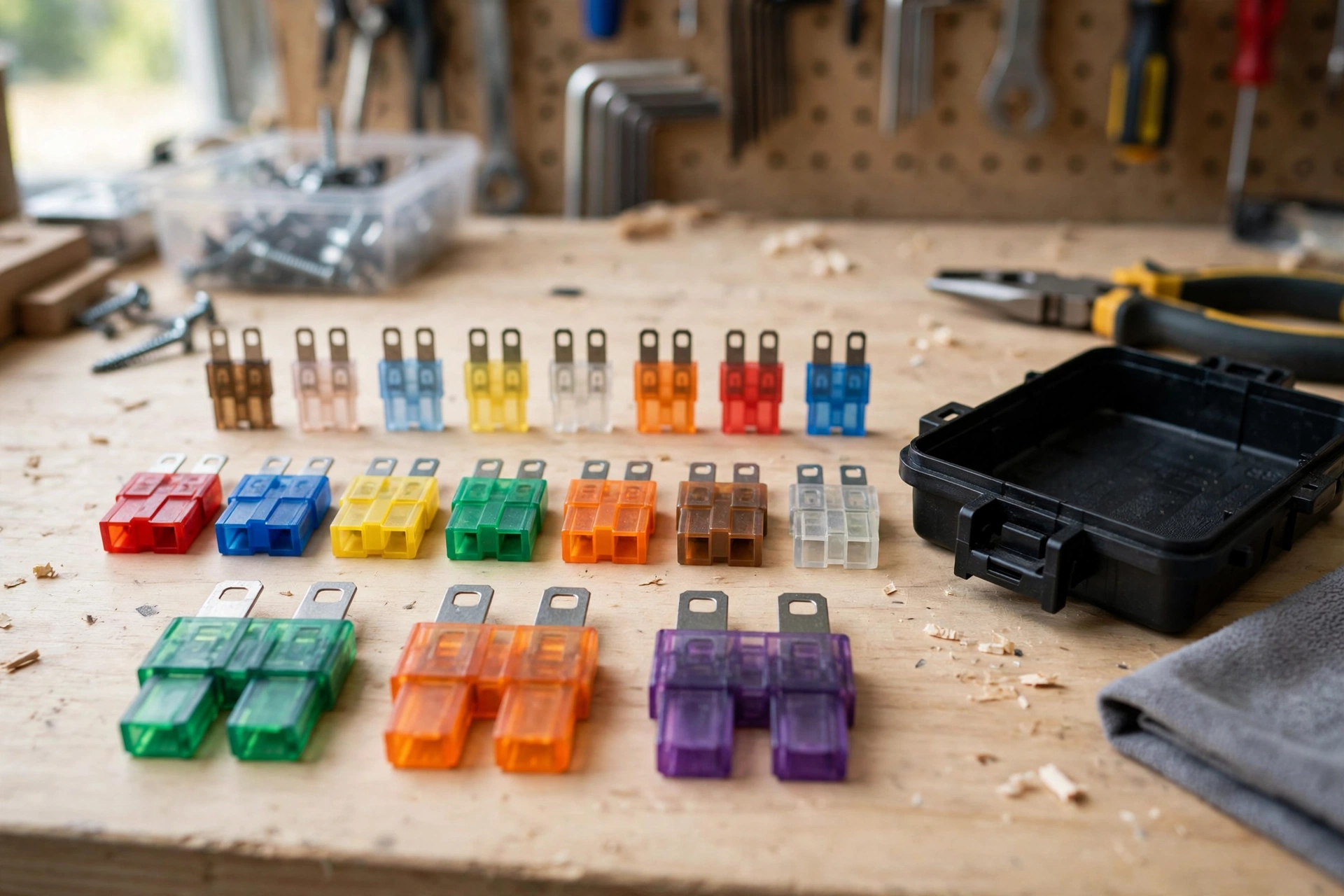
- Match the amperage exactly. This is the one rule that matters. Blade fuse colors are standardized: red means 10 amps, blue means 15 amps, yellow means 20 amps, green means 30 amps. Install a fuse with the SAME amperage as the one you removed, or the rating printed in the diagram. Never install a bigger fuse "to stop it from blowing". The fuse is the weakest link on purpose. Upsizing it lets the wiring become the weakest link instead, and wiring fires are a real thing.
- Match the physical size too. Mini, standard ATO, and maxi are different sizes and do not interchange. Take the old fuse to the store or buy a mixed assortment box.
- Push the new fuse firmly into the same slot. It should seat fully with a little click or firm resistance. A fuse that sits halfway can overheat from a poor connection.
- Retest the circuit. Key on, test the outlet, the light, or crank the engine. If it works, snap the fuse box lid back on and keep the rest of the assortment in the glove box. Future you will be grateful.
- Buy spares before you need them. A fuse assortment is a cheap part, the kind of thing that sits in the glove box for years and then saves a tow.
What a fuse job costs
There is no cost_data mystery here, so the honest version: fuses are a cheap part and the labor is yours. A single fuse at an auto parts store is pocket change. A multi-size assortment with 100-plus fuses and a puller is still a small purchase, and most boxes include the common amperages your car uses.
At a shop, the fuse itself is nothing. What you would pay for is the diagnostic fee to have a technician find which fuse died and why. That is fair if the fuse keeps blowing and there is a short to hunt down, because chasing a short takes real diagnostic time. But if the only thing wrong is one popped fuse and you have five minutes, paying for a diagnostic is paying someone to open a plastic lid for you.
DIY savings on a simple fuse replacement: basically the whole bill, minus the assortment you will reuse for years.
DIY vs shop: the verdict
Check and replace the fuse yourself, every time, as the first step. There is no cheaper diagnostic in existence. If the replacement holds, you are done in five minutes and you look like a genius.
Take it to a shop when: the same fuse blows more than once, when multiple fuses fail together, when you smell burning plastic, or when the dead circuit is part of the charging or ignition system and you are not sure where to look next. Repeatedly blown fuses mean a short, a failing motor, or water where it should not be, and that is genuinely a diagnostic job. See our Alternator Problems: Symptoms, Testing, and When You Actually Need a New One if the electrical problems keep spreading beyond one circuit.
FAQ
Can I drive with a blown fuse? It depends which circuit died. A blown fuse for the radio or the 12V outlet is an inconvenience. A blown fuse for a brake light, a headlight, or the fuel pump is a safety or drivability problem, fix it before driving. If you are not sure which circuit it is, check the diagram before you turn the key.
Can I use a higher amp fuse temporarily? No. Never. The fuse rating is matched to the thinnest wire on that circuit. A bigger fuse lets the wire overheat before the fuse gives up, and melted wiring is how electrical fires start. Carry spares instead.
Where is the fuse box on my car? There is no universal answer, and anyone who gives you one is guessing. Common spots are under the driver side dash, behind the glove box, in the kick panel, and in the engine bay near the battery. Your owner's manual has the exact diagram, and many fuse box lids have a printed legend on the underside.
How long do car fuses last? Often the life of the car. When one fails, it almost always failed because of current: an overload, a short, or a component drawing too much as it ages. A single random blow with no repeat is usually a one-time overload, replace it and move on.
The take
Checking fuses first is the most underrated habit in car repair. It is free to look, it takes five minutes, and it solves the problem outright a surprising number of times. The whole job is: ignition off, find the box, pull the fuse, look at the wire inside, replace it with the same amperage. That is it.
And if one headlight went dark and the fuse is fine, the next stop is the bulb. This 2012-2018 BMW 3-Series - Headlight Bulb Replacement guide covers the model-specific steps, and this 2019-2024 Chevrolet Silverado - Jump Start guide is the one to open if the truck will not turn over and you want to rule the battery out fast. A fuse, a bulb, and a jump start: that is the entire electrical triage for a car that quit, and it costs you almost nothing.
Safety: Informational DIY. EZ Car Fix is not a shop or dealer.