Car Fan Only Works on High: Blower Motor Resistor Test
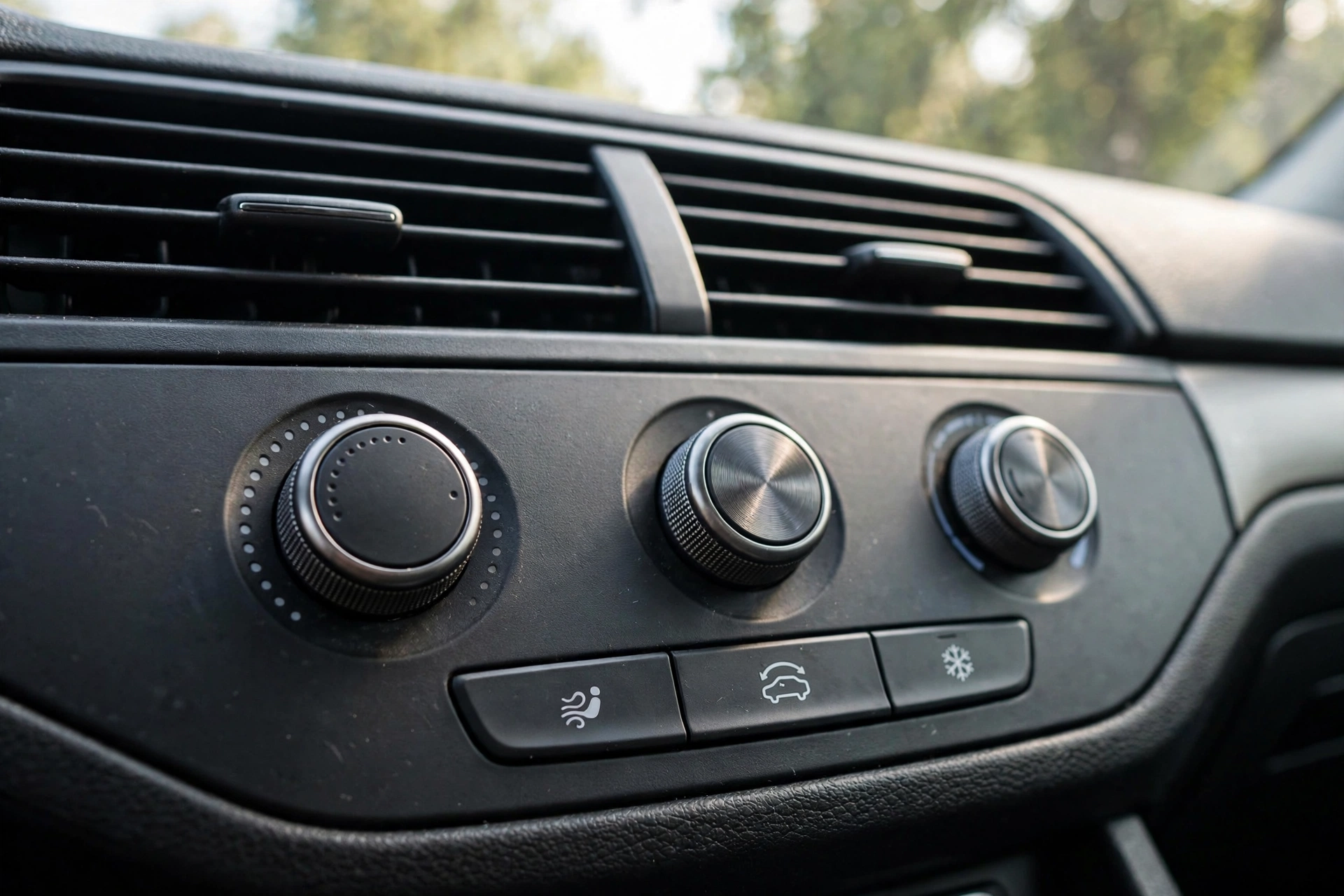
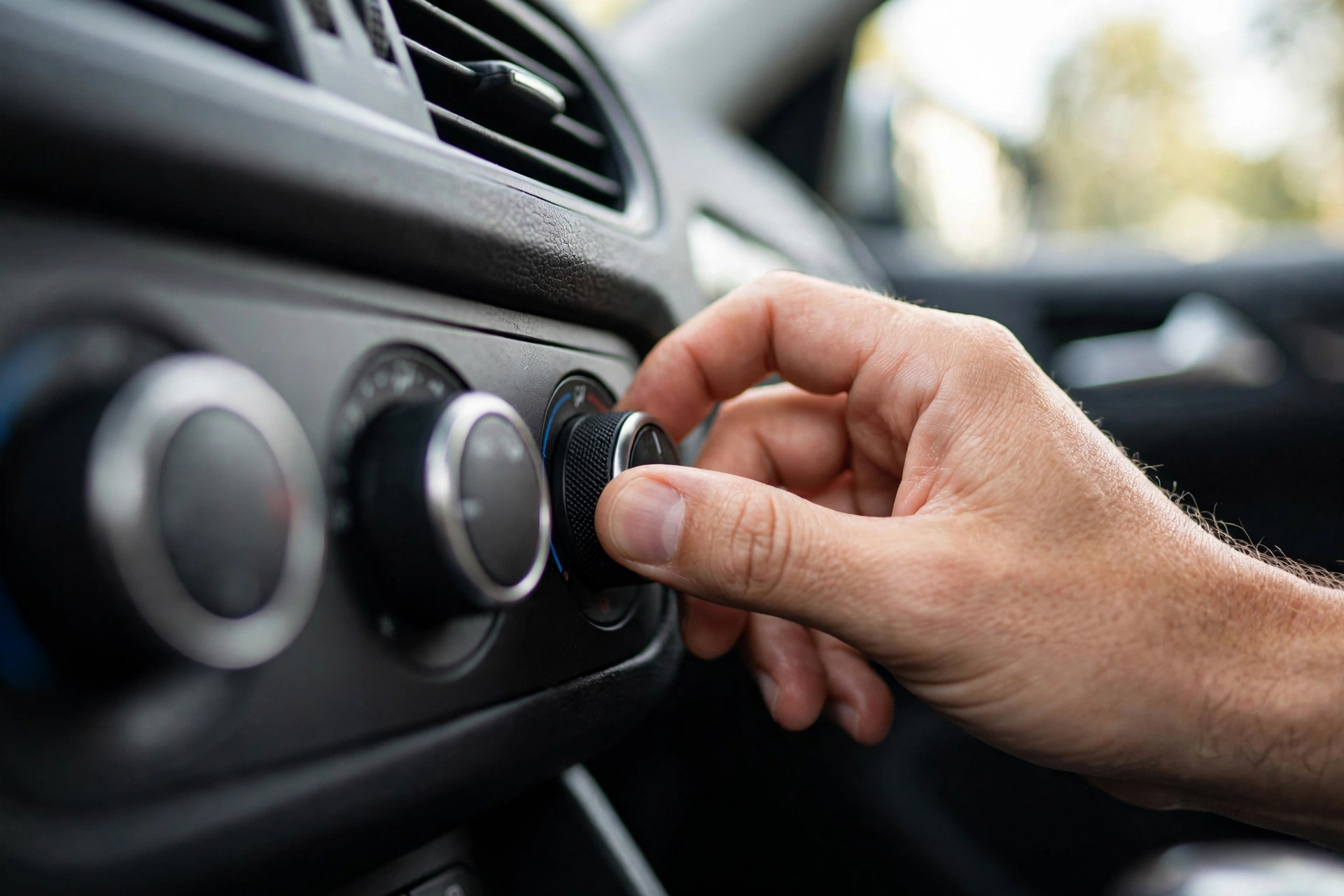
You turn the fan knob to 1, 2, 3. Nothing. You twist it to 4 and the blower roars to life like it was waiting for permission. Your blower motor resistor is dead. That is the answer, and it is the answer for the vast majority of cars that behave this way.
Here is why: your fan does not have four separate speeds. It has one motor, and on the lower three speeds the power runs through a resistor pack that burns off some of the voltage as heat. On the highest speed, the resistor is bypassed completely and full battery voltage, around 12 volts, goes straight to the motor. So when the resistor burns out, speeds 1 through 3 die together and speed 4 keeps working like nothing happened. It is one of the cleanest diagnostic patterns in all of auto repair.
Why Your Fan Only Blows on High
The resistor pack is a small coil of wire (or an electronic module on newer cars) that sits in the airflow path of the blower itself, because it gets hot enough to need its own cooling. That constant heating and cooling eventually breaks it, and when it goes, it tends to go all at once: every lower speed dies the same day.
A few other things can cause the same symptom, but they are rare. A failed fan speed switch can do it. A melted connector at the resistor can do it. A wiring break can do it. But if you are betting, bet on the resistor.
One more clue: if the lower speeds died gradually over weeks, or if you smell hot plastic near the vents, that is the resistor pack cooking itself to death. If the fan stopped working on ALL speeds including high, that is a different problem (blown fuse, dead motor, or broken switch), and the test below will point you there too.
How to Test the Blower Motor Resistor
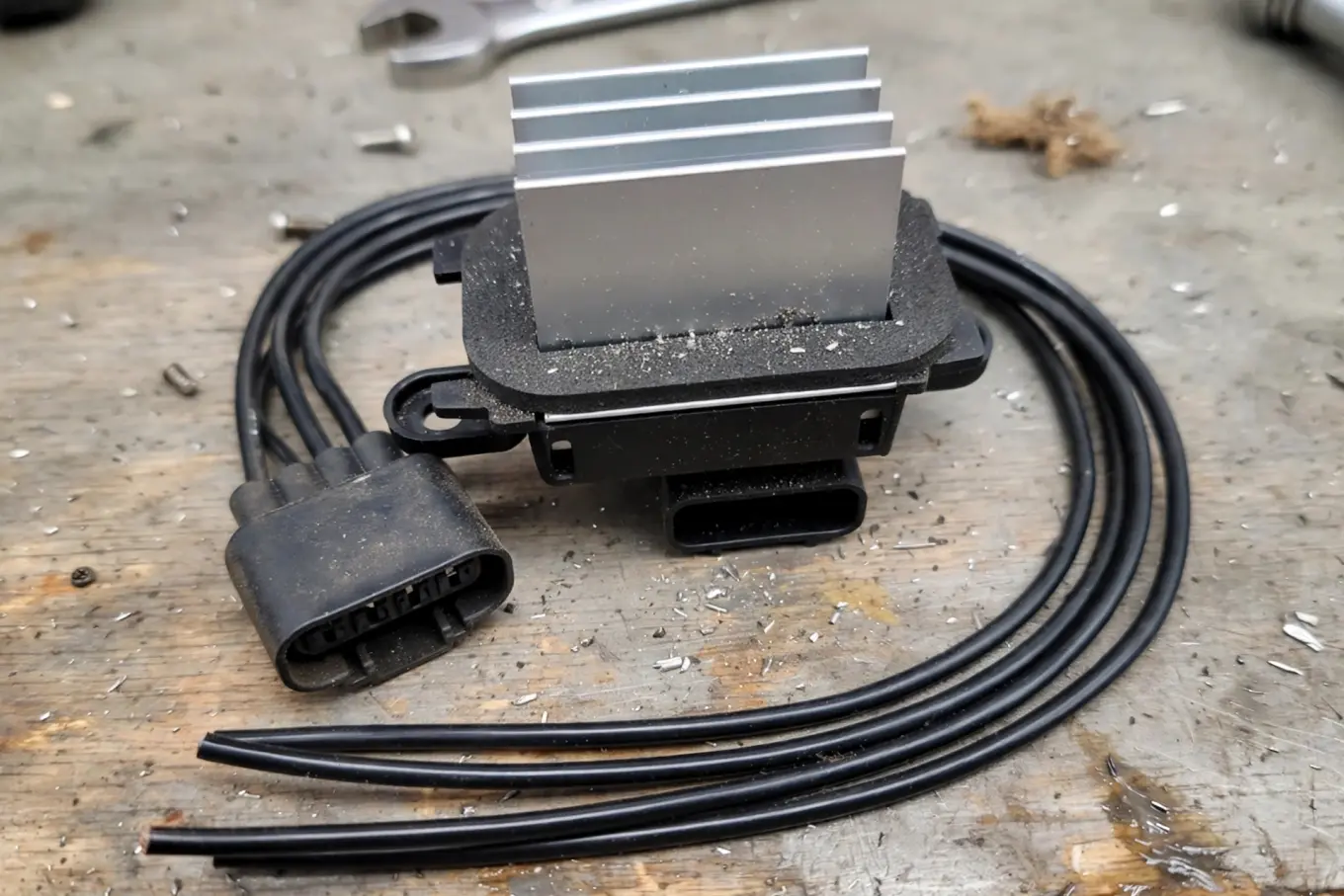
You do not need to buy parts yet. Work through these steps in order.
-
Map the dead speeds. Turn the fan to each speed and write down which ones work. If only speed 4 works, the resistor is the prime suspect. If nothing works at all, check the fuse before anything else.
-
Check the fuse. The blower fuse is usually in the interior fuse box, and its location is printed in your owner's manual. Pull it and look: a broken filament means it is blown. A blown fuse often means the blower motor is pulling too much current, so do not just replace the fuse and call it fixed.
-
Test the motor directly. This is the one step that settles it. Unplug the blower motor connector and run two jumper wires straight from the battery to the motor terminals. If the motor spins strong, the motor is fine and your problem is upstream (resistor, switch, or wiring). If it does not spin, the motor itself is dead.
-
Inspect the resistor and its connector. On most cars the resistor sits behind or under the glovebox, screwed into the blower housing. Unplug it and look at the connector pins. Melted plastic, discolored terminals, or a burnt smell means the connector failed along with the resistor, and you need to replace both.
-
Meter test, if you own a multimeter. Set it to resistance and probe between the input pin and each output pin on the resistor. If any pin reads open (infinite resistance), the resistor pack is dead. There is no need to know exact spec values for this test: an open coil is an open coil, and a healthy resistor reads some finite resistance on every output.
That is the whole test. If the motor runs on direct power and the resistor reads open or the connector is melted, you have found it.
What a Blower Motor Resistor Costs
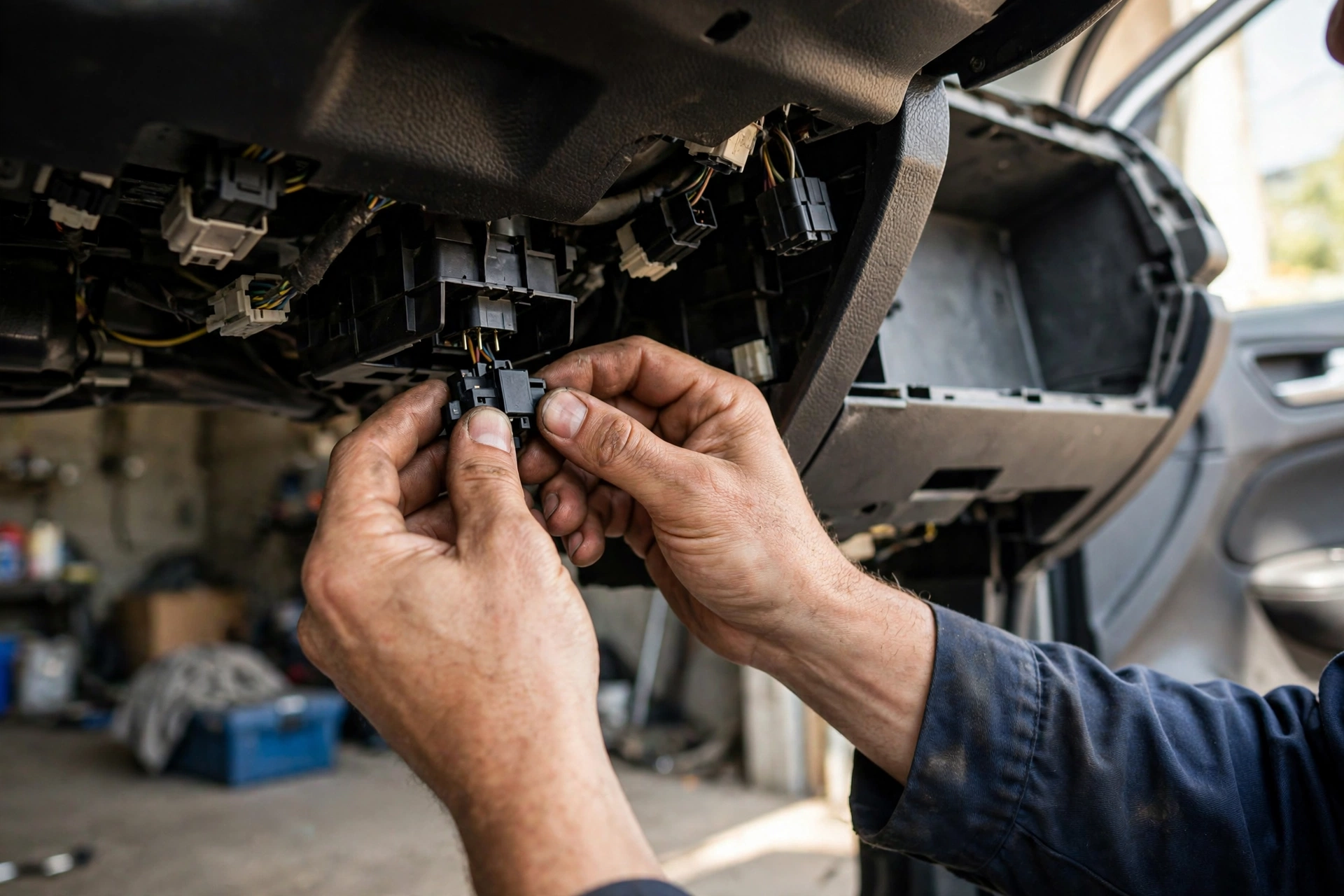
The part itself is cheap. This is one of those repairs where the hardware is the smallest line on the bill.
At a shop, labor is the big line and the part is a small one. The resistor often lives behind the glovebox, which means pulling panels and working in an awkward position, and shops bill the time it takes. An independent shop will charge less than the dealer for the same job, because their labor rate is lower and they are more likely to use a quality aftermarket part. Either way, expect a mostly-labor job.
Do it yourself and the economics flip. The part is cheap, the tools are basic hand tools you already own, and the job is mostly patience rather than skill. Your only real expense is the part itself, plus a replacement connector pigtail if yours melted, which is also a cheap part.
One honest warning: on some vehicles the resistor is buried behind the dashboard and the job turns into real surgery. If your manual shows the resistor location deep behind the dash rather than behind the glovebox, get a quote before you start tearing things apart.
DIY vs Shop: Should You Replace It Yourself?
Replace it yourself. This is one of the easiest electrical repairs on a car, it is hard to mess up, and you cannot really make anything worse by trying. The only special skill involved is patience with plastic clips.
The exception is access. If the resistor is buried deep behind the dash, pay the shop. An hour of a tech's time in a cramped footwell is money well spent compared to your Saturday and a pile of broken trim clips.
FAQ
Can a bad blower motor resistor drain the battery?
No. A dead resistor cannot drain anything, because it cannot pass current. But a shorted resistor or a stuck relay can keep the fan running after you shut the car off, and that will drain the battery overnight. If your fan keeps blowing with the key out, pull the blower fuse until you fix it.
Why did my new resistor burn out again?
Because the blower motor is dying. A worn motor pulls more current than it should, and that extra current is what cooks the resistor. If you replace a second resistor in a year, replace the motor too. They are a matched pair and they fail as a team.
Could it be the fan switch instead of the resistor?
It can, but it is much less common. The resistor is the weak link in the circuit by design. If a new resistor does not fix it, the switch is the next suspect.
Is it safe to drive with the fan stuck on high?
Yes. It is loud and annoying, and it will defrost your windshield just fine. It is not a safety problem and it will not damage anything. Fix it when you have a free hour.
The Take
The blower motor resistor is the rare car problem where the symptom is basically the diagnosis. Fan only works on high? Replace the resistor, and replace the blower motor too if it is old or noisy. It is a cheap part, a simple job, and a shop will mostly charge you for the labor.
If your heater has other problems, start with Car Heater Blowing Cold Air: 7 Causes to Check First. For a hot-weather version of this whole story, Air Conditioning Not Blowing Cold: Diagnosis and Repair Without Wasting Money covers the AC side. And when you are ready to do the work, our step-by-step guides walk you through it: 2010-2017 Chevrolet Equinox - Blower Motor Replacement and 2008-2013 Toyota Highlander — Blower Motor Replacement.
Safety: Informational DIY. EZ Car Fix is not a shop or dealer.