Car Won't Start Even With a Jump: What's Next
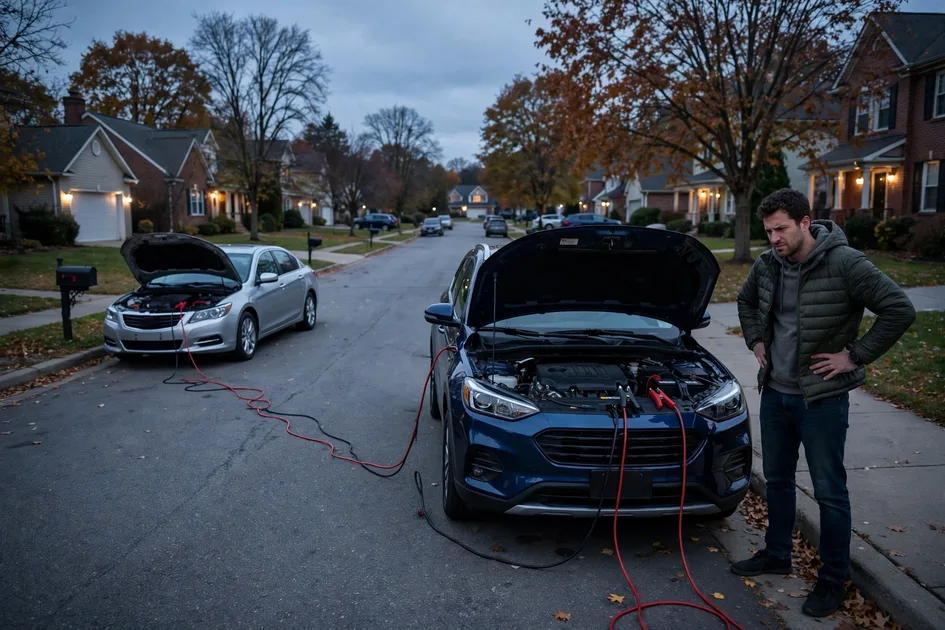
You hooked up the cables, waited, turned the key, and got nothing. Or worse, you got the exact same click, whirr, or silence as before. Here is the blunt truth: a jump start only rules out a weak battery. If the jump did not change anything, the problem was never the battery's charge. Something else in the starting chain is broken, and the clues are in what the car does when you turn the key.
Read the Failure Clues First
Before you touch anything, listen and watch. Each failure has a signature:
- Rapid clicking when you turn the key: the starter is getting some power but not enough. Usually a battery with a dead cell, corroded terminals, or bad cables. If good jumper cables on a running donor car did not fix it, the battery may be too far gone or the connections too dirty to pass current.
- One loud click, then nothing: the classic dead starter. The solenoid engages but the motor does not spin.
- Slow crank that fades: weak battery or one that cannot hold a charge under load. This one sometimes responds to a jump, which is why it matters whether yours changed at all.
- Engine cranks fine but will not fire: this is not a battery problem at all. The starter is doing its job. You are looking at fuel, spark, or an immobilizer issue, a completely different problem.
- Total silence, no dash lights: the main power path is dead. Blown main fuse, fusible link, or a disconnected battery cable.
The rest of this post covers the first three cases, because those are the ones where a failed jump points at a specific part.
Start With the Battery and Its Connections
A jump start is only as good as the connection it passes through. Work through these before you buy anything:
- Question the jump itself. Cheap, thin jumper cables lose so much voltage that they barely help. The donor car needs to be running, and you need to let it charge your battery for 2 to 3 minutes before cranking. If someone held cables on for ten seconds and you turned the key, that was not a real test.
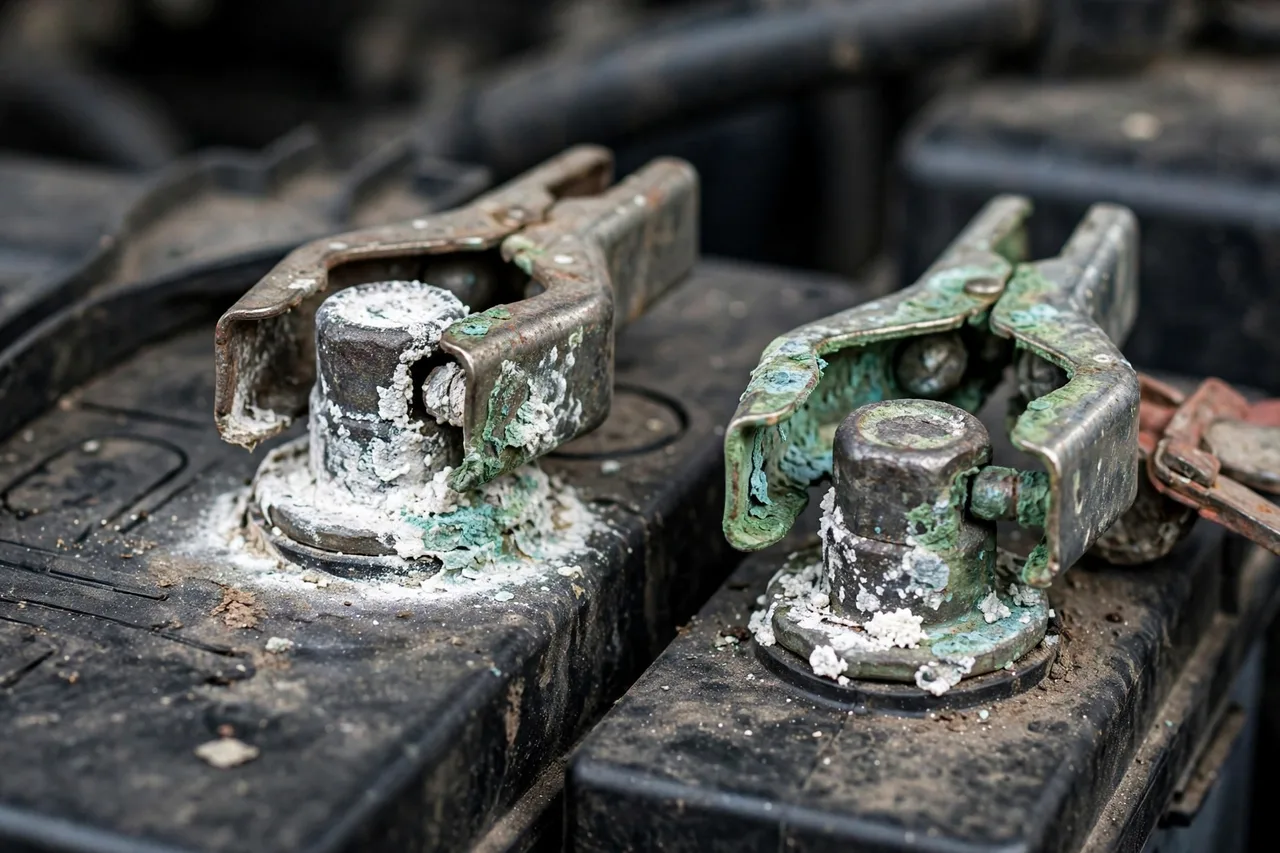
- Look at the terminals. Pop the hood and look for white or green crust on the battery posts. Corrosion is resistance, and resistance chokes the starter's current. Twist each cable end by hand. If it moves, it is loose, and a loose clamp can cause a no-start all by itself.
- Clean them properly. Disconnect the negative cable first, then the positive. Scrub the posts and the insides of the clamps with a wire brush until the metal is bright. Reconnect positive first, negative last, and snug them down. Then try starting again.
- Follow the cables. The ground cable from the battery to the chassis and the positive cable to the starter can corrode where you cannot see it, under the insulation. Swollen, stiff, or green-tinged cable is a bad cable. A bad cable makes even a brand new battery useless.
If the cables are clean and tight and a proper jump still did nothing, stop suspecting the battery's charge and start suspecting everything else.
Test the Battery for Real, Not With a Guess
A battery can read fine at rest and collapse under load. One dead cell turns the battery into a load instead of a source, and no jump start will overcome that.
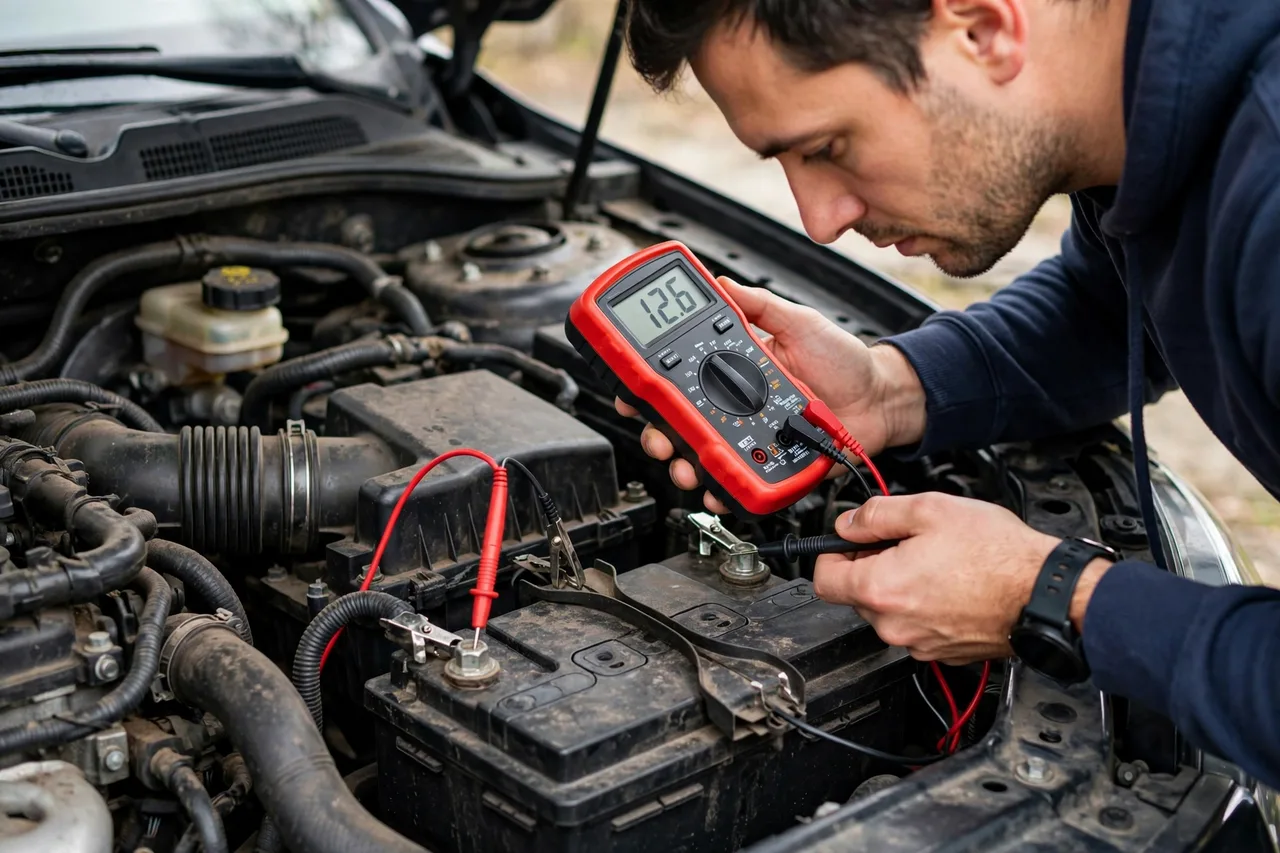
- Resting voltage. A multimeter across the posts of a fully charged battery reads around 12.6 volts. Under 12 volts means it is discharged or dying.
- Cranking voltage. Have someone turn the key while you watch the meter. If voltage drops below about 9.5 volts during cranking, the battery cannot deliver starting current.
- Get a free load test. Almost every auto parts store will load-test a battery for free. This is the definitive test. If it fails, no amount of jumping would ever have worked, which is exactly your situation.
A battery more than 4 or 5 years old is living on borrowed time. When it fails the load test, a swap is one of the easiest repairs on the car. The 2023-2026 Acura Integra Battery Replacement guide walks through the swap step by step, and the process is nearly identical on most modern cars.
The Single Click Points at the Starter
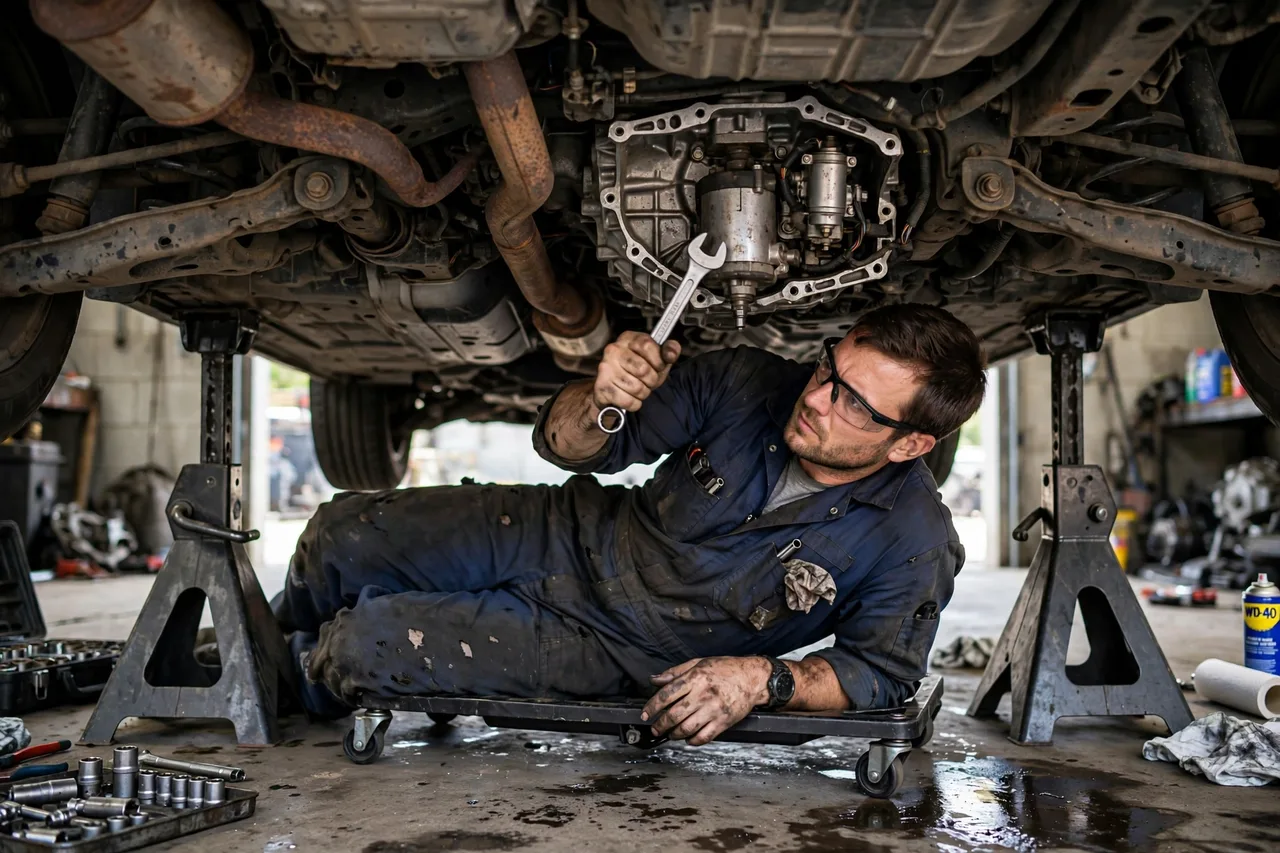
If you get one solid click and the engine never turns, the starter solenoid is engaging but the motor is not spinning. This is the most common reason a car refuses to start even with a good jump.
- The tap test. Have someone hold the key in the start position while you tap the starter body firmly with a wrench handle or a piece of wood. If the engine suddenly cranks, the starter has dead spots on its commutator. It will work for a while and then leave you stranded again. Replace it now, while the car starts in your driveway and not in a parking lot at night.
- Check the starter signal wire. The small wire on the starter solenoid carries the start signal from the ignition switch. If it is loose or corroded, the solenoid never fires and you get total silence. Wiggle it, clean it, and try again.
- Listen for the solenoid. No click at all, with good dash lights, means the start signal never arrived. That points at the ignition switch, the starter relay, or the neutral safety switch.
A starter replacement is a bolt-off, bolt-on job on most cars, with access being the only real variable. The 2017-2021 Acura MDX - Starter guide shows exactly what is involved, and the Starter Problems: How to Tell If It's Your Starter, Battery, or Something Else post goes deeper on the electrical tests.
The Switches and Fuses People Forget
If the battery and starter check out, the start signal may never be reaching the starter:
- Neutral safety switch. Automatics only start in Park or Neutral. Try starting in Neutral with your foot on the brake. If it fires right up, the switch is worn or out of adjustment. This is a five-minute diagnosis and a common fix.
- Ignition switch. If the dash lights flicker or die when you turn to Start, or you have to jiggle the key, the electrical half of the ignition switch is worn out. This is a mostly-labor job on many cars because the steering column has to come apart.
- Starter relay and main fuses. Swap the starter relay with an identical one from the fuse box (the horn relay is usually the same) and try again. A blown fusible link or main fuse gives you total electrical silence, which no jump can overcome.
- The alternator question. If the car starts on a jump but dies shortly after, or you have been jump-starting it every morning, the alternator is not recharging the battery. That is a charging problem, not a starting problem. The 2017-2021 Acura MDX - Alternator Replacement guide shows the job on one popular model.
What Each Fix Costs
No dollar figures here, because real costs swing hard by car and by city. Think in tiers instead:
- Cleaning terminals and tightening cables: free DIY, a few minutes. A shop usually folds this into any diagnostic.
- New battery: cheap part, minutes of labor. Shops add a small install fee; dealers charge noticeably more for the same battery.
- Starter replacement: middle of the road. The part itself is a mid-priced component and the job is mostly labor. Easy access keeps the bill reasonable. A buried starter on some V6 and V8 engines adds labor hours and a bigger bill. Independents charge less than dealers, and DIY saves the labor entirely.
- Ignition switch or neutral safety switch: cheap parts, mostly labor, because of the column or linkage work.
- Alternator: a bigger-ticket part plus labor. DIY-friendly on many four-cylinders, annoying on cars where it is buried.
The consistent pattern: the dealer is the most expensive option for every one of these, the independent shop sits in the middle, and DIY wins on anything you can reach with basic tools.
DIY or Call a Shop?
A starter replacement is DIY if you can reach it and you are comfortable under the car. Confirming the starter is the problem is the hard part; the swap itself is usually straightforward. Call a shop when the starter is buried, when the ignition switch needs the column torn down, or when you have done everything above and the car still does nothing. At that point you need a wiring diagram and a real electrical diagnosis, not more parts guessing.
FAQ
Can a battery be so dead that a jump start will not work? Yes. A battery with a shorted cell becomes an electrical load instead of a source, and it can drag the donor car's voltage down with it. Corroded or loose terminals do the same thing by blocking the current path.
How long should I let the donor car charge mine before cranking? Two to three minutes with the donor engine running. Trying to crank immediately is the most common reason jumps fail.
Will tapping the starter damage it? No, not if you are reasonable about it. Firm taps on the starter body with a wrench handle are a standard field test. You are not fixing it, you are confirming it is the problem so you can replace it with confidence.
My car cranks but will not start. Is that the same problem? No. Cranking means the battery and starter are doing their jobs. A crank-but-no-fire problem is fuel, spark, or the anti-theft immobilizer, and a jump start was never going to help.
The Takeaway
A failed jump is information, not bad luck. It told you the battery's charge was not the problem, and the sound the car makes when you turn the key tells you which part actually is. Work the chain in order: real jump, clean connections, tested battery, starter, then switches and fuses. Most no-starts die in the first three steps.
If you have not already, read How to Jump Start a Car Safely (Step-by-Step DIY) so your next jump is a real test instead of a guess. And when the clues point at the starter, the Starter Problems: How to Tell If It's Your Starter, Battery, or Something Else post walks through the full electrical test procedure.
Safety: Informational DIY. EZ Car Fix is not a shop or dealer.