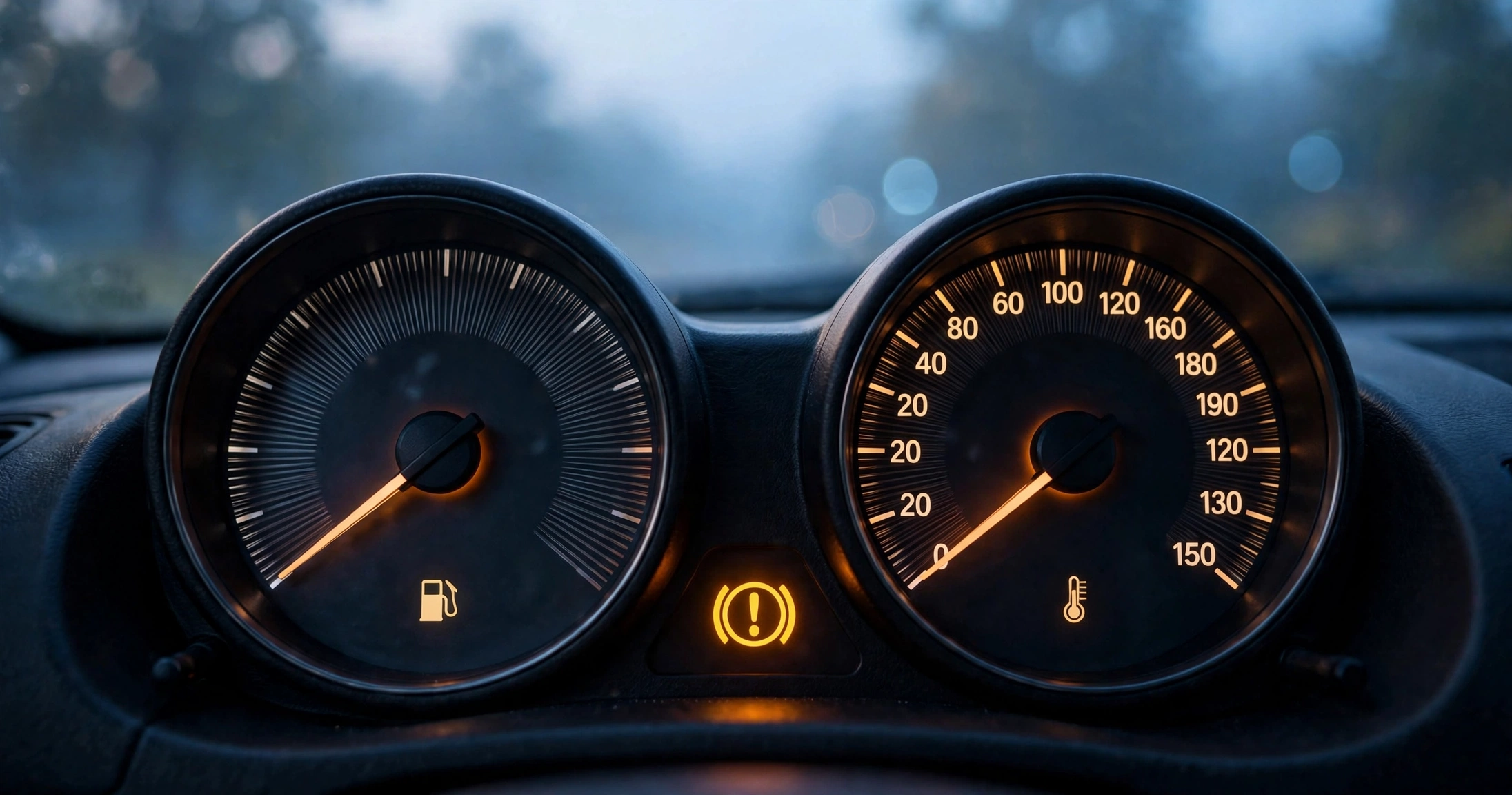
Why Your Tire Pressure Light Comes On in Cold Weather
Cold air shrinks. For roughly every 10 degrees Fahrenheit the temperature drops, your tires lose about 1 PSI. Park the car overnight in a cold snap and the tire pressure monitoring system wakes up to pressure below its threshold, so the TPMS light comes on. In most cases the tires are not damaged and nothing is leaking. They just need air.
This is the single most common reason a TPMS light appears in fall and winter. The part most people miss: the cold did not create the problem out of nothing. It exposed tires that were already running low. A tire inflated correctly in September usually survives a cold October morning without tripping the light. One that was already a few PSI soft does not.
Cold air drops pressure. Here is the rule of thumb.
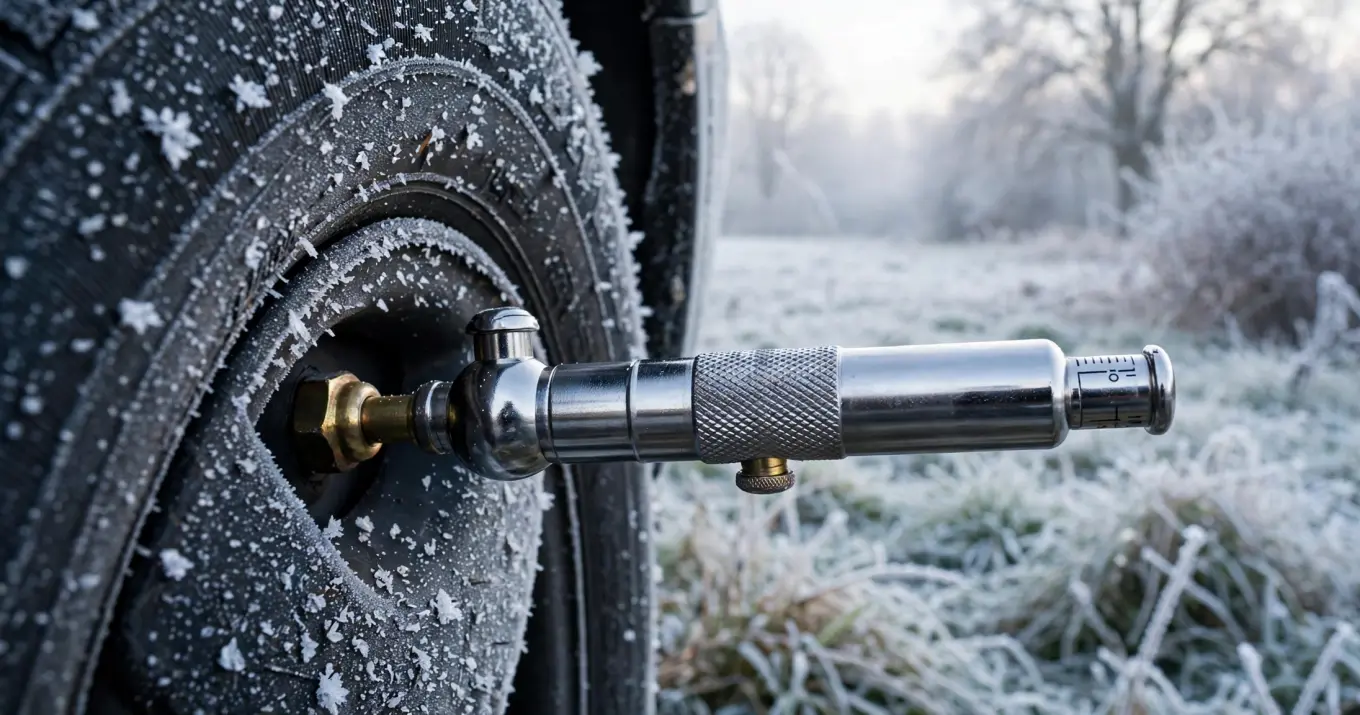
Air contracts when it gets cold. The standard rule of thumb the tire industry uses is about 1 PSI lost for every 10 degrees Fahrenheit of temperature drop. An overnight swing of 30 degrees, totally normal in October and November, costs you around 3 PSI across all four tires at once.
That is usually enough to matter. By federal rule, TPMS must warn you when pressure falls to 25 percent below the number on your door jamb placard. On a car with a 32 PSI recommendation, the light comes on around 24 to 25 PSI. If your tires were sitting at 28 PSI in September because nobody had checked them in months, one cold night pushes them to 25 and the light greets you in the morning.
If the light came on purely from cold, your tires were underinflated before the cold arrived. The weather just made it visible. That is worth knowing, because underinflated tires wear the edges faster, use more fuel, and run hotter at highway speed. The light doing its job is the good outcome here.
Solid light vs blinking light: they mean different things
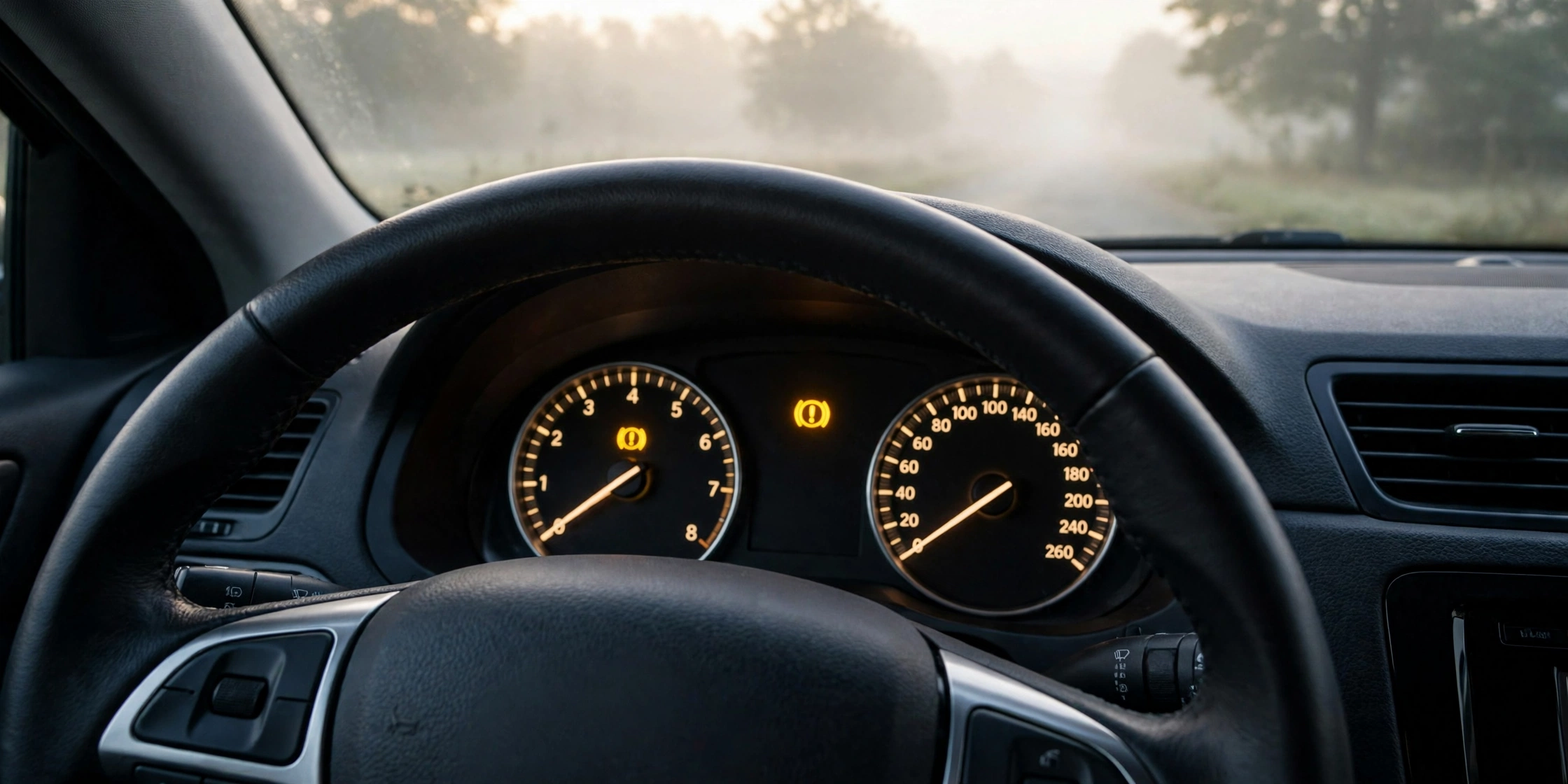
A solid TPMS light means low pressure in one or more tires. Check them and add air. That covers the vast majority of cold-weather cases.
A light that blinks for about a minute when you start the car, then stays solid, means something else: the monitoring system itself has a fault. It cannot read one or more sensors, so it cannot tell you about pressure either. Common causes:
- A dead TPMS sensor battery. The sensors inside your wheels run on tiny batteries that last roughly 7 to 10 years, and the battery is not replaceable. The whole sensor gets swapped.
- A sensor damaged during a tire change or by corrosion.
- Winter wheels without sensors. If you run a separate set of winter wheels and they have no TPMS sensors installed, the car notices every time you start it.
- A sensor that lost its pairing after tire work and needs a relearn.
The blink-then-solid pattern means a sensor fault, and that is a tire shop job, not a driveway fix.
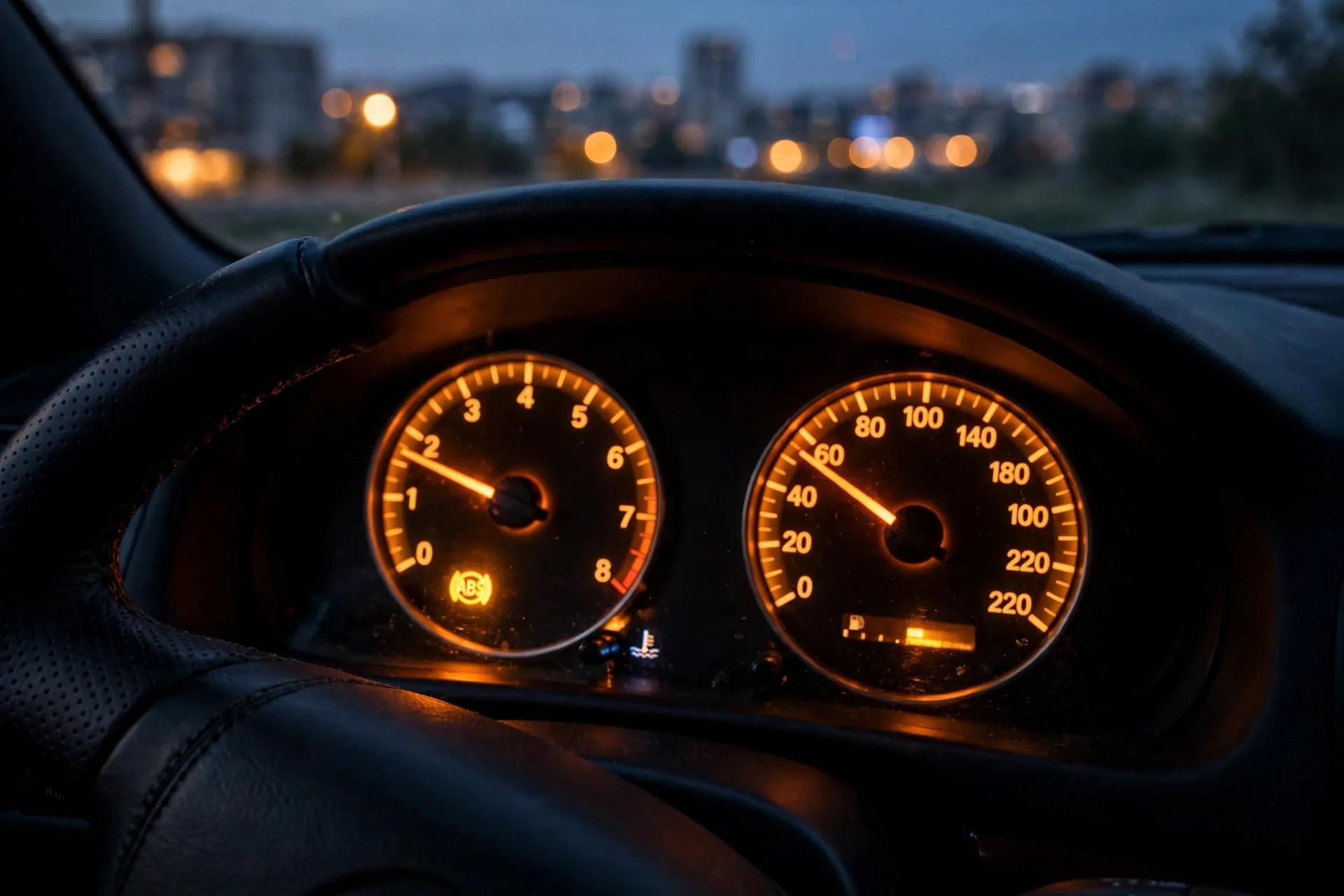
Some cars use indirect TPMS instead of sensors in the wheels. These systems watch wheel speed through the ABS sensors and infer a low tire from how it rolls. They have no sensor batteries to die, but they are pickier: after you adjust pressure you usually have to run a reset or calibration from a dashboard button or the infotainment menu, or the light just stays on. If your car has a TPMS reset button, usually under the dash or in the glove box, this is the car that needs it.
What to do: check and inflate, in the right order
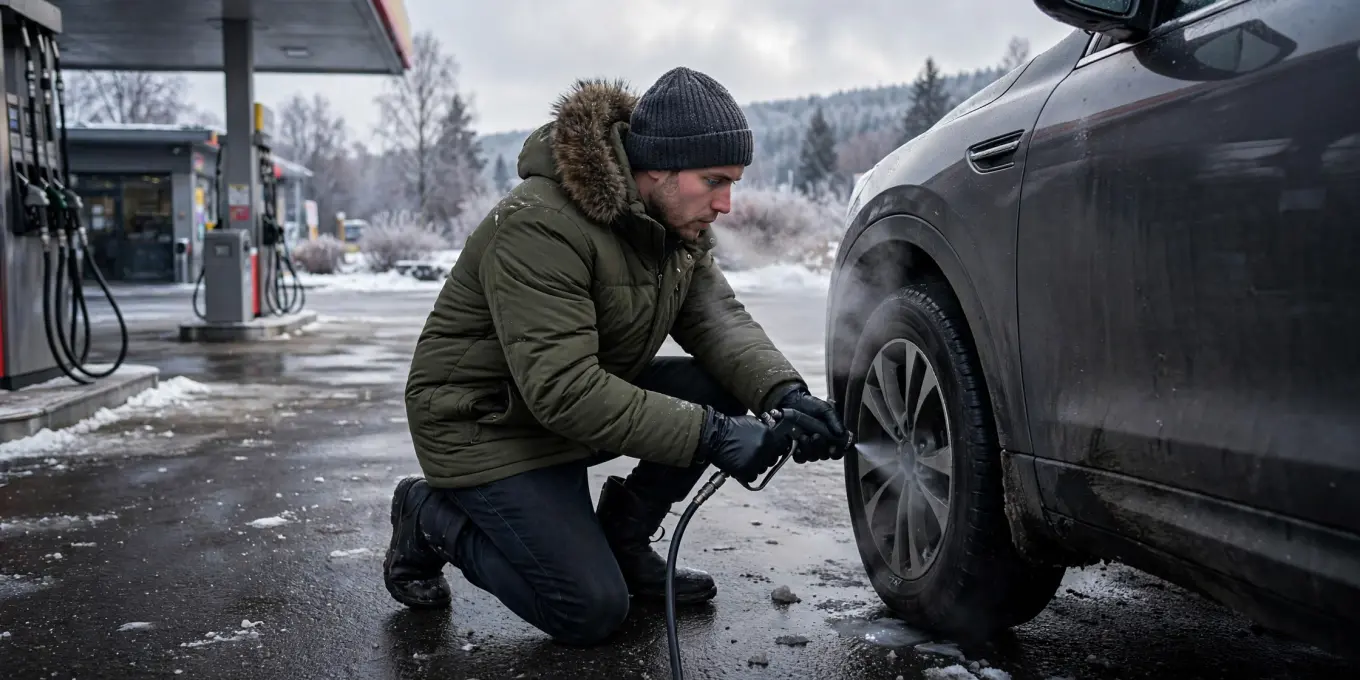
Do this on a cold morning before driving, or after the car has sat for at least three hours. Pressure readings taken after highway driving read high and will mislead you.
- Check every tire with your own gauge. Do not trust the dashboard readout alone if your car has one, and do not trust the gas station air pump gauge, which has been abused by ten thousand drivers before you. Check all four, plus the spare if you have a full-size one, since some systems monitor it too.
- Find the correct number on the driver door jamb placard, the sticker on the B-pillar you see when you open the driver door. That is the carmaker's recommendation for your car. Ignore the number molded into the tire sidewall. That is the tire's maximum, not the target.
- Add air to the placard number. Most gas station air pumps are free or cost pocket change, and a basic pencil or dial gauge is a cheap one-time buy that lives in your glove box forever.
- If your car has a TPMS reset button or a reset option in the settings menu, run it after inflating. On cars without one, the light usually clears on its own after a short drive as the system sees the corrected pressures.
- Recheck in a week. If the light is back, the cold is not your problem anymore. You have a slow leak.
That last step matters more than people think. A nail in the tread, a leaky valve stem, or corrosion where the tire bead seals against an alloy wheel (common in road-salt states) can bleed a tire down over days. The cold gets blamed; the nail did it. A spray bottle of soapy water on the tread and valve stem will show the leak as bubbles. If you find one, that tire needs a proper plug-patch from a shop or a replacement, not more air every week.
TPMS sensors: the part that actually wears out
Everything above assumes the sensors work. They do not last forever. At 7 to 10 years the internal batteries die, usually one at a time, and each dead sensor means a blink-then-solid light and one wheel the car can no longer watch.
Replacement means breaking the tire bead, swapping the sensor, and relearning it to the car. The sensor itself is a small part. The labor is the tire work, which is why the smart time to replace aging sensors is during a tire change, when the wheels are already off and the tires are already being mounted. Doing it as a standalone visit costs noticeably more for the same part, because you are paying for the mount and balance work twice.
When you do buy tires, ask the shop about the sensor ages. If the car is pushing a decade old and the sensors are original, replacing all four during the tire job beats coming back one by one as each battery dies. If you run dedicated winter wheels, either install sensors in them or accept the blinking light all winter and check pressures manually.
What this costs
Air is the cheapest fix in car ownership. Checking and topping up your tires costs nothing if you own a gauge, and next to nothing at a gas station air pump. It takes ten minutes and it is the entire fix for most cold-weather TPMS lights.
Sensor replacement is the only repair in this story that costs real money, and it is a small-part-plus-tire-labor job, cheapest when bundled with a tire change. An independent tire shop is the right place for it, not the dealer. The dealer will do it fine and charge more for the same sensor and the same relearn procedure.
The expensive outcome is ignoring the light. Running tires 25 percent low through winter chews through tread, and one hard pothole hit on a soft tire is how sidewalls get destroyed and wheels get bent. The air is free. The new tire is not.
DIY vs shop: the verdict
The cold-weather TPMS light is a driveway fix. Gauge, placard number, air pump, ten minutes, done. No tools beyond the gauge, no parts, no appointment.
Bring a shop into it for exactly two situations: the light blinks then stays solid (sensor fault), or the same tire keeps going low week after week (leak that needs a plug-patch or a new tire). Both need equipment you do not own. Everything else is you, a gauge, and the door jamb sticker.
FAQ
Should I overinflate my tires in winter to get ahead of the cold? No. Inflate to the door jamb number measured with the tires cold. Recheck it as the season gets colder — the placard is a cold-pressure target, not a buffer against big temperature swings. Overinflating past it wears the center of the tread and hurts grip on the cold pavement you are trying to stay safe on.
Why does the light come on in the morning and turn off by afternoon? Driving warms the tires, and warm air expands, so pressure climbs back 1 to 2 PSI, just enough to clear the warning threshold. The light going off does not mean the pressure is correct. It means you are hovering right at the edge. Add air anyway.
Can I just ignore it until spring? You can, and plenty of people do, but you will pay for it in tread wear and fuel. A tire running a quarter low all winter also runs hotter at highway speed and is far easier to damage on a pothole. Ten minutes with a gauge beats buying tires early.
Do I need new TPMS sensors when I buy new tires? Not automatically. But if the sensors are original and the car is around 8 to 10 years old, doing them with the tire job is the cheap window. Once the new tires are mounted, each future sensor replacement means paying for tire labor all over again.
My take: the TPMS light is the most honest warning light on your dashboard. It almost never lies and it almost never means something expensive. When it comes on in cold weather, it is telling you two true things at once: the air got cold, and your tires were already low. Believe both, add air, and move on.
If you want to make tire checks part of a real maintenance routine, the 2017-2024 Jeep Compass Tire Pressure and Rotation DIY Guide and the 2018-2023 Subaru Crosstrek Tire Pressure and Rotation DIY Guide walk through pressure checks and rotation together, and the 2013-2022 Acura ILX Tire Pressure and Rotation DIY Guide covers the same job on a sedan. For the bigger winter picture, read Winter Tires vs All-Season vs All-Weather: What You Actually Need and the tire rotation maintenance guide.
Safety: Informational DIY. EZ Car Fix is not a shop or dealer.
Last reviewed: October 2026.