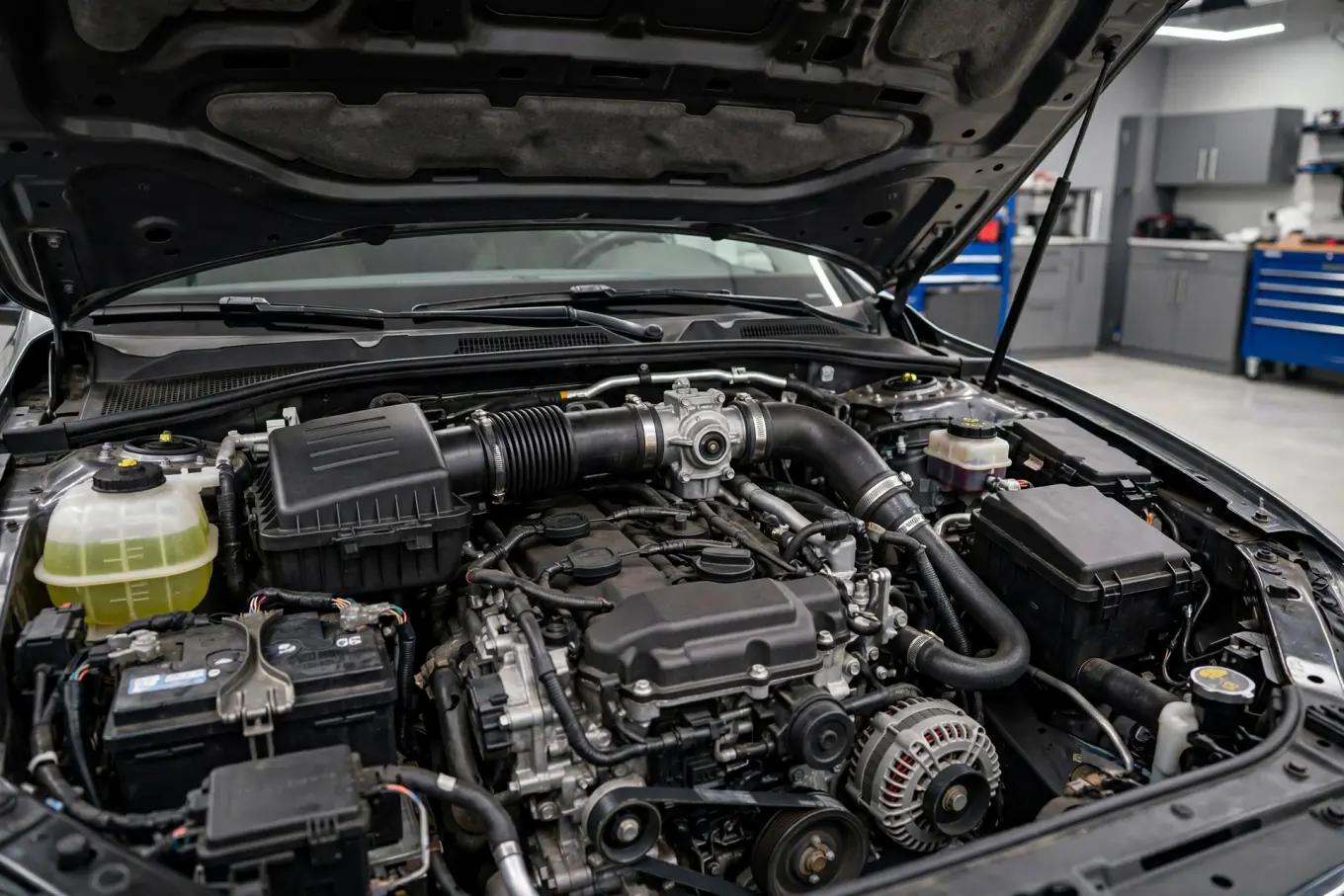
Thermostat Stuck Open or Closed: Symptoms and Cost
A thermostat is a small valve between your engine and your radiator, and when it fails it only fails two ways. Stuck open, your engine never fully warms up, your heater blows lukewarm air, and your gas mileage drops. Stuck closed, your engine overheats fast, sometimes within minutes of starting. Both problems point at the same cheap part, but they feel completely different from the driver seat.
If your temperature gauge never reaches its normal spot, or it climbs into the red on a short drive, the thermostat is the first suspect.
What a Thermostat Actually Does
Your engine is designed to run at a set operating temperature, not as cold as possible. When you start a cold engine, the thermostat stays shut and keeps coolant circulating inside the engine so it warms up quickly. Once the engine reaches its normal temperature, the thermostat opens and lets coolant flow out to the radiator, where air moving through the grille pulls the heat away.
Think of it as a gate that opens and closes to hold the engine in its comfort zone. When it sticks, there is no halfway setting. It sticks open, it sticks closed, and your cooling system has to live with whichever one it picked.
Stuck Open: The Symptoms
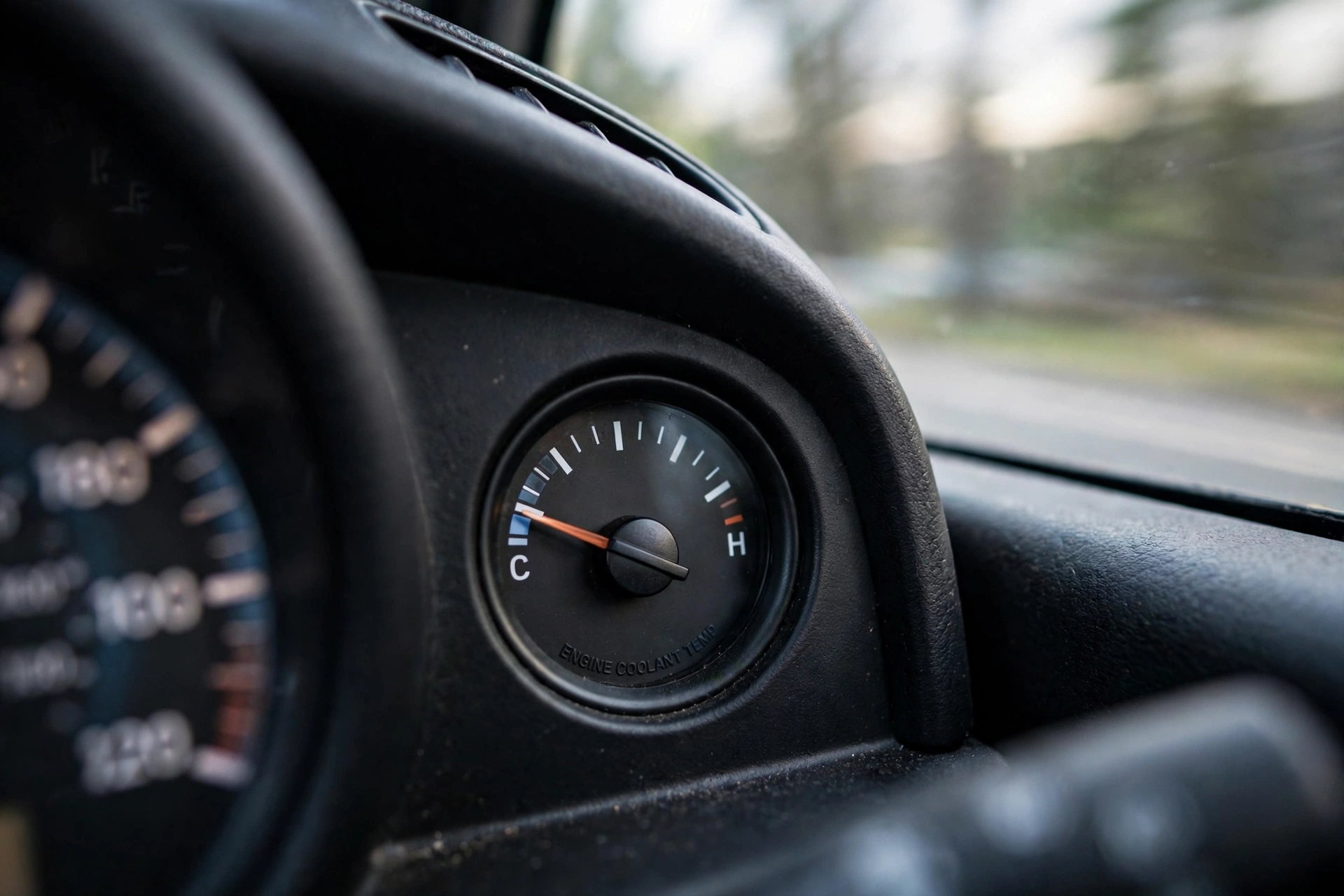
A thermostat stuck open lets coolant flow to the radiator from the moment you start the car. The engine takes forever to warm up, and on a cold day or at highway speed it may never fully get there.
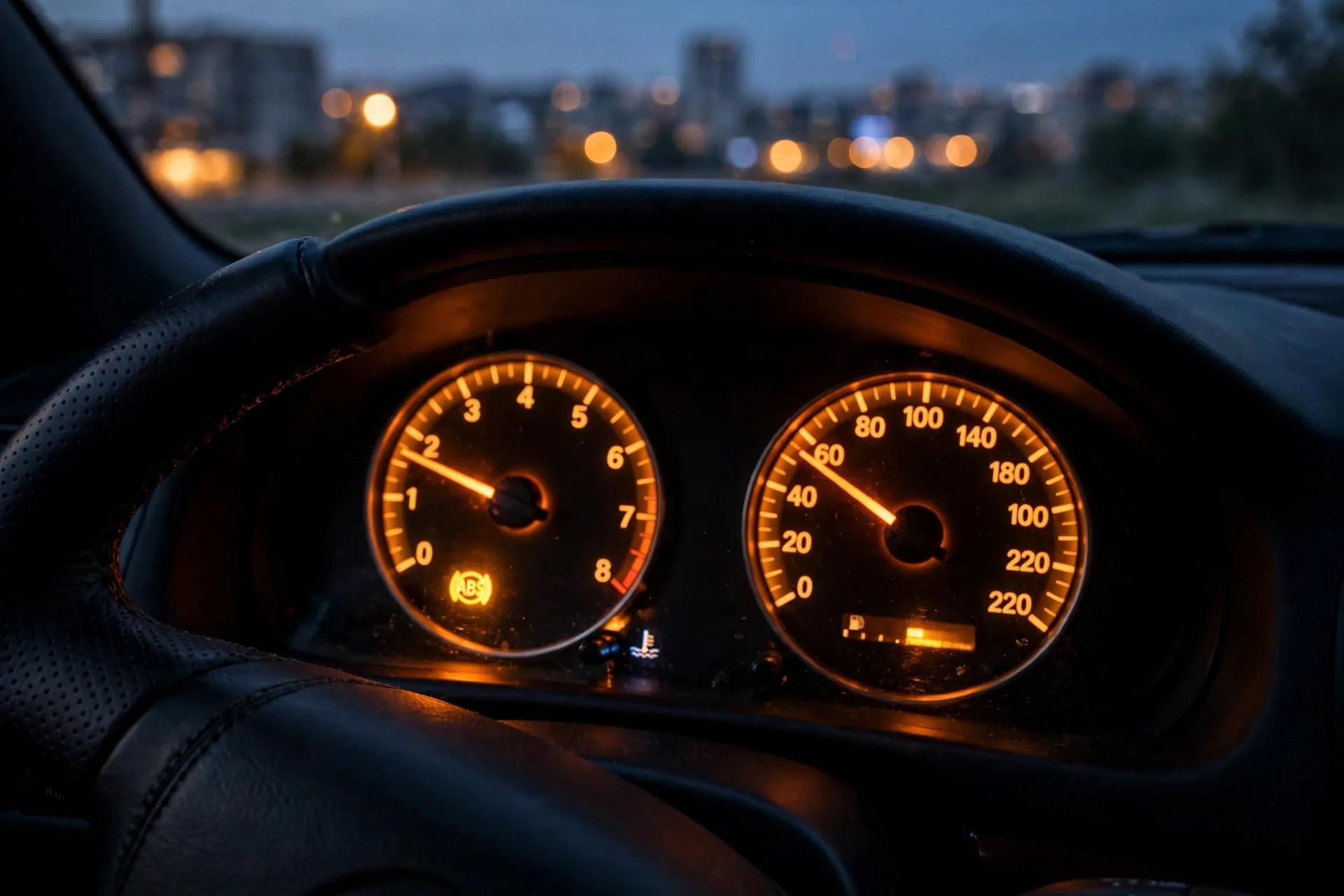
- Temperature gauge stays low. The needle sits well below its normal spot even after a long drive, and it may drop further at highway speed when cold air is rushing through the radiator.
- Heater blows lukewarm air. Your heater gets its warmth from hot coolant. If the engine never fully warms up, the heater never gets hot air to give you.
- Worse gas mileage. A cold engine runs rich, meaning it uses more fuel, and it stays in that mode longer when the thermostat is stuck open.
- Check engine light with code P0128. This code means the engine is running below its regulating temperature. It is one of the most common codes tied to a stuck open thermostat.
A stuck open thermostat is annoying and wasteful, but it is the gentle failure mode. Your engine is running too cool, not too hot, so it is not about to damage itself on the spot. Fix it soon anyway, because cold running wastes fuel and leaves you without real heat in winter.
Stuck Closed: The Symptoms
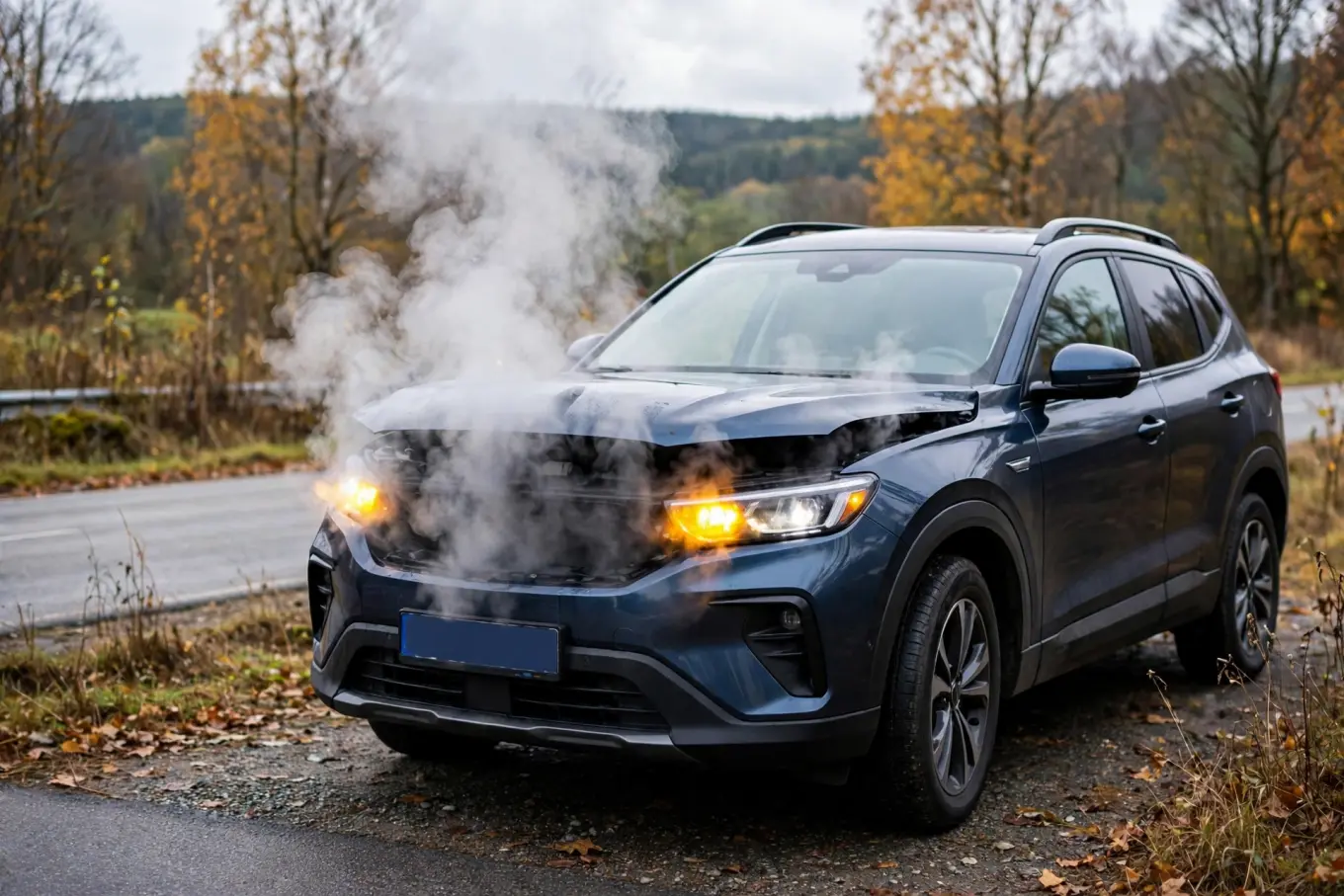
A thermostat stuck closed blocks coolant from reaching the radiator at all. Heat has nowhere to go, so the temperature gauge climbs fast and keeps climbing.
- Gauge climbs into the red. The needle moves past its normal spot and keeps going, sometimes within minutes of starting.
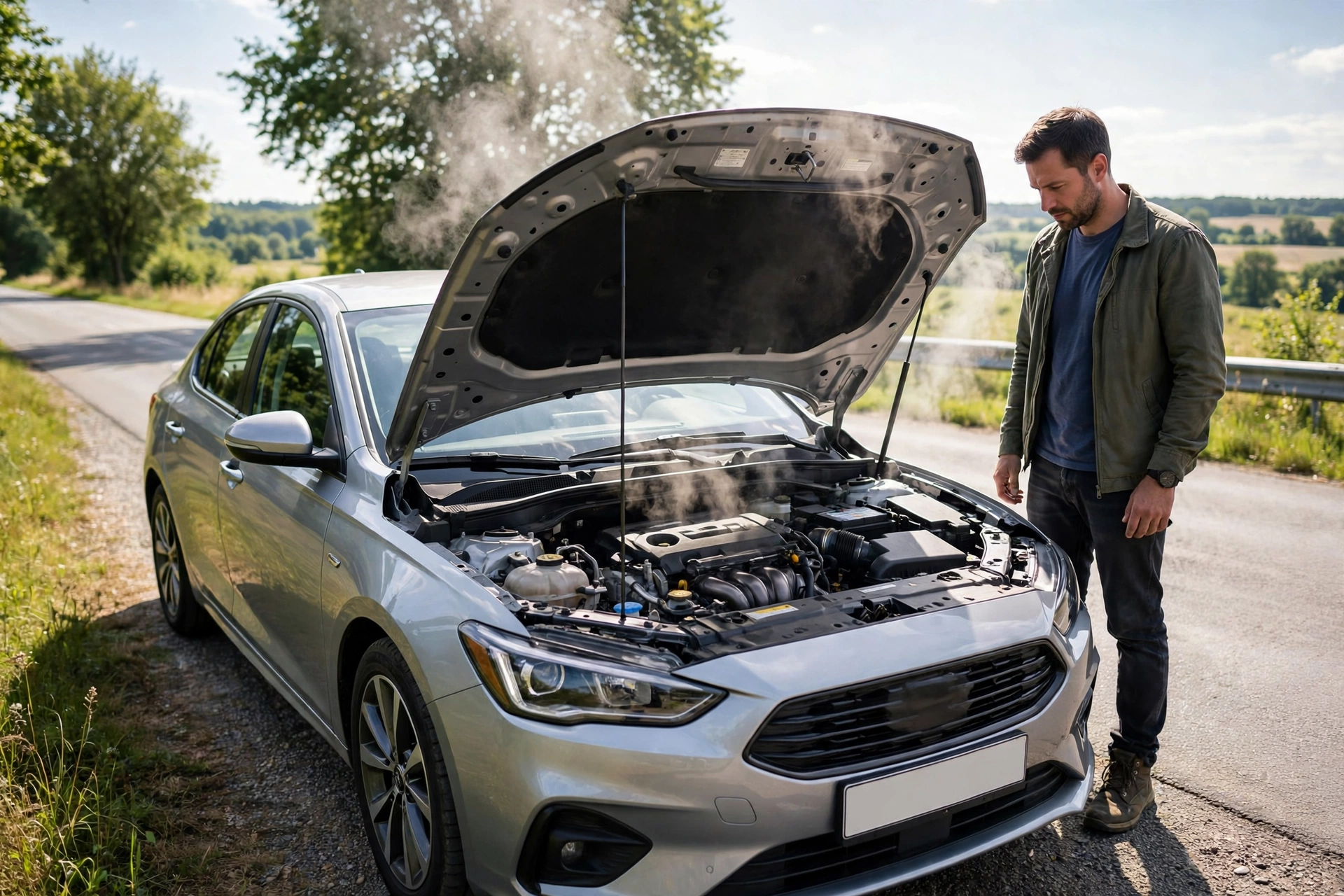
- Steam or coolant smell from under the hood. When coolant boils, it pushes out through the overflow and makes steam. You may smell something sweet, which is coolant, before you see anything.
- Coolant bubbling in the overflow tank. With nowhere to circulate, coolant in the engine gets hot enough to boil and push into the reservoir.
- Warning lights or messages. Many cars flash a temperature warning when the engine overheats. Believe it.
A stuck closed thermostat is the urgent failure mode. Driving an overheating engine can warp the cylinder head, blow a head gasket, or crack the head itself, and those repairs are in a different league from a thermostat. If the gauge hits the red, pull over somewhere safe, shut the engine off, and let it cool. Do not open the radiator cap or the coolant reservoir while the engine is hot. Pressurized coolant can spray and cause serious burns. Wait until everything is cool to the touch, then check the coolant level. Our Radiator and Cooling System Guide covers the other parts that can cause the same overheating symptoms.
How to Diagnose a Bad Thermostat
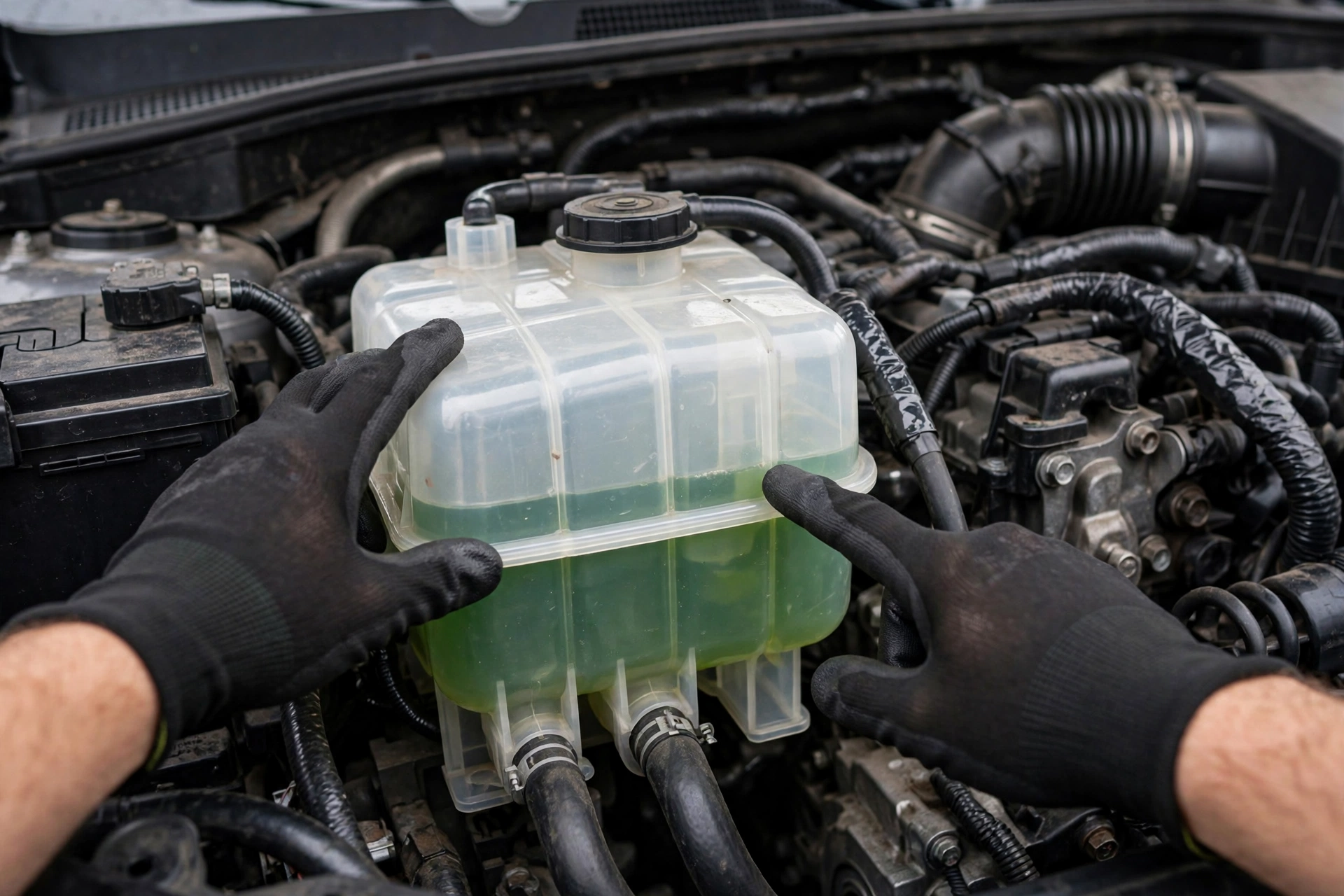
You can narrow this down in your driveway. Work on a cold engine, and never open a hot cooling system.
- Check the coolant level first. With the engine cold, look at the overflow reservoir. If it is low, top it off with the coolant type your owner's manual calls for and look for leaks. Low coolant alone can cause overheating and a weak heater, so rule it out before blaming the thermostat.
- Watch the gauge on a normal drive. Note how long the needle takes to reach its usual spot and whether it stays there. A gauge that never reaches normal points to stuck open. A gauge that climbs past normal points to stuck closed or another cooling problem.
- Feel the upper radiator hose. After the engine has run a few minutes, carefully feel the upper radiator hose where it meets the radiator. On a healthy car, the hose stays cool until the thermostat opens, then it gets hot all at once. If the hose warms up gradually from the start, the thermostat may be stuck open. If the hose stays cool while the gauge climbs, the thermostat may be stuck closed and blocking flow.
- Check the heater. Turn the heater on full blast. Lukewarm air on a fully warmed up engine supports the stuck open diagnosis. Hot air that suddenly goes cold while the gauge climbs points to a circulation problem.
- Scan for codes. A cheap scan tool or a free code read will show P0128 if the engine is running too cool. A stuck closed thermostat often sets no code at all, because the computer sees a hot engine and has no way to know the thermostat is the reason.
- Rule out the lookalikes. A bad coolant temperature sensor can fake a gauge reading. A failing water pump, a clogged radiator, a stuck cooling fan, or a low coolant level can all cause overheating too. If your diagnosis steps point in two directions at once, the thermostat is still the most common cause, but do not skip the coolant level and hose checks.
One honest note: there is no driveway test that proves a thermostat is bad with total certainty. The steps above build a strong case. If the car is overheating and you are not sure why, a shop can pressure test the cooling system and confirm the cause before parts get replaced.
Thermostat Replacement Cost
The thermostat itself is a cheap part. The total bill depends almost entirely on where the thermostat lives on your engine.
On many four cylinder cars, the thermostat sits right on top of the engine or near the upper hose, and the job is straightforward. On other cars it is buried under the intake manifold, behind the timing cover, or packaged with the water pump housing, and getting to it takes real labor time. Same cheap part, very different bill.
Doing it yourself saves the labor portion, which is usually most of the bill. The catch is the coolant. You will lose coolant when you open the housing, you need to catch and dispose of it properly, and you need to refill and bleed the air out of the system afterward. Air left in the cooling system can cause overheating on its own, so the bleeding step matters as much as the part swap. If your car uses a specific coolant type, check your owner's manual and use exactly that.
DIY or Shop: The Verdict
If the thermostat is easy to reach on your car, this is a solid DIY job for a home mechanic with basic tools. You need a drain pan, sockets, a new gasket or seal, fresh coolant, and patience for the bleeding step. Our step by step 2011-2015 Chevrolet Cruze - Thermostat Replacement guide shows what the job looks like on one common car.
If the thermostat is buried, or your car is overheating and you are not sure the thermostat is the only problem, take it to a shop. Overheating damage is expensive, and guessing wrong costs more than the diagnosis. This is also the right call if the thermostat is packaged with the water pump, as in our 2009-2018 VW Tiguan - Water Pump and Thermostat Replacement guide, where the job is bigger than a simple thermostat swap.
Either way, do not ignore a stuck open thermostat just because the car still runs, and never keep driving on a stuck closed one. The part is cheap. The engine it protects is not. While you are in there, check your coolant overall. Our Coolant Flush Guide explains when a flush makes sense, and our 2018-2024 Chevrolet Equinox - Coolant Flush guide shows the procedure on a common SUV.
FAQ
Can I drive with a stuck open thermostat?
Short distances, yes, but get it fixed soon. The engine runs too cool, which wastes fuel and leaves you with a weak heater.
Can I drive with a stuck closed thermostat?
No. A stuck closed thermostat causes overheating, and driving an overheating engine can cause head gasket or cylinder head damage. Pull over, shut the engine off, and let it cool before you do anything else.
Will a bad thermostat turn on the check engine light?
A stuck open thermostat often does, usually with code P0128. A stuck closed thermostat often does not, because the computer sees a hot engine and has no way to know the thermostat is the reason. No light does not mean no problem.
How do I know it is the thermostat and not the water pump?
A stuck open thermostat gives you a low gauge and a lukewarm heater, which a water pump usually does not. Overheating can come from either one. Check the coolant level, feel the upper hose, and look for coolant leaking from the pump area. If the diagnosis is unclear, have a shop pressure test the system before replacing parts.
Your thermostat is a small part with an outsized job, and it only fails two ways. Low gauge and weak heat means stuck open. Fast climbing gauge and steam means stuck closed. The first one wastes your fuel and your heat. The second one can cost you an engine if you keep driving. Diagnose it with the steps above, fix it promptly either way, and your cooling system goes back to doing the quiet job it is supposed to do.
Safety: Informational DIY. EZ Car Fix is not a shop or dealer.